Artwork
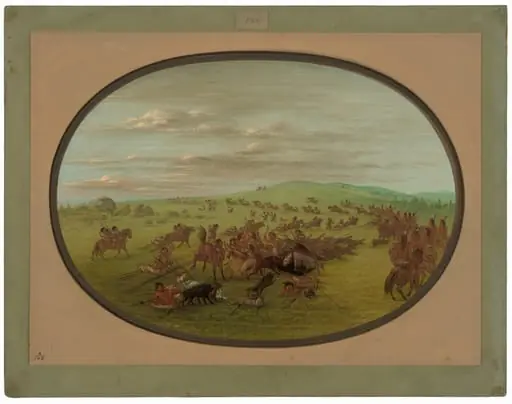
Camanchee Horsemanship
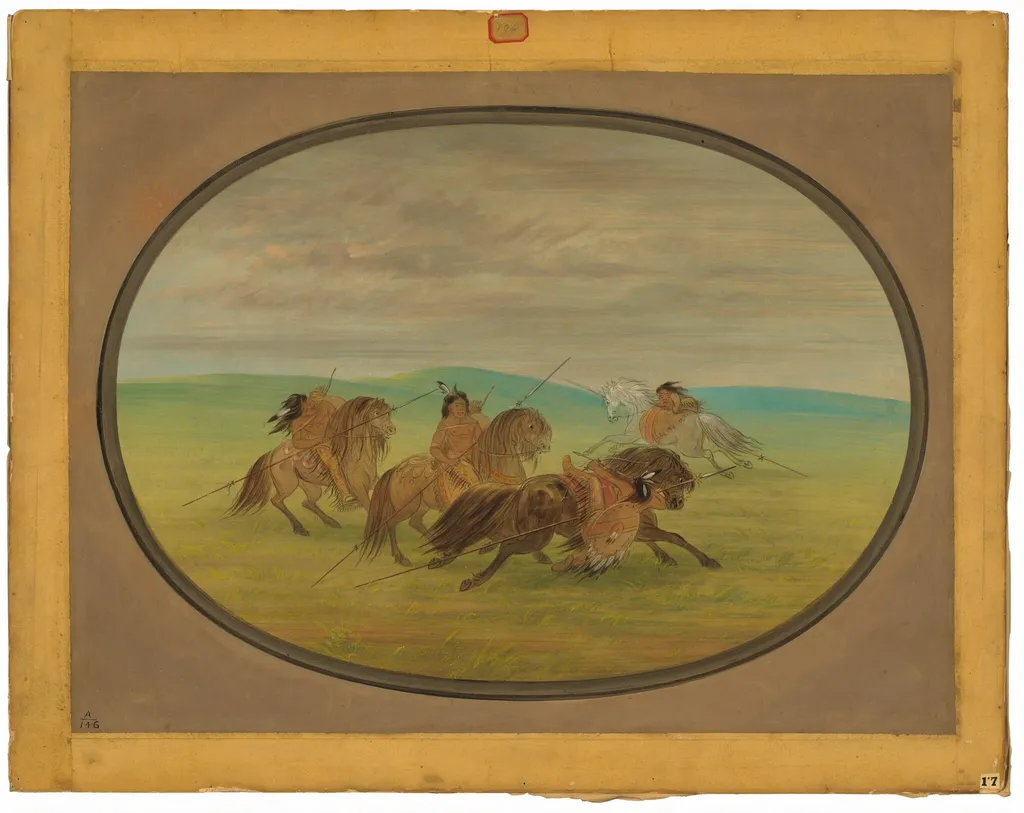
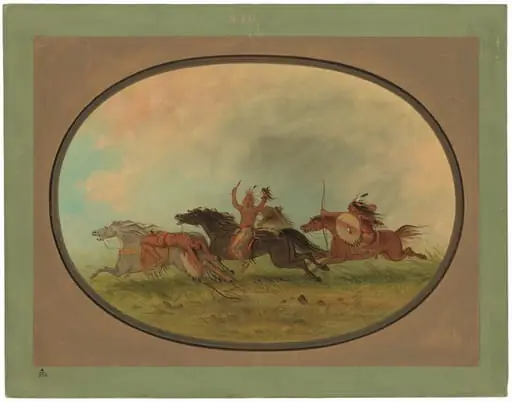
Camanchee Horsemanship is an oil painting by the Impressionist artist George Catlin. It dates from 1865 and is held in the collection of the National Gallery of Art.
About this work
Overview
Camanchee Horsemanship is an 1861 painting by the American artist George Catlin, executed in oil on card mounted on paperboard.
Camanchee Horsemanship is an 1861 painting by the American artist George Catlin, executed in oil on card mounted on paperboard. Measuring 47.7 by 63 centimeters, the work belongs to Catlin's second major body of work, known as his Cartoon Collection. The painting is currently held at the National Gallery of Art in Washington, D.C., under accession number 1965.16.51. It depicts four Comanche warriors demonstrating their equestrian skills across a flat plain, illustrating a specific martial technique of dropping alongside their horses to evade enemy weapons.
Subject & Meaning
The artwork illustrates a Comanche martial stratagem where a rider drops his body to the side of his horse at full speed, shielding himself from enemy weapons behind the horse's body while keeping his heel hooked over the animal's back. This maneuver allowed the warrior to swiftly rise or shift sides as needed, all while carrying and wielding a bow, shield, and a long lance. Catlin first documented this equestrian feat in 1834 while accompanying the United States Dragoons in Indian Territory, expressing profound astonishment at the technique. In his 1871 exhibition catalog for the Cartoon Collection, Catlin described the painting specifically as warriors showing their mode of dropping upon the sides of their horses for protection during wartime.
History & Provenance
Created between 1861 and 1869, the painting remained with George Catlin until his death in 1872. It then descended to his three daughters, Clara Gregory Catlin, Louise Catlin Kinney, and Elizabeth Wing Catlin. In 1912, the American Museum of Natural History in New York purchased the work from Elizabeth Wing Catlin as part of a larger acquisition of the Cartoon Collection. When the museum deaccessioned these works, Paul Mellon purchased over three hundred of them through Kennedy Galleries in 1959. Mellon subsequently gifted 351 paintings from the collection, including this one, to the National Gallery of Art in 1965. The painting has been included in several exhibitions, such as Catlin, Bodmer, Miller: Artist Explorers of the 1830s at the Joslyn Art Museum in 1967, A Gallery Revived at the Buffalo Bill Historical Center in 1989, and Take Two: George Catlin Revisits the West at the Sid Richardson Museum in 2014. It was also placed on extended loan to the United States Embassy residences in Dublin from 1975 to 1978 and Damascus from 1982 to 1984.
Context
During the mid-nineteenth century, George Catlin produced two major collections of Native American portraits, genre scenes, and western landscapes. His first collection, the Indian Gallery, comprised over five hundred works from the 1830s, with most survivors now at the Smithsonian American Art Museum. The Smithsonian holds a related 1834 to 1835 oil on canvas painting titled Comanche Feats of Horsemanship, which explores the same equestrian stratagem Catlin witnessed in Indian Territory. During the 1850s and 1860s, Catlin created his second major body of work, the Cartoon Collection, which numbered over six hundred works. Camanchee Horsemanship belongs to this later group, which Catlin exhibited in New York in 1871 alongside a published catalog detailing the subjects.
Legacy
The subject of Comanche horsemanship depicted by Catlin found a notable place in contemporary popular culture through the 2019 HBO series Watchmen. The second episode, titled Martial Feats of Comanche Horsemanship, derives its name directly from Catlin's work. Within the narrative of the show, a version of the painting hangs prominently in the home of the Tulsa chief of police, Judd Crawford. According to in-universe annotated notes written by FBI Agent Dale Petey, the painting was given to Crawford by Senator Joe Keene, a character who authored the Keene Act banning unsanctioned costumed vigilantes, thereby linking the historical artwork to the fictional political framework of the series.
Own this work as a print
Artist & collection

Artist
George Catlin ( KAT-lin; July 26, 1796 – December 23, 1872) was an American lawyer, painter, author, and traveler, who specialized in portraits of Native Americans in the American frontier.

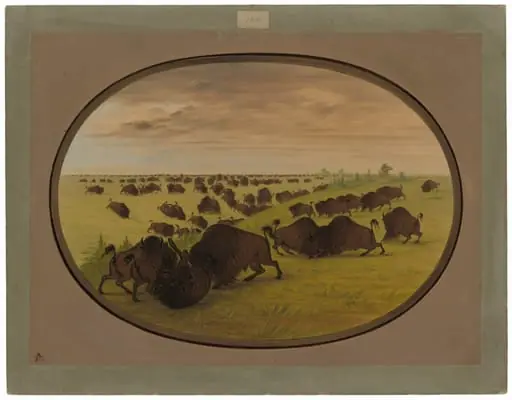 Bulls Fighting
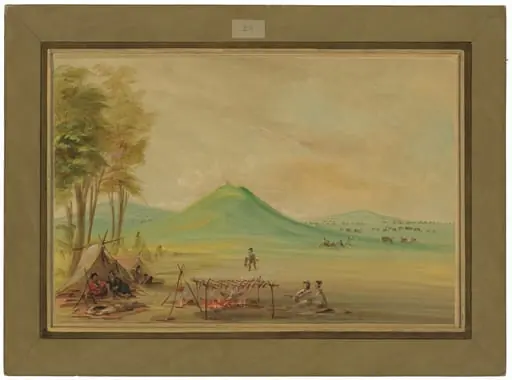 Expedition Encamped on a Texas Prairie. April 1686
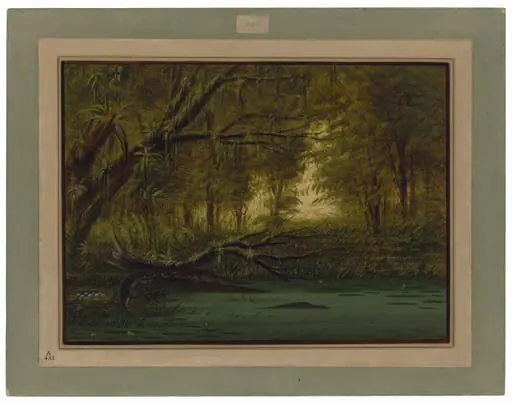 An Alligator's Nest
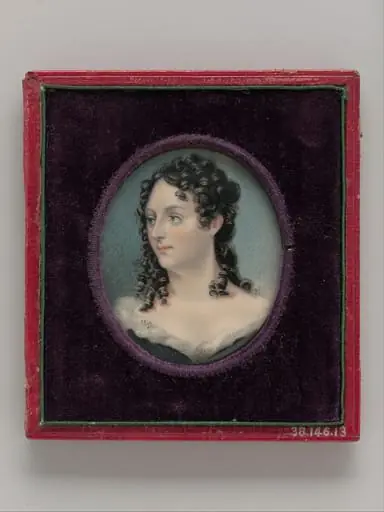 Mrs. George Catlin (Clara Bartlet Gregory)
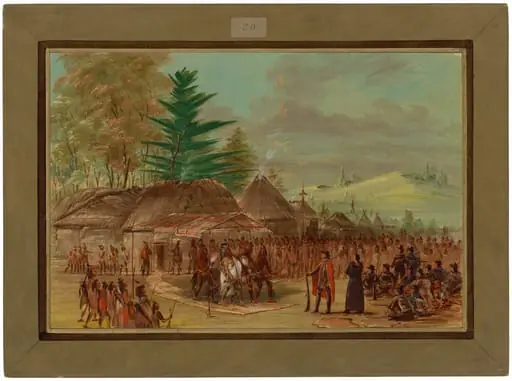 Chief of the Taensa Indians Receiving La Salle. March 20, 1682
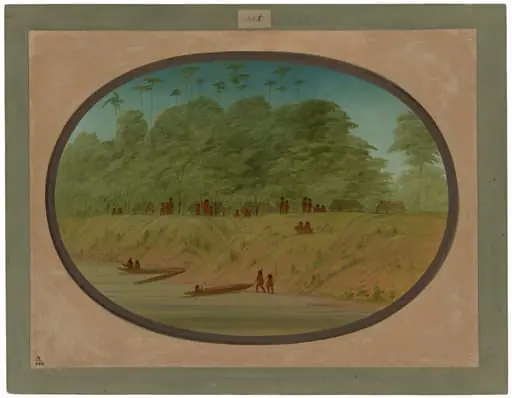 A Small Village - Payaguas Indians
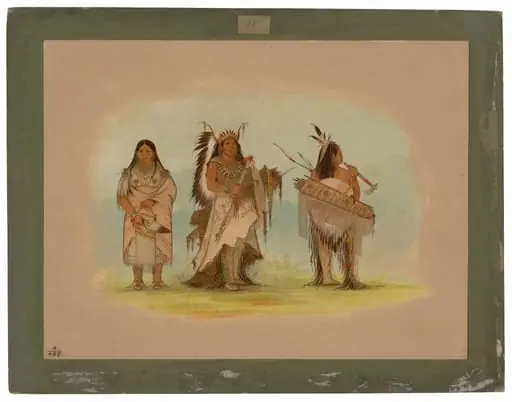 Omaha Chief, His Wife, and a Warrior
 Father Hennepin Leaving the Mississippi to Join La Salle. May 8, 1680