Artwork
The Scalper Scalped - Pawnees and Cheyennes
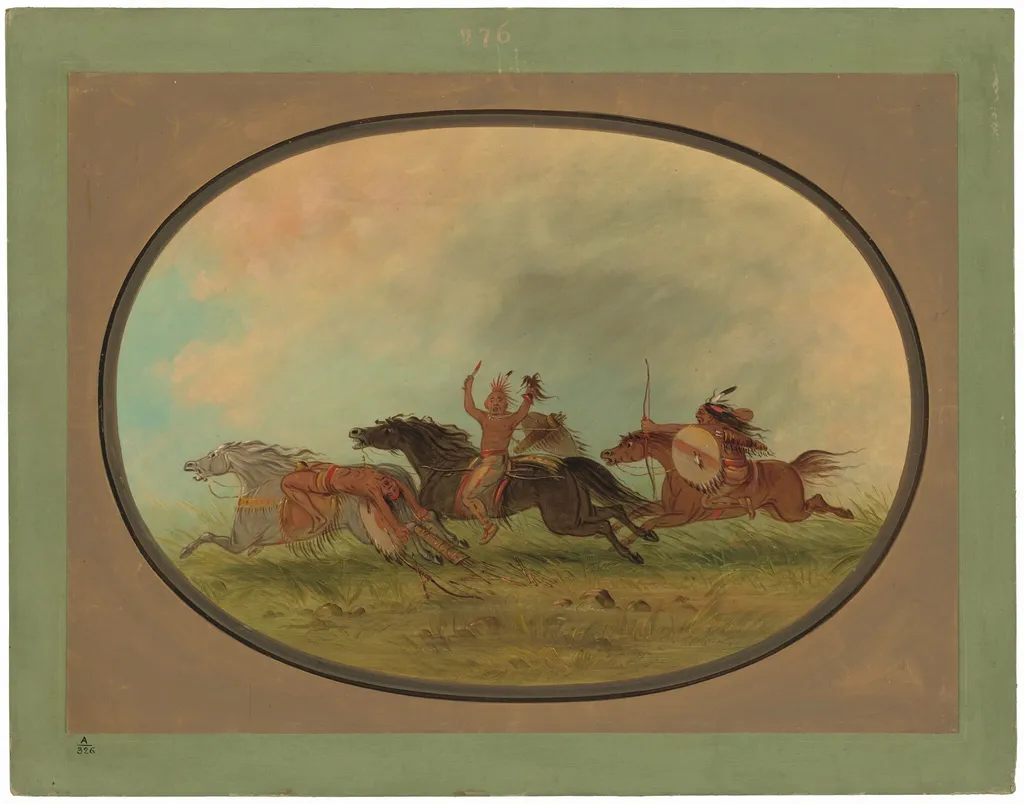
The Scalper Scalped - Pawnees and Cheyennes is an oil painting by the American Folk Art artist George Catlin. It dates from 1865 and is held in the collection of the National Gallery of Art.
- Inscription
- Inscribed:lower left on board: A/326; upper center on board in pink paint: 276; upper center reverse in graphite: 273
About this work
Technique & Style
Classified as a genre scene, the painting depicts a narrative interaction between Pawnee and Cheyenne figures.
George Catlin executed The Scalper Scalped - Pawnees and Cheyennes in 1861 using oil paint applied to a card support, which was subsequently mounted onto paperboard. The work measures 46.1 cm in height and 62.1 cm in width. Classified as a genre scene, the painting depicts a narrative interaction between Pawnee and Cheyenne figures.
The composition relies on the artist's characteristic oil technique to render the specific historical moment and the formal arrangement of the subjects within the frame.
History & Provenance
George Catlin executed this oil on card mounted on paperboard in 1861. Following the artist's death in 1872, the work passed by descent to his daughters: Clara Gregory Catlin, Louise Catlin Kinney, and Elizabeth Wing Catlin. In 1912, the American Museum of Natural History purchased the painting directly from Elizabeth Wing Catlin.
The museum retained the piece until 1959, when it was sold through Kennedy Galleries of New York to Paul Mellon of Upperville, Virginia. Mellon subsequently gifted the work to the National Gallery of Art in Washington, D.C., in 1965, where it remains in the collection.
The Scalper Scalped - Pawnees and Cheyennes is held by the National Gallery of Art in Washington, D.C.
The work entered the collection through a series of transactions beginning with George Catlin, who created it in 1861. It passed by descent to his daughters, was purchased in 1912 from Elizabeth Wing Catlin by the American Museum of Natural History, and later sold in 1959 through Kennedy Galleries to Paul Mellon, who gifted it to the National Gallery in 1965. The painting is cataloged in the National Gallery of Art's collection and is listed on Wikidata as part of their collection.
Overview
The work titled The Scalper Scalped – Pawnees and Cheyennes was executed in 1865 by George Catlin. It is an oil painting applied to a card support that has been affixed to a paperboard backing. The composition records a violent encounter between two mounted Native warriors, one brandishing a blood‑stained scalp while the other points a rifle forward.
Subject & Meaning
The scene depicts two Plains Indian combatants on horseback, a motif drawn from Catlean observations of intertribal conflict in the early 1830s. One figure clutches a freshly taken scalp, a traditional trophy of warfare, while his companion advances with a firearm, suggesting a moment of heightened tension and the merging of indigenous martial customs with introduced weaponry.
Context
Created during the post‑Civil War period, the work forms part of Catlin’s extensive visual record of Indigenous peoples, a project that began with his 1832–1839 expeditions across the western frontier. By the 1860s, his focus had shifted from field sketches to studio compositions, using the scene to convey both the brutality of intertribal warfare and the cultural practices that accompanied it.
Own this work as a print
Artist & collection

Artist
George Catlin ( KAT-lin; July 26, 1796 – December 23, 1872) was an American lawyer, painter, author, and traveler, who specialized in portraits of Native Americans in the American frontier.

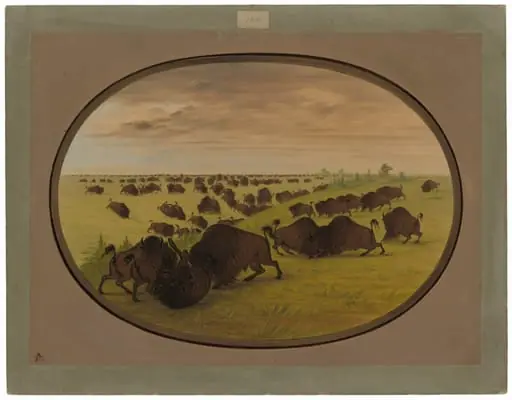 Bulls Fighting
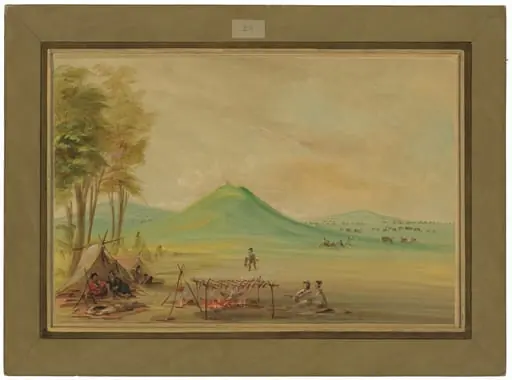 Expedition Encamped on a Texas Prairie. April 1686
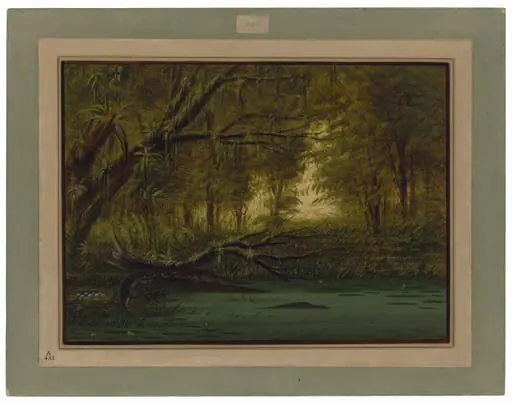 An Alligator's Nest
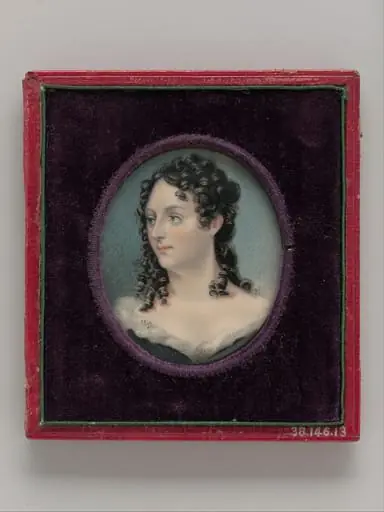 Mrs. George Catlin (Clara Bartlet Gregory)
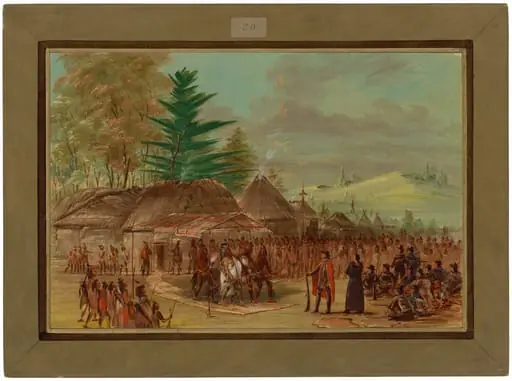 Chief of the Taensa Indians Receiving La Salle. March 20, 1682
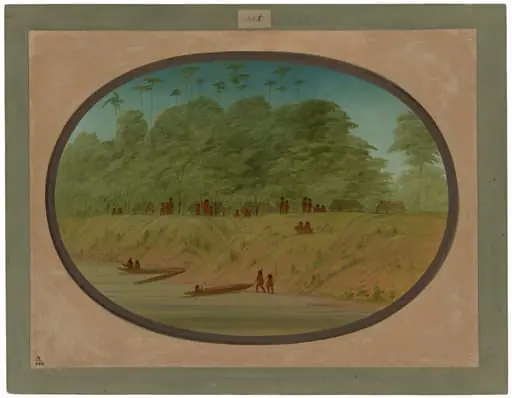 A Small Village - Payaguas Indians
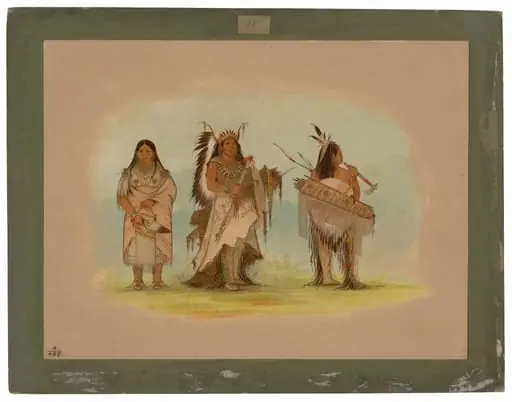 Omaha Chief, His Wife, and a Warrior
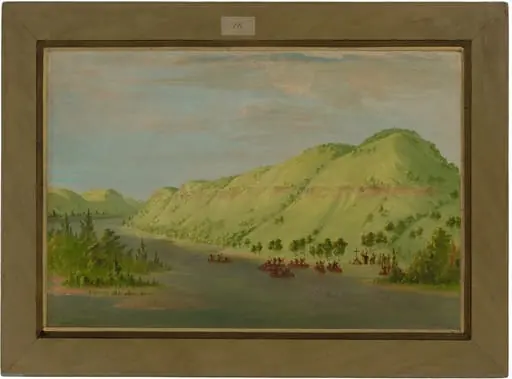 Father Hennepin Leaving the Mississippi to Join La Salle. May 8, 1680
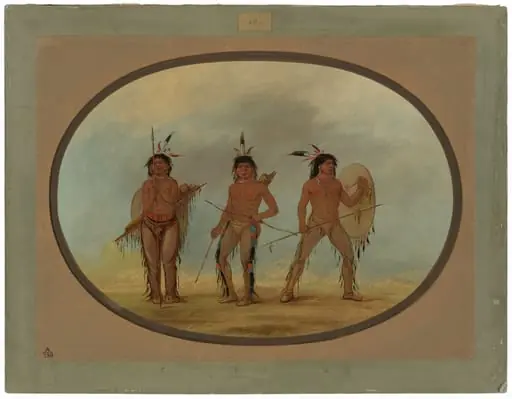 Three Cheyenne Warriors
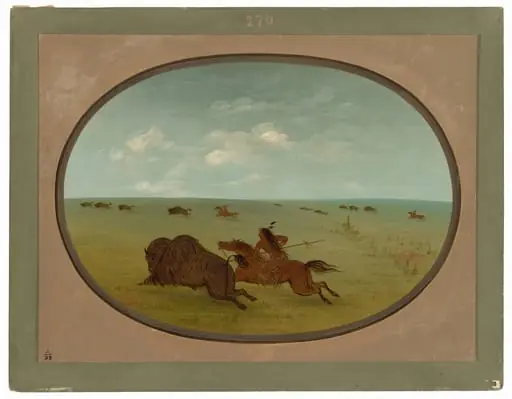 Buffalo Chase, Sioux Indians, Upper Missouri
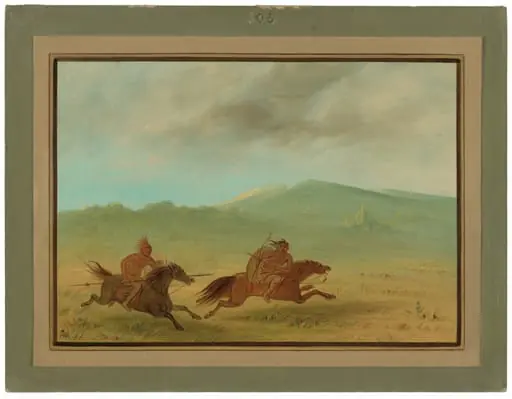 An Osage Indian Pursuing a Camanchee
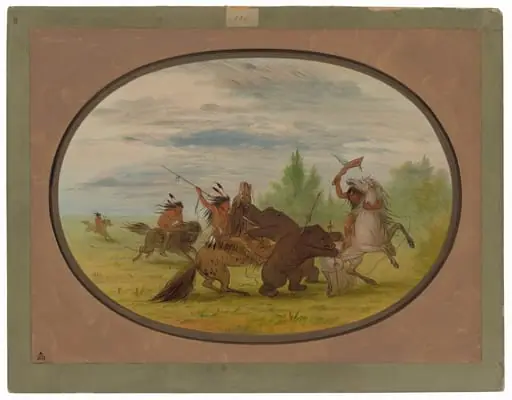 K'nisteneux Indians Attacking Two Grizzly Bears
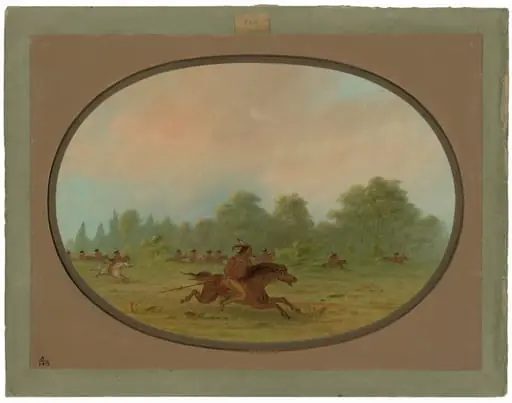 Defile of a Camanchee War Party
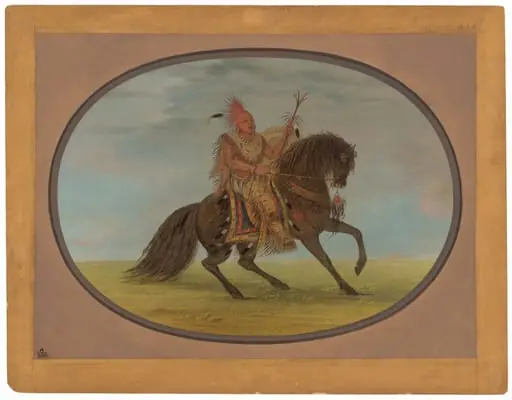 The Running Fox on a Fine Horse - Saukie
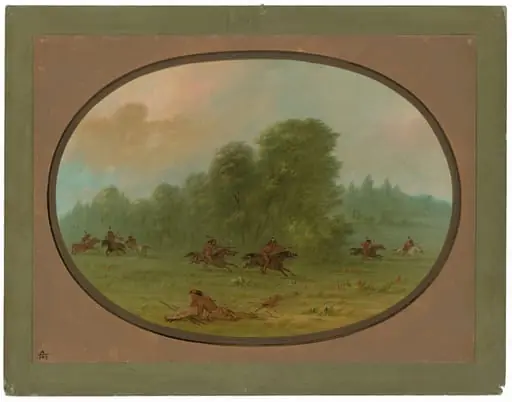 Battle between the Jiccarilla Apachees and Camanchees
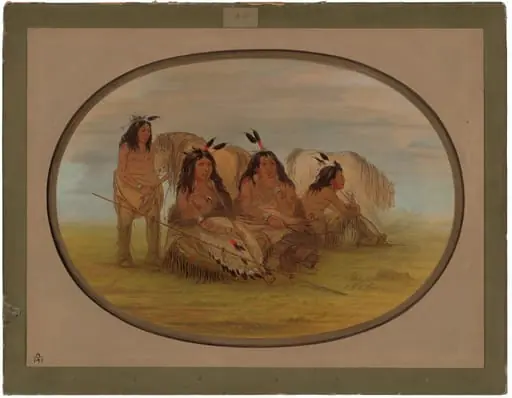 Camanchee Chief with Three Warriors
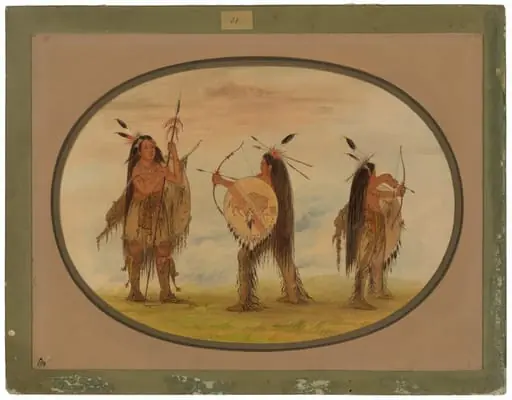 Three Mandan Warriors Armed for War
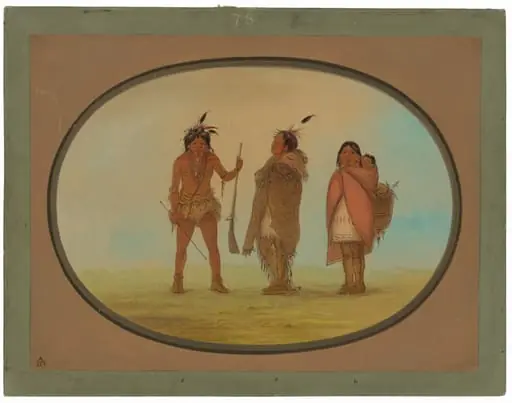 Arapaho Chief, His Wife, and a Warrior