Artwork
Facsimile of a Mandan Robe
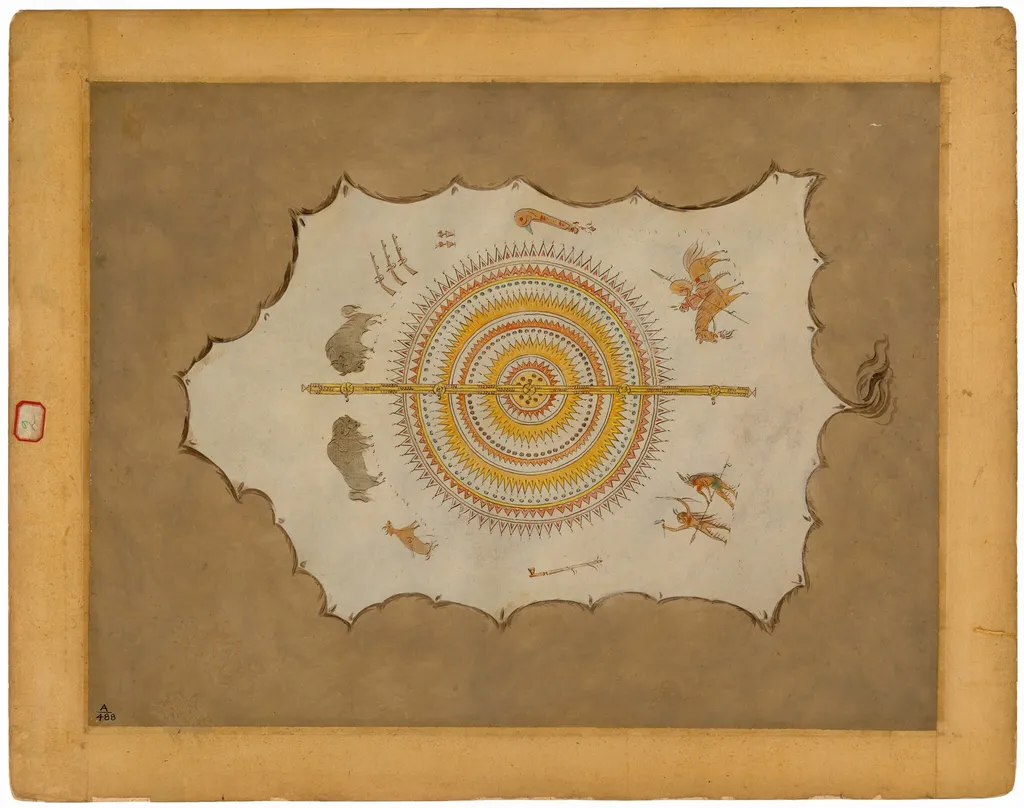
Facsimile of a Mandan Robe is an oil painting by the American Folk Art artist George Catlin. It dates from 1865 and is held in the collection of the National Gallery of Art.
About this work
Subject & Meaning
As a reproduction of an original artifact, the facsimile invites contemplation of preservation and the transmission of cultural knowledge across generations.
The work depicts a ceremonial Mandan robe rendered as a painted object, emphasizing the cultural significance of dress in Plains societies. Its iconography includes traditional motifs that signify status and spiritual protection, reflecting broader themes of identity and communal belonging. The painting thus serves as a visual record of Indigenous material culture, interpreted through the artist's ethnographic lens.
The robe's symbolic patterns reference rites of passage and warrior achievements, linking personal honor to collective heritage. As a reproduction of an original artifact, the facsimile invites contemplation of preservation and the transmission of cultural knowledge across generations.
The work measures 45.8 cm in height and 60 cm in width, and was created in 1865.
Technique & Style
This work is classified as a painting executed in oil on card mounted on paperboard, a support combination that suited the documentary aims of George Catlin's ethnographic reproductions. The painting measures 45.8 cm in height by 60 cm in width, a relatively modest horizontal format appropriate to recording the proportions of a hide garment laid flat for display.
Stylistically, the work belongs to Catlin's sustained effort to document Indigenous material culture through direct visual transcription, presenting the robe as a still-life study rather than as a worn object. The card-and-paperboard support reflects a field-friendly technique, allowing the artist to capture ornamental detail with the precision of a specimen record.
History & Provenance
George Catlin executed this oil on card work in 1865. Upon the artist's death in 1872, the piece passed by descent to his daughters: Clara Gregory Catlin, Louise Catlin Kinney, and Elizabeth Wing Catlin. In 1912, the American Museum of Natural History purchased the painting directly from Elizabeth Wing Catlin.
The museum retained the work until 1959, when it was sold through Kennedy Galleries of New York to Paul Mellon of Upperville, Virginia. Mellon subsequently donated the facsimile to the National Gallery of Art in Washington, D.C., in 1965, where it remains part of the permanent collection.
Context
The work was painted in 1865 by George Catlin, a frontier artist known for documenting Indigenous cultures of North America. Its depiction of a Mandan robe reflects 19th-century ethnographic interests and Catlin's broader mission to preserve visual records of Native peoples before perceived cultural disappearance. The painting entered the National Gallery of Art collection in 1965 via a gift from Paul Mellon, building on its earlier ownership history that included George Catlin, his daughters, and the American Museum of Natural History.
Overview
Created in 1865, the work titled Facsimile of a Mandan Robe is an oil painting executed on a card that has been adhered to a paperboard support. It belongs to the tradition of American folk art and presents a stylized representation of a ceremonial garment associated with the Mandan people of the Northern Plains.
Own this work as a print
Artist & collection

Artist
George Catlin ( KAT-lin; July 26, 1796 – December 23, 1872) was an American lawyer, painter, author, and traveler, who specialized in portraits of Native Americans in the American frontier.

 Bulls Fighting
 Expedition Encamped on a Texas Prairie. April 1686
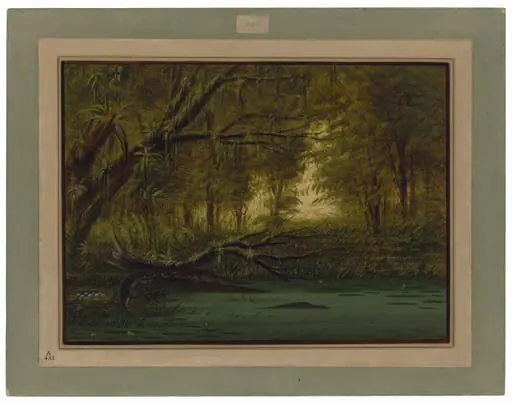 An Alligator's Nest
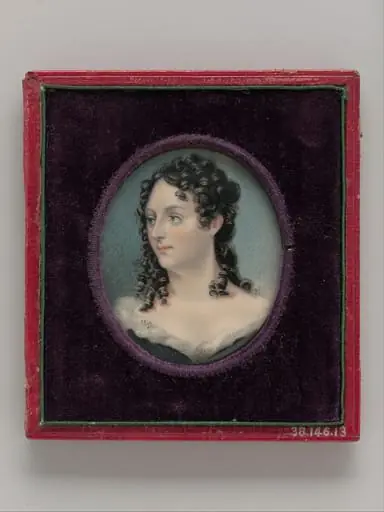 Mrs. George Catlin (Clara Bartlet Gregory)
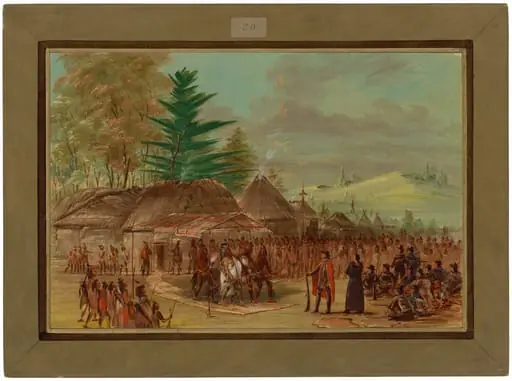 Chief of the Taensa Indians Receiving La Salle. March 20, 1682
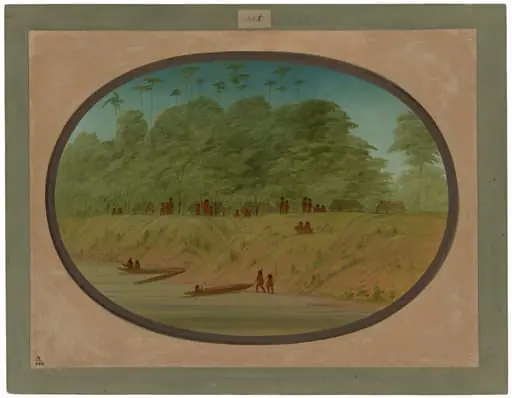 A Small Village - Payaguas Indians
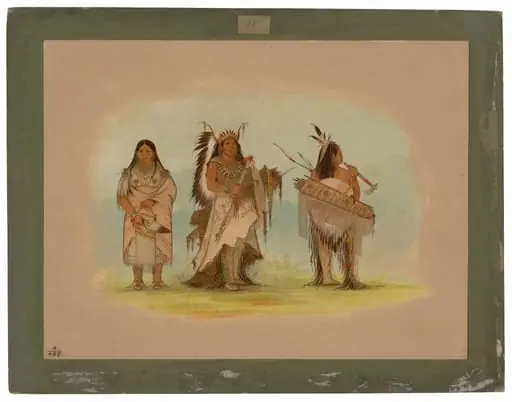 Omaha Chief, His Wife, and a Warrior
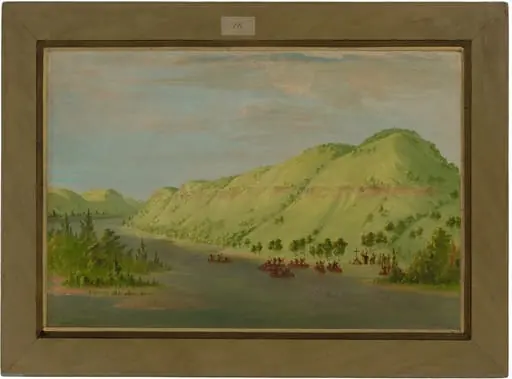 Father Hennepin Leaving the Mississippi to Join La Salle. May 8, 1680
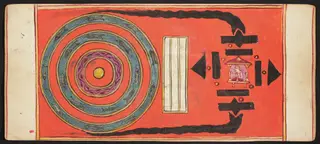 Tantric Manuscript, "Sangrahani Sutra"
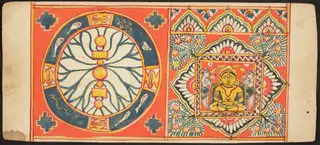 Tantric Manuscript "Sangrahani Sutra"
 Untitled
 Durga and Ganesh
 Prima Causa (First Cause)
 Tantric Manuscript, "Sangrahani Sutra"
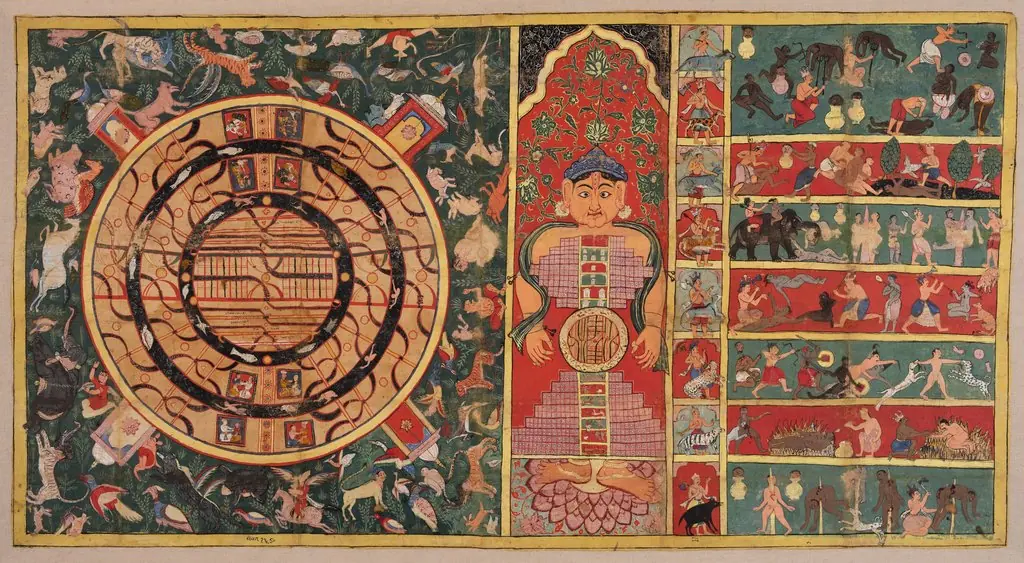 Diagrams of the Universe: The Two-and-a-Half Continents, the Universe in the Shape of a Person, and the Seven Levels of Hell
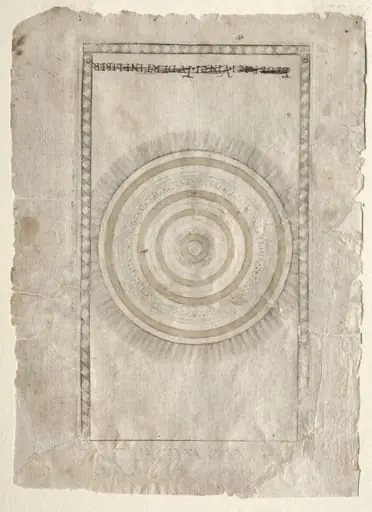 The Empyrean Sphere (from the Tarocchi, series A: Firmaments of the Universe, #50)
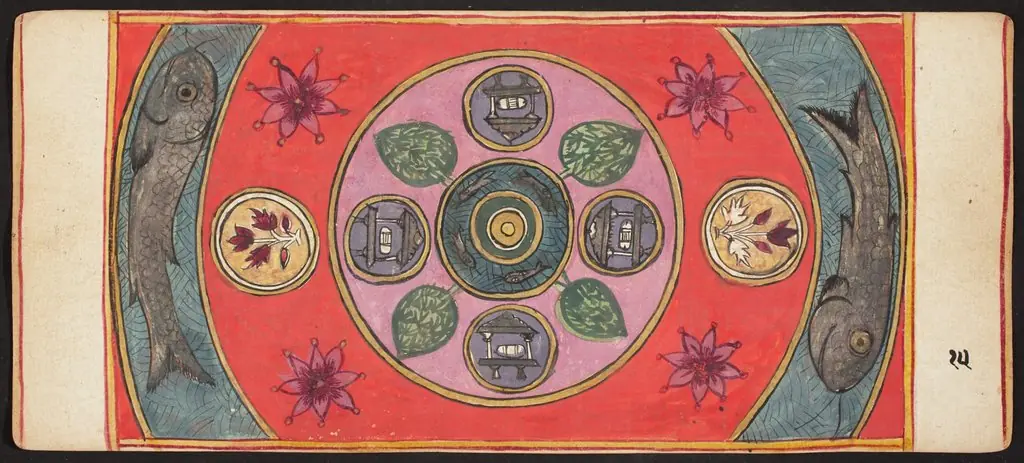 Tantric Manuscript, "Sangrahani Sutra"