Artwork
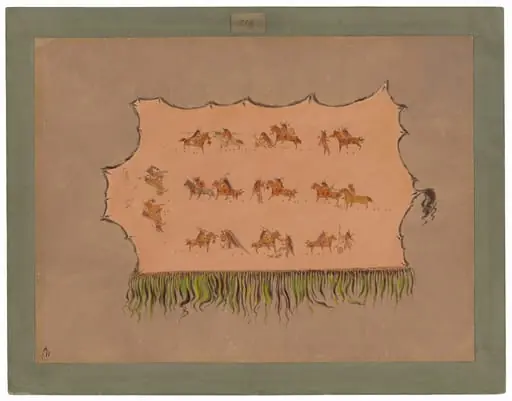
Facsimile of an Omaha Robe
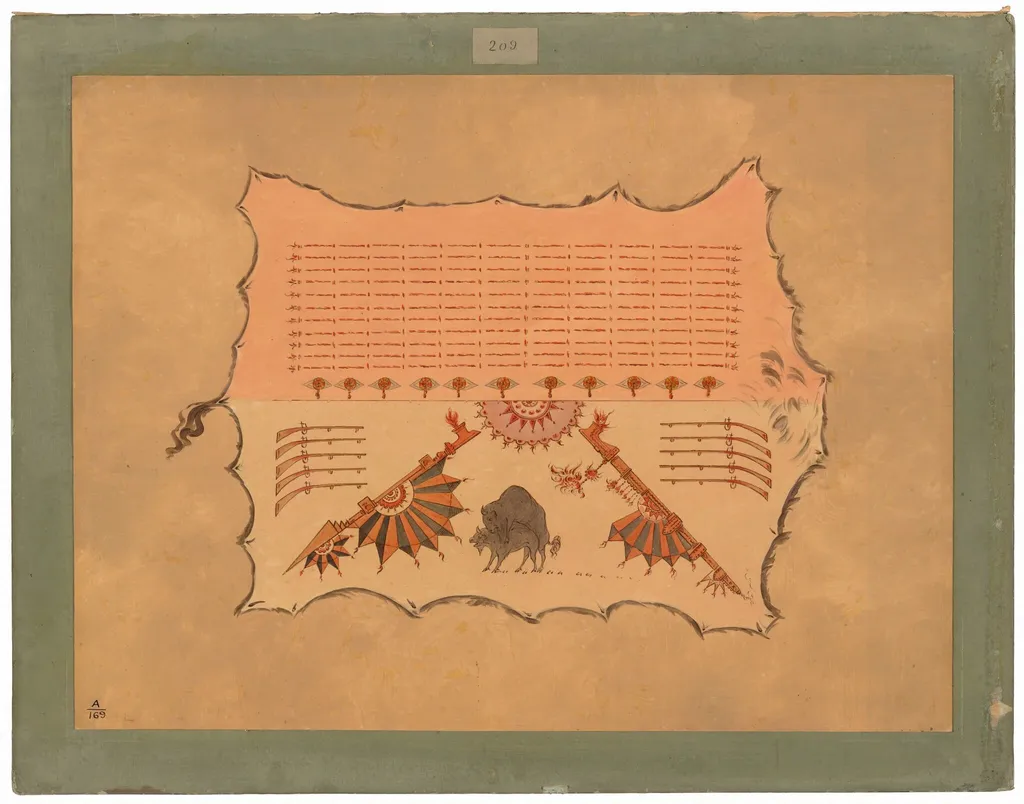
Facsimile of an Omaha Robe is an oil painting by the American Folk Art artist George Catlin. It dates from 1865 and is held in the collection of the National Gallery of Art.
- Inscription
- Inscribed:lower left on card: A/169; upper center on board on applied paper: 209; top right reverse partially obscured by tape: 14 x 1 [or possibly 7]; center reverse in white chalk: Top Row [or possibly Top Robe]
About this work
Technique & Style
Catlin executed the facsimile in oil on card mounted on paperboard, a modest support suited to documentary reproduction rather than large-scale easel painting.
Catlin executed the facsimile in oil on card mounted on paperboard, a modest support suited to documentary reproduction rather than large-scale easel painting. The work measures 46.2 by 62.9 cm, a horizontal format corresponding to the proportions of a hide robe. As a faithful copy of a painted Omaha hide garment, the piece functions as an ethnographic record translated into oil on a rigid card-and-paperboard ground.
History & Provenance
George Catlin executed this oil on card work in 1865. Upon the artist's death in 1872, the piece passed by descent to his daughters: Clara Gregory Catlin, Louise Catlin Kinney, and Elizabeth Wing Catlin. In 1912, the American Museum of Natural History purchased the work directly from Elizabeth Wing Catlin.
The museum retained the painting until 1959, when it was sold through Kennedy Galleries of New York to Paul Mellon of Upperville, Virginia. Mellon subsequently donated the work to the National Gallery of Art in Washington, D.C., in 1965, where it is inventoried as accession number 1965.1.14.
Overview
Created in 1865, Facsimile of an Omaha Robe is an oil painting executed on card that has been adhered to a paperboard support. The work belongs to the tradition of American folk art and is presented as an allegorical scene rather than a literal record. Its composition is framed by a wavy orange border that encloses a stylized depiction of Plains life.
Subject & Meaning
At the center of the image a solitary bison stands between two striped tents, each topped with a pole and feathered ornament. Small dot-like forms surround the animal, possibly representing people or objects, while a line of trees with tiny faces crowns the upper edge. The arrangement suggests a quotidian moment on the Omaha reservation, rendered with symbolic rather than documentary intent.
Context
George Catlin traveled the American West on five expeditions during the 1830s, producing portraits and written accounts of Plains Indian cultures. By the mid‑1860s, his focus had shifted toward more stylized, allegorical representations, reflecting both his accumulated observations and the growing public appetite for romanticized images of Native life.
Legacy
Although not as widely reproduced as Catlin’s portrait series, this work illustrates his later artistic phase and contributes to the visual archive of 19th‑century Indigenous representation. It remains a reference point for scholars examining the intersection of folk art, ethnographic illustration, and the allegorical treatment of cultural subjects in American art history.
Own this work as a print
Artist & collection

Artist
George Catlin ( KAT-lin; July 26, 1796 – December 23, 1872) was an American lawyer, painter, author, and traveler, who specialized in portraits of Native Americans in the American frontier.

 Bulls Fighting
 Expedition Encamped on a Texas Prairie. April 1686
 An Alligator's Nest
 Mrs. George Catlin (Clara Bartlet Gregory)
 Chief of the Taensa Indians Receiving La Salle. March 20, 1682
 A Small Village - Payaguas Indians
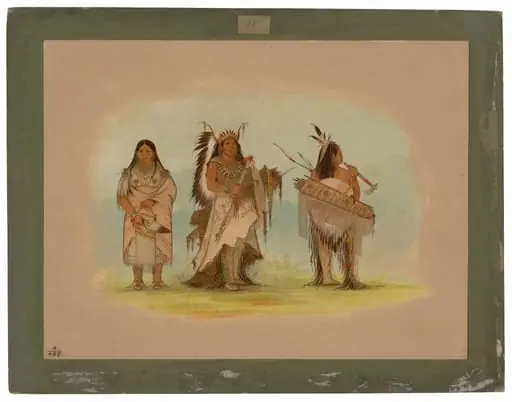 Omaha Chief, His Wife, and a Warrior
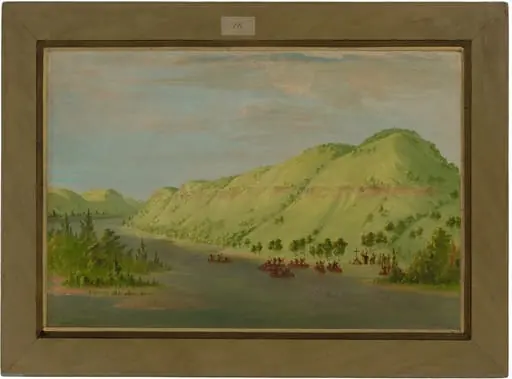 Father Hennepin Leaving the Mississippi to Join La Salle. May 8, 1680
- Facsimile of an Ojibbeway Robe
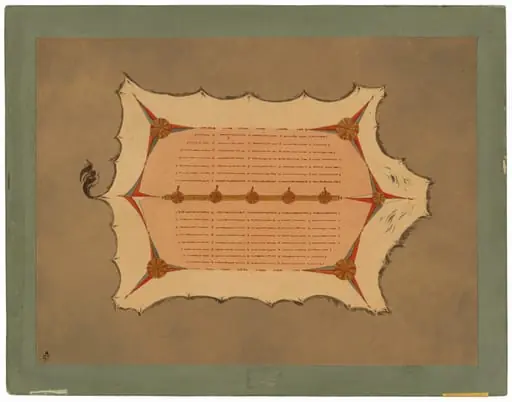 Facsimile of a Sioux Robe with Porcupine Quills
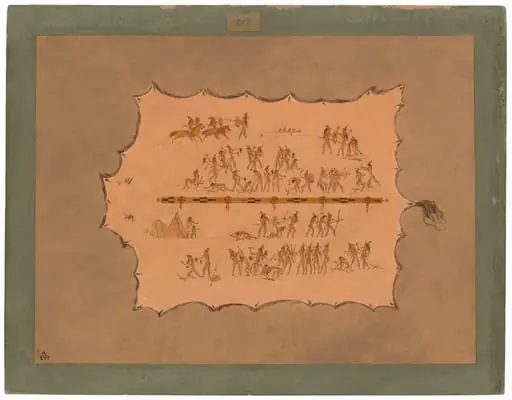 Facsimile of a Sioux Robe
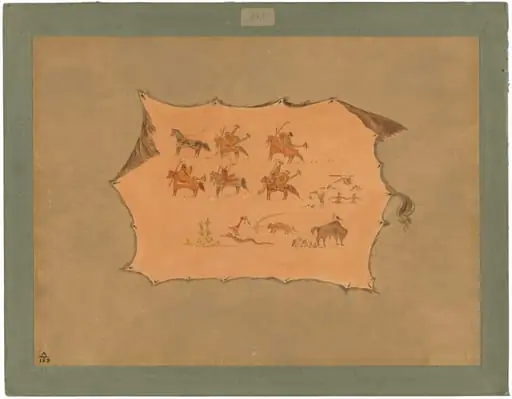 Facsimile of a Pawnee Doctor's Robe
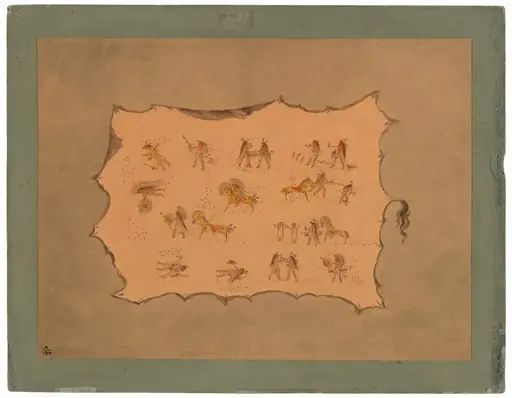 Facsimile of the Robe of Mah-to-toh-pa - Mandan
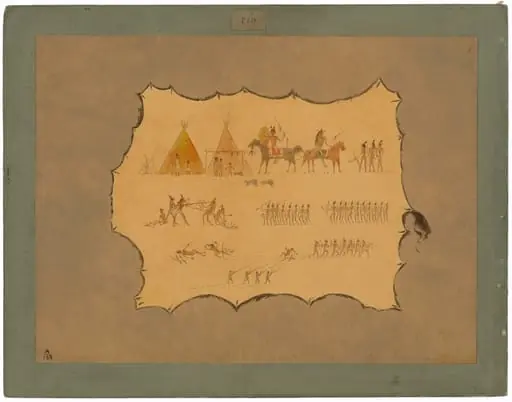 Facsimile of a Cheyenne Robe
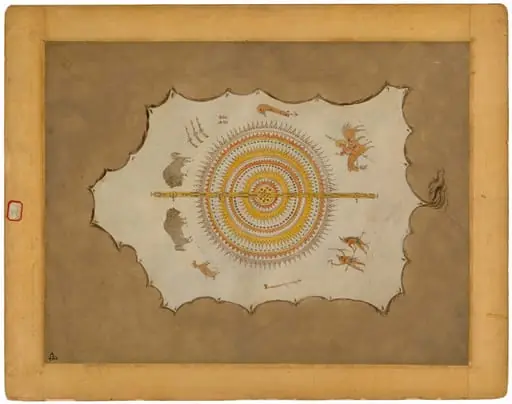 Facsimile of a Mandan Robe
 Facsimile of Chief Four Men's Robe - Mandan
 Facsimile of a Pawnee Doctor's Robe with Fantastic Professional Designs