Artwork
Sioux Village - Lac du Cygne
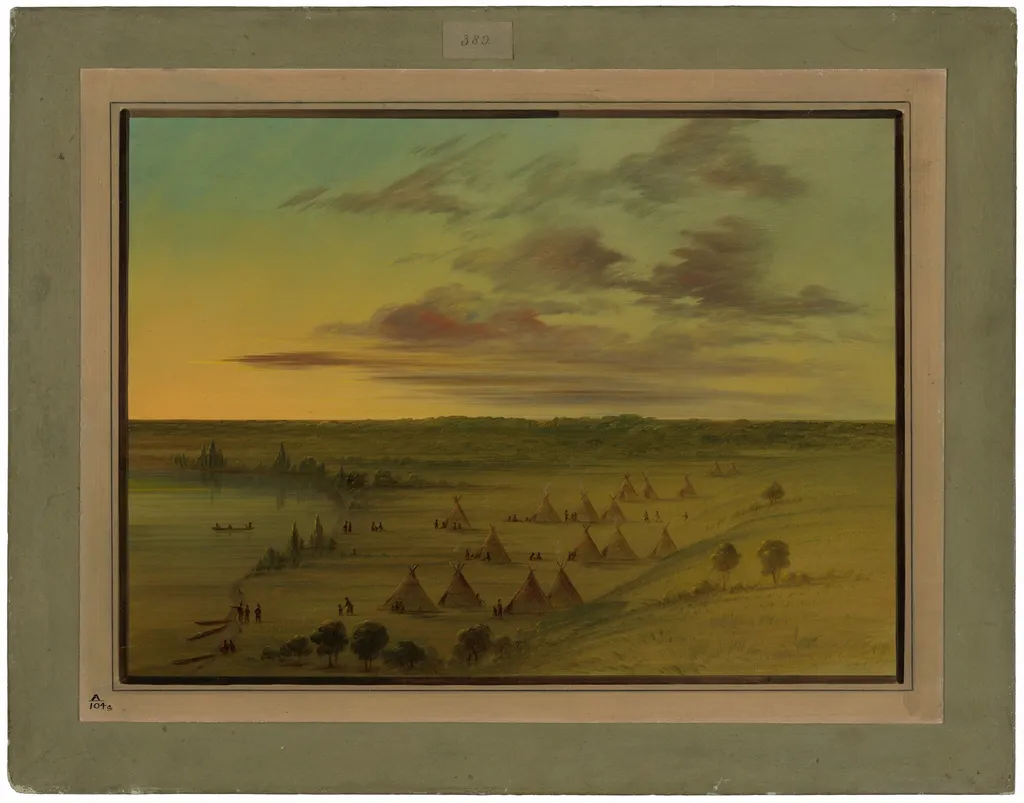
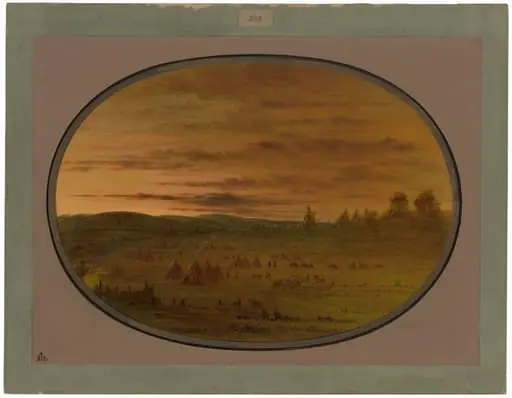
Sioux Village - Lac du Cygne is an oil painting by the Impressionist artist George Catlin. It dates from 1865 and is held in the collection of the National Gallery of Art. Created in 1865, this oil painting on card, later affixed to paperboard, portrays a tranquil Sioux settlement by a lake.
- Inscription
- Inscribed:lower left on card: A/104a; upper center on board on applied paper: 389.; upper center reverse in graphite: 389; center reverse in black ink: 104
About this work
Subject & Meaning
Its depiction of a tree serves as an iconographic element underscoring the interconnectedness of nature and Indigenous communities.
Sioux Village - Lac du Cygne portrays a tranquil riverside scene featuring a solitary tree, evoking both the natural environment and the cultural presence of the Sioux people. The work reflects George Catlin's interest in documenting Native American life and landscapes during the mid-nineteenth century, emphasizing themes of exploration and the changing American frontier. Its depiction of a tree serves as an iconographic element underscoring the interconnectedness of nature and Indigenous communities.
The painting measures 46.5 cm in height by 61.1 cm in width and is housed in the National Gallery of Art in Washington, D.C.
Technique & Style
Sioux Village – Lac du Cygne is classified as a painting executed in oil on card mounted on paperboard, a support combination characteristic of George Catlin's field-based practice. The work is a landscape genre piece dated 1865, with recorded dimensions of 46.5 cm in height by 61.1 cm in width, giving it a horizontal orientation suited to its depiction of a tree within a village setting. The card-and-paperboard support suggests a lightweight, portable ground consistent with Catlin's documentary approach, while the oil medium allowed for the painterly handling required to render the natural environment.
History & Provenance
Painted in 1865, the work entered George Catlin's personal holdings and passed by descent to his daughters Clara Gregory Catlin, Louise Catlin Kinney, and Elizabeth Wing Catlin. The American Museum of Natural History purchased it from Elizabeth Wing Catlin in 1912, then sold it in 1959 through Kennedy Galleries in New York to Paul Mellon of Upperville, Virginia, who donated it to the National Gallery of Art in Washington, D.C., in 1965, where it is now held. No exhibition history is recorded in the available sources.
Context
Sioux Village - Lac du Cygne (1865), an oil on card mounted on paperboard landscape, entered the National Gallery of Art's collection through the 1965 gift of Paul Mellon, following its 1959 acquisition from Kennedy Galleries, New York. The work traces a lineage from George Catlin's daughters to the museum and reflects the artist's sustained engagement with frontier subjects, situating the piece within his broader documentation of North American landscapes and Indigenous life.
Overview
Created in 1865, this oil painting on card, later affixed to paperboard, portrays a tranquil Sioux settlement by a lake. A lone tree rises amid a cluster of tipis, while the water’s edge and surrounding foliage frame the scene. The composition is devoid of human figures, emphasizing the quiet atmosphere of the place Catlin observed.
Own this work as a print
Artist & collection

Artist
George Catlin ( KAT-lin; July 26, 1796 – December 23, 1872) was an American lawyer, painter, author, and traveler, who specialized in portraits of Native Americans in the American frontier.

 Bulls Fighting
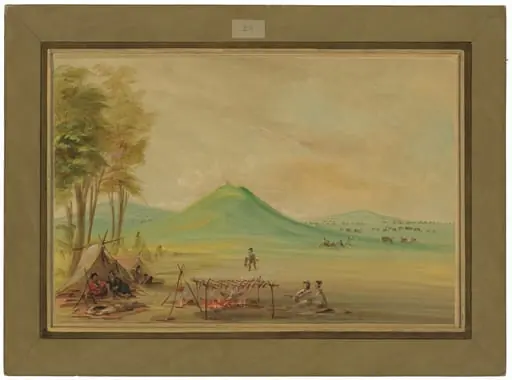 Expedition Encamped on a Texas Prairie. April 1686
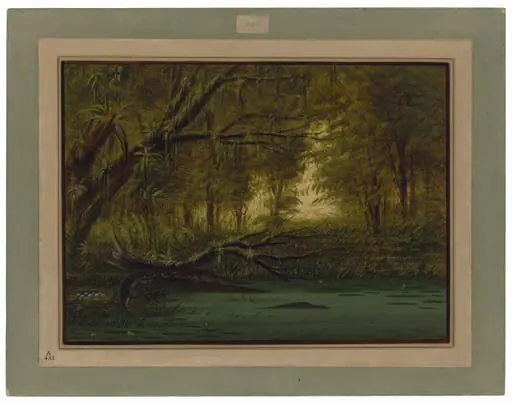 An Alligator's Nest
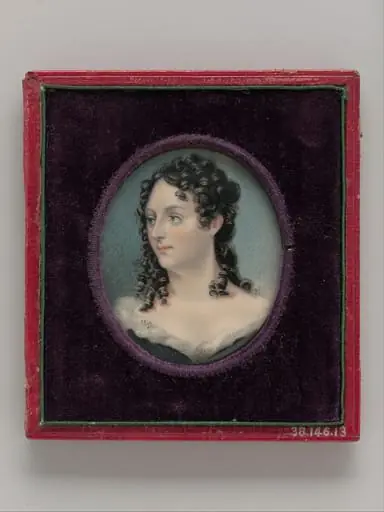 Mrs. George Catlin (Clara Bartlet Gregory)
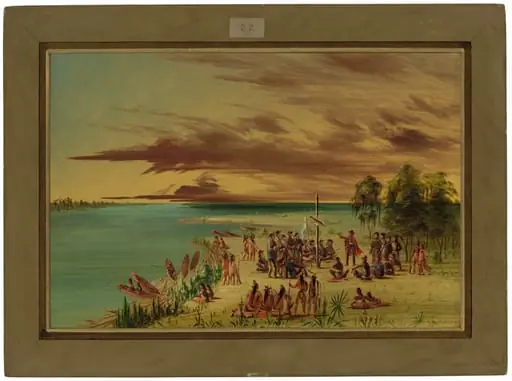
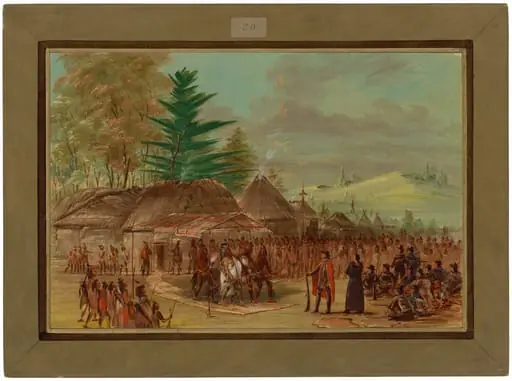 Chief of the Taensa Indians Receiving La Salle. March 20, 1682
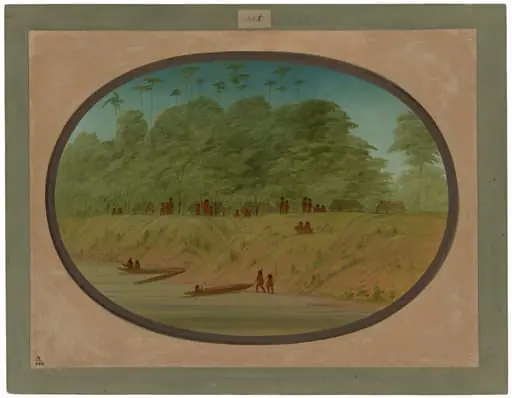 A Small Village - Payaguas Indians
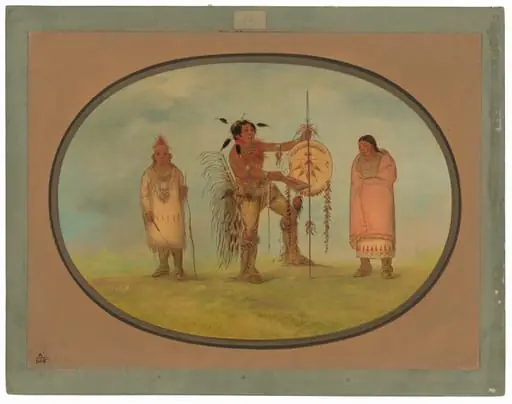
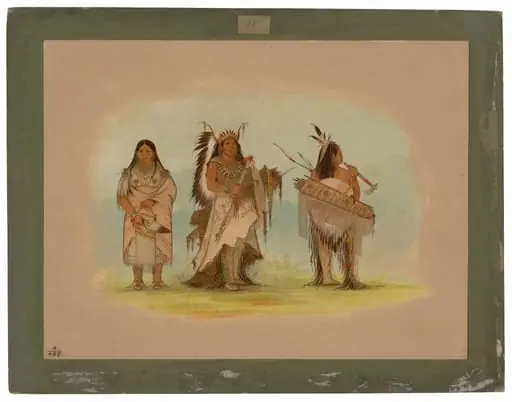 Omaha Chief, His Wife, and a Warrior
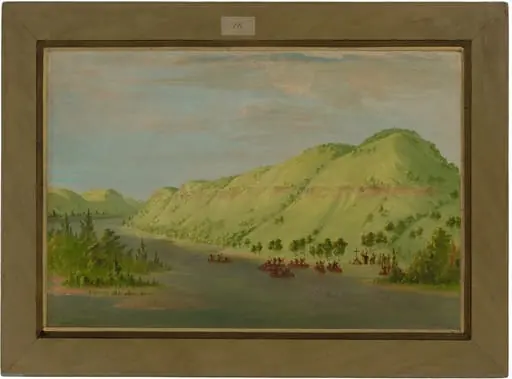 Father Hennepin Leaving the Mississippi to Join La Salle. May 8, 1680