Artwork
La Salle Claiming Louisiana for France. April 9, 1682
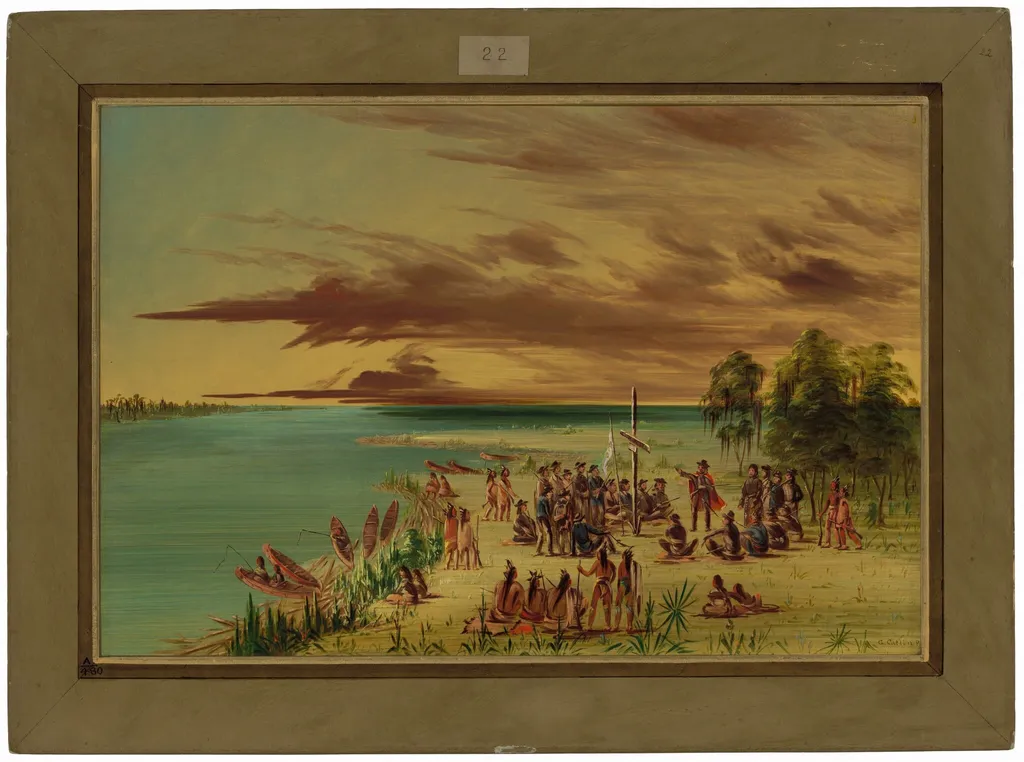
La Salle Claiming Louisiana for France. April 9, 1682 is an oil painting by the Romanticist artist George Catlin. It dates from 1848 and is held in the collection of the National Gallery of Art.
- Inscription
- Inscribed:lower right: G. Catlin P.
About this work
The painting shows a man in 17th-century clothes standing under a tree. He holds a tall stick wrapped in cloth. Other people watch from a distance.
This was painted long after the event in 1682. The artist never saw Louisiana or this scene. He used old prints and stories to imagine it.
Look up Catlin, George if you want to see more of his wild, colorful Native American scenes.
Technique & Style
Stylistically, Catlin employs a restrained realism, blending academic draftsmanship with anecdotal detail to evoke the 1682 event.
The painting is executed in oil on canvas, a medium Catlin favored for history compositions. Its dimensions are 37.8 × 56.4 cm, a compact format typical of his cabinet-scale works. Handling is smooth and controlled, with careful modeling of figures and landscape to convey narrative clarity and local color.
Stylistically, Catlin employs a restrained realism, blending academic draftsmanship with anecdotal detail to evoke the 1682 event. The composition balances documentary impulse with theatrical framing, using a central tree to anchor the scene and guide the viewer's eye across the gathering of figures and banners.
History & Provenance
La Salle Claiming Louisiana for France, April 9, 1682 was painted by George Catlin in 1848 in oil on canvas. The work originated in Catlin's own possession and remained with him until his death in 1872, after which it passed by descent to his three daughters: Clara Gregory Catlin, Louise Catlin Kinney, and Elizabeth Wing Catlin. In 1912, the American Museum of Natural History purchased the painting directly from Elizabeth Wing Catlin.
The museum later deaccessioned it in 1959, selling it through Kennedy Galleries in New York to Paul Mellon of Upperville, Virginia. Mellon held the painting until 1965, when he gave it to the National Gallery of Art in Washington, D.C., where it is catalogued under accession number 1965.14.3 and remains in the collection.
Context
Painted in 1848, George Catlin's La Salle Claiming Louisiana for France illustrates the 1682 French expedition that asserted territorial claims over the Mississippi Valley. The work entered the Catlin estate after his death, passed to his daughters, and was acquired by the American Museum of Natural History in 1912 before being sold to Paul Mellon in 1959 and gifted to the National Gallery of Art in 1965. Contemporary scholarship situates the canvas within Catlin's broader project of documenting American frontiers, linking his ethnographic interests to the genre of history painting.
As a history painting, it reflects nineteenth-century attempts to dramatize early colonial events, and its reception has been tied to assessments of Catlin's role in shaping an American visual narrative.
Overview
George Catlin’s 1848 oil on canvas, La Salle Claiming Louisiana for France – April 9, 1682, presents a staged historical tableau. Central to the composition is a 17th‑century figure standing beneath a tree, clutching a cloth‑bound pole, while distant onlookers observe. The work translates an 18th‑century colonial claim into a mid‑19th‑century genre painting.
Subject & Meaning
The scene dramatizes René‑Robert Cavelier, Sieur de La Salle’s formal assertion of French sovereignty over the Mississippi basin. By foregrounding the ceremonial planting of a staff, Catlin underscores the act of territorial proclamation, while the peripheral figures suggest the presence of indigenous witnesses to the European claim.
Own this work as a print
Artist & collection

Artist
George Catlin ( KAT-lin; July 26, 1796 – December 23, 1872) was an American lawyer, painter, author, and traveler, who specialized in portraits of Native Americans in the American frontier.

 Bulls Fighting
 Expedition Encamped on a Texas Prairie. April 1686
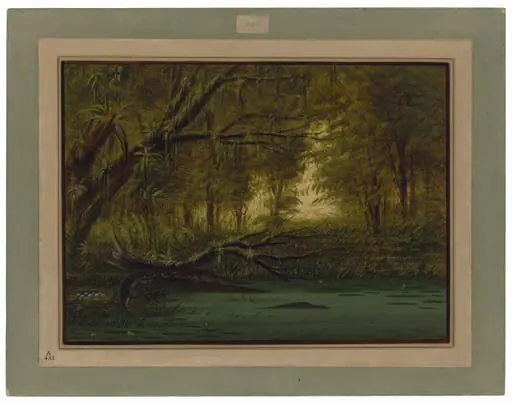 An Alligator's Nest
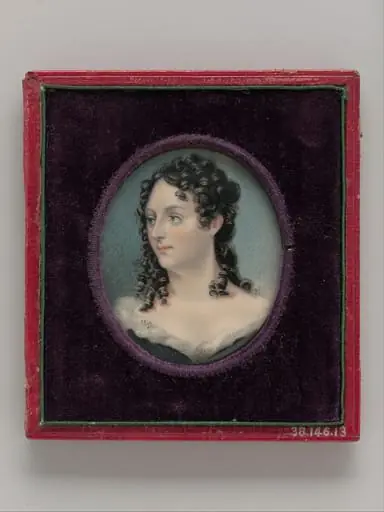 Mrs. George Catlin (Clara Bartlet Gregory)
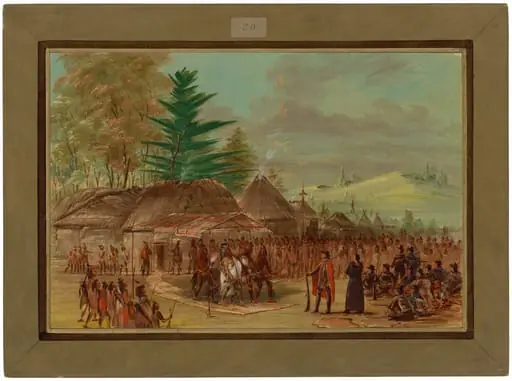 Chief of the Taensa Indians Receiving La Salle. March 20, 1682
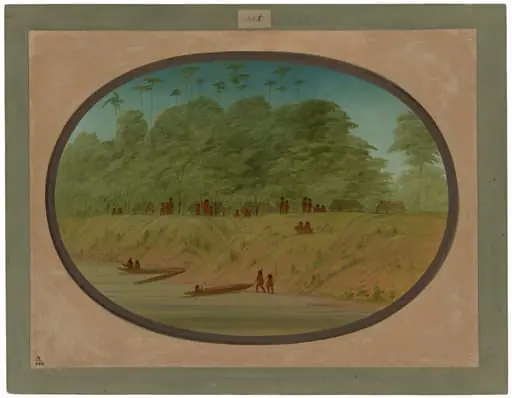 A Small Village - Payaguas Indians
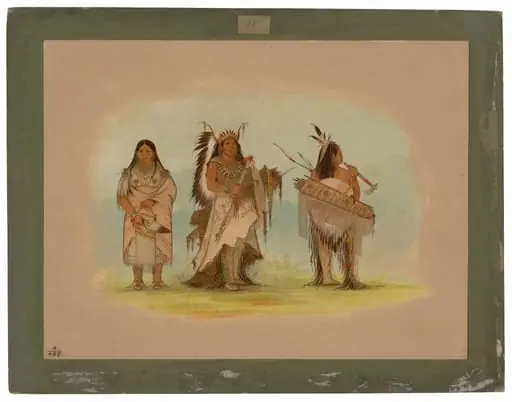 Omaha Chief, His Wife, and a Warrior
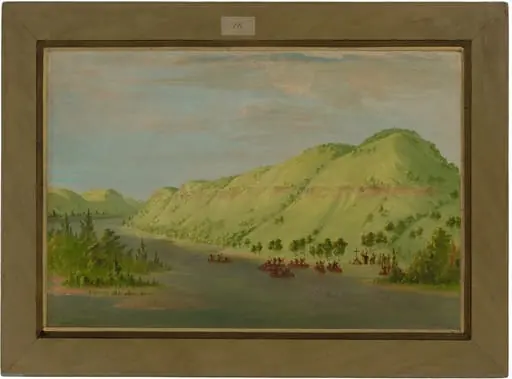 Father Hennepin Leaving the Mississippi to Join La Salle. May 8, 1680
- La Salle Taking Possession of the Land at the Mouth of the Arkansas. March 10, 1682
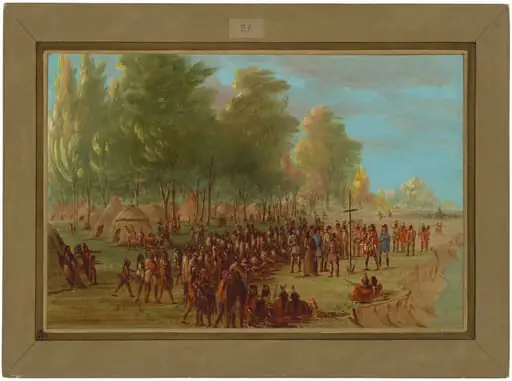 La Salle Erecting a Cross and Taking Possession of the Land. March 25, 1682
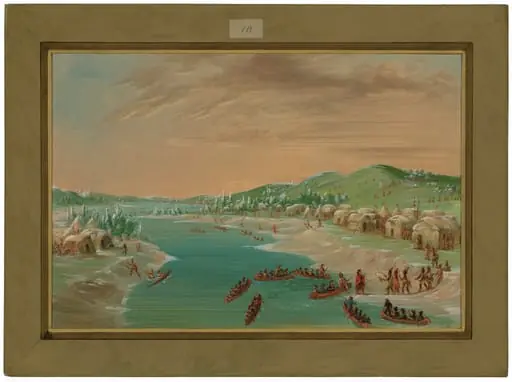 La Salle and Party Arrive at the Village of the Illinois. January 1, 1680
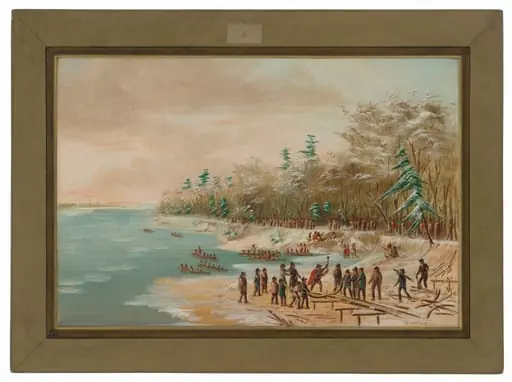 La Salle Driving the First Bolt for the Griffin. January 26, 1679
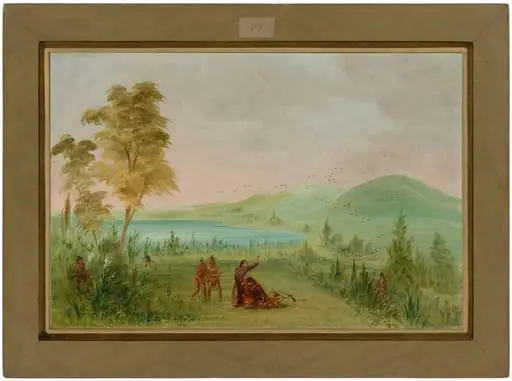 La Salle Assassinated by Duhaut. May 19, 1686
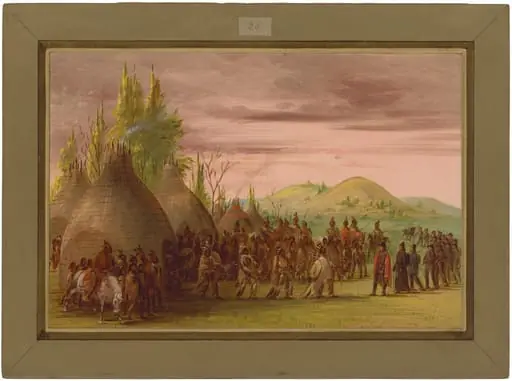 La Salle Received in the Village of the Cenis Indians. May 6, 1686
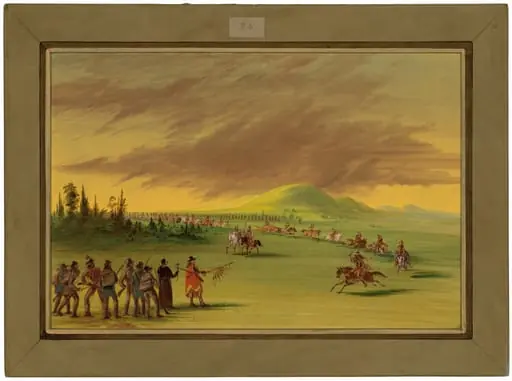 La Salle Meets a War Party of Cenis Indians on a Texas Prairie. April 25, 1686