Artwork
Three Omagua Men
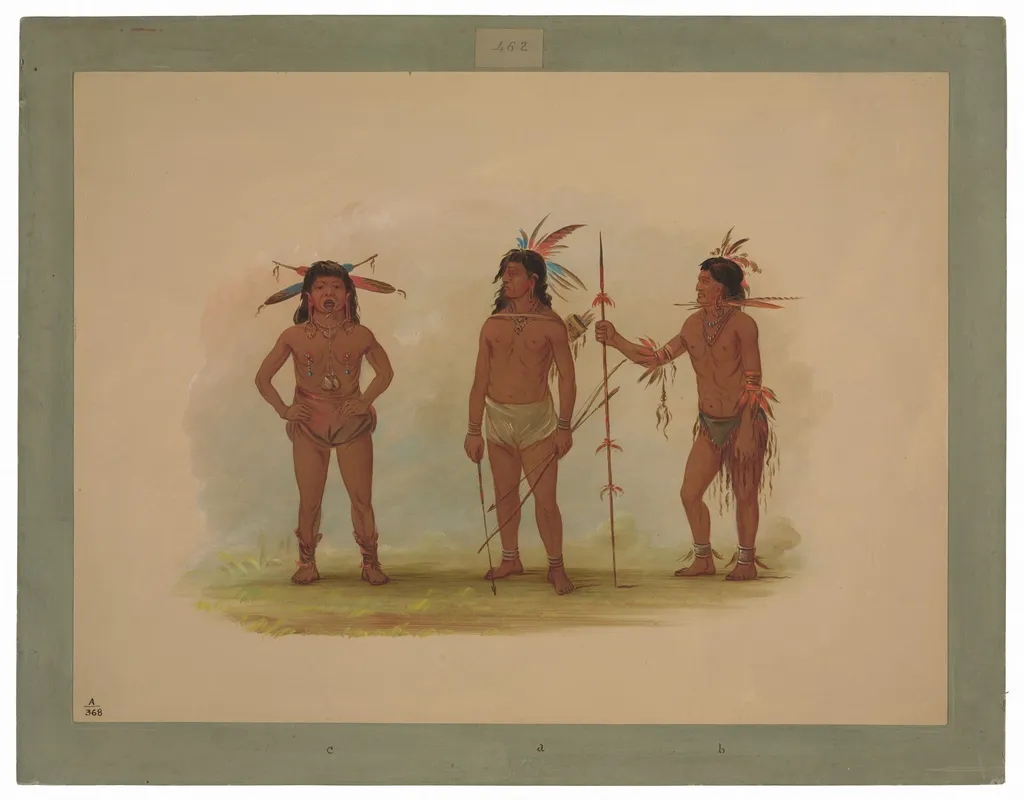
Three Omagua Men is an oil painting by the American Folk Art artist George Catlin. It dates from 1862 and is held in the collection of the National Gallery of Art.
About this work
Subject & Meaning
Their attire and adornments function as visual markers of status and tribal affiliation, reflecting traditional iconography associated with Amazonian societies.
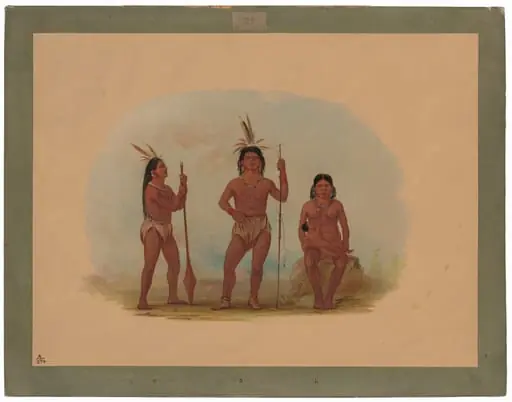
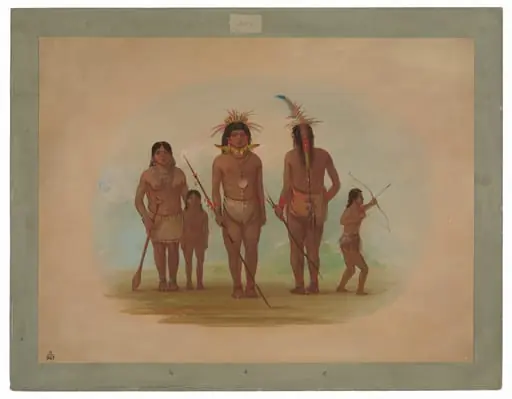
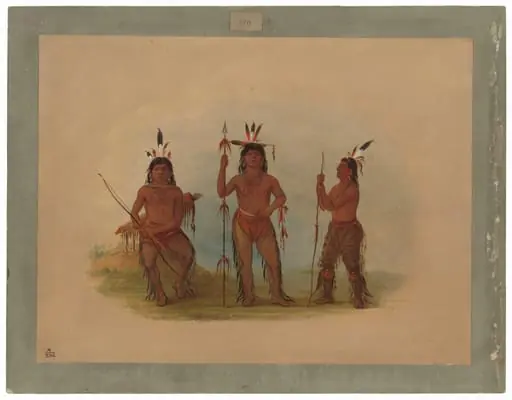
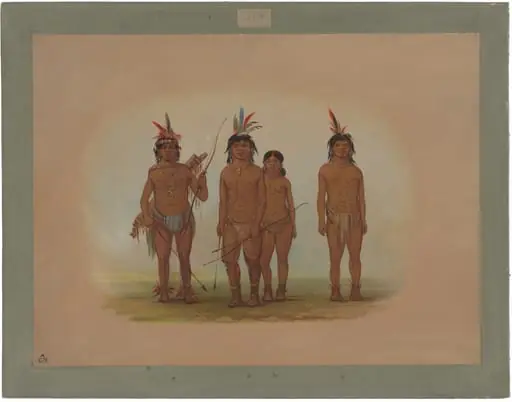
The painting depicts three members of the Omagua people, an indigenous group from the upper Amazon region, rendered in a portrait format that emphasizes their individual presence and cultural identity. Their attire and adornments function as visual markers of status and tribal affiliation, reflecting traditional iconography associated with Amazonian societies. The work serves as both a documentary record and an ethnographic interpretation, illustrating 19th-century Western perspectives on South American Indigenous peoples while preserving their physical features and symbolic dress.
Currently held by the National Gallery of Art in Washington, D.C., the piece contributes to ongoing discussions about representation, colonial observation, and the preservation of marginalized cultural narratives.
Technique & Style
Executed in oil on a card support later mounted on paperboard, the work measures 46.4 cm in height and 62.5 cm in width. Catlin’s handling is fluid yet controlled, with smoothly blended passages in flesh and costume contrasted by sharper contours in accoutrements. The composition arranges the three figures in a shallow, stage-like space, their bodies and garments rendered with descriptive linearity that emphasizes posture and identity over atmospheric recession. Stylistically, the painting aligns with Catlin’s documentary approach, privileging clear delineation and local color over illusionistic depth.
History & Provenance
The painting Three Omagua Men was created in 1864 by George Catlin as an oil on card mounted on paperboard portrait. It entered the artist's family by descent to his daughters Clara Gregory Catlin, Louise Catlin Kinney, and Elizabeth Wing Catlin. The work was purchased in 1912 from Elizabeth Wing Catlin by the American Museum of Natural History and subsequently sold in 1959 through Kennedy Galleries, New York, to Paul Mellon of Upperville, Virginia.
In 1965 the painting was gifted to the National Gallery of Art, where it remains in the collection today.
The painting is held by the National Gallery of Art, Washington, D.C., where it entered the collection as a gift from Paul Mellon in 1965. It is recorded as accession number 1965.16.31.
Its exhibition history is not documented in the cited sources.
Overview
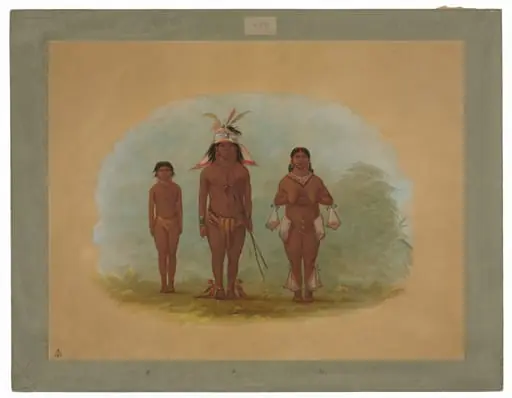
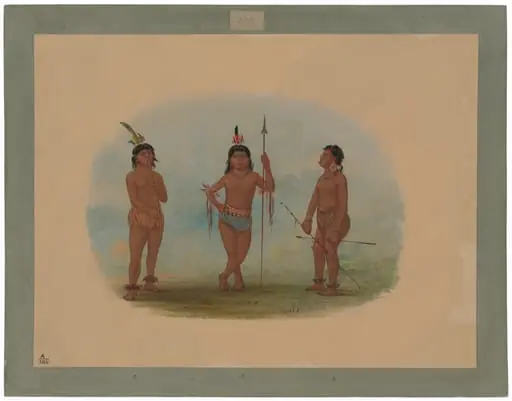
Created in 1862, Three Omagua Men is an oil painting executed on card that has been mounted on a paperboard backing. The work depicts three indigenous figures standing side by side, each nude above the waist and dressed in traditional loincloths, feathered headpieces and ornamental jewelry. The composition is simple, set against a muted brown field with a hint of green at the lower edge.
Context
Catlin’s project emerged at a time when the United States was expanding westward and scientific interest in Native cultures was growing. His approach combined travelogue observation with artistic representation, situating this piece within the broader movement of Realism that sought to depict subjects truthfully, without idealization, for both scholarly and public audiences.
Own this work as a print
Artist & collection

Artist
George Catlin ( KAT-lin; July 26, 1796 – December 23, 1872) was an American lawyer, painter, author, and traveler, who specialized in portraits of Native Americans in the American frontier.

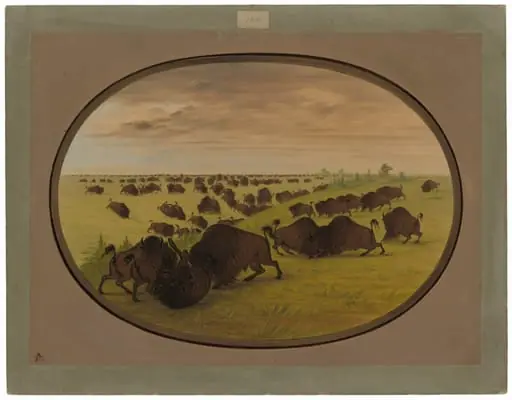 Bulls Fighting
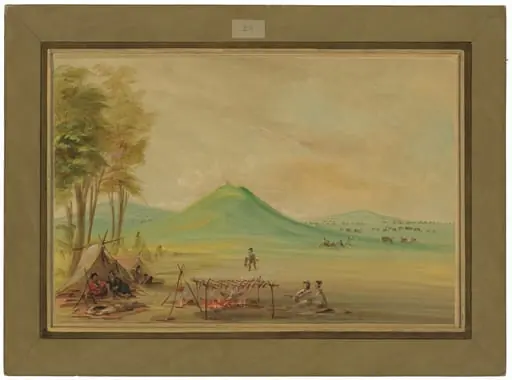 Expedition Encamped on a Texas Prairie. April 1686
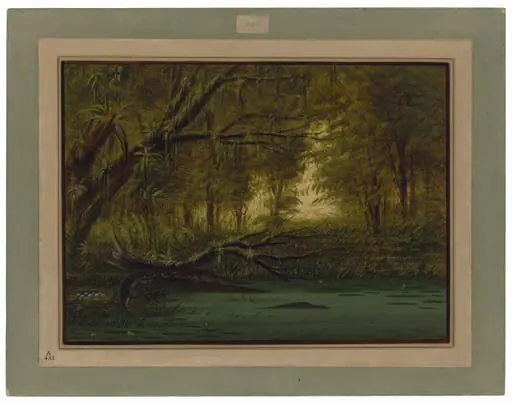 An Alligator's Nest
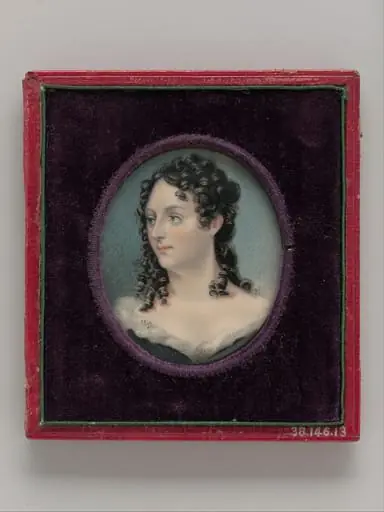 Mrs. George Catlin (Clara Bartlet Gregory)
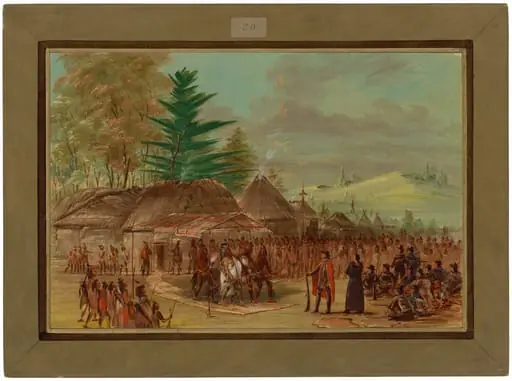 Chief of the Taensa Indians Receiving La Salle. March 20, 1682
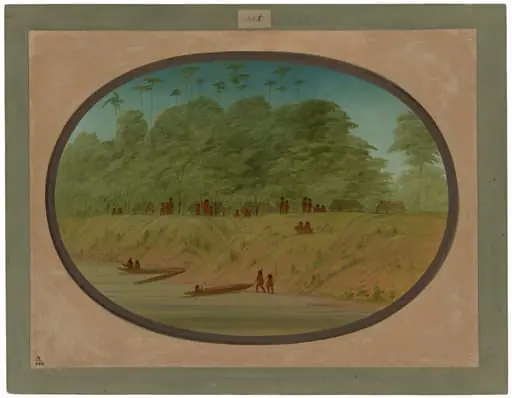 A Small Village - Payaguas Indians
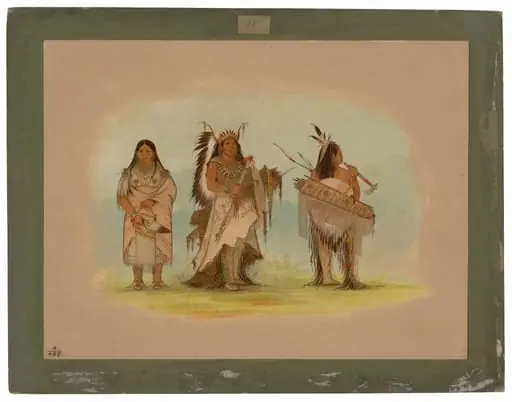 Omaha Chief, His Wife, and a Warrior
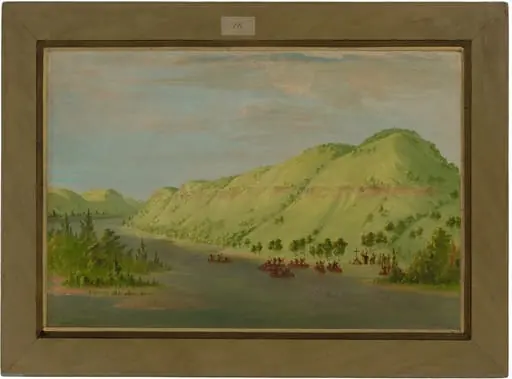 Father Hennepin Leaving the Mississippi to Join La Salle. May 8, 1680