Artwork
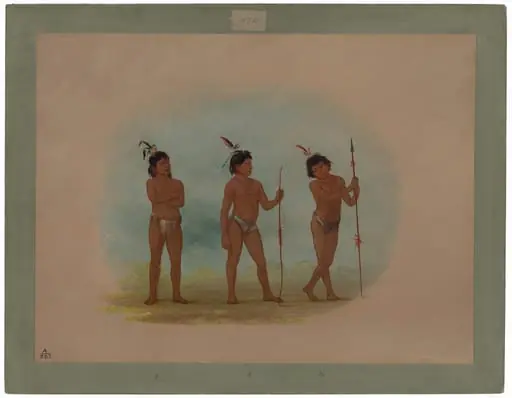
Three Young Tobos Men
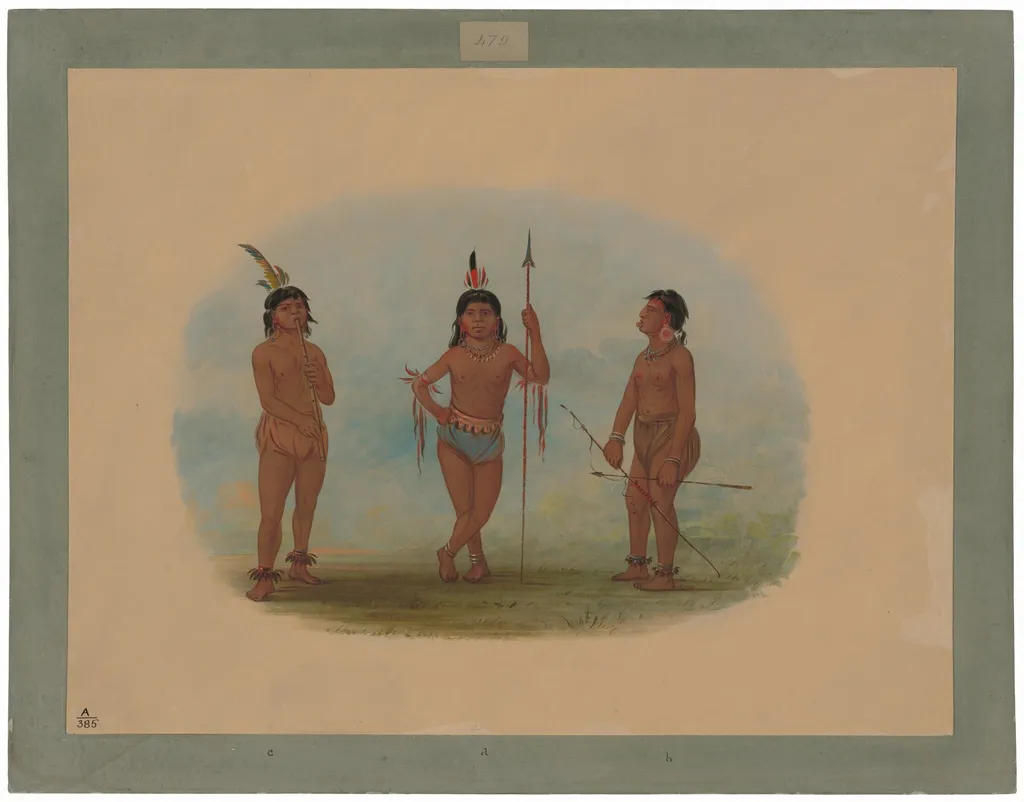
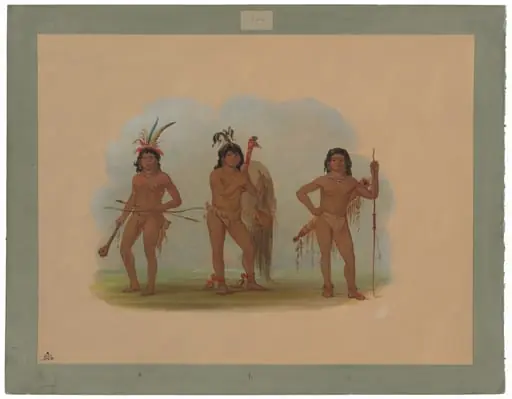
Three Young Tobos Men is an oil painting by the Impressionist artist George Catlin. It dates from 1862 and is held in the collection of the National Gallery of Art.
About this work
Subject & Meaning
The painting depicts three young men identified as Tobos, a subgroup within the Pawnee people, rendered in a frontal and semi-profile arrangement that emphasizes individual physiognomy and adornment.
Catlin’s approach frames the sitters as dignified individuals rather than generic ethnographic types, highlighting personal regalia and body art that signify tribal identity and status. The work’s muted palette and careful delineation of facial tattoos and hair ornaments underscore cultural specificity while aligning with Catlin’s broader project of documenting Indigenous life during a period of intense social transformation.
Technique & Style
This card is subsequently mounted onto a paperboard backing, a technique that stabilizes the smaller format of the work.
George Catlin created Three Young Tobos Men in 1865 using oil paint applied to a card support. This card is subsequently mounted onto a paperboard backing, a technique that stabilizes the smaller format of the work. The painting measures 46.8 centimeters in height and 62.1 centimeters in width.
Classified as a portrait, the work exhibits the formal qualities typical of Catlin's ethnographic documentation from this period, focusing on the depiction of the subjects within a compact, portable format suitable for collection and display.
History & Provenance
The work was created in 1865 by George Catlin as an oil painting on card mounted on paperboard. It entered the collection of his daughters Clara Gregory Catlin, Louise Catlin Kinney, and Elizabeth Wing Catlin by descent. In 1912 the painting was purchased from Elizabeth Wing Catlin by the American Museum of Natural History.
It was later sold in 1959 through Kennedy Galleries, New York, to Paul Mellon of Upperville, Virginia. The National Gallery of Art received the work as a gift in 1965.
Three Young Tobos Men is held by the National Gallery of Art in Washington, D.C. It entered the collection in 1965 as a gift from Mr. Paul Mellon. The work was previously owned by Elizabeth Wing Catlin, from whom it was purchased in 1912 by the American Museum of Natural History, and later sold in 1959 through Kennedy Galleries to Paul Mellon. The painting measures 46.8 cm in height and 62.1 cm in width.
Overview
Created in 1862, Three Young Tobos Men is an oil painting executed on card that has been affixed to a paperboard support. The work portrays three adolescent figures from a Native American tribe, rendered with a direct, observational approach characteristic of mid‑nineteenth‑century American realism.
Own this work as a print
Artist & collection

Artist
George Catlin ( KAT-lin; July 26, 1796 – December 23, 1872) was an American lawyer, painter, author, and traveler, who specialized in portraits of Native Americans in the American frontier.

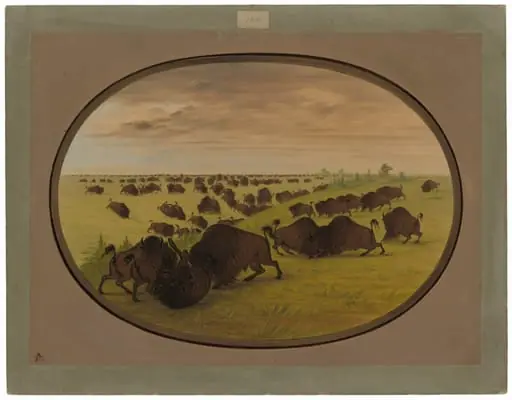 Bulls Fighting
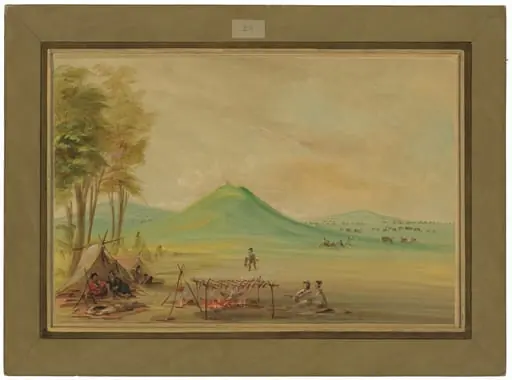 Expedition Encamped on a Texas Prairie. April 1686
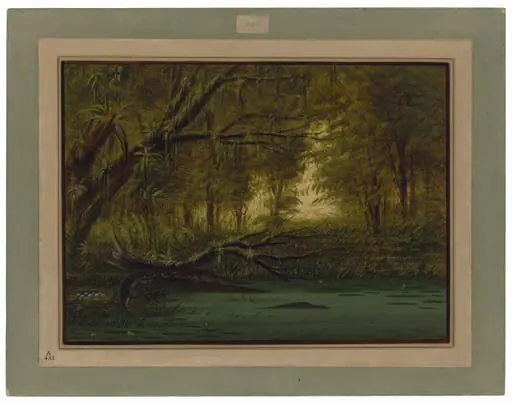 An Alligator's Nest
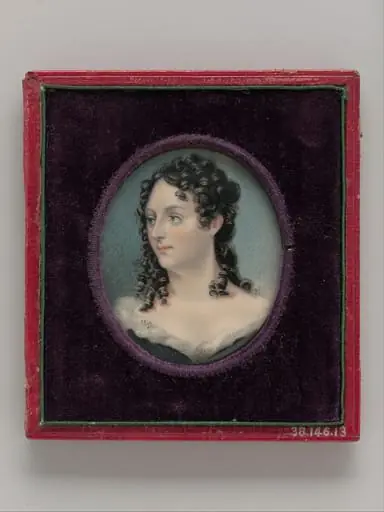 Mrs. George Catlin (Clara Bartlet Gregory)
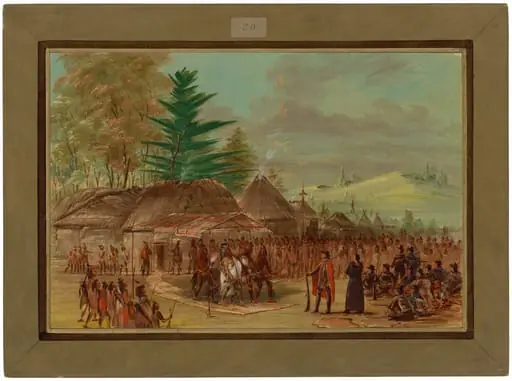 Chief of the Taensa Indians Receiving La Salle. March 20, 1682
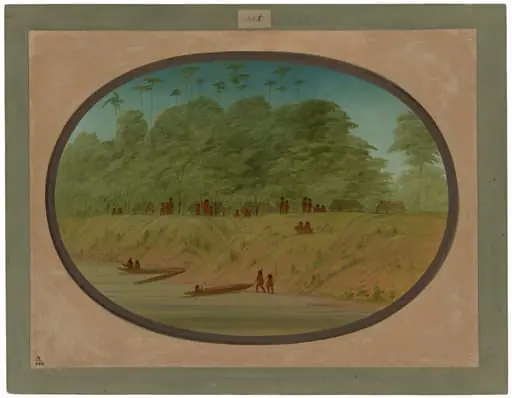 A Small Village - Payaguas Indians
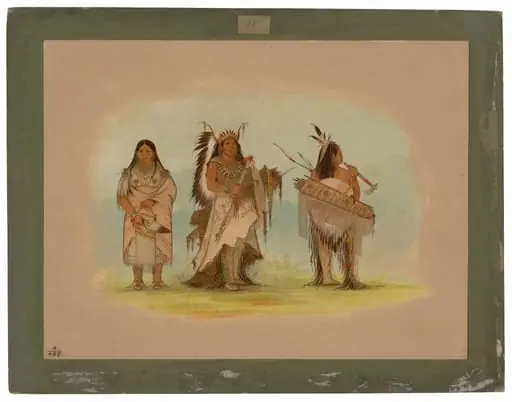 Omaha Chief, His Wife, and a Warrior
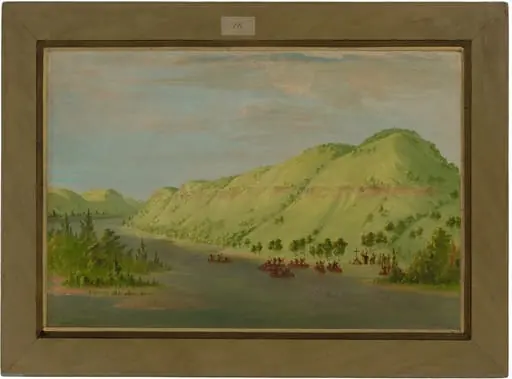 Father Hennepin Leaving the Mississippi to Join La Salle. May 8, 1680