Artwork
Lamentation
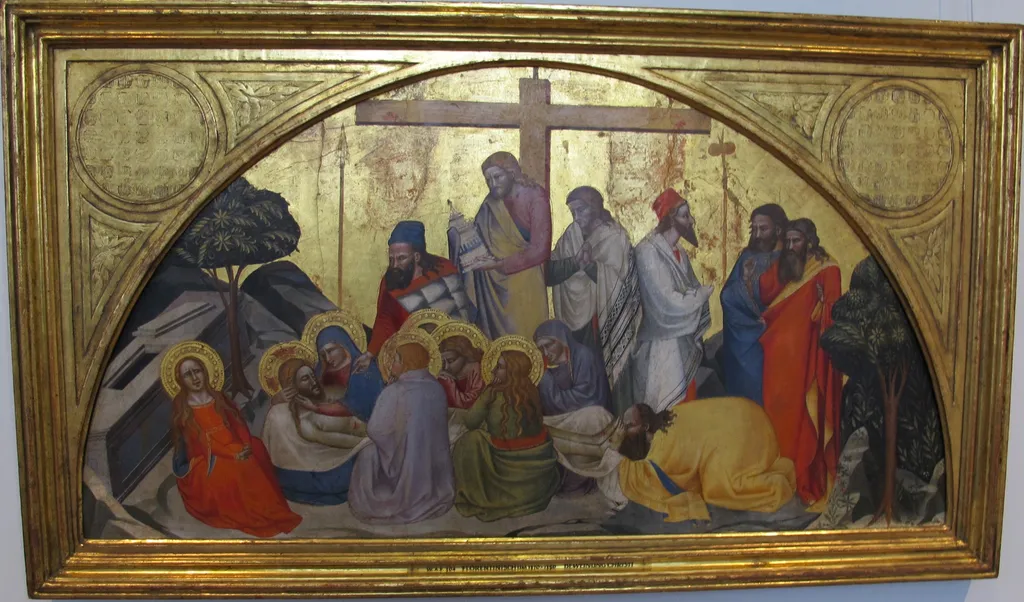
Lamentation is an unspecified painting by the Byzantine icon painting artist Cenni di Francesco. It dates from 1375 and is held in the collection of the Bavarian State Painting Collections.
About this work
Subject & Meaning
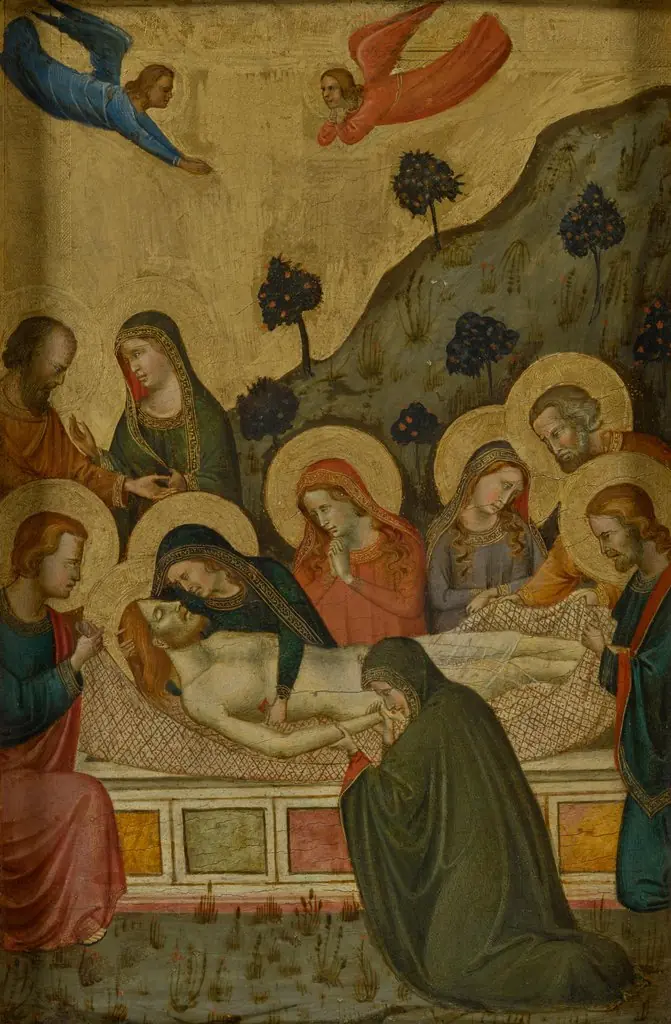
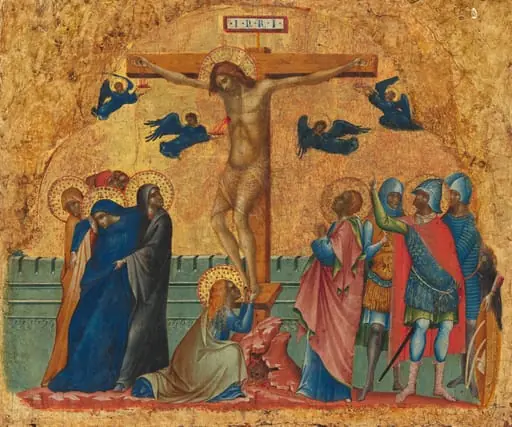
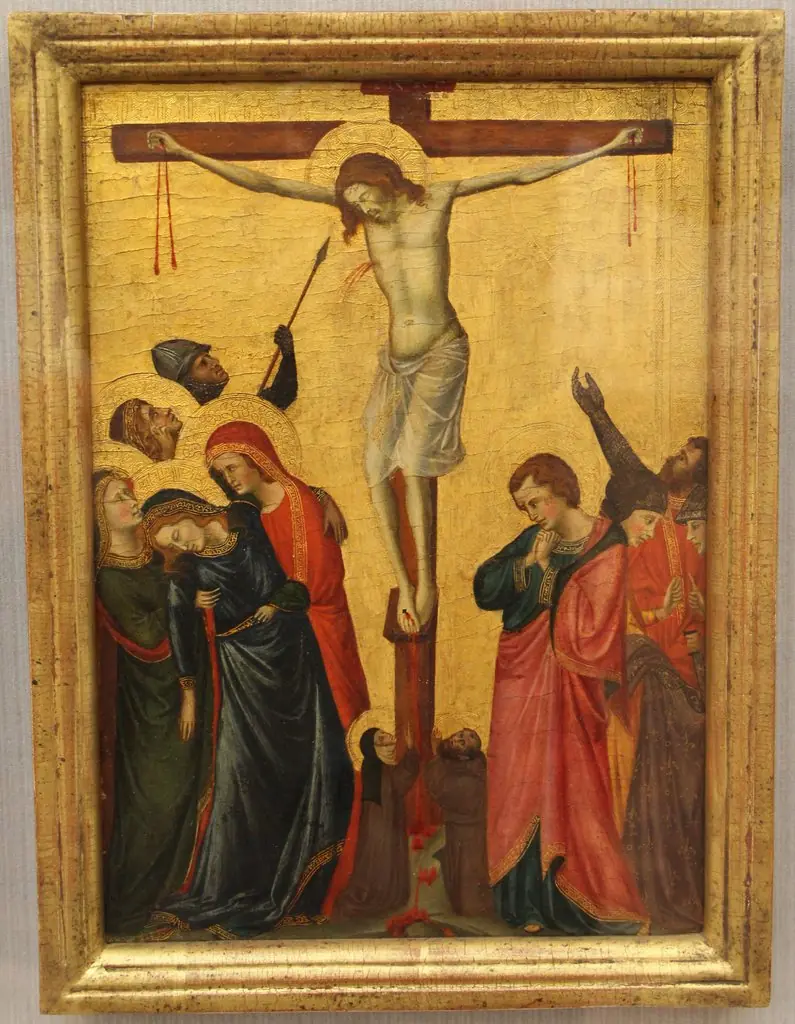
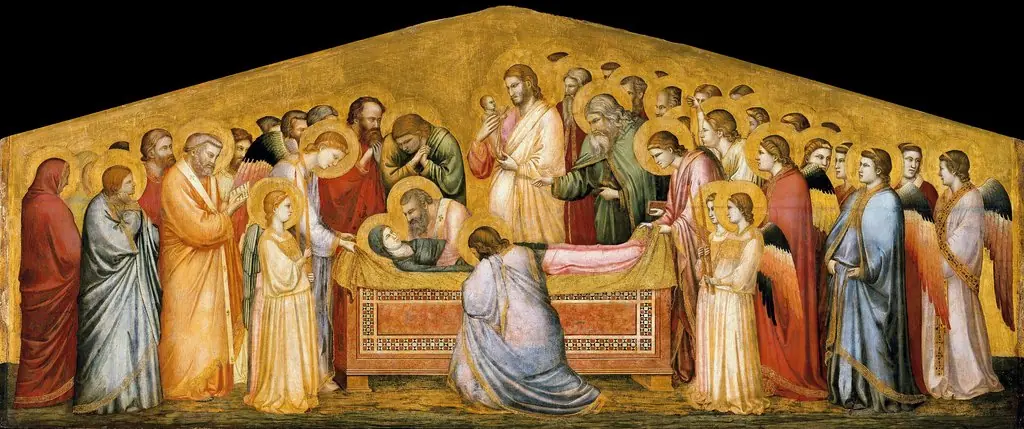
The painting depicts the Lamentation of Christ, a scene from the Passion narrative in which Christ’s body is mourned after the Crucifixion.
The painting depicts the Lamentation of Christ, a scene from the Passion narrative in which Christ’s body is mourned after the Crucifixion. It shows the dead Christ supported by angels and surrounded by mourners, including the Virgin Mary and John the Evangelist, arranged in a compact composition that focuses on sorrow and reverence. The iconography aligns with traditional representations of this moment, emphasizing grief and spiritual reflection.
The work’s restrained palette and composition convey the gravity of the event, underscoring its devotional purpose within late fourteenth-century Tuscan religious art.
Technique & Style
The painting is executed on a poplar panel support, sized 45.7 cm in height by 85.6 cm in width, and is painted in oil on a ground layer typical of late fourteenth-century Tuscan panels. The handling shows fine, linear drapery folds and delicate hatching in the modeling of flesh and fabric, consistent with an International Gothic idiom softened by naturalistic detail. Figures are arranged in a shallow, stage-like recession, with the slumped body of Christ placed off-center to the left, drawing attention through its diagonal placement.
The composition balances grief-stricken attendants in symmetrical groupings, their elongated proportions and attenuated fingers contributing to an elegiac rhythm that unifies the scene.
History & Provenance
The Lamentation is dated to around 1375, aligning with Cenni di Francesco’s documented activity in late Trecento Florence.
The panel entered the Bavarian State collections through the Wittelsbacher Ausgleichsfonds after its transfer from the Wittelsbacher family holdings. It was recorded at the Alte Pinakothek, Munich, by the time Ludwig I of Bavaria consolidated the collection in the early nineteenth century.
The painting Lamentation is currently held at the Alte Pinakothek in Munich, Germany, as part of the Bavarian State Painting Collections. It is administered through the Wittelsbacher Ausgleichsfonds, a fund established to compensate the House of Wittelsbach. The work was acquired for the collection by Ludwig I of Bavaria.
While the piece is cataloged under the name of Cenni di Francesco, it was formerly attributed to Giovanni del Biondo in the museum's records. The inventory includes the specific dimensions of the poplar panel, which measures 45.7 cm in height and 85.6 cm in width.
Legacy
Lamentation by Cenni di Francesco, painted in 1375 on poplar panel, reshaped the visual language of devotional art through its stark emotional intensity, influencing narrative approaches to the Crucifixion and Pietà in later Italian painting.
The work’s presence in the Wittelsbacher Ausgleichsfonds collection and its display at the Alte Pinakothek cemented its role as a reference point for scholars studying the evolution of religious imagery in the late 14th century.
Overview
Created in 1375 by the Florentine Gothic painter Cenni di Francesco, this panel painting on poplar depicts a biblical lamentation scene. Executed with the rich gold background typical of Byzantine influence, the work now belongs to the collection of the Alte Pinakothek in Munich.
Context
The painting reflects the transitional period in late‑fourteenth‑century Florence, when Gothic sensibilities merged with lingering Byzantine visual conventions. Such works served devotional purposes, offering a visual focus for contemplation of Christ’s Passion.
Artist & collection
Artist
Cenni di Francesco di ser Cenni was an Italian Gothic painter active in Florence between 1369/1370 and 1415.