Artwork
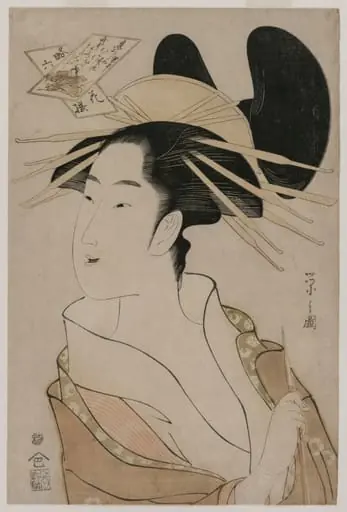
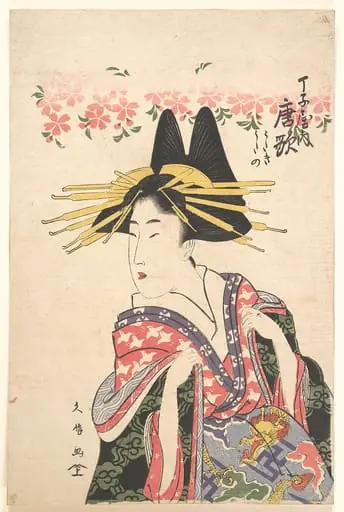
鳥文斎栄之画 「畧六花撰 喜撰法師」 |Matching Shells (Kai-awase), “Kisen Hōshi,” from the series Modern Parodies of the Six Poetic Immortals (Yatsushi rokkasen: Kisen Hōshi)
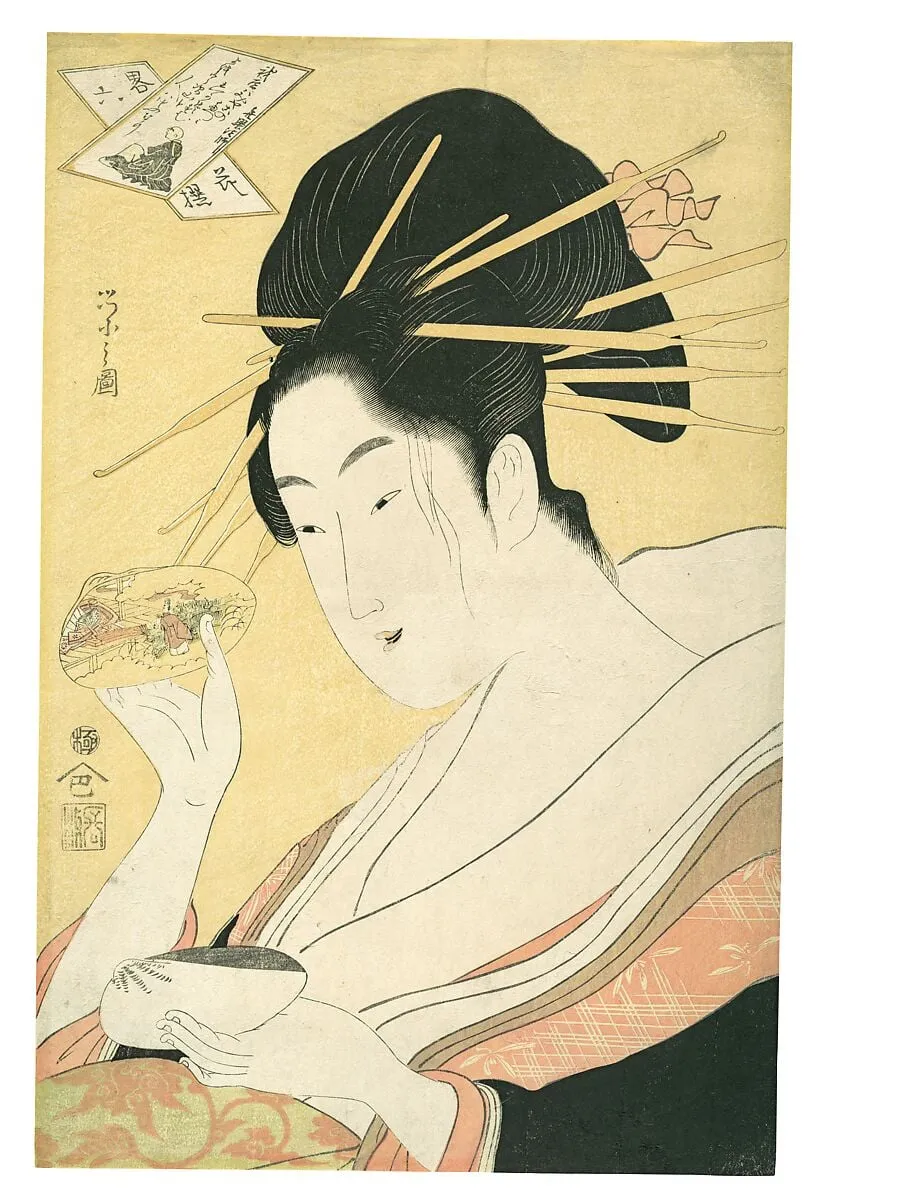
鳥文斎栄之画 「畧六花撰 喜撰法師」 |Matching Shells (Kai-awase), “Kisen Hōshi,” from the series Modern Parodies of the Six Poetic Immortals (Yatsushi rokkasen: Kisen Hōshi) is an ink print by the Romanticist artist Chôbunsai Eishi. It dates from 1797 and is held in the collection of the Metropolitan Museum of Art.
About this work
Overview
Chōbunsai Eishi, originally a samurai retainer with a stipend from the Tokugawa shogunate, abandoned his official post to dedicate himself to art.
Chōbunsai Eishi, originally a samurai retainer with a stipend from the Tokugawa shogunate, abandoned his official post to dedicate himself to art. He became a prominent figure in ukiyo-e, known for refined bijin-ga that departed from popular trends. This print, part of a series reimagining classical poetic figures through contemporary scenes, showcases his transition from Kano-school training to a distinctive personal style marked by elegance and restraint.
Subject & Meaning
The print depicts Kisen Hōshi, one of the Six Poetic Immortals, reimagined as a courtly woman engaged in kai-awase, a shell-matching game tied to classical poetry. Her poised posture and quiet focus suggest contemplation rather than play. The faint script and symbolic objects in the background allude to literary tradition, transforming a game into a meditation on cultural memory and the lingering presence of poetic heritage in Edo-period society.
Technique & Style
Eishi employed fine, controlled lines to render texture in the woman’s hair and robe, using subtle cross-hatching to suggest volume without heavy shading. Colors are restrained, soft pinks and blacks on pale paper, enhancing the print’s quiet intimacy. The background features minimal, abstracted forms: a fan and a card, hinting at the game’s ritual without literal detail. This economy of means reflects his training in Kano aesthetics, adapted to the intimate scale of ukiyo-e.
History & Provenance
Created around 1797, this print belongs to Eishi’s series Modern Parodies of the Six Poetic Immortals, a deliberate reworking of classical literary icons into contemporary Edo life. It entered The Metropolitan Museum of Art’s collection through documented acquisitions of late 19th- and early 20th-century Japanese prints, preserving its original condition and provenance as part of a broader effort to document the evolution of ukiyo-e beyond commercial themes.
Context
During the late 18th century, Edo’s literati increasingly engaged with classical Heian poetry as a form of cultural refinement. Eishi’s series responded to this trend by blending aristocratic literary allusions with the visual language of urban pleasure quarters. His choice to depict a poetic immortal as a refined woman, rather than a monk, reflects shifting gendered interpretations of cultural authority and the growing influence of women in literary circles.
Legacy
Eishi’s work influenced later ukiyo-e artists by demonstrating how traditional themes could be reinterpreted with psychological nuance and visual subtlety. His departure from bold, colorful depictions of courtesans toward quieter, more introspective portraits expanded the expressive range of bijin-ga. This print remains a key example of how classical Japanese culture was reimagined in the Edo period through the medium of printmaking.
Artist & collection

Artist
Chōbunsai Eishi (鳥文斎 栄之; 1756–1829) was a Japanese ukiyo-e artist. His last name was Hosoda (細田). His first name was Tokitomi (時富). His common name was Taminosuke (民之丞) and later Yasaburo (弥三郎). Pupil of Kano Eisen'in…

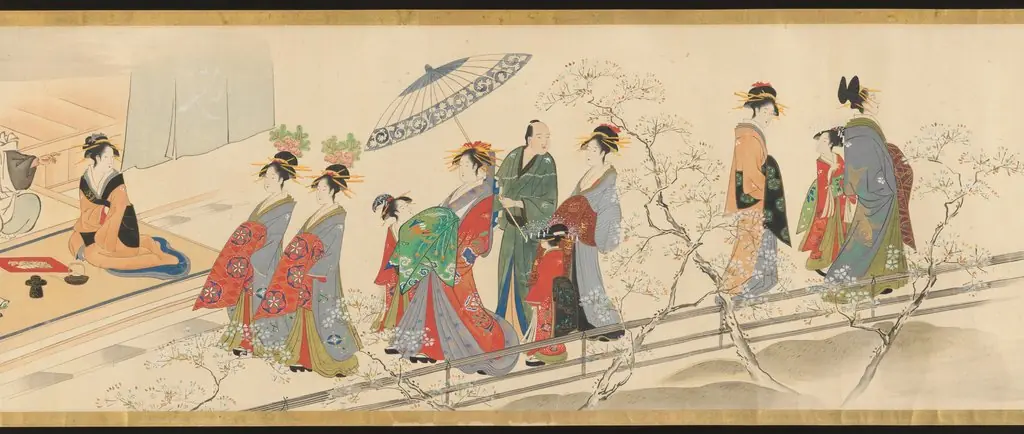 Three Gods of Good Fortune Visit the Yoshiwara; or “Scenes of Pleasure at the Height of Spring”
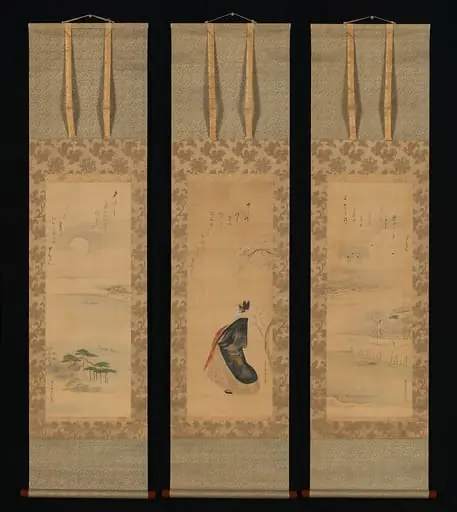 蜀山人(大田 南畝)賛 雪・月・花図 |Snow, Moon, and Cherry Blossoms (Yoshiwara in Three Seasons)
 Untitled
 Untitled
 Untitled
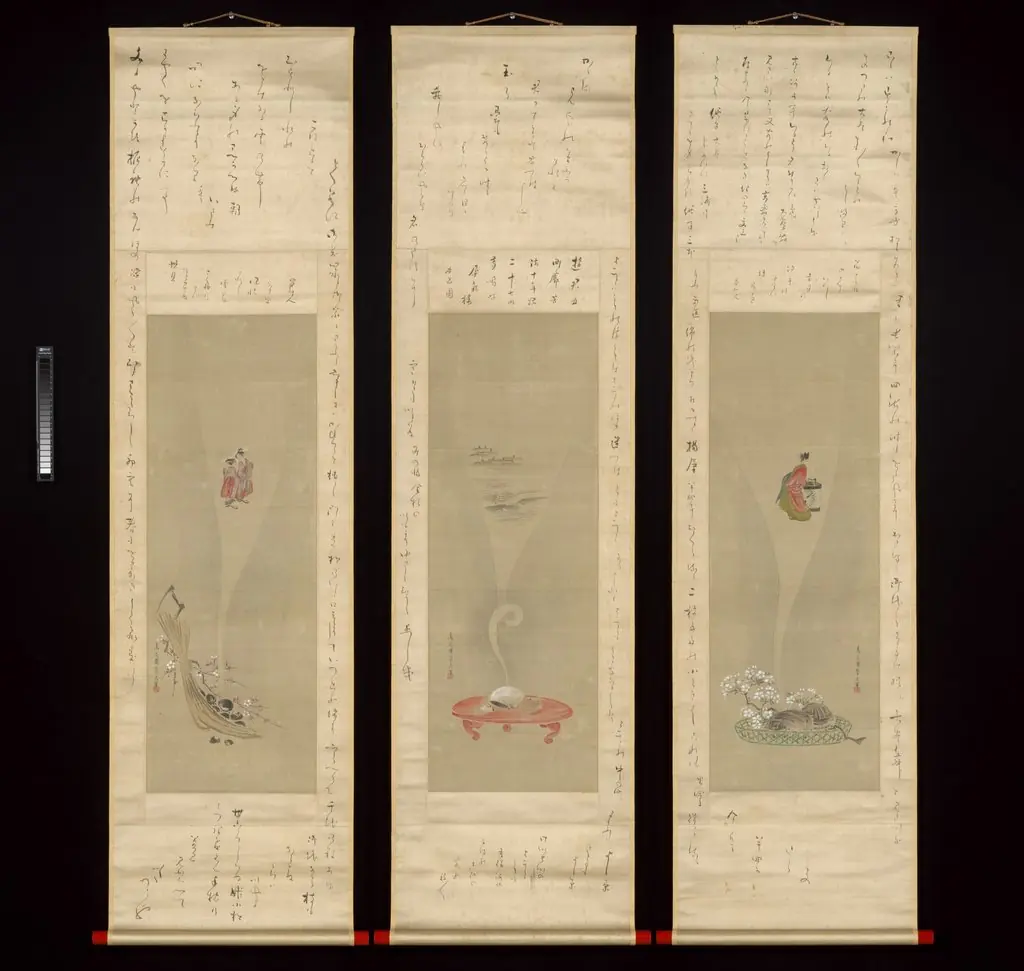 Shellfish and Apparitions of the Yoshiwara Pleasure Quarter
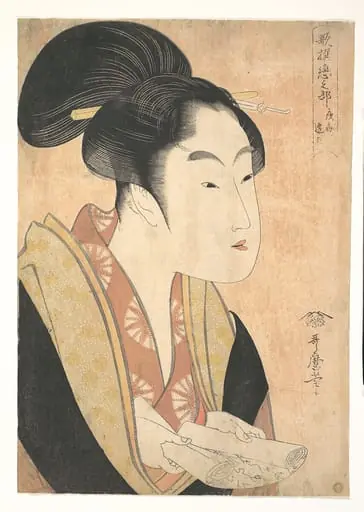
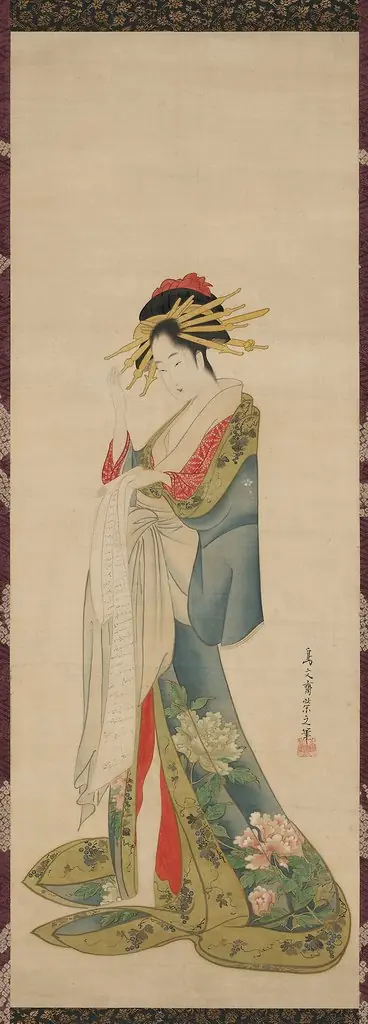 A Courtesan Reading a Letter
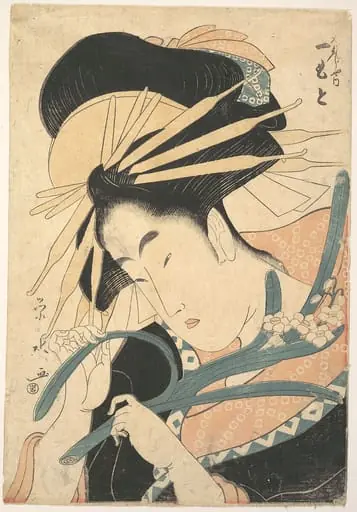
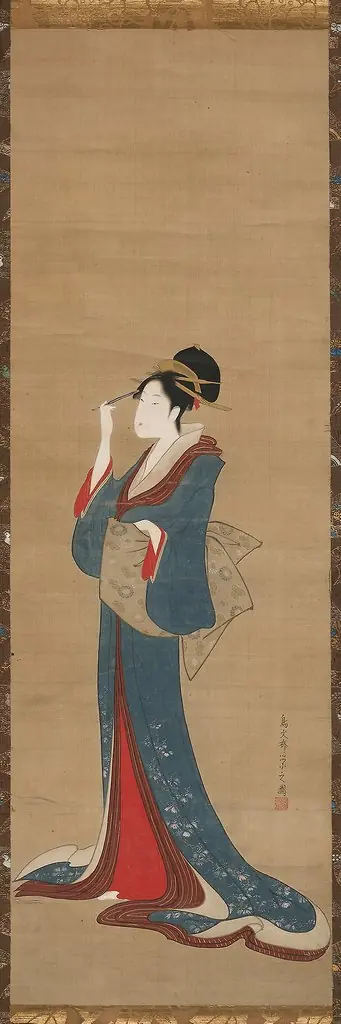 Beauty Replacing Her Hairpin