Artwork
Portrait of a Government Official
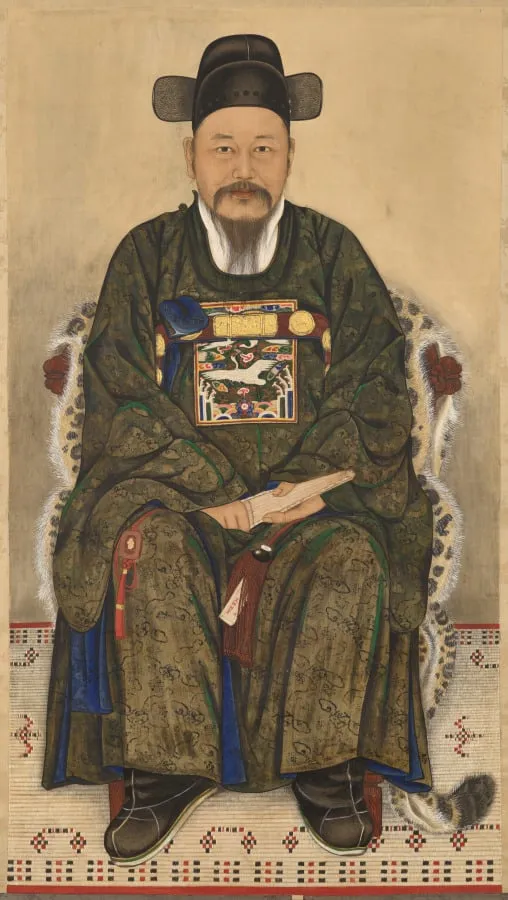
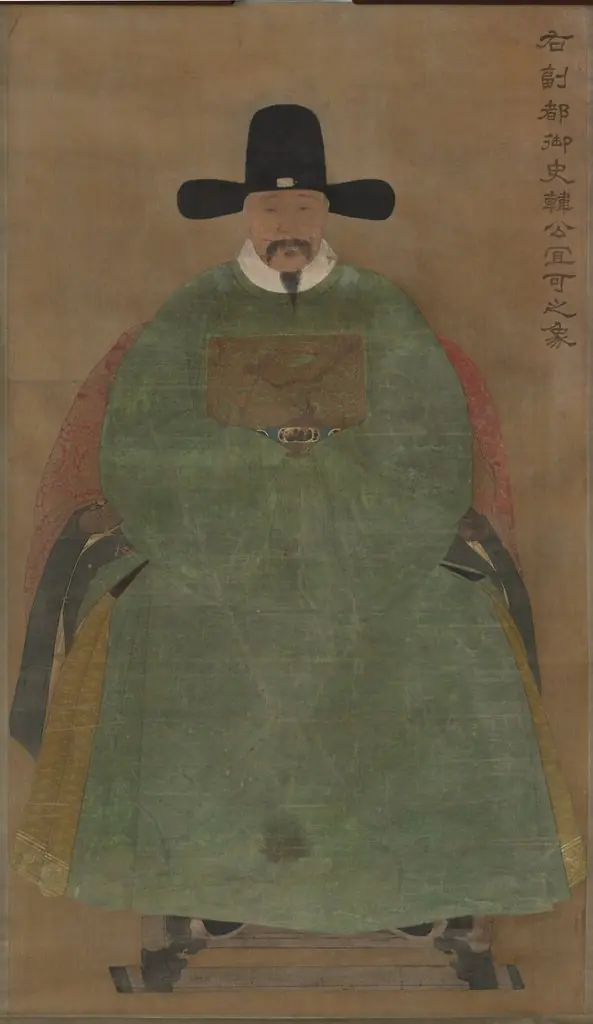
Portrait of a Government Official is an unspecified painting by the Korean Minhwa artist Chae Yongshin. It dates from 1921 and is held in the collection of the Cleveland Museum of Art.
- Accession no.
- 2020.259
- Credit line
- John L. Severance Fund
About this work
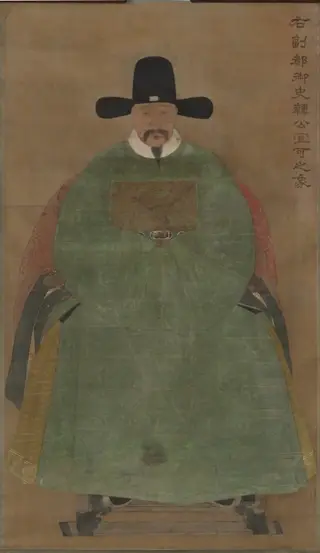
His embroidered badge shows a single flying crane, proof he’s just been promoted to a high government rank.
A man in a dark green uniform sits in a chair covered with a leopard-skin rug. His embroidered badge shows a single flying crane, proof he’s just been promoted to a high government rank.
The painting was made in 1921, when Korea was under Japanese rule. The artist caught the man’s shy smile, hinting at both pride and worry about the future. The leopard skin was a royal gift, a tradition that still mattered even under foreign control.
To see how artists painted power during this time, look up korea, japanese colonial period (1910−1945).
Overview
Created in 1921 by the Korean painter Chae Yongshin (1848–1941), this portrait depicts a newly promoted government official seated on a chair draped with a leopard‑skin rug. The sitter wears a dark green court uniform and displays a modest smile that suggests a mixture of confidence and apprehension about his advancing career.
Subject & Meaning
The figure’s rank is indicated by an embroidered badge featuring a single flying crane, a symbol of the third‑grade bureaucratic position he has just attained. His expression, a shy smile, conveys both pride in his promotion and the uncertainty that accompanies new responsibilities within the colonial administration.
Technique & Style
Chae employs a realistic rendering of textures, from the sheen of the silk uniform to the plushness of the leopard skin, using delicate brushwork to capture subtle facial nuances. The composition balances formal regalia with a personal, introspective mood, reflecting early‑20th‑century Korean portraiture influenced by both traditional and Western techniques.
Context
The portrait was produced during the Japanese colonial period (1910–1945), when Korean officials served under foreign rule. The leopard‑skin rug, a gift from the royal court, underscores lingering Korean courtly customs even as the political landscape had shifted dramatically.
Legacy
As a visual record of Korean bureaucratic attire and courtly gifts under colonial rule, the painting offers scholars insight into the ways personal identity and state authority were negotiated in portraiture of the era.
Artist & collection