Artwork
The Little Schoolmistress
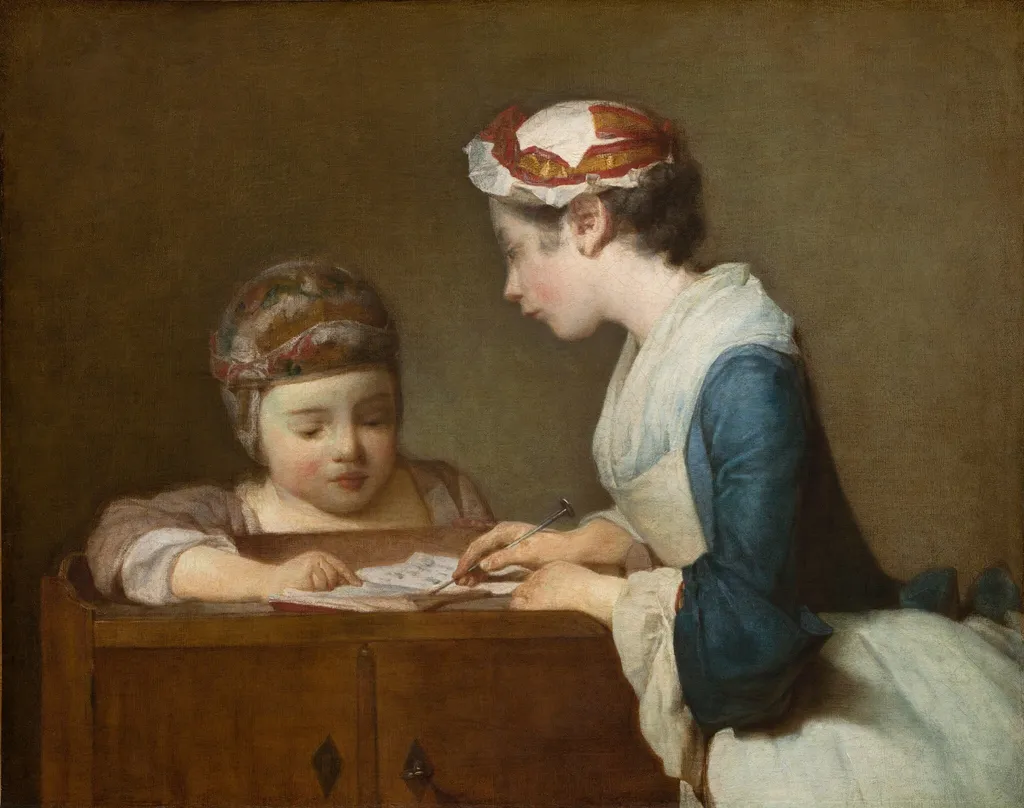
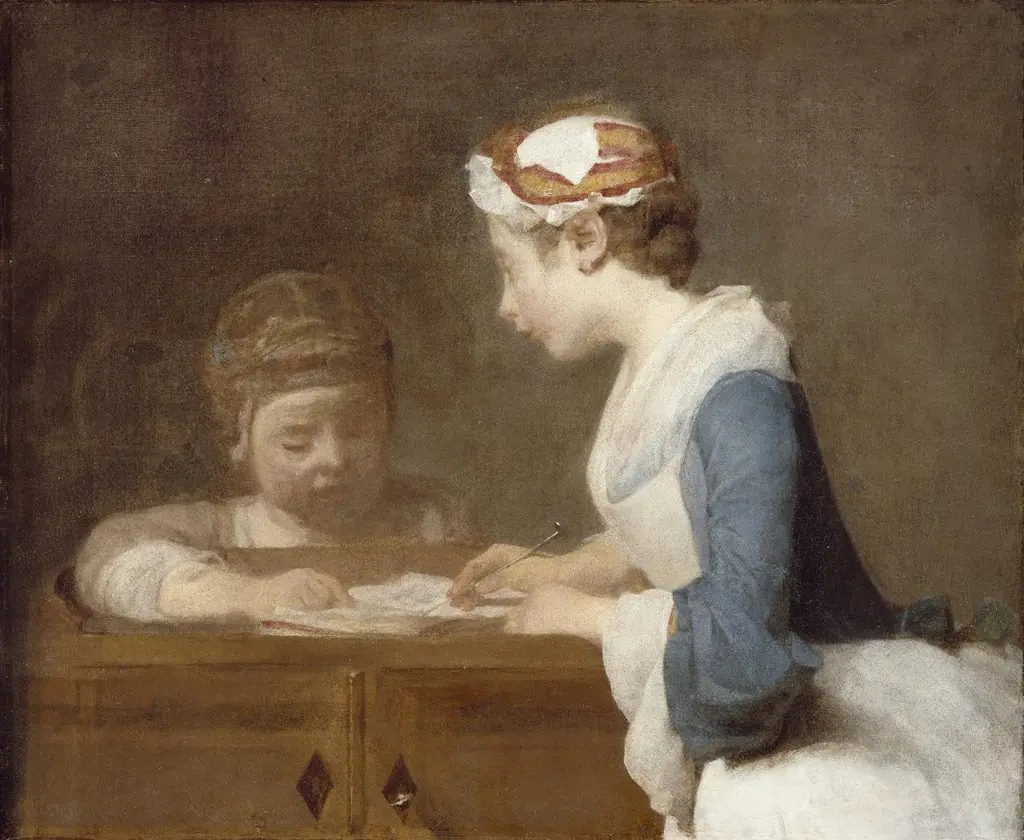
The Little Schoolmistress is an oil painting by the Baroque artist Jean-Baptiste-Siméon Chardin. It dates from 1740 and is held in the collection of the National Gallery of Art.
About this work
Technique & Style
Brushwork is deliberately restrained; Chardin’s layered, blended application yields a matte surface that emphasizes the tactility of objects and figures.
Chardin’s The Little Schoolmistress is executed in oil on canvas, a medium he favored for its luminous handling and subtle tonal gradations. The composition is restrained in palette, relying on earthy ochres, muted greens, and soft browns to convey the quiet domestic scene. Brushwork is deliberately restrained; Chardin’s layered, blended application yields a matte surface that emphasizes the tactility of objects and figures.
Formal qualities center on a low viewpoint and shallow space, focusing attention on the seated schoolmistress and her pupils. The composition’s stability is reinforced by the vertical alignment of the figures and the horizontal plane of the table, while the subdued lighting and diffuse shadows avoid dramatic contrast, aligning with mid-century French genre conventions.
History & Provenance
Jean-Siméon Chardin created The Little Schoolmistress in 1740 as an oil on canvas painting. The work's earliest documented owner was Casimir Perrin, marquis de Cypierre, who held it in Paris until his death in 1844. It subsequently appeared at his estate sale in March 1845, organized by the dealer Thoré.
The painting later entered the collection of Albert, vicomte de Curel, remaining with his heirs until their estate sale at Galerie Georges Petit in November 1918. Following this auction, the dealer M. Knoedler & Co. acquired the piece and sold it in May 1919 to Frank D. and Clara W. Stout of Chicago. The painting was eventually consigned back to Knoedler and purchased on December 28, 1936, by The A.W. Mellon Educational and Charitable Trust in Pittsburgh. It was officially gifted to the National Gallery of Art in Washington, D.C., in 1937.
The Little Schoolmistress is held in the Andrew W. Mellon collection at the National Gallery of Art in Washington, D.C., where it was accessioned as a gift from the A.W. Mellon Educational and Charitable Trust in 1937. The work entered the museum's holdings after being purchased by the Trust on December 28, 1936, following a consignment from the Stout heirs via M. Knoedler & Co. Prior to its acquisition by the Trust, the painting was sold in November 1918 at the estate sale of Albert, vicomte de Curel, and previously belonged to Casimir Perrin, marquis de Cypierre, whose estate sale occurred in March 1845.
The specific inventory details trace its path through these private Parisian collections before its final transfer to the United States.
Overview
Jean Siméon Chardin's The Little Schoolmistress, executed in 1740, is a genre scene depicting an intimate domestic moment of instruction. The composition centers on a young woman seated at a table, guiding a young boy through a lesson. Chardin arranges the figures in a stable, pyramidal structure that emphasizes their focused interaction, while the background remains subdued to direct attention to the pedagogical exchange.
Painted in oil on canvas, the work exemplifies the artist's mature style, characterized by a restrained palette and a mastery of light that models the forms with soft, tactile precision. The figures are dressed in modest, contemporary eighteenth-century attire, grounding the scene in the everyday reality of the French bourgeoisie rather than idealized mythology. This painting reflects Chardin's significant contribution to the Rococo period, where he elevated scenes of domestic life and childhood education to the status of high art.
Unlike the frivolous mythological subjects favored by many of his contemporaries, Chardin found dignity and moral weight in quiet, ordinary activities. The Little Schoolmistress stands as a testament to his ability to capture the gravity of learning and the gentle authority of the teacher, securing his reputation as a master of psychological depth within the genre painting tradition.
Subject & Meaning
The artwork centers on a young woman engaged in teaching a boy, her expression conveying patience and kindness. This portrayal of a gentle interaction highlights a common domestic activity of the era. Chardin's choice to depict such a simple, unadorned scene elevates the ordinary, inviting viewers to reflect on the quiet dignity of daily life and human connection.
Own this work as a print
Artist & collection

Artist
Jean Siméon Chardin (French:; November 2, 1699 – December 6, 1779) was an 18th-century French painter.

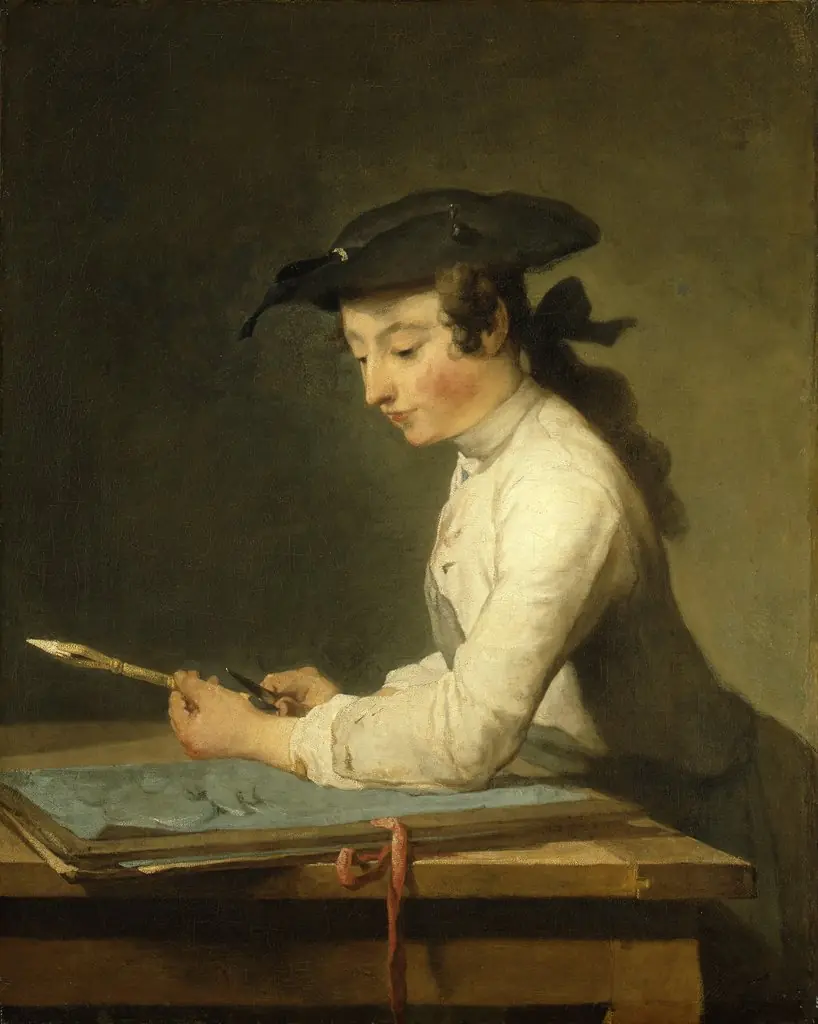 The Draughtsman
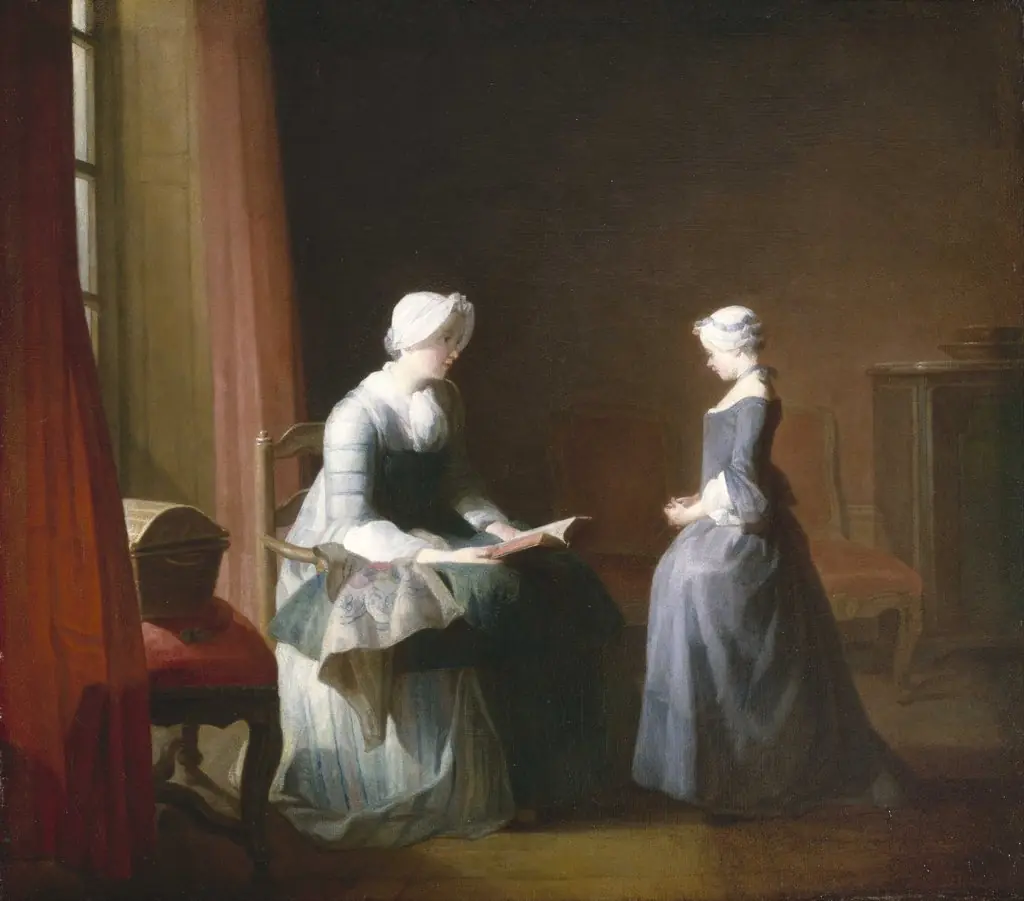 The Good Education
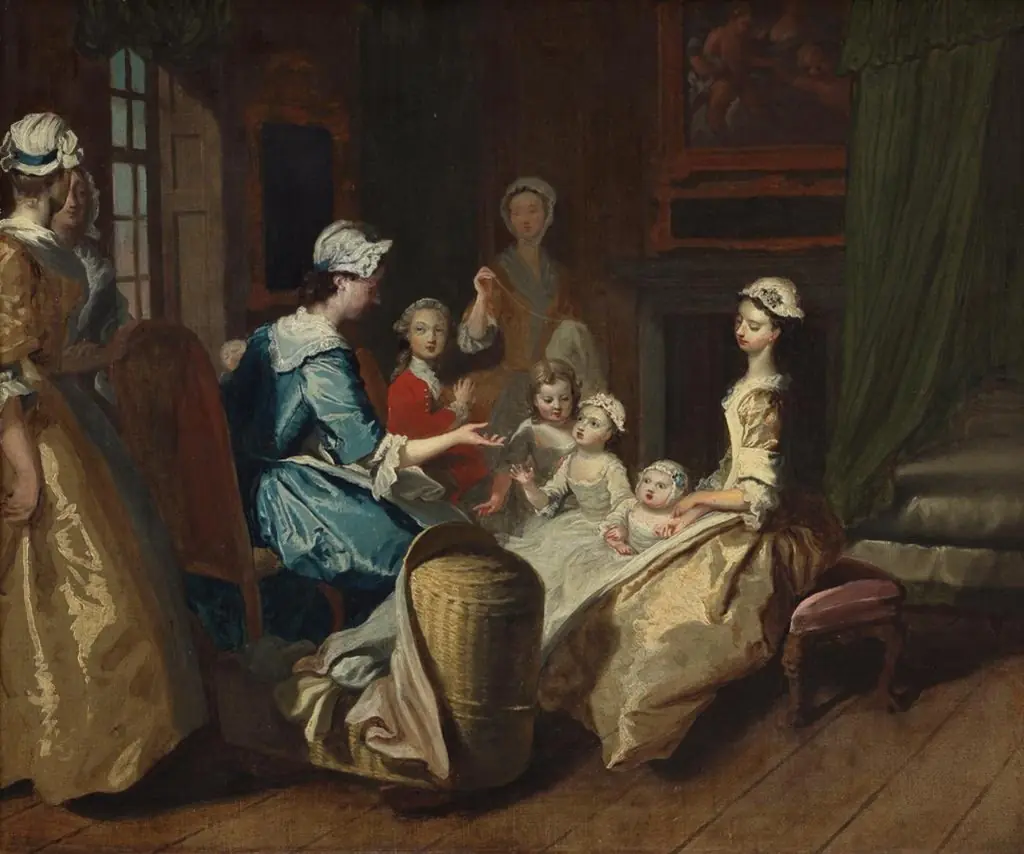 Pamela tells a nursery tale
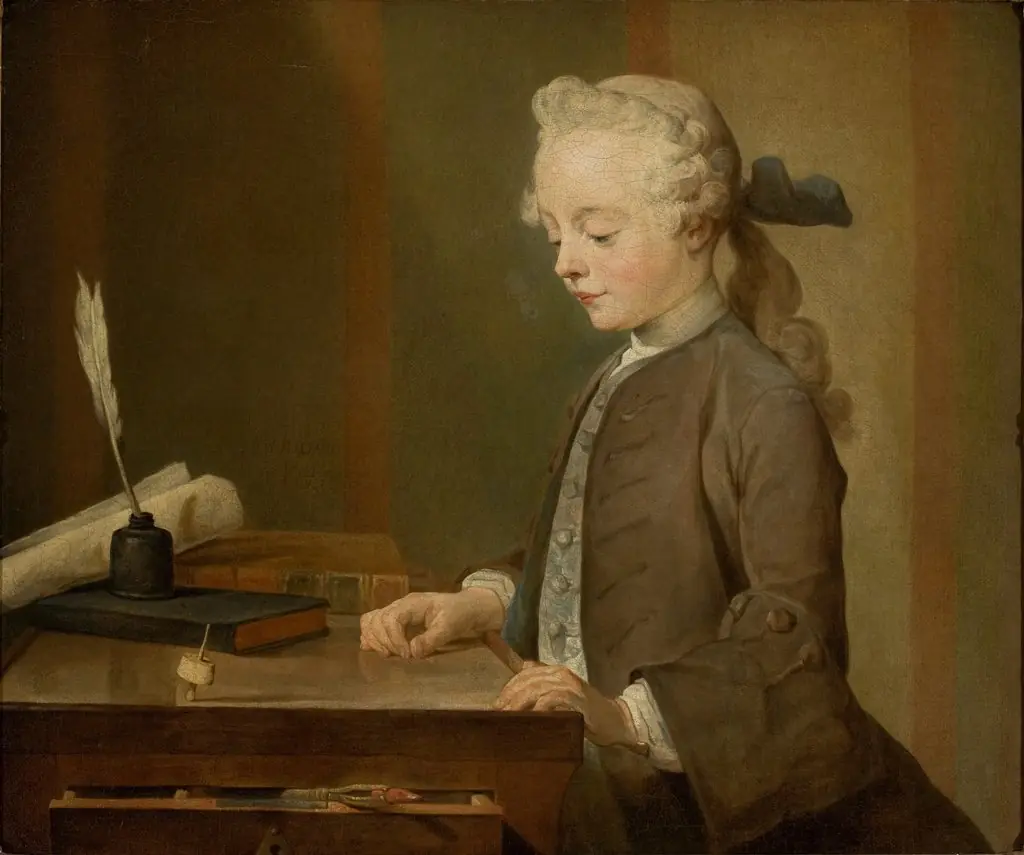 Portrait of Auguste Gabriel Godefroy
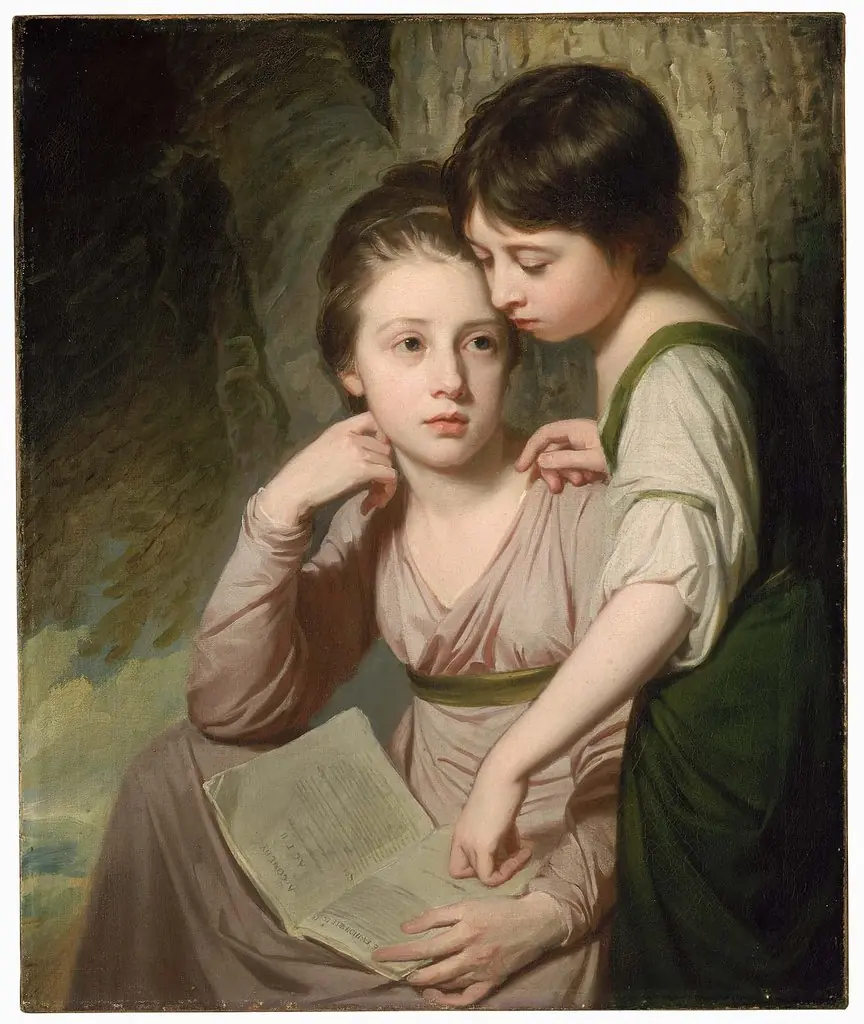 Portrait of Two Girls (Misses Cumberland)
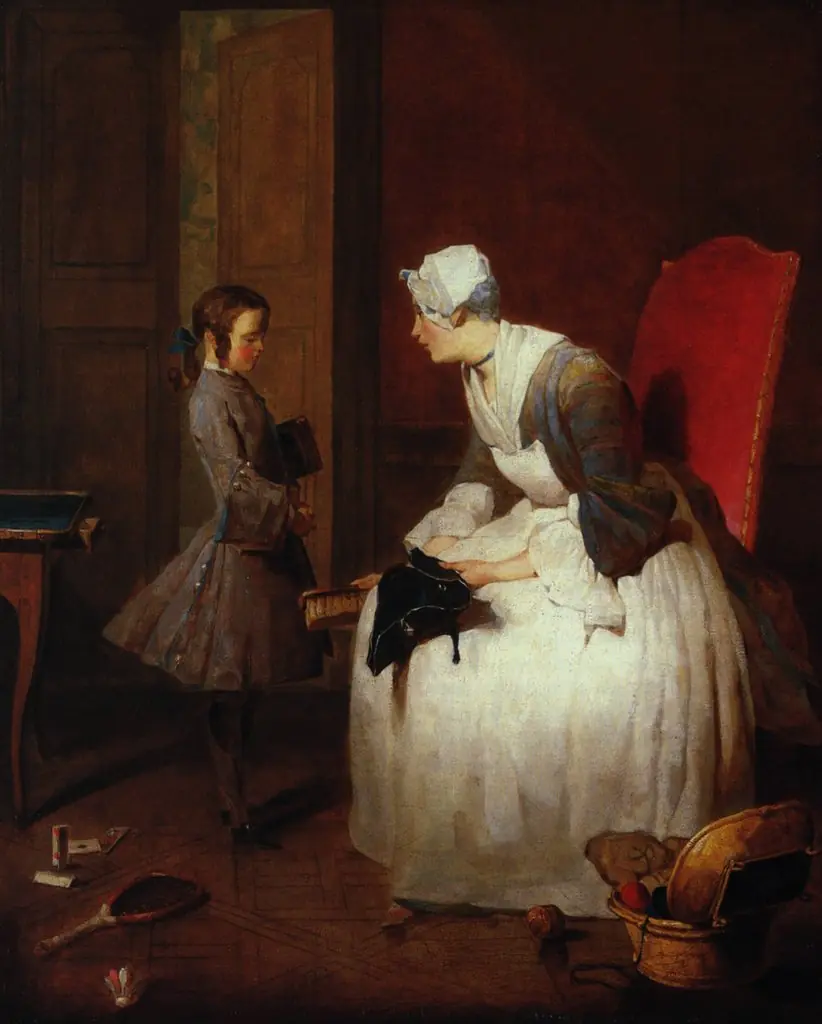 La Gouvernante
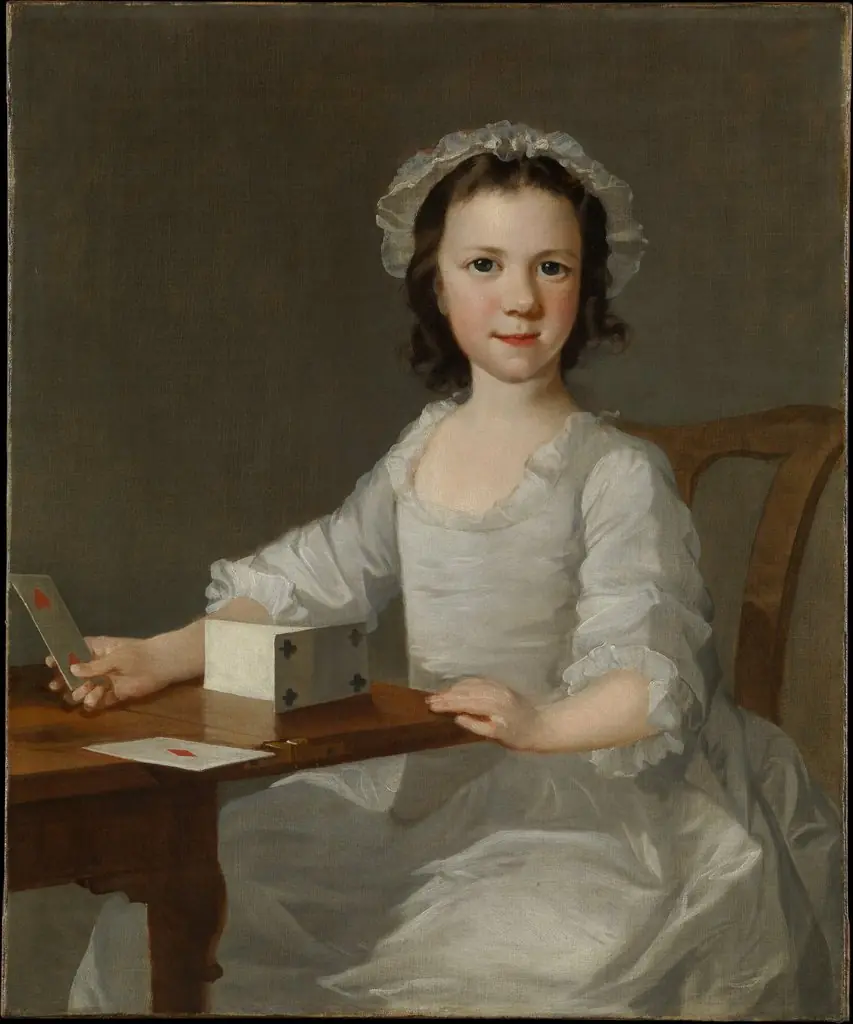 Girl Building a House of Cards
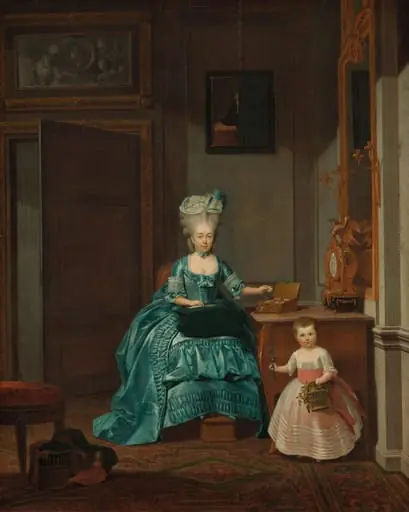 Portrait of Suzanna Cornelia Mogge and her Daughter Johanna Ferdinanda van Collen
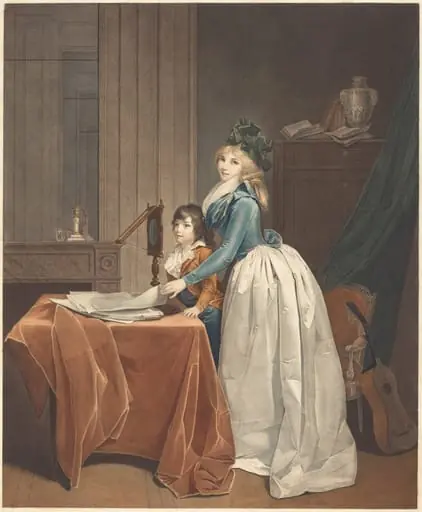 L'Optique (The Optical Viewer)
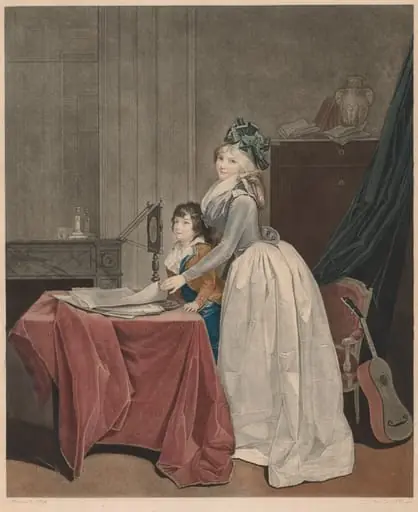 The Optical Viewer