Artwork
The Kitchen Maid
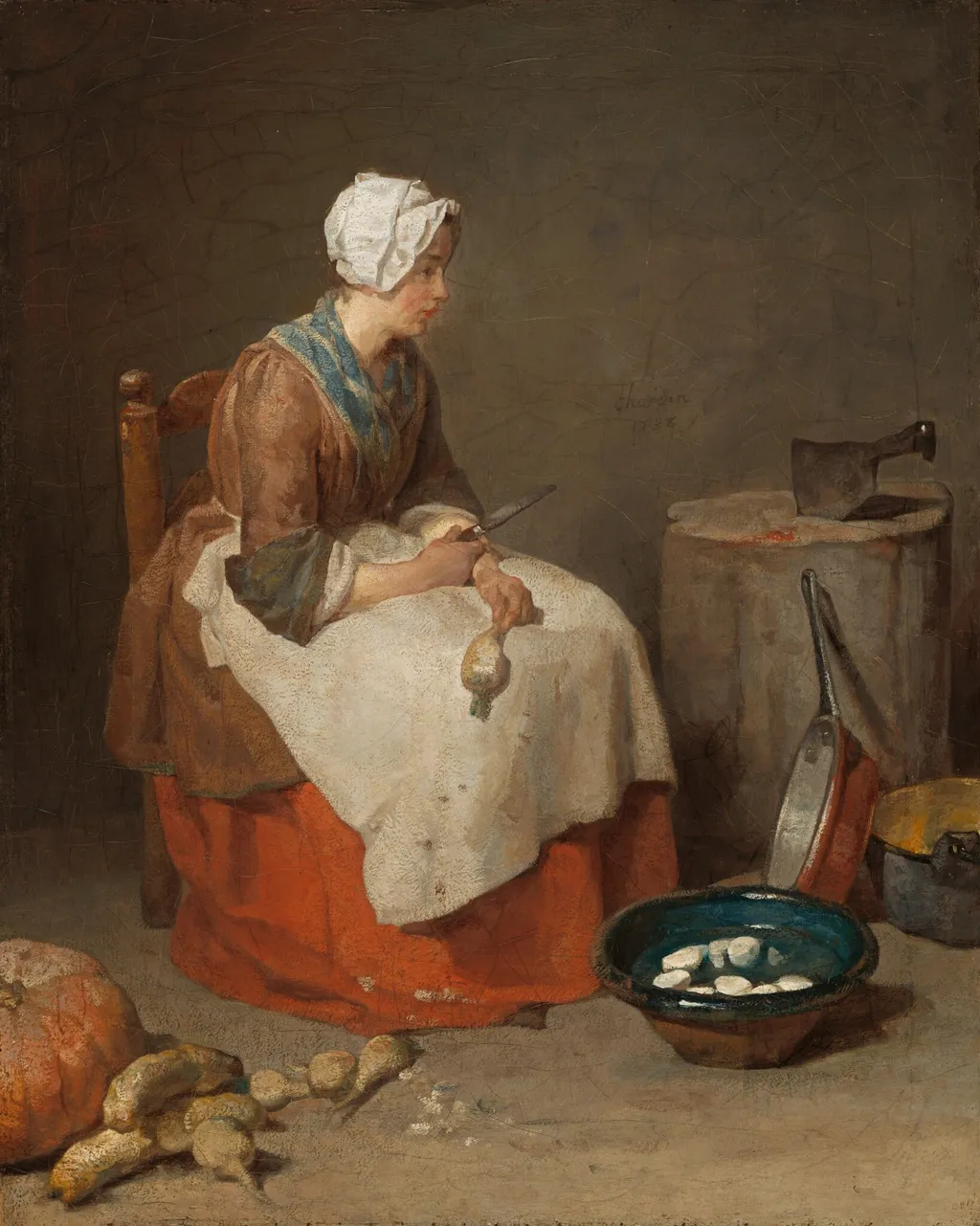
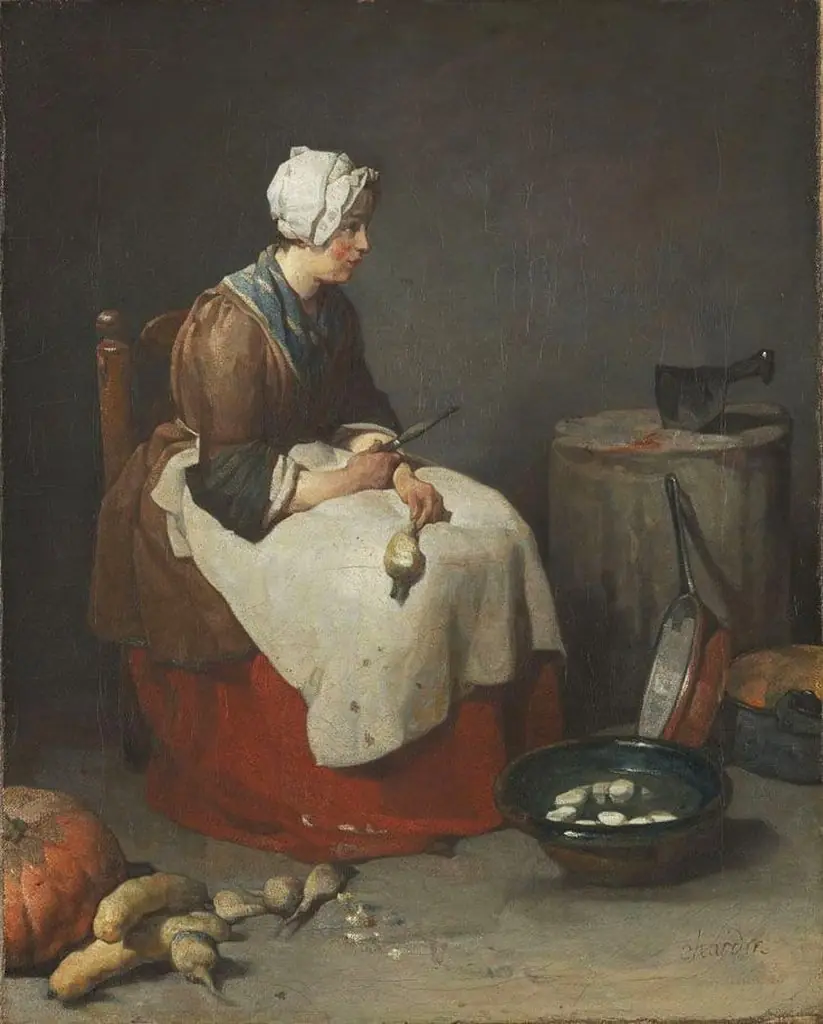
The Kitchen Maid is an oil painting by the Baroque artist Jean-Baptiste-Siméon Chardin. It dates from 1738 and is held in the collection of the National Gallery of Art.
- Inscription
- Inscribed:center right: Chardin / 1738
About this work
Subject & Meaning
A butcher’s block with a blood‑stained cleaver and scattered vegetables lie on the floor, while the surrounding props reference a Dutch kitchen interior.
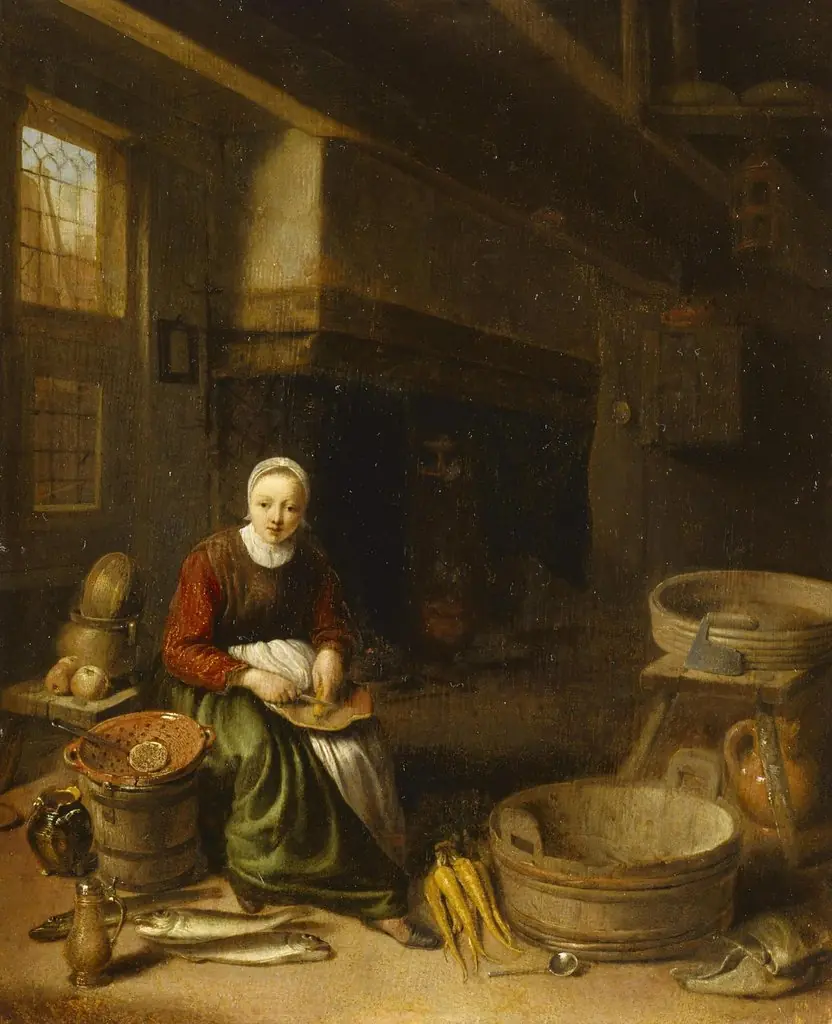
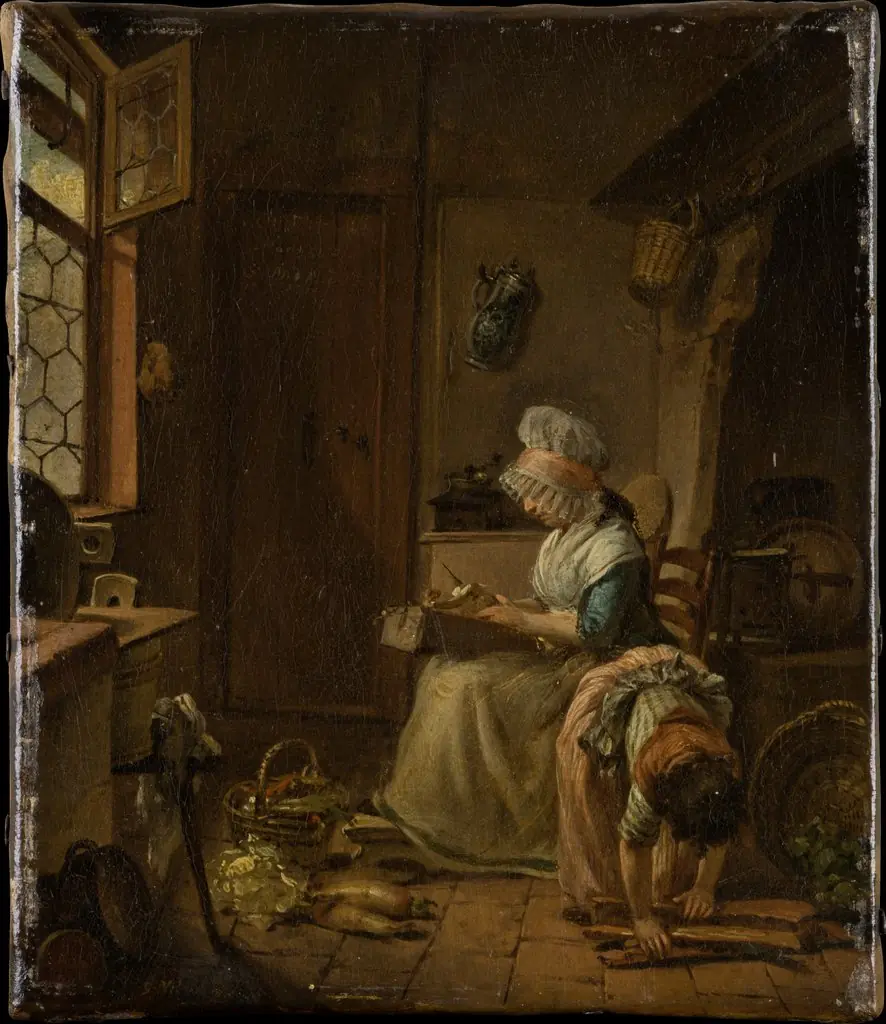
The painting shows a young kitchen maid seated on a low chair in a modest, orderly kitchen, pausing from her work of peeling turnips. A butcher’s block with a blood‑stained cleaver and scattered vegetables lie on the floor, while the surrounding props reference a Dutch kitchen interior. The maid’s neutral expression and focused gaze convey neither sorrow nor joy, emphasizing a moment of quiet concentration.
Chardin’s earthy palette, granular pigments and subdued lighting create a timeless, almost tactile atmosphere, while the meticulously arranged space contrasts with contemporary depictions of servant life. The work offers no explicit moralizing, leaving interpretation to the viewer’s speculation about the sitter’s thoughts.
Technique & Style
The Kitchen Maid is executed in oil on canvas, a support noted in the work’s provenance and material description (1,2). Chardin’s pigments are granular and his palette earthy, with thick handling that builds up the surface (3). The lighting is subdued, avoiding sudden contrasts, while the composition centers on a young kitchen maid seated on a low chair, gazing to the right with a neutral expression (3).
Around her lie vegetables, pots and a butcher’s block bearing a cleaver and a spot of blood, suggesting a quiet tension (3). The bounded pictorial space conveys contentment and timelessness, and the overall execution displays a sensuous use of design and color (3). The painting remains in good condition within the National Gallery of Art’s collection (1).
History & Provenance
The Kitchen Maid, an oil‑on‑canvas genre scene painted by Jean‑Siméon Chardin in 1738, entered the collection of Prince Joseph Wenzel of Liechtenstein, who acquired it directly from the artist; it subsequently passed by inheritance through the Liechtenstein line to Prince Franz Josef II, remaining in the family at least until 1948. In March 1951 the work was bought from Frederick Mont, Inc. by the Samuel H. Kress Foundation and was gifted to the National Gallery of Art in 1952. The painting is one of four known versions, reflecting its contemporary popularity and establishing Chardin’s reputation in French genre painting.
The work is held by the National Gallery of Art, Washington, accessioned as 1952.1.10. It entered the collection in 1952 as a gift of the Samuel H. Kress Foundation, which had acquired it from Frederick Mont, Inc., New York, on 8 March 1951. Formerly in the collection of Prince Joseph Wenzel of Liechtenstein and later by descent to Prince Franz Josef II von und zu Liechtenstein, the painting was previously exhibited at the Salon of 1739 in Paris under the title La Ratisseuse de Navets (Woman Scraping Turnips).
Context
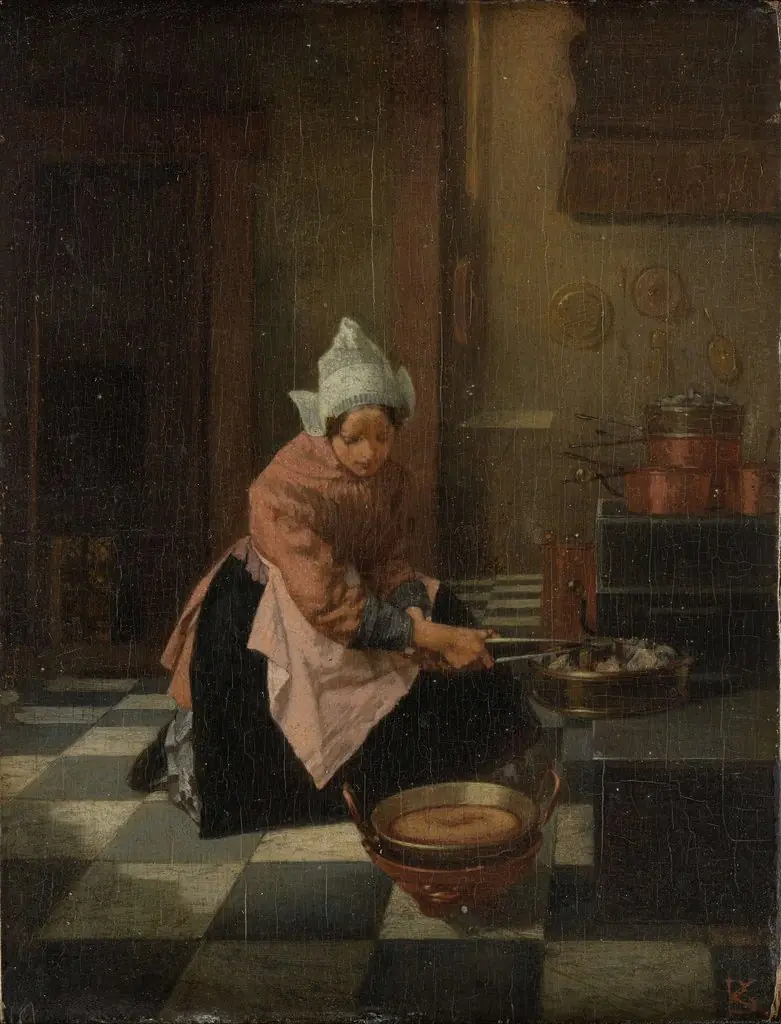
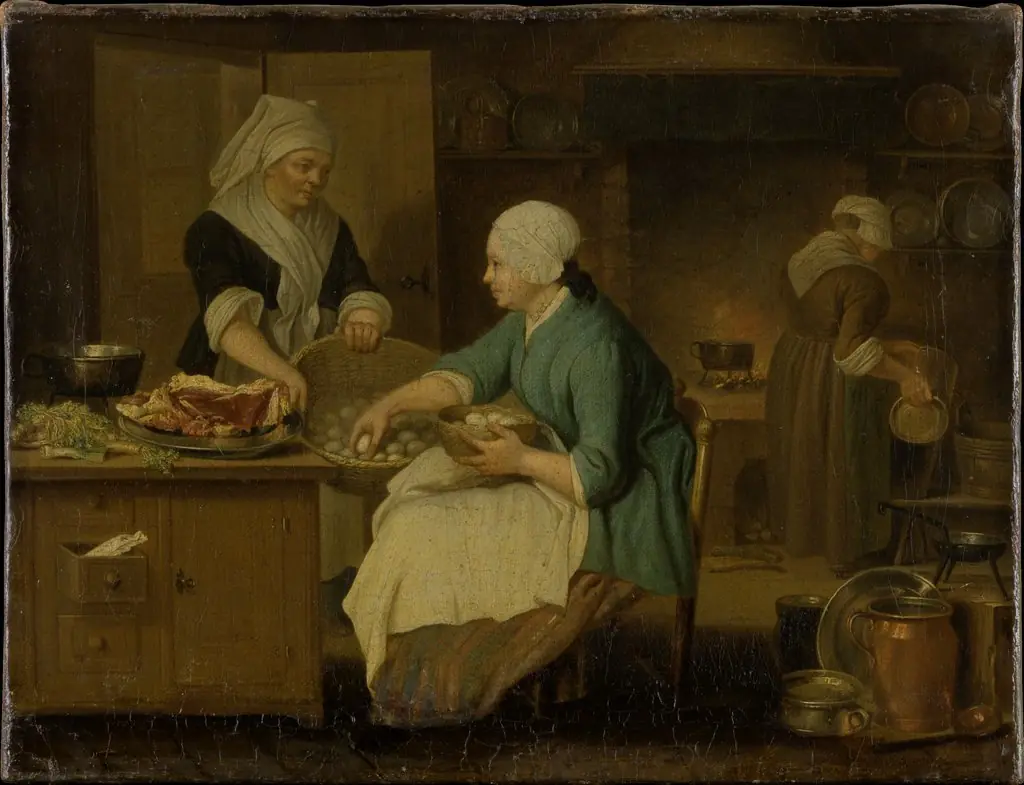
The Kitchen Maid was first exhibited at the 1739 Salon under the title La Ratisseuse de Navets, where it attracted limited notice, partly because it was presented alongside Chardin’s more celebrated The Governess. Contemporary interest was later demonstrated by the production of at least four versions of the composition, including the Washington copy of 1738, a Munich version of 1746, a lost version for Frederick II, and a Dutch studio copy, underscoring the work’s commercial appeal. Critics have highlighted its ambiguous spatial framing, earthy palette, and the dignified yet unheroic portrayal of a servant in a meticulously ordered kitchen, features that distinguish Chardin’s genre scenes from contemporaries.
The painting entered the Samuel H. Kress Collection in 1951 and was gifted to the National Gallery of Art in 1952, cementing its status as a key example of 18th‑century French genre painting.
Overview
Jean Siméon Chardin's 1738 oil on canvas painting, The Kitchen Maid, depicts a young woman pausing from her domestic duties within a humble kitchen setting. This work exemplifies Chardin's characteristic focus on quiet, everyday scenes, rendered with meticulous attention to detail and a subtle play of light. Its popularity during the artist's lifetime led him to create multiple versions of the composition.
Own this work as a print
Artist & collection

Artist
Jean Siméon Chardin (French:; November 2, 1699 – December 6, 1779) was an 18th-century French painter.