Artwork
The Laundress
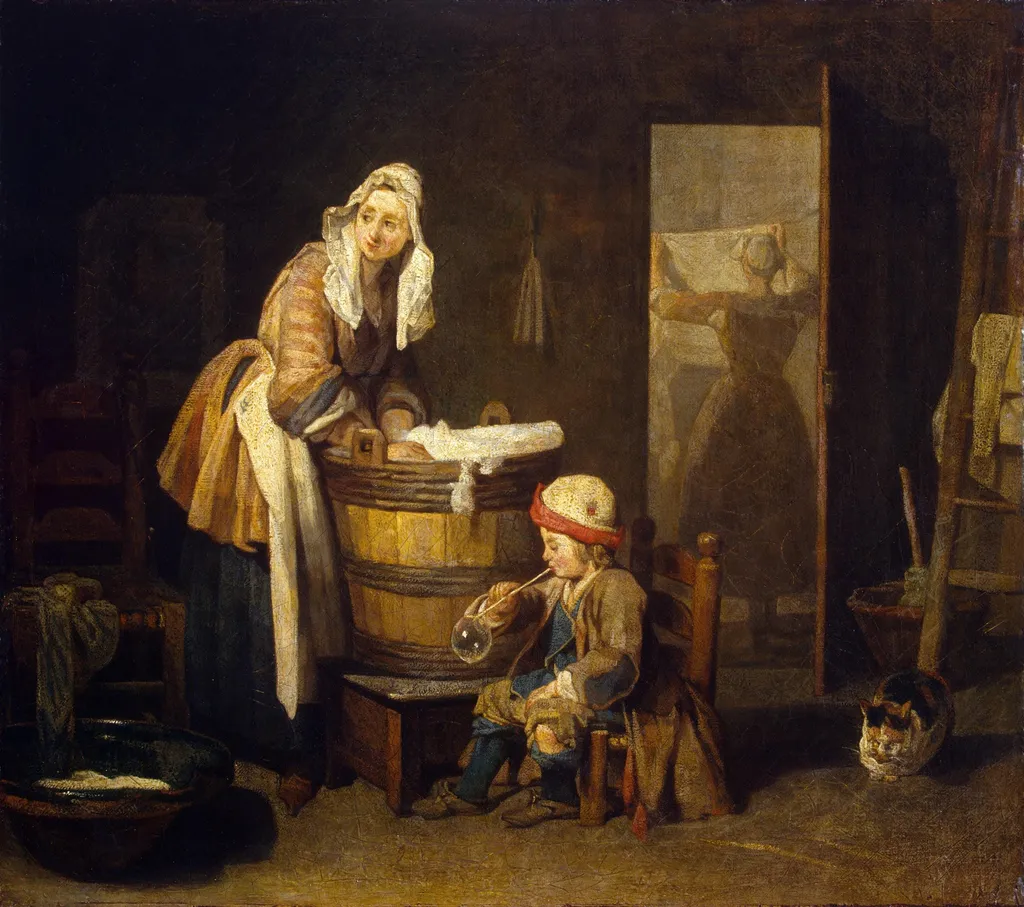
The Laundress is an oil painting by the Rococo painting artist Jean-Baptiste-Siméon Chardin. It dates from 1730 and is held in the collection of the Collection Crozat.
About this work
Subject & Meaning
Two additional versions exist: a smaller signed work in the Nationalmuseum, Stockholm, and a now-destroyed version from the Rothschild collection.
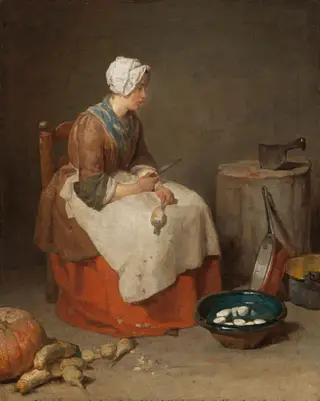
Jean-Baptiste-Siméon Chardin's The Laundress (c. 1730–1740) portrays a young laundress, identified by her white coif and blue dress, bent over a tub of soapy water while a small boy creates a soap bubble and a cat rests nearby; the interior setting includes a chair, linens, and a soap dish. The scene, documented in the Crozat collection and later acquired by Catherine II for the Hermitage, exemplifies the genre of domestic labor that Chardin elevated to moral subject matter, reflecting Enlightenment ideals of modest virtue and the dignity of everyday work. Two additional versions exist: a smaller signed work in the Nationalmuseum, Stockholm, and a now-destroyed version from the Rothschild collection. The painting's intimate composition underscores the quiet dignity of domestic chores.
Technique & Style
Executed in oil on canvas, the prime version of The Laundress (c. 1733–1740) measures about 38 × 48 cm and is signed in the upper left corner. The work depicts a laundress in a modest interior, rendered with delicate brushwork that captures soft daylight through a back door, the texture of linen, and the subtle sheen of a soap bubble. Chardin's handling emphasizes quiet domestic activity, using muted blues, yellow-brown tones, and a restrained palette to convey intimacy.
History & Provenance
The prime version of The Laundress (La Blanchisseuse) by Jean-Baptiste-Siméon Chardin was created between 1733 and 1740, as indicated by its signature and stylistic placement within the artist's early genre scenes. The work originated in the collection of Louis-Antoine Crozat, Baron de Thiers, where it was inventoried by 1755. In 1772 it was acquired by Catherine II of Russia, on the advice of Denis Diderot, as part of the bulk purchase of the Crozat collection, and it has since remained in the Hermitage Museum in Saint Petersburg.
Two further versions of the composition exist: one signed on the stool beneath the tub, exhibited at the Paris Salon of 1737 and later held by the Nationalmuseum in Stockholm, and a third, smaller version destroyed during World War II, formerly in the Henri de Rothschild collection.
Overview
Jean Siméon Chardin's The Laundress, also known as A Young Girl Doing Laundry, is the title given to three distinct oil paintings by the French artist. These works depict domestic life, specifically the labor of washing clothes, a common theme in 18th-century French art. Each version captures a quiet moment of daily activity, rendered with a focus on humble subjects and their surroundings.
Own this work as a print
Artist & collection
Artist
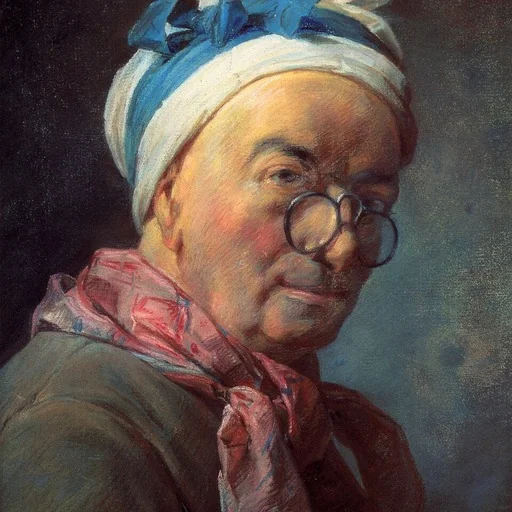
Jean Siméon Chardin (French:; November 2, 1699 – December 6, 1779) was an 18th-century French painter.
 Donna che lava i piatti
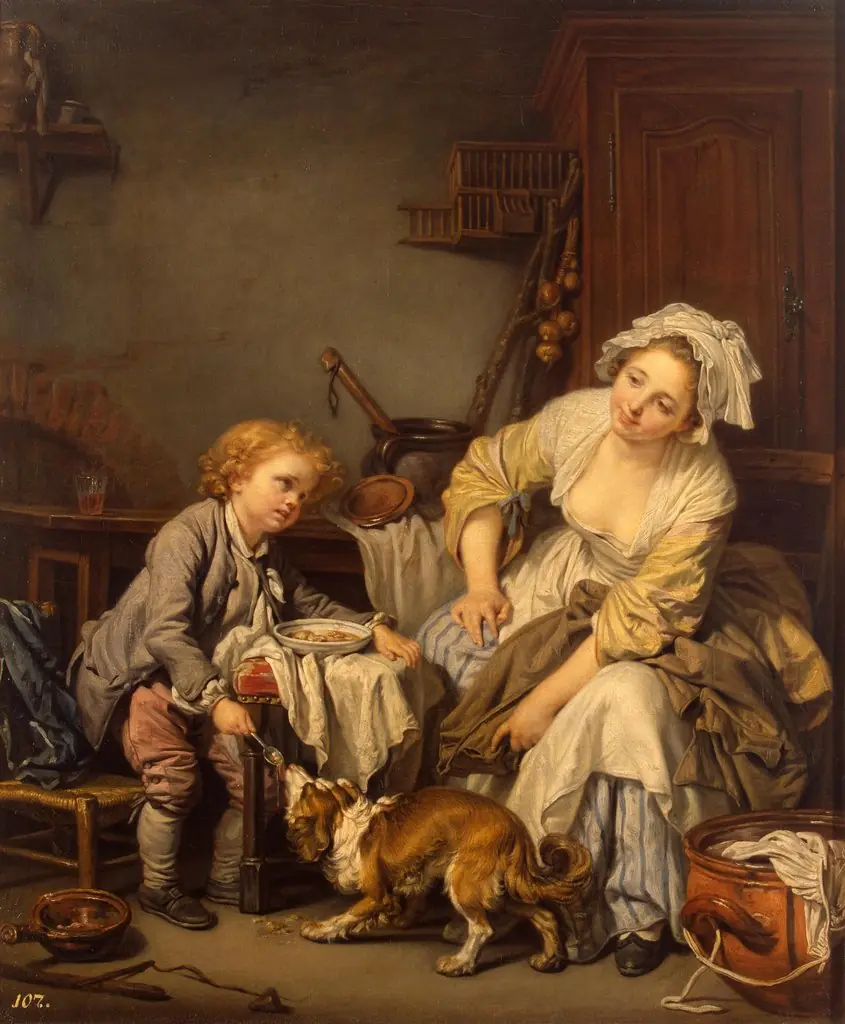 Spoiled Child
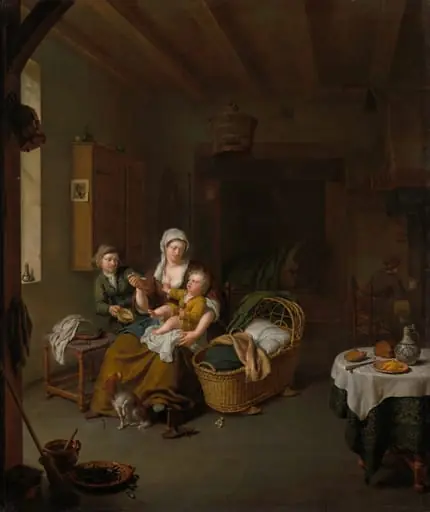 A Mother Feeding her Child (The Happy Mother)
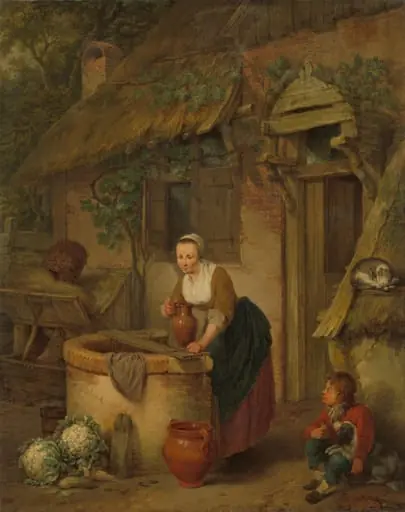 Woman Drawing Water from a Well
 A Mother Feeding her Child (The Happy Mother)
 Magd am Brunnen (Art des)
 The Day before Parting
 The Fisherman's Children
 Servant Girl Plucking a Chicken
 Broken Eggs
- The Laundress (La Blanchisseuse)