Artwork
Winter Scene
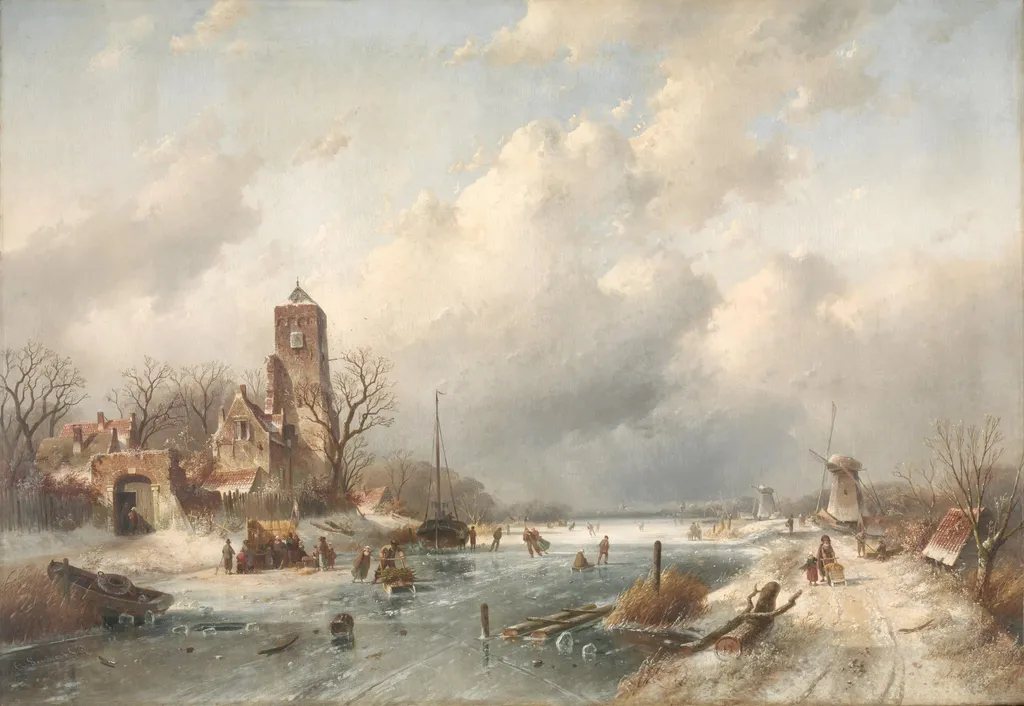
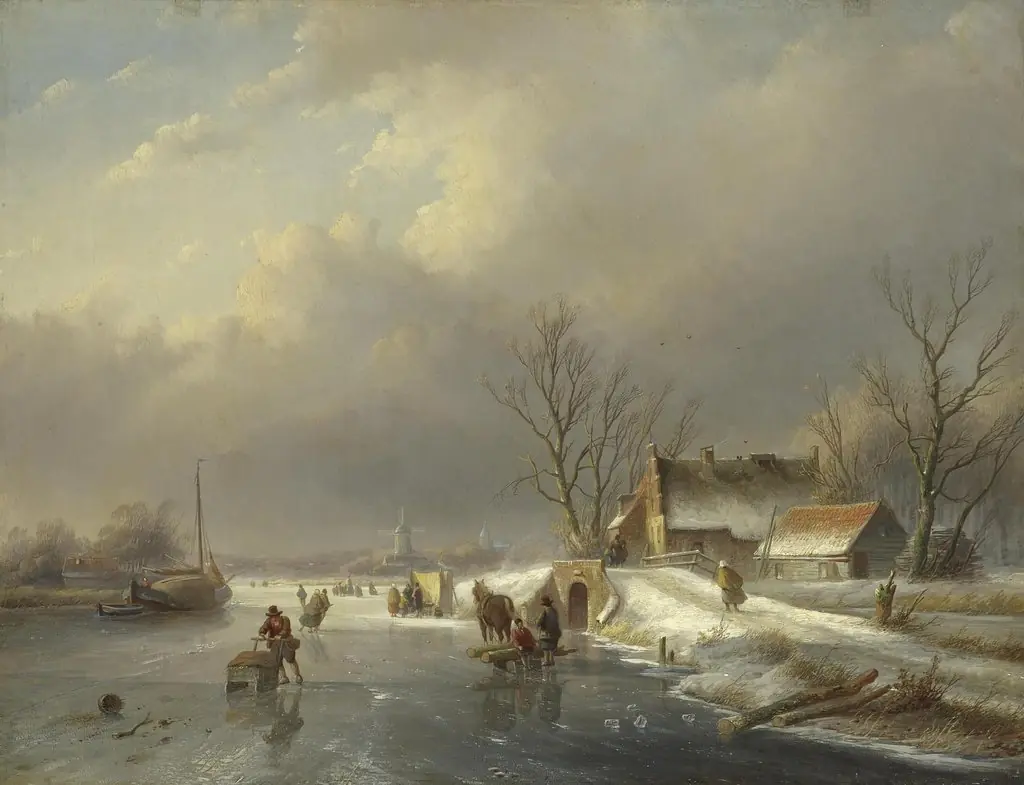
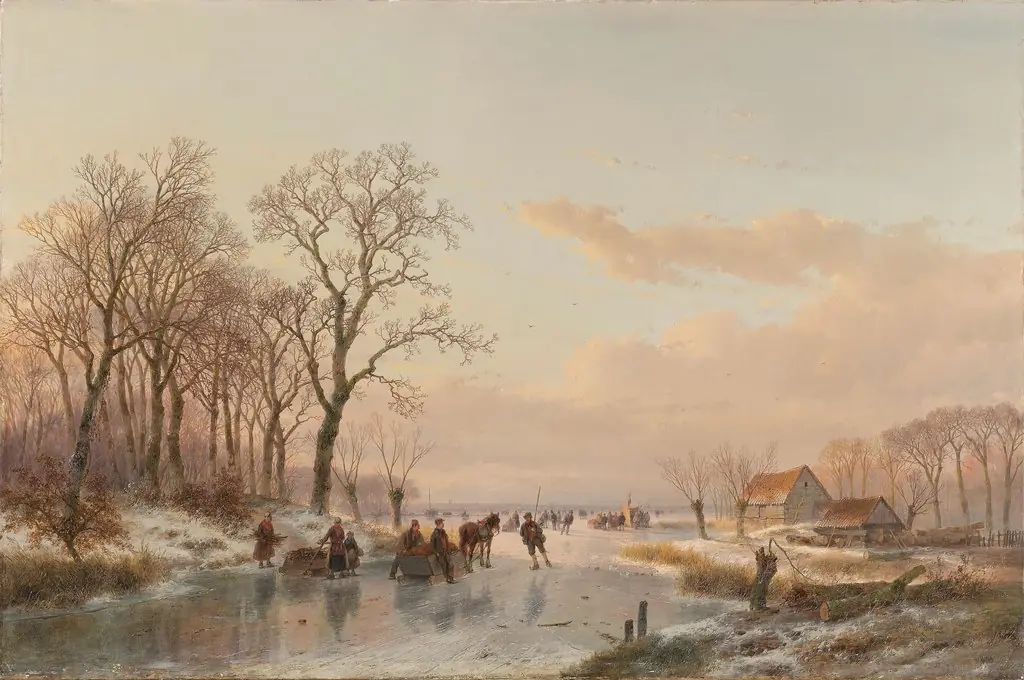
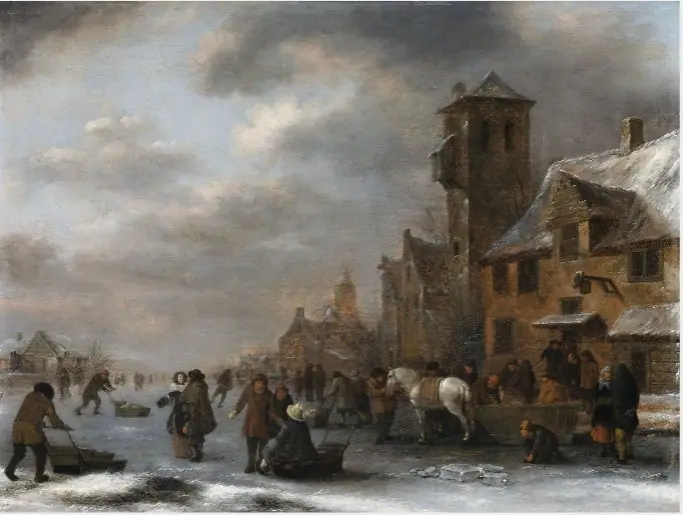
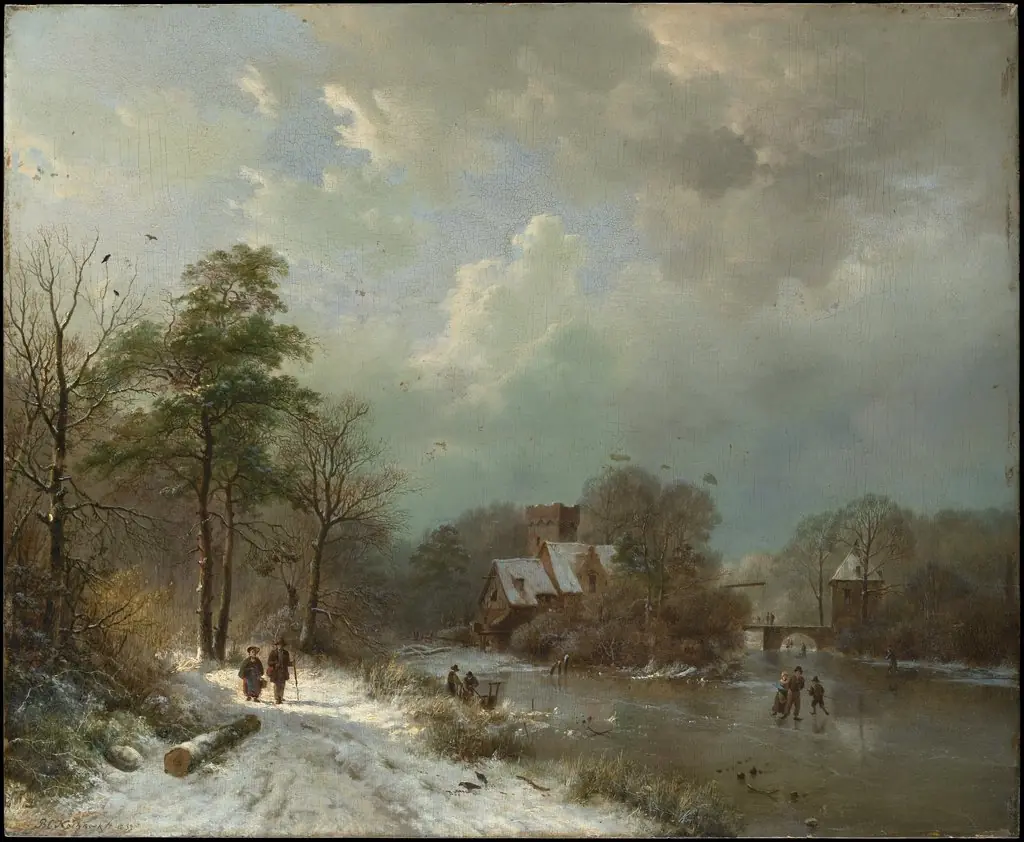
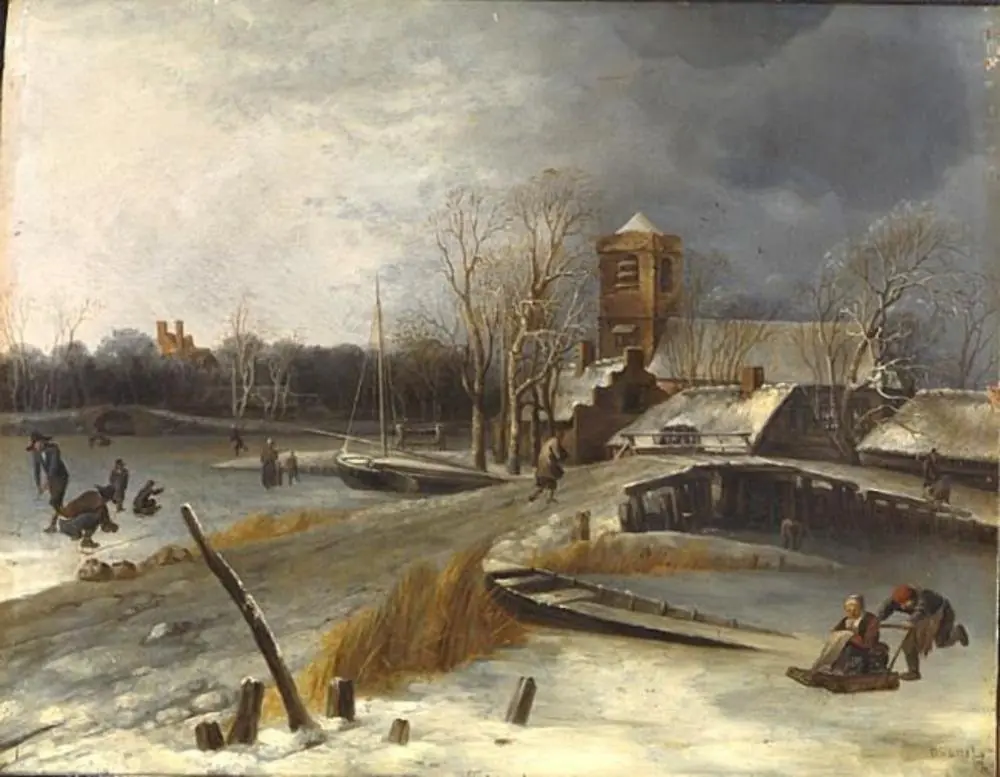
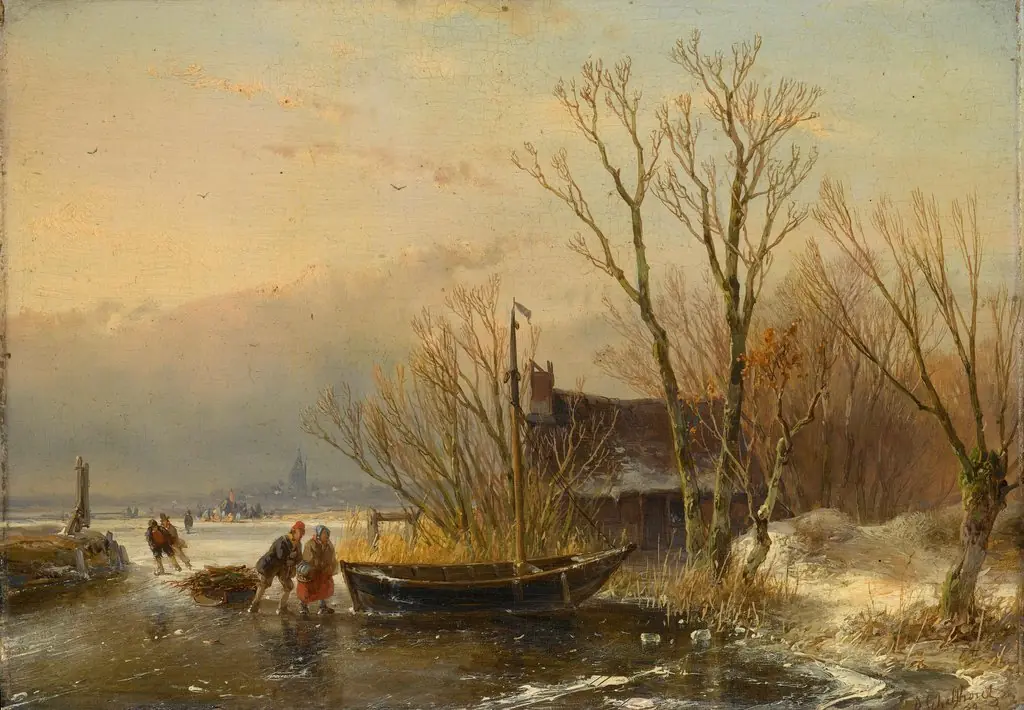
Winter Scene is an unspecified painting by the Dutch Golden Age artist Charles Leickert. It dates from 1867 and is held in the collection of the Rijksmuseum. The work depicts a winter landscape centered on a frozen canal that runs alongside a small village.
About this work
Subject & Meaning
The composition emphasizes atmospheric effects and the quiet stillness of a frozen river, embodying the Romantic fascination with nature’s fleeting moments.
Winter Scene depicts a tranquil winter landscape characterized by snow-covered banks, frozen waterways, and a muted sky rendered in pale blues and rosy dawn tones. The composition emphasizes atmospheric effects and the quiet stillness of a frozen river, embodying the Romantic fascination with nature’s fleeting moments. Leickert’s focus on winter scenes reflects his specialization in capturing the subtle textures of frost and the emotional resonance of seasonal change, aligning with the broader Romantic movement’s interest in evocative natural imagery.
History & Provenance
Winter Scene was painted by Charles Leickert in 1867 as a landscape work depicting a winter setting. The painting was created while Leickert was active in the Netherlands, primarily in The Hague and later Amsterdam, where he specialized in winter landscapes and cityscapes. He became a member of the Royal Academy of Amsterdam in 1856 and continued producing art until his move to Mainz, Germany, in 1887. Winter Scene is part of a broader body of work that includes multiple versions of similar winter scenes, reflecting Leickert's focus on atmospheric effects and romanticized natural environments. The work is held in museum collections such as the Rijksmuseum and has been reproduced in scholarly publications, including entries in dictionaries of Belgian painters and studies on Dutch Romantic landscape art.
Leickert's technique involved creating idealized, nostalgic winter scenes with attention to subtle variations in sky color and light, often producing several versions of a single composition. His output was both artistic and commercial, with documented sales and museum acquisitions during his lifetime, including a notable acquisition by the Landesmuseum Mainz of his studio attributes in 1928.
Context
Winter Scene (1867) belongs to Charles Leickert’s mature phase, when he refined his signature handling of Dutch winter light and atmosphere. Scholars emphasize Leickert’s capacity to render the ephemeral qualities of snow and sky, aligning his work with mid‑nineteenth‑century Romantic landscape traditions that favored poeticized natural effects. His training under Bartholomeus van Hove, Wijnand Nuijen, and Andreas Schelfhout grounded his technique in Dutch landscape conventions, while his specialization in winter scenes positioned him within a broader Northern European Romantic current. By the 1860s, Leickert’s compositions often juxtaposed quiet human activity with expansive, luminous skies, a hallmark of his idealized, nostalgic approach to Dutch scenery.
Own this work as a print
Artist & collection
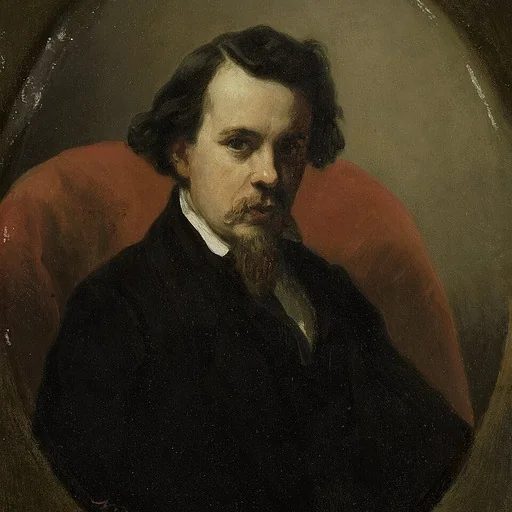
Artist
Charles Henri Joseph Leickert (22 September 1816, Brussels – 5 December 1907, Mainz) was a Dutch painter of landscapes. As a specialist in winter landscapes, he explored the nuances of the evening sky and the rosy-fingered dawn.