Artwork
A Saint Bernard Dog Comes to the Aid of a lost Woman with a sick Child
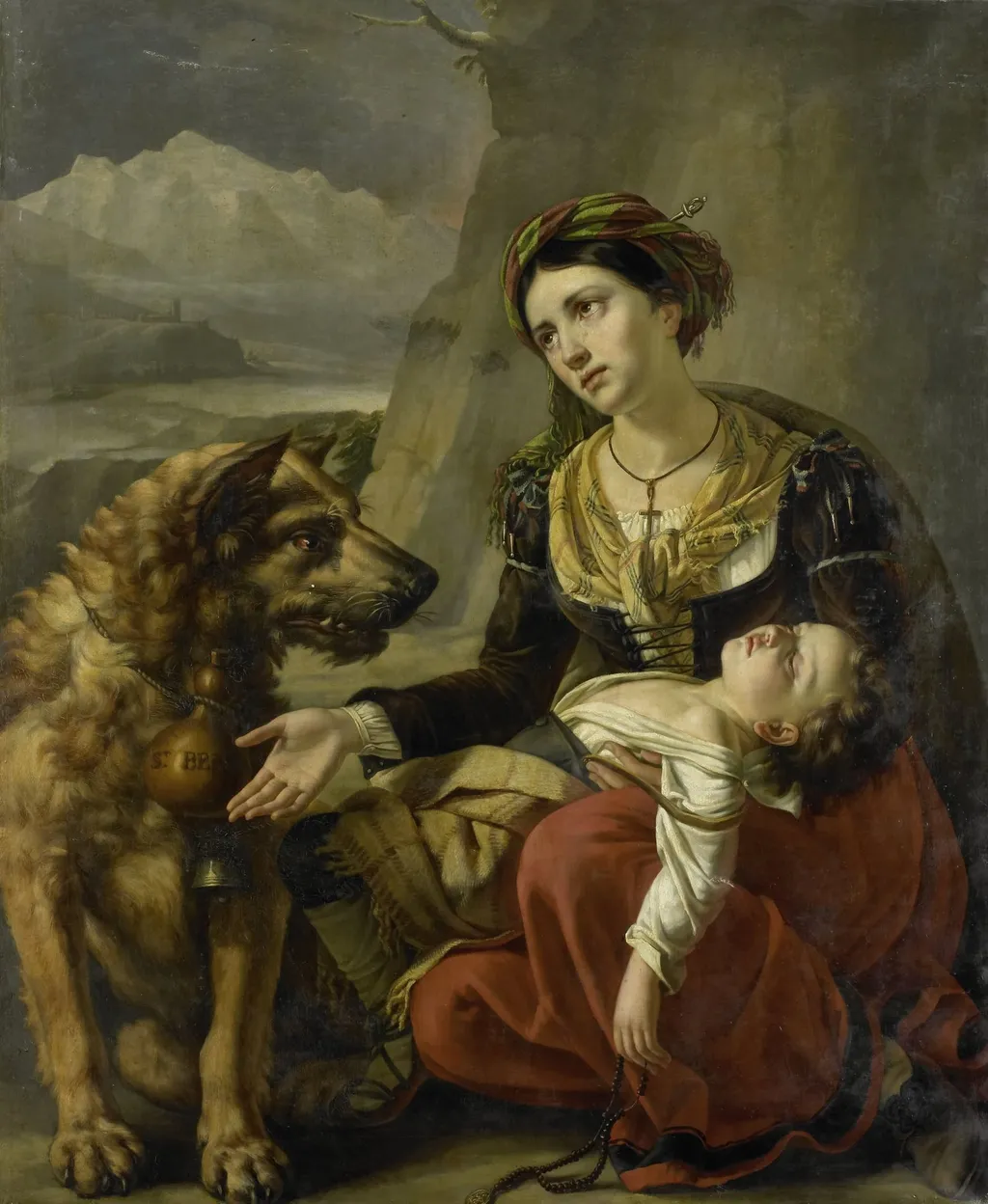
A Saint Bernard Dog Comes to the Aid of a lost Woman with a sick Child is an unspecified painting by the Romanesque artist Charles Picqué. It dates from 1827 and is held in the collection of the Rijksmuseum.
About this work
Overview
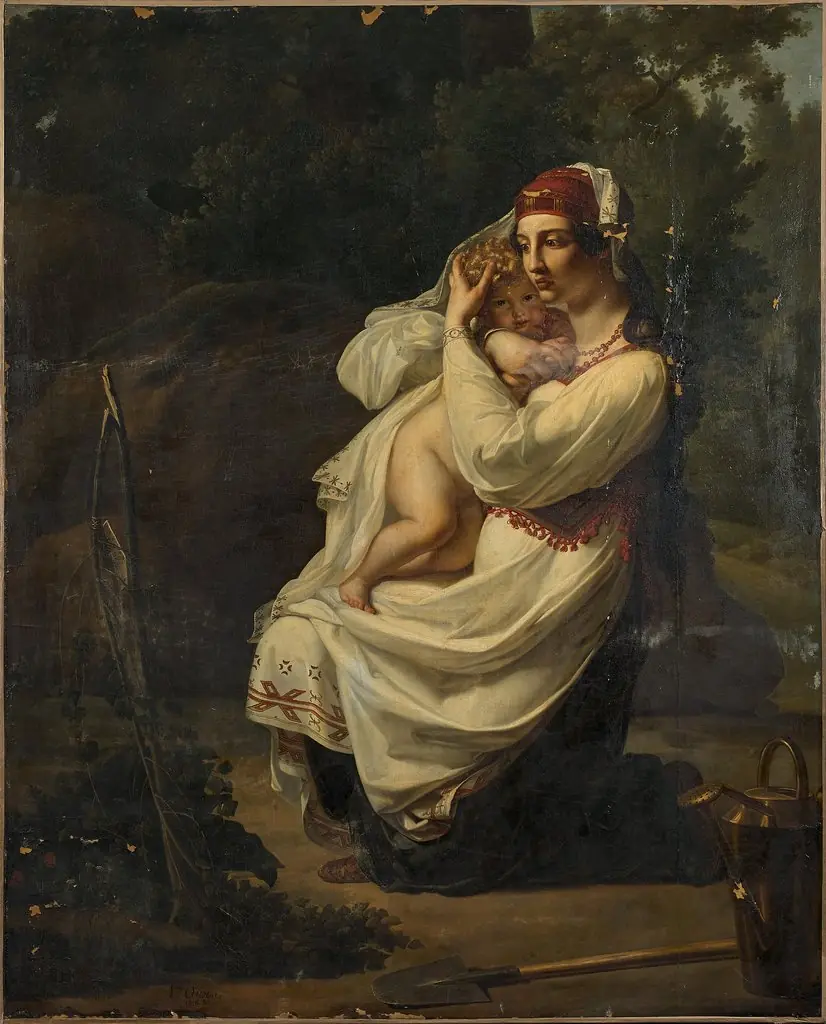
This painting depicts a moment of quiet rescue in the Alpine mountains, where a Saint Bernard dog assists a stranded woman and her ill child.
This painting depicts a moment of quiet rescue in the Alpine mountains, where a Saint Bernard dog assists a stranded woman and her ill child. The scene is rendered with calm precision, avoiding theatricality. The dog, identifiable by its collar-mounted barrel labeled 'St. Bern.', sits beside the pair, while the woman kneels against a rocky outcrop, holding the child close.
The composition emphasizes stillness over action, reflecting the dog’s role as a steady, reliable presence in harsh conditions.
Subject & Meaning
The subject draws from Alpine legends in which Saint Bernard dogs, bred and trained by monks, located travelers lost in snowstorms. The child’s rosary suggests spiritual endurance amid suffering, while the barrel, historically used to carry brandy for warmth, hints at practical aid from monastic communities. The scene blends earthly survival with quiet faith, portraying the dog not as a hero but as a patient instrument of deliverance, grounded in real rescue traditions of the Great St. Bernard Pass.
Technique & Style
The artist employs a restrained palette and soft modeling to convey the chill of the mountain environment. Light falls gently on the figures, emphasizing texture, the wool of the woman’s garment, the dog’s thick fur, the rough stone. The composition is balanced, with the dog and woman forming a stable triangle around the child.
Brushwork is precise but unobtrusive, avoiding dramatic contrasts; the mood is contemplative, aligning with the quiet dignity of the rescue.
History & Provenance
The painting reflects 19th-century European interest in Alpine rescue lore, popularized by accounts from the Great St. Bernard Monastery. Saint Bernards were indeed bred there and equipped with barrels containing spirits to revive frostbitten travelers. While the specific origin of this work is undocumented, its imagery aligns with contemporary illustrations and prints circulating in museums and illustrated journals, where such scenes were used to celebrate canine loyalty and monastic charity.
Context
In the 1800s, Alpine travel became more common, and stories of rescue dogs gained traction in popular culture. Monasteries promoted these tales to attract pilgrims and donations. Paintings like this one served both as documentation and moral allegory, reinforcing values of compassion and perseverance.
The inclusion of the rosary ties the rescue to broader religious narratives, positioning divine intervention as manifest through human and animal cooperation in nature’s harshest reaches.
Legacy
The image contributes to a lasting visual tradition of dogs as lifesavers in cold climates. While modern search-and-rescue dogs no longer carry barrels, the Saint Bernard’s association with mountain rescue endures in public memory. This painting, like others of its kind, helped cement the breed’s symbolic role, not as a pet, but as a silent guardian of human vulnerability in remote, perilous landscapes.
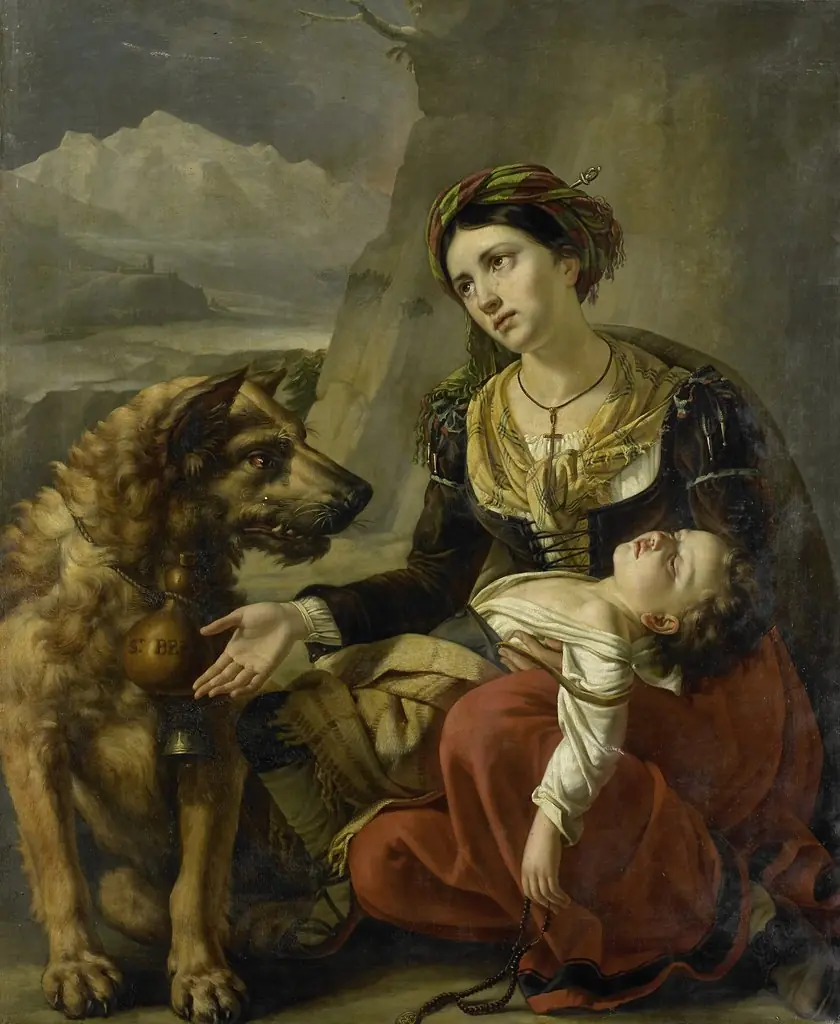
Own this work as a print
Artist & collection
Artist
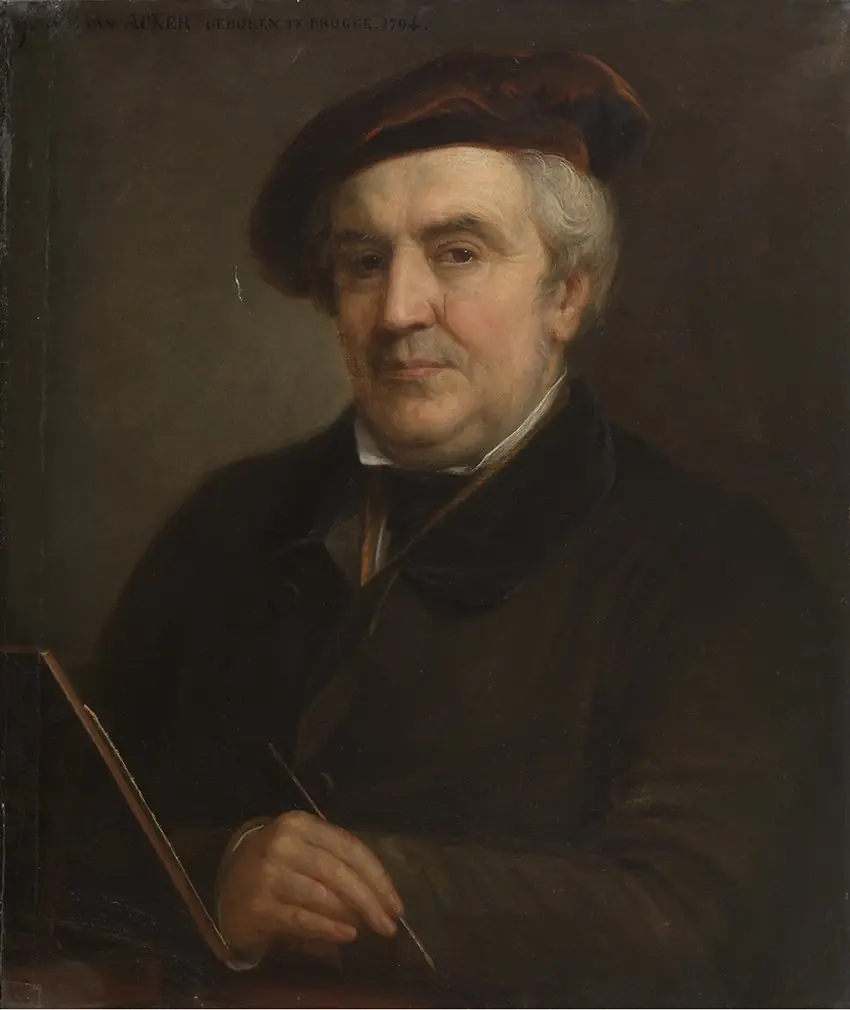
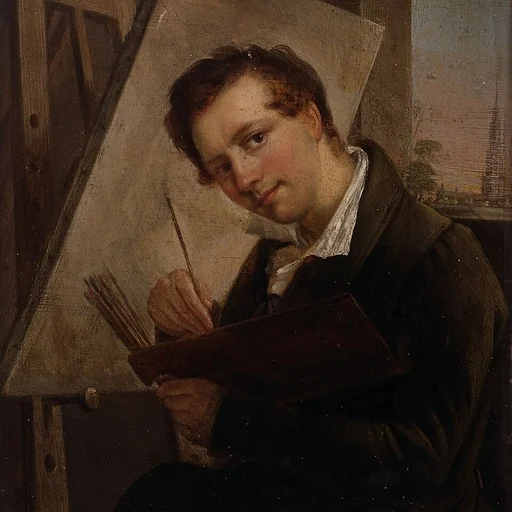
Charles Picqué (20 June 1799 – 21 March 1869), also called Charles-Louis Picqué, was a Belgian painter, lithographer and engraver known for his neo-classical and romantic works.