Artwork
Bright Lake and Beautiful Mountains

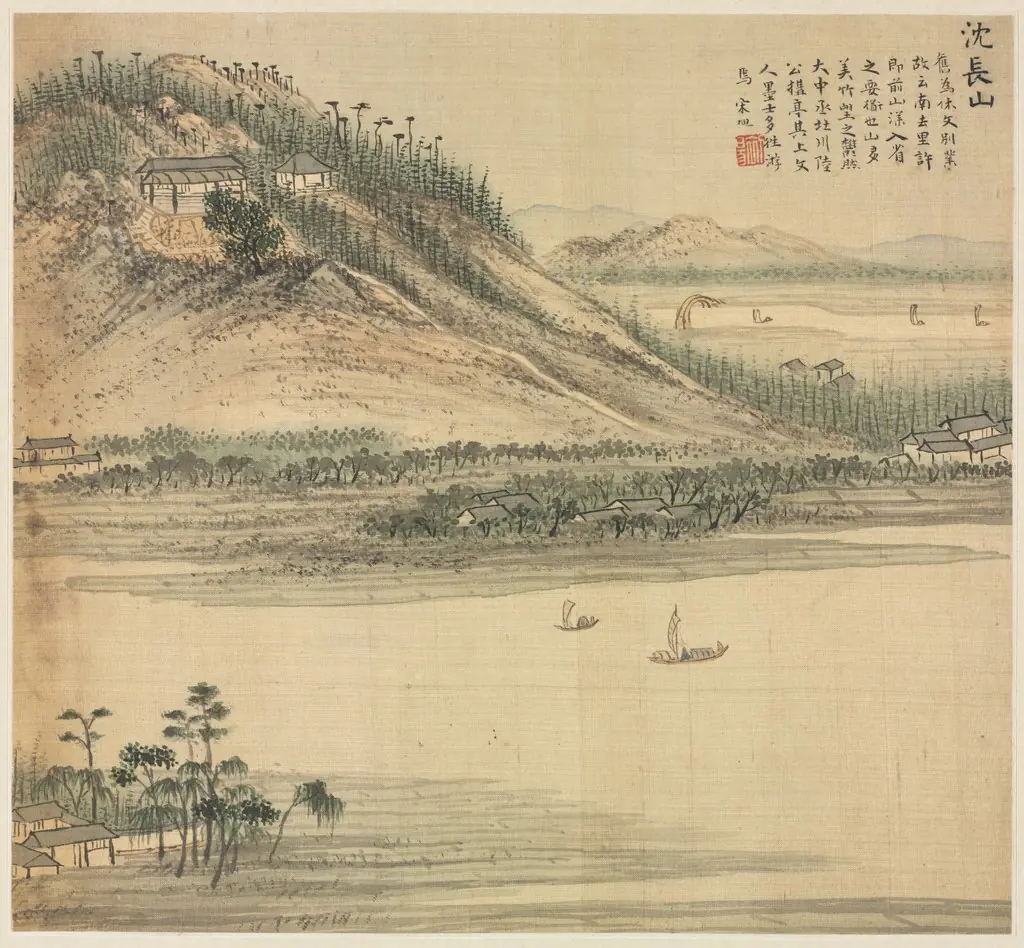
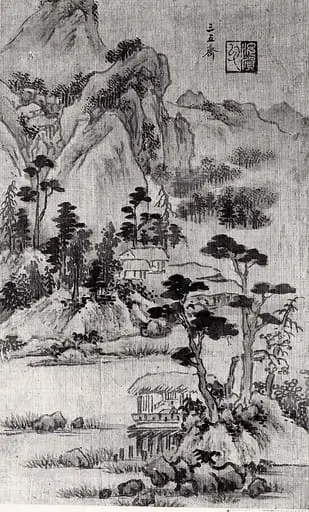
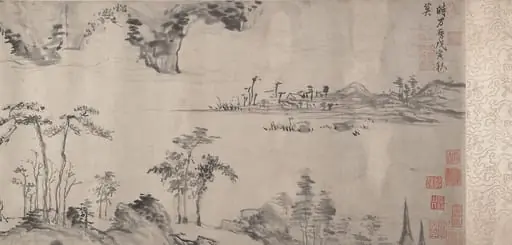
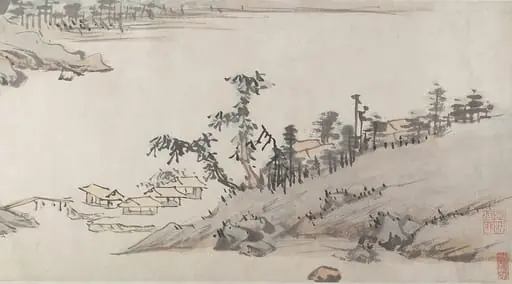
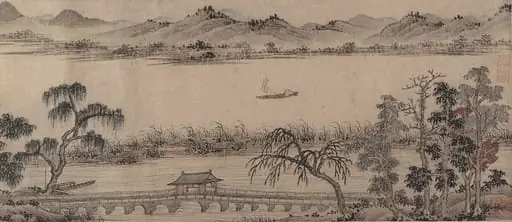
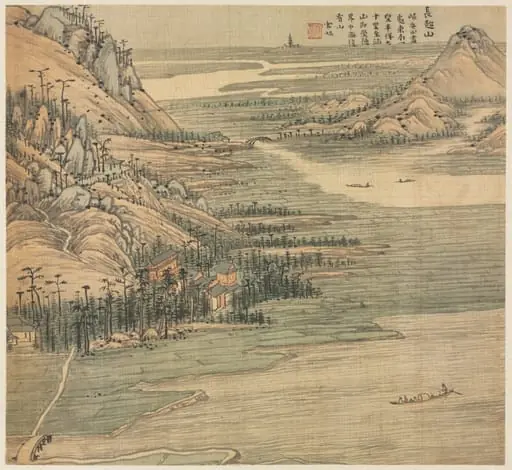
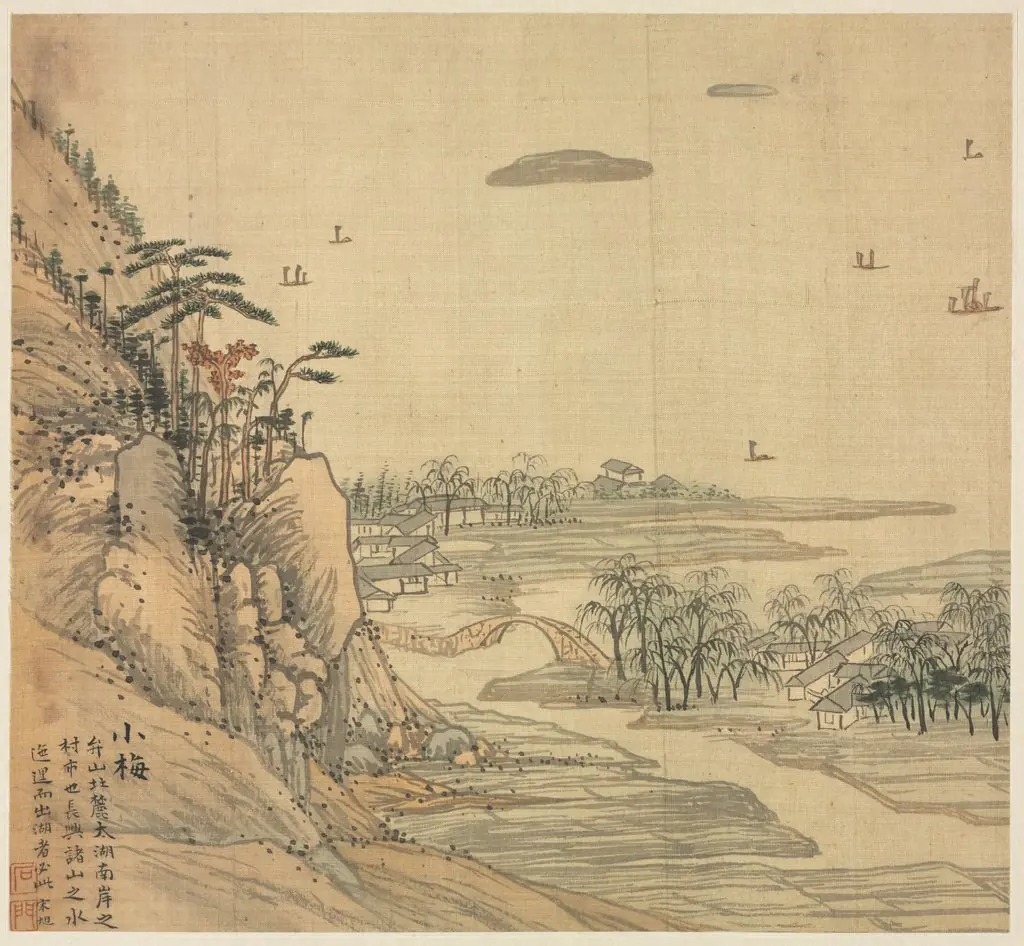
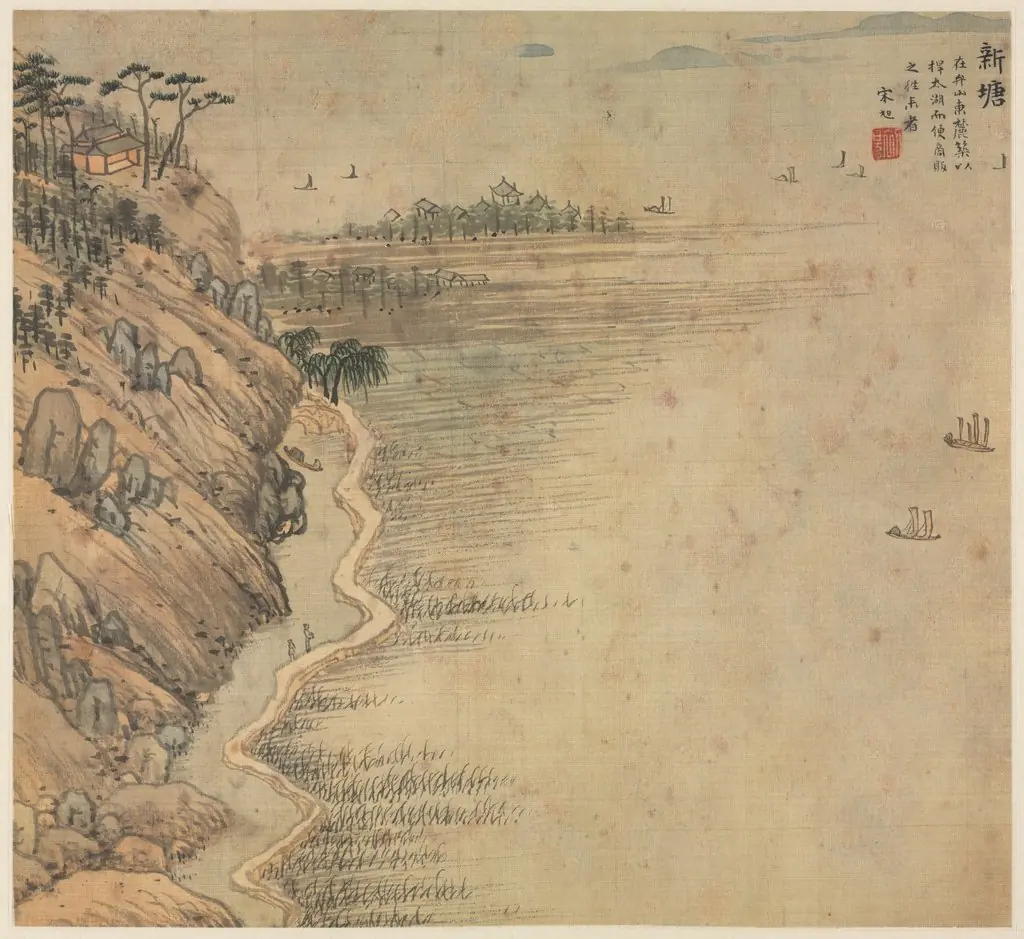
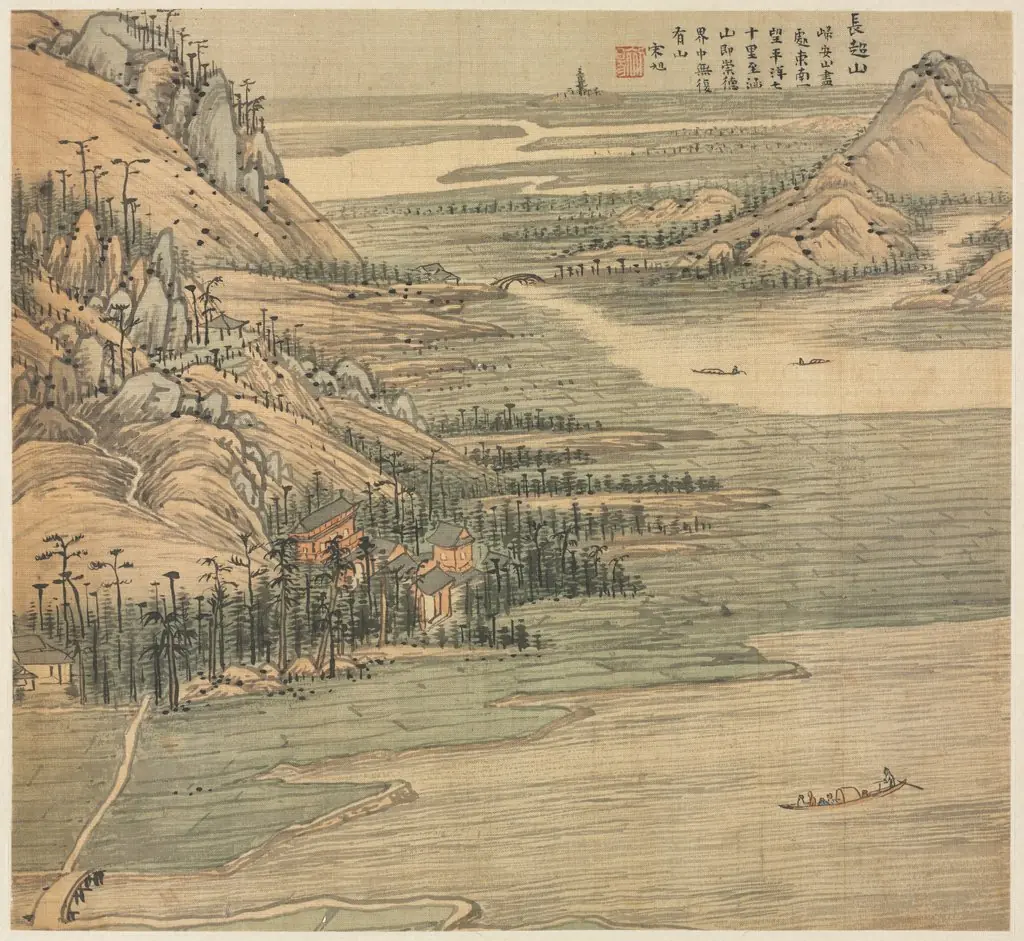
Bright Lake and Beautiful Mountains is an unspecified painting by the Ming dynasty painting artist Chen Gua. It dates from 1549 and is held in the collection of the Detroit Institute of Arts.
About this work
Overview
Painted in 1549 by Chen Gua, this ink-on-paper landscape captures a quiet expanse of water framed by distant peaks. The composition balances stillness and subtle motion, using tonal gradations rather than color to define space. Its restrained palette of gray, black, and white reflects the literati tradition of monochrome ink painting, emphasizing mood over literal representation.
Subject & Meaning
The scene presents an idealized natural world, calm waters, towering mountains, and dense foreground vegetation, common in Ming dynasty literati art. These elements symbolize harmony between humanity and nature, evoking contemplation rather than narrative. The absence of human figures reinforces a sense of solitude, aligning with Daoist ideals of retreat and quietude.
Technique & Style
Chen Gua employed varied brushwork to suggest texture and depth: dry strokes for rocky outcrops, wet washes for misty air, and fine lines for tree branches. The layered ink tones create atmospheric perspective, with lighter hues receding into the distance. This controlled yet expressive technique reflects the scholar-artist’s mastery of ink’s expressive potential.
History & Provenance
The painting entered the Detroit Institute of Arts’ collection in the 20th century, though its earlier ownership history remains undocumented. It is one of few surviving works attributed to Chen Gua, a lesser-known figure among Ming painters. Its preservation suggests it was valued by collectors for its refined execution and quiet aesthetic.
Context
Created during the mid-Ming period, the work aligns with a cultural shift toward introspective landscape painting among scholar-officials. While court artists favored colorful, detailed scenes, literati like Chen Gua favored monochrome ink for its spiritual resonance. This painting exemplifies the era’s preference for personal expression over public display.
Legacy
Though Chen Gua’s name is not widely recognized today, this painting contributes to the broader understanding of Ming literati aesthetics. Its preservation in a major Western institution allows continued study of how Chinese ink traditions were transmitted and appreciated beyond their original cultural context.
Artist & collection
Artist
Chen Gua painted Ming-dynasty landscapes like Bright Lake and Beautiful Mountains, a scroll dated 1549.