Artwork
明 陳洪綬 準提佛母法像圖 軸|Bodhisattva Guanyin in the Form of the Buddha Mother
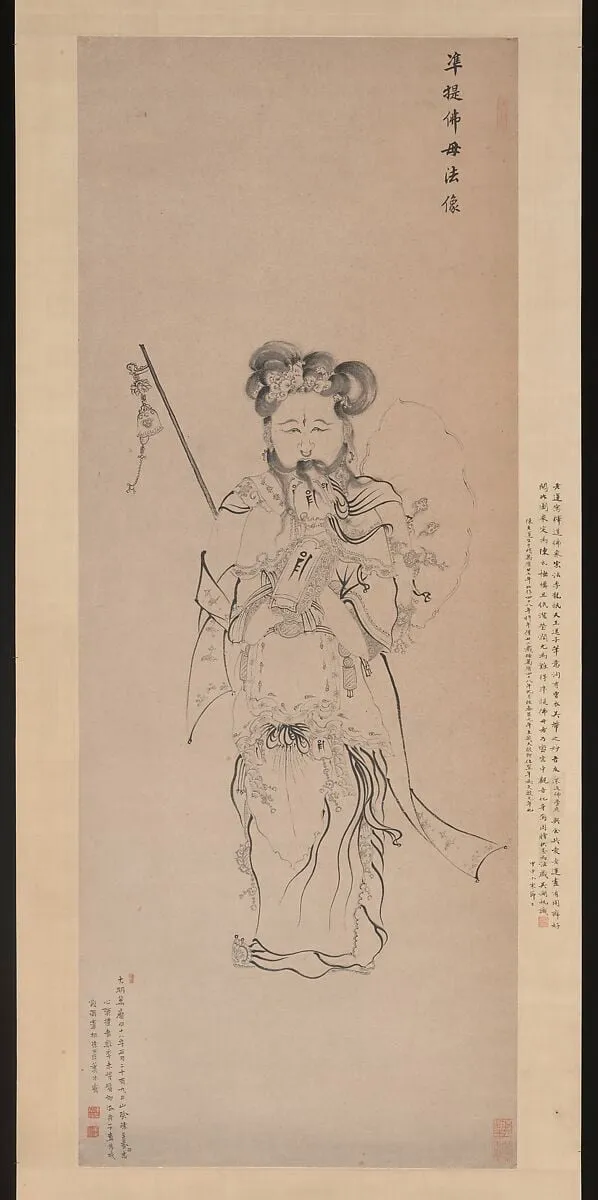
明 陳洪綬 準提佛母法像圖 軸|Bodhisattva Guanyin in the Form of the Buddha Mother is an ink painting by the Baroque artist Chen Hongshou. It dates from 1620 and is held in the collection of the Metropolitan Museum of Art.
About this work
If you like this, look up cross-hatching, the way Chen layers tiny ink strokes to build shadows and depth.
A robed figure sits on a lotus, many arms spread like a fan, each hand holding a different object. The face is calm, almost smiling, eyes half-closed.
Chen Hongshou painted this in 1620, when most Buddhist scrolls were stiff and formal. Here, the lines flow like calligraphy, soft, but sharp at the edges. The folds of the robe look like water ripples, even though they’re just ink on paper.
If you like this, look up cross-hatching, the way Chen layers tiny ink strokes to build shadows and depth.
Subject & Meaning
The work portrays a Bodhisattva within the context of Buddhism, specifically identified as the Buddha Mother form of Guanyin. Created by Chen Hongshou in 1620, this hanging scroll executed in ink on paper serves as a religious image. As a depiction of a Bodhisattva, the painting functions as a devotional object representing the spiritual figure's presence and attributes within Buddhist tradition.
The subject matter is firmly rooted in religious iconography, focusing on the visualization of the deity for veneration. The piece stands as a significant example of early 17th-century Chinese religious painting, capturing the essence of the Buddha Mother through the artist's distinctive style.
Technique & Style
Executed in 1620, this work by Chen Hongshou is a hanging scroll created with ink on paper. As a religious painting depicting the Bodhisattva Guanyin in the form of the Buddha Mother, the piece utilizes a monochromatic palette restricted to ink, foregoing color to define the sacred figure. The choice of paper as the support medium distinguishes it from silk-based works common in the period, while the hanging scroll format indicates its intended use for vertical display, likely within a devotional context.
The composition focuses entirely on the Buddhist deity, adhering to the genre's iconographic requirements through the artist's specific handling of the ink medium to render the form.
History & Provenance
The hanging scroll titled Bodhisattva Guanyin in the Form of the Buddha Mother was created in 1620 by the Chinese artist Chen Hongshou, also known as Chen Zi. Executed in ink on paper, this religious work originated in China during the Ming dynasty. The painting is currently held in the collection of the Metropolitan Museum of Art.
While the specific commissioning patron or detailed ownership chain prior to its arrival at the museum is not detailed in the available records, the work's inception is firmly dated to 1620. The piece represents a significant example of Chen Hongshou's religious art from the early seventeenth century, depicting a Bodhisattva within the Buddhist tradition.
The painting is held by the Metropolitan Museum of Art, New York, where it is inventoried as 1987.133.1. The work was accessioned in 1987 as part of the Mr. and Mrs. Earl Morse Collection. It has not been recorded in any public exhibition history according to available institutional records.
Overview
Chen Hongshou's Bodhisattva Guanyin in the Form of the Buddha Mother is an ink-on-paper hanging scroll from 1620. This religious painting portrays a revered Buddhist figure, specifically Guanyin in a powerful manifestation. The artwork exemplifies the artist's distinctive approach to spiritual subjects, rendering the deity with both traditional reverence and a unique stylistic interpretation.
Context
Created in 1620, this painting emerged during a period when many Buddhist devotional scrolls adhered to established, often formal and somewhat rigid artistic traditions. Chen Hongshou's interpretation, however, introduces a notable stylistic innovation. His work demonstrates a conscious move towards a more dynamic and expressive rendering of sacred imagery, distinguishing it from the prevailing artistic norms of its time.
Artist & collection

 明/清 陳洪綬、陳字 雜畫 冊|Figures, flowers, and landscapes
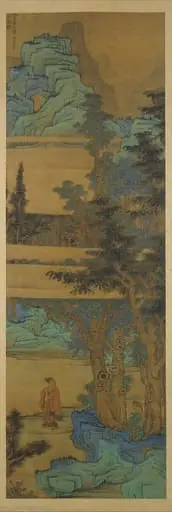 明 陳洪綬 樹下高士圖 軸|Scholar-recluse in blue-green landscape
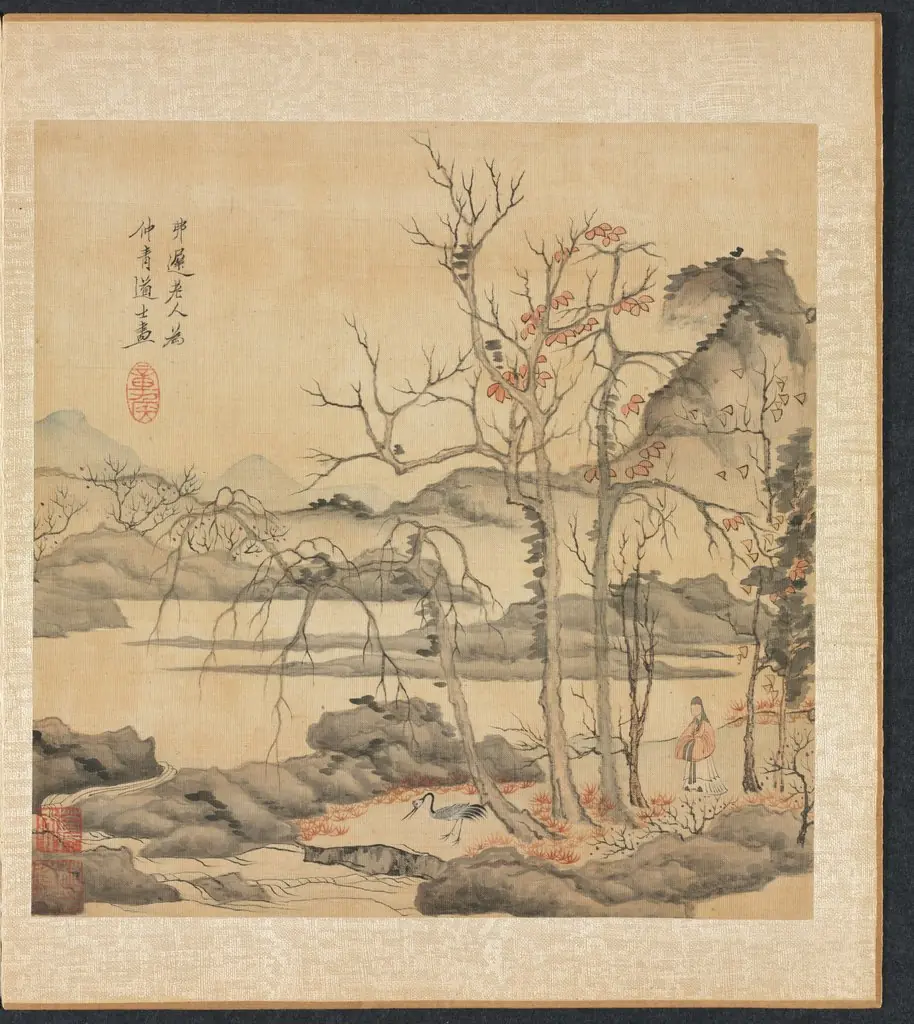 Paintings after Ancient Masters: Daoist and Crane in Autumn Landscape
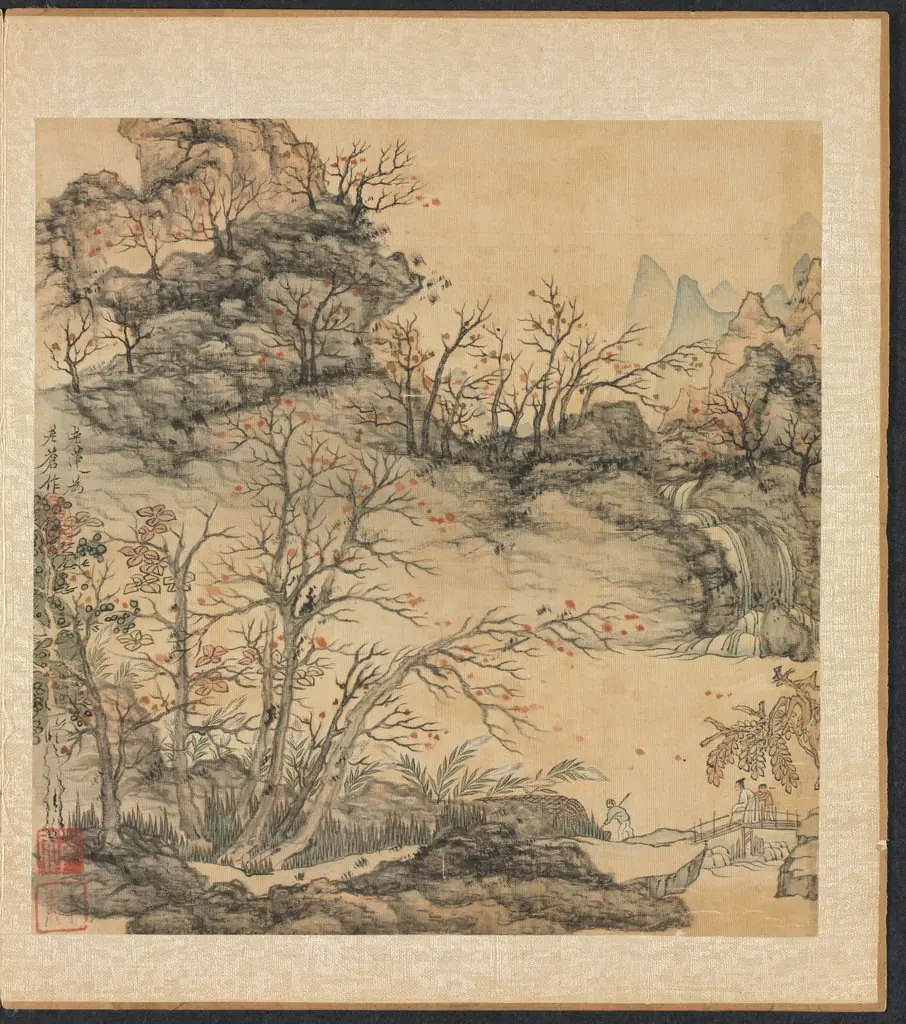 Paintings after Ancient Masters: Autumn Landscape
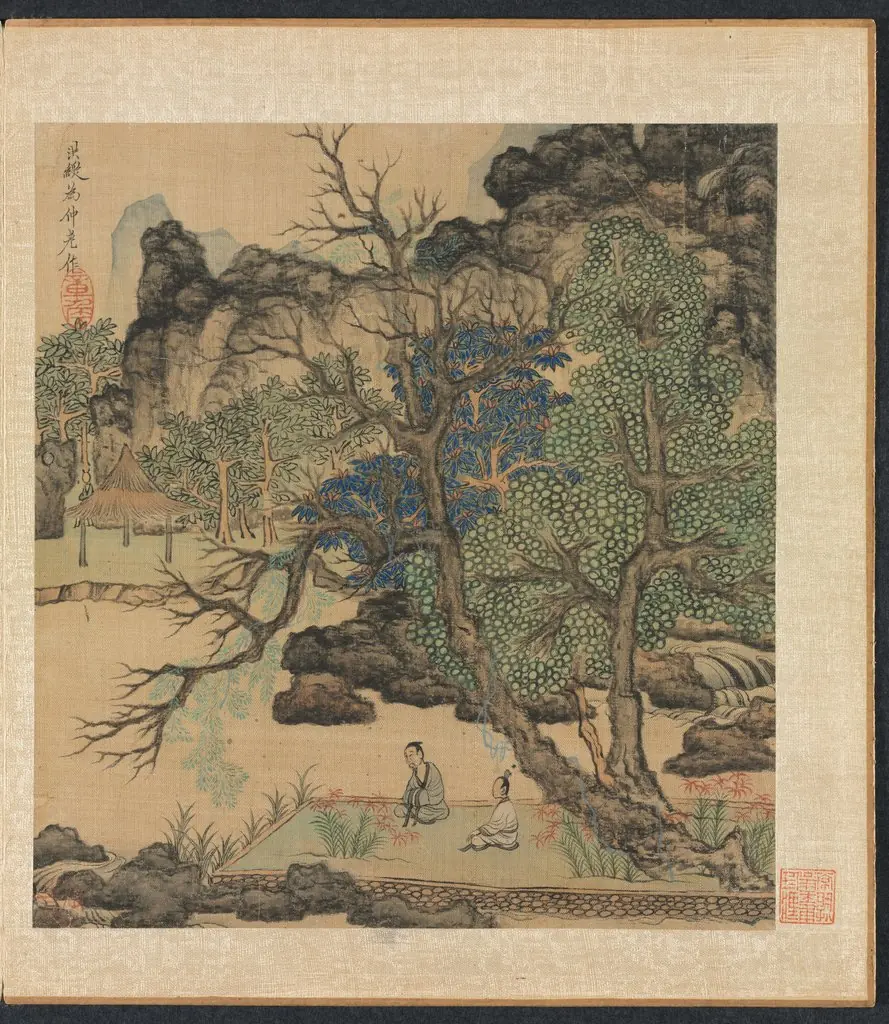 Paintings after Ancient Masters: Scholars in a Garden
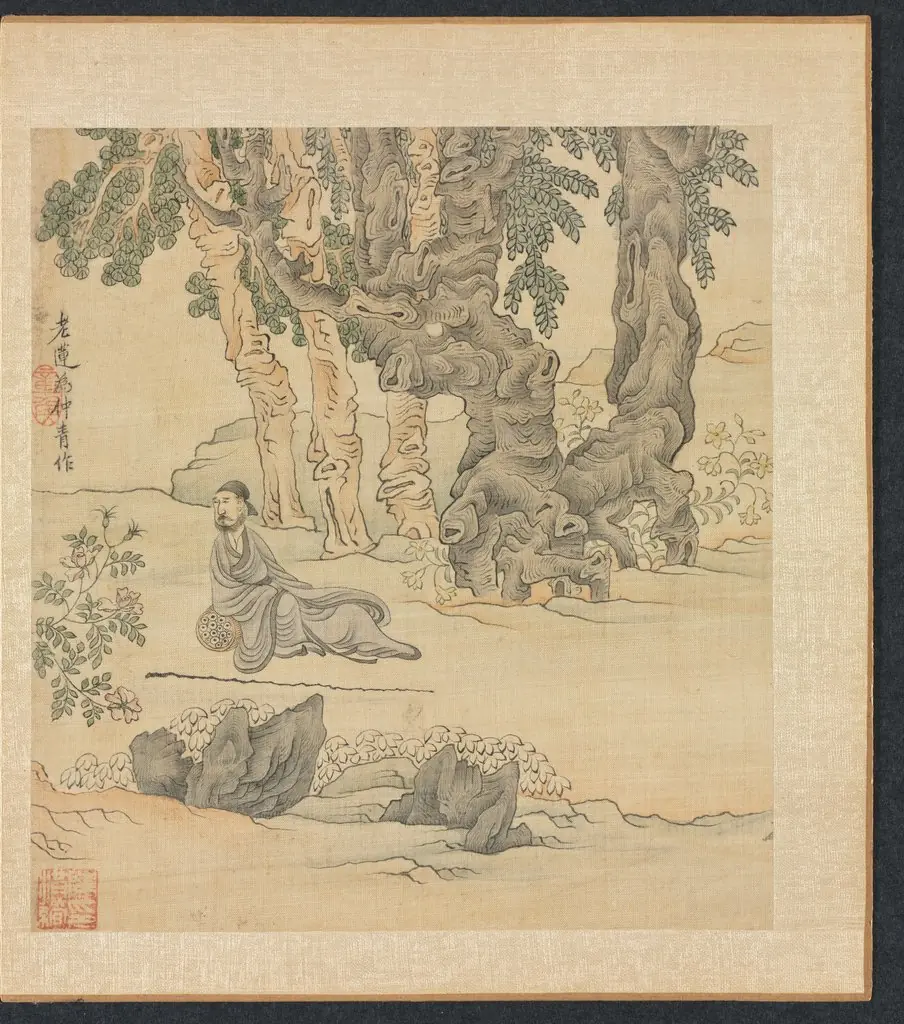 Paintings after Ancient Masters: Portrait of Zhongqing in a Landscape
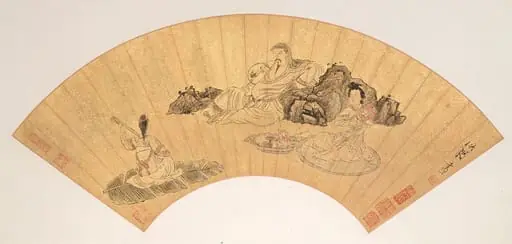 明 陳洪綬 山水花鳥人物圖 扇冊|Landscapes and Flowers
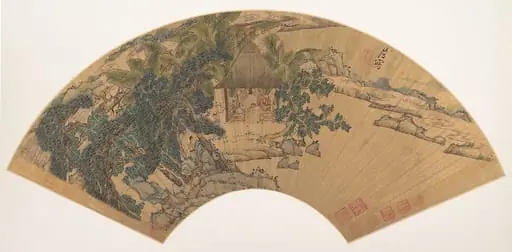 明 陳洪綬 山水圖 扇|Landscape
 Untitled
 狩野孝信筆 布袋図「拄杖擊破三千界。彌勒撫掌笑呵呵,明月清風無。」|Hotei
 清 蘇仁山 李凝陽像 軸|The Immortal Li Tieguai
 Ichimura Uzaemon IX as Shingen in “A String of Prayer Beads Shaken at a Ribbon of Waterfall”
 Untitled
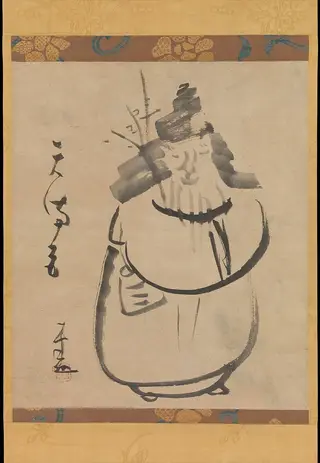 「天満宮」 渡唐天神図|“Tenmangū,” Sugawara no Michizane as Tenjin Traveling to China
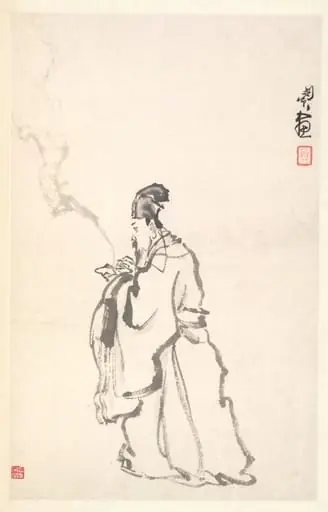 Su Dongpo
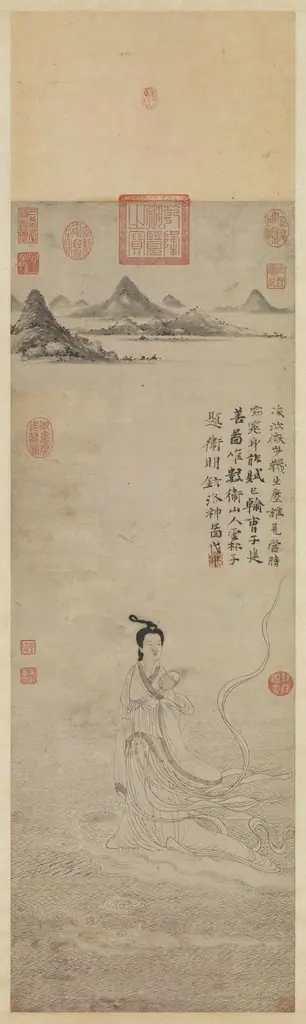 Nymph of the Luo River
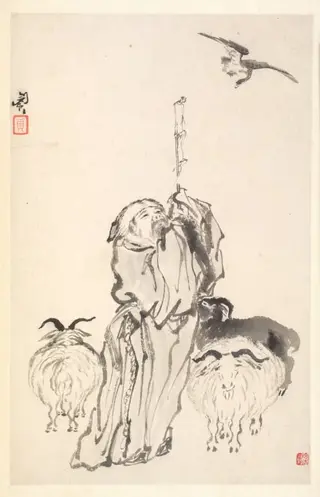 Su Wu the Shepherd
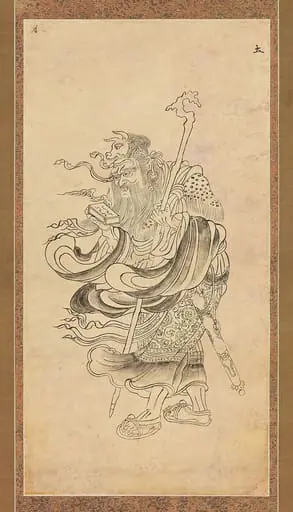 土曜図像|Iconographic Drawing of Saturn