Artwork
明 陳洪綬 樹下高士圖 軸|Scholar-recluse in blue-green landscape
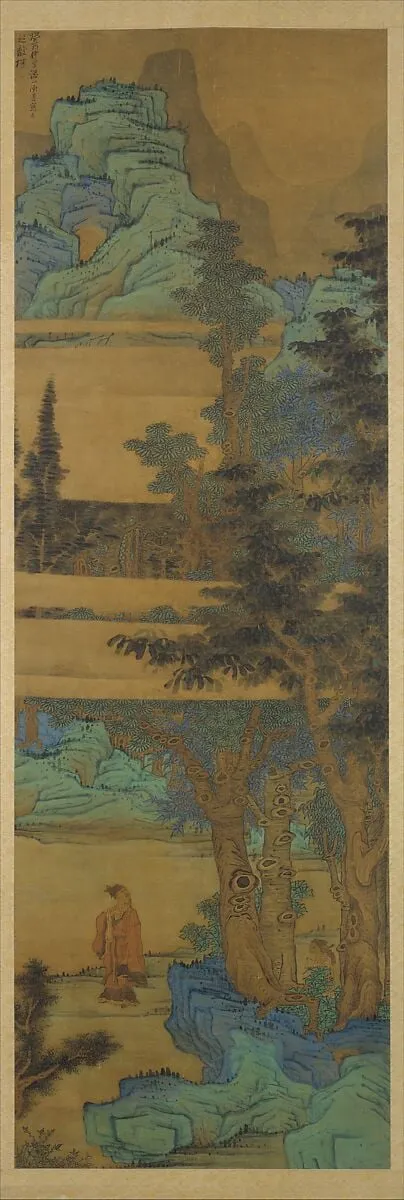
明 陳洪綬 樹下高士圖 軸|Scholar-recluse in blue-green landscape is an ink painting by the Baroque artist Chen Hongshou. It dates from 1633 and is held in the collection of the Metropolitan Museum of Art.
About this work
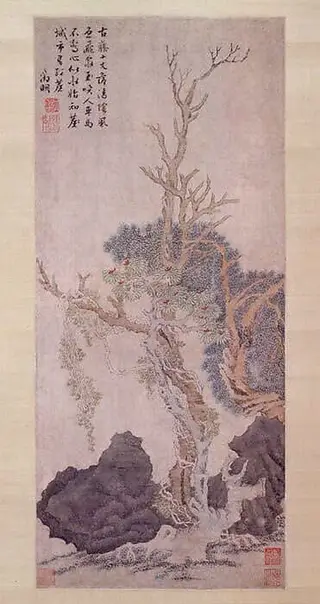
A man in a long blue robe sits reading a scroll beneath a twisted tree, rocks and mist swirling around him in soft jade greens and blues. Chen Hongshou painted his figures with exaggerated features, long fingers and sharp noses, here picturing an idea of wisdom and calm rather than a real person. Painted in 1633.
Subject & Meaning
The blue‑green palette and stylized rocks reinforce associations with classical landscape symbolism, suggesting harmony between humanity and nature.
The painting shows a solitary male figure identified as a scholar‑recluse standing beneath a tree within a blue‑green landscape, a composition typical of Ming‑dynasty literati art. The figure’s simple robes and the secluded setting convey the ideal of the hermit‑sage who withdraws from worldly turmoil to pursue moral cultivation and scholarly contemplation. The blue‑green palette and stylized rocks reinforce associations with classical landscape symbolism, suggesting harmony between humanity and nature.
Executed in 1633 on a hanging silk scroll, the work reflects Chen Hongshou’s mastery of ink and color and his engagement with the cultural theme of retreat, which scholars interpret as both personal expression and a subtle commentary on the political instability of his era.
Technique & Style
The work is a hanging scroll executed in ink and polychrome on silk, dated 1633 and attributed to Chen Hongshou. It belongs to the landscape painting genre and portrays a scholar‑recluse within a blue‑green landscape, a composition typical of the period’s stylized spatial depth and muted tonal modulation. The piece is part of the Metropolitan Museum of Art’s collection, where it is preserved under controlled environmental conditions suitable for silk supports.
Its formal qualities include a restrained palette, delicate brushwork, and an emphasis on atmospheric perspective that conveys a contemplative mood. The artwork’s handling requires careful conservation due to its fragile silk substrate.
History & Provenance
The hanging scroll titled Scholar-recluse in blue-green landscape was created by the artist Chen Hongshou, also known as Chen Zi, in the year 1633. Executed in ink and color on silk, this work depicts a man within a landscape setting and is classified as a landscape painting. The piece originated in China and is currently held in the collection of the Metropolitan Museum of Art.
No specific details regarding the original commission, the identity of the initial patron, or the intermediate ownership chain prior to its arrival at the museum are provided in the available records. The dating to 1633 establishes the work within the late Ming dynasty period.
Overview
Created in 1633, Scholar-recluse in blue-green landscape is a hanging scroll by the late Ming dynasty master Chen Hongshou (1598–1652). Executed in ink and color on silk, the work depicts a solitary figure in a long blue robe seated beneath a gnarled, twisting tree while reading a scroll. The composition is defined by Chen's distinctive stylistic mannerisms, characterized by exaggerated physiognomy and elongated forms that lend the scholar an almost puppet-like presence.
The landscape setting utilizes a blue-green palette of soft greens and blues, evoking the texture of aged jade, while rocks and swirling mist create a dreamlike atmosphere surrounding the recluse. This piece exemplifies Chen's mature output during the early 17th century, a period marked by his departure from strict naturalism in favor of expressive distortion and archaic revivalism. The work reflects the artist's interest in literati themes of seclusion and introspection, rendered through a unique visual language that combines traditional landscape elements with idiosyncratic figure painting.
It stands as a significant example of his contribution to 17th-century Chinese art, bridging the gap between Ming dynasty traditions and the emerging stylistic complexities of the era.
Artist & collection

 明/清 陳洪綬、陳字 雜畫 冊|Figures, flowers, and landscapes
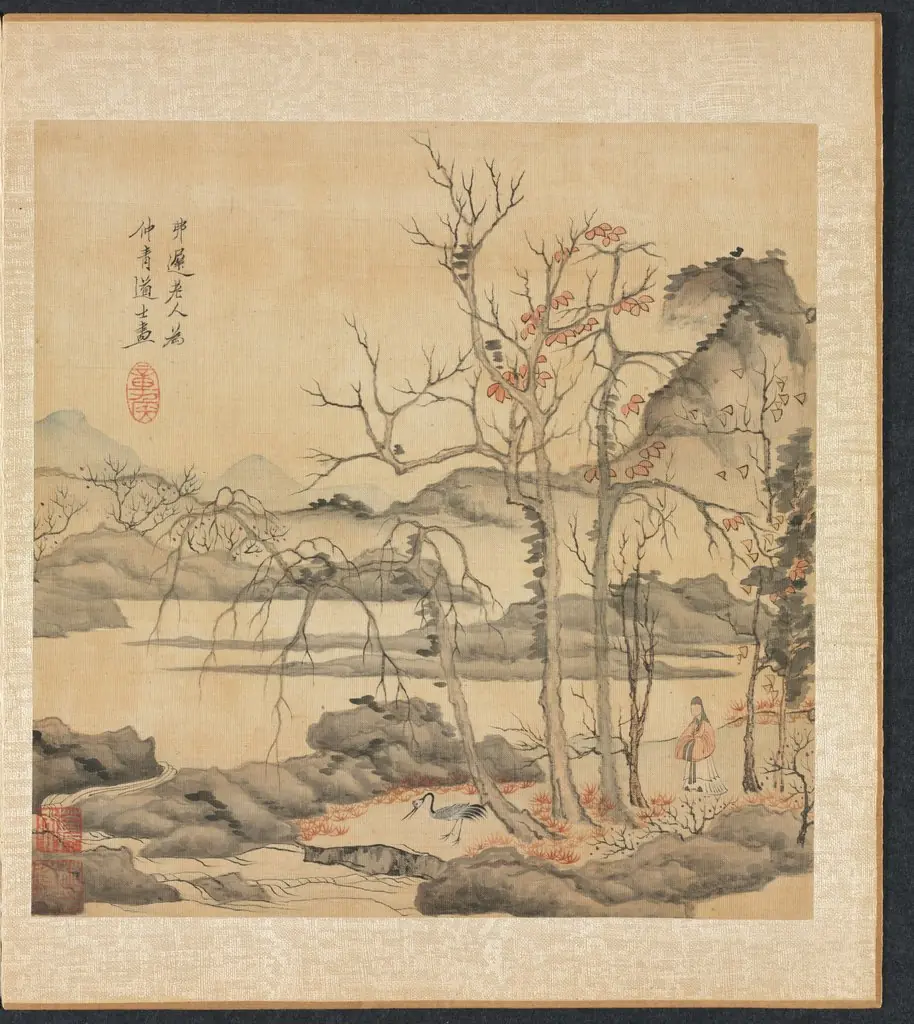 Paintings after Ancient Masters: Daoist and Crane in Autumn Landscape
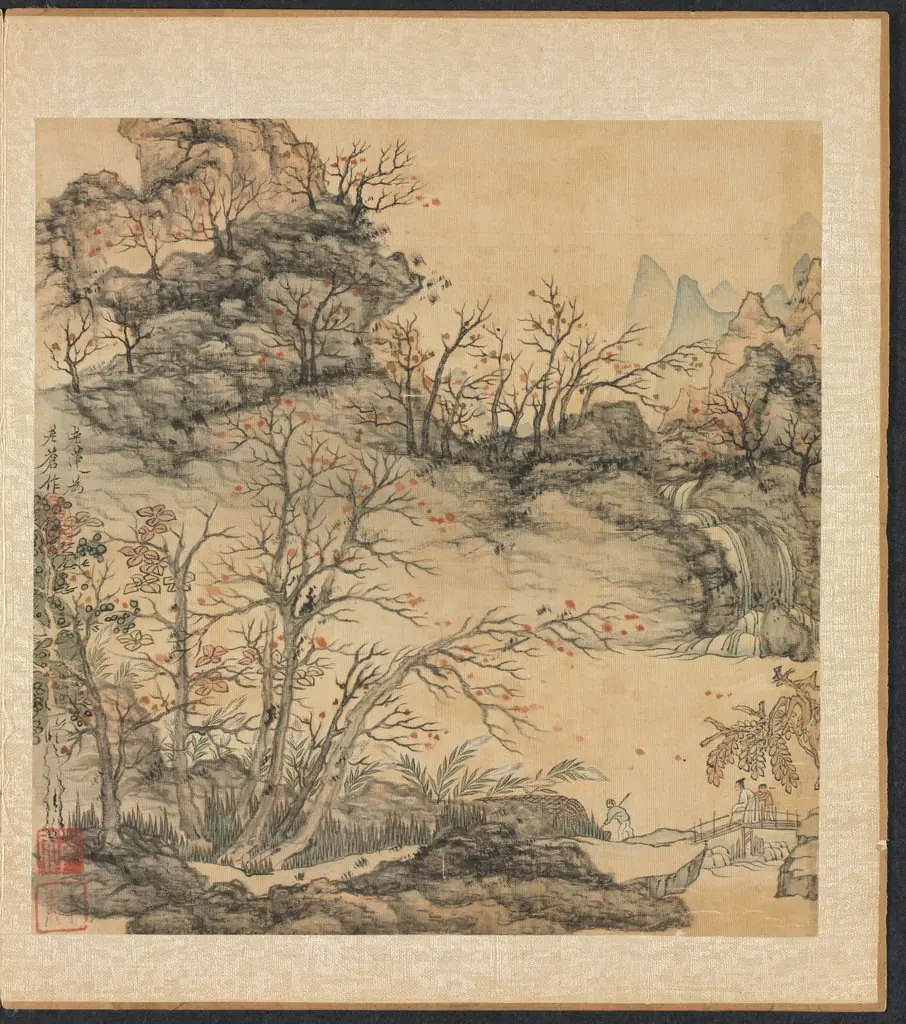 Paintings after Ancient Masters: Autumn Landscape
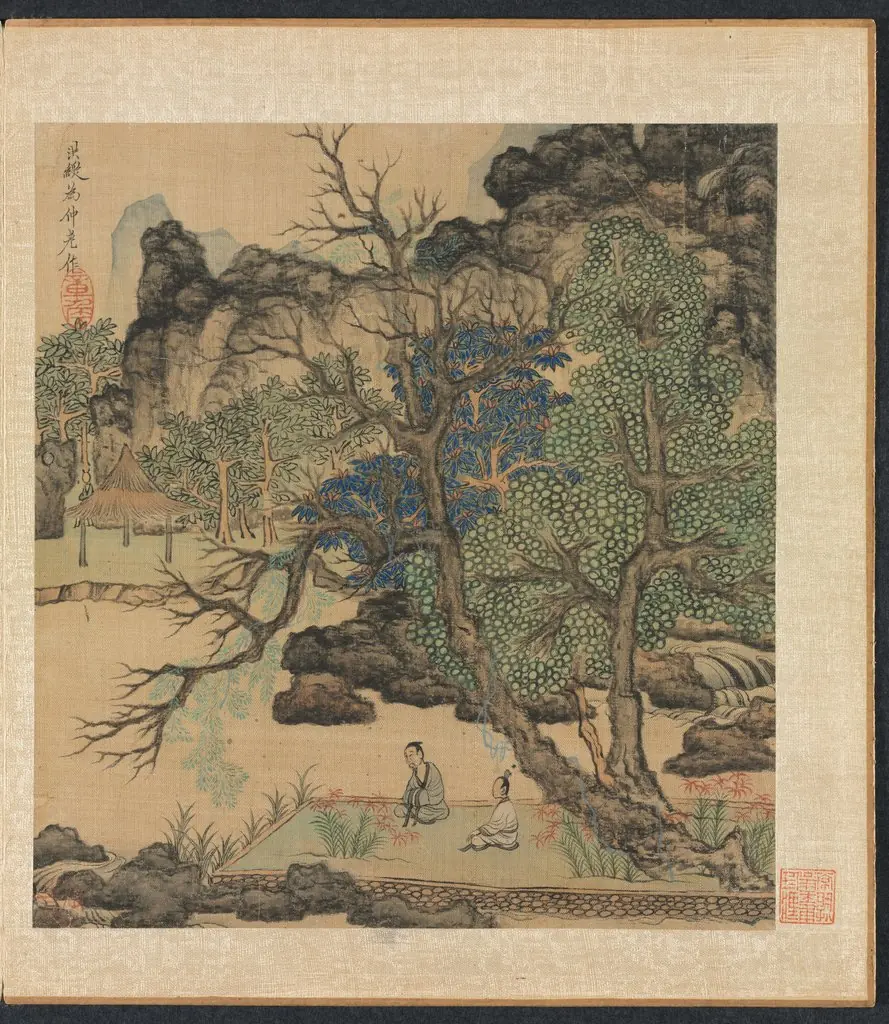 Paintings after Ancient Masters: Scholars in a Garden
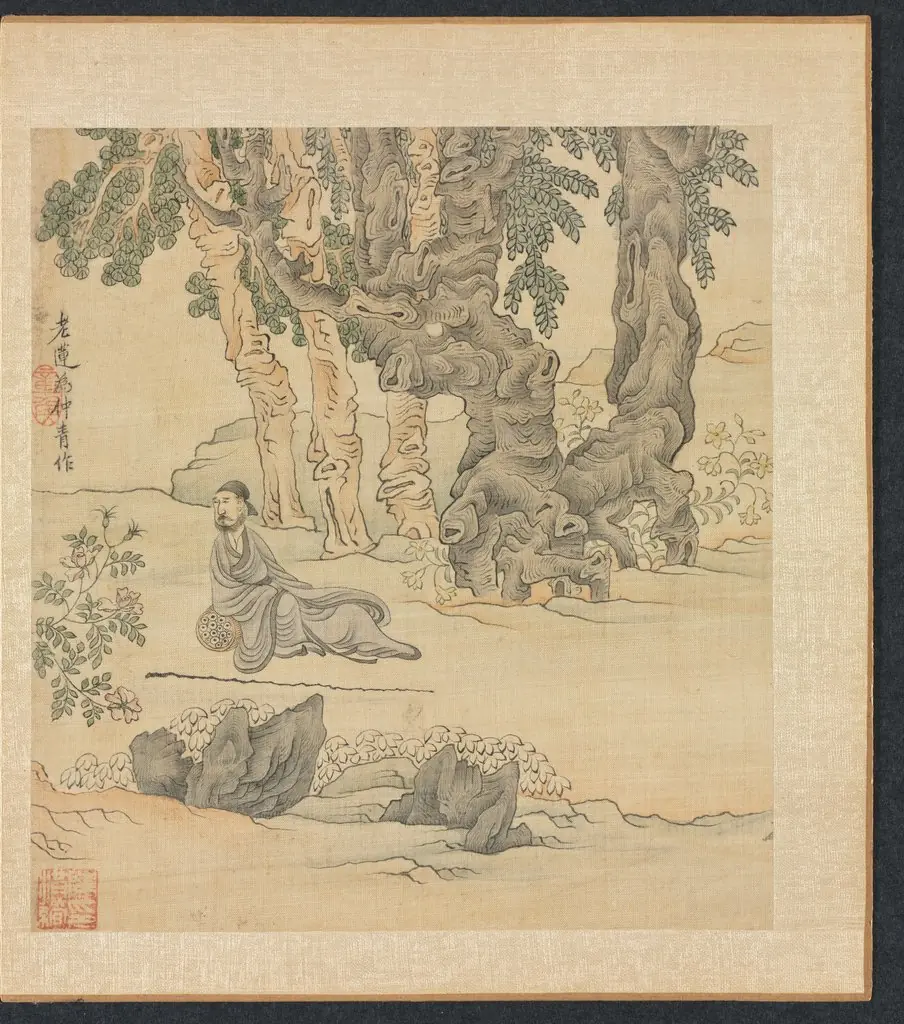 Paintings after Ancient Masters: Portrait of Zhongqing in a Landscape
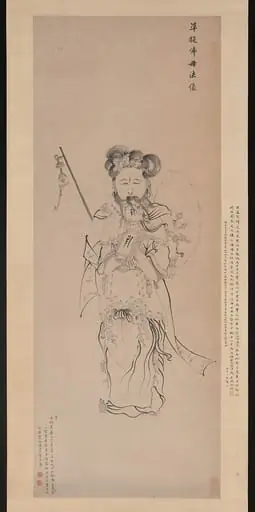 明 陳洪綬 準提佛母法像圖 軸|Bodhisattva Guanyin in the Form of the Buddha Mother
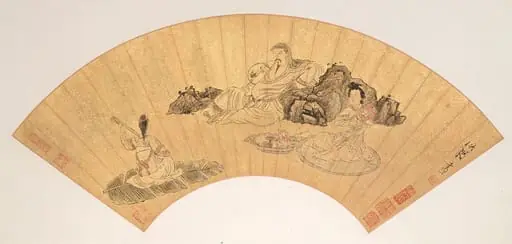 明 陳洪綬 山水花鳥人物圖 扇冊|Landscapes and Flowers
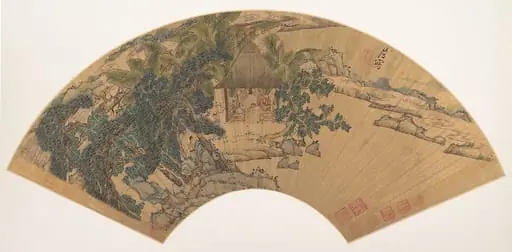 明 陳洪綬 山水圖 扇|Landscape
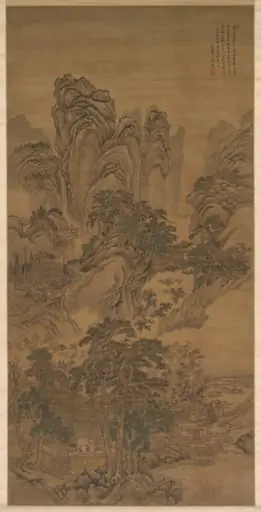 Landscape
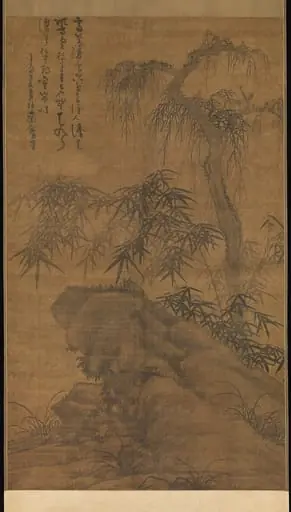 元 吳鎮 高節凌雲圖 軸|Bamboo, old tree, and rock
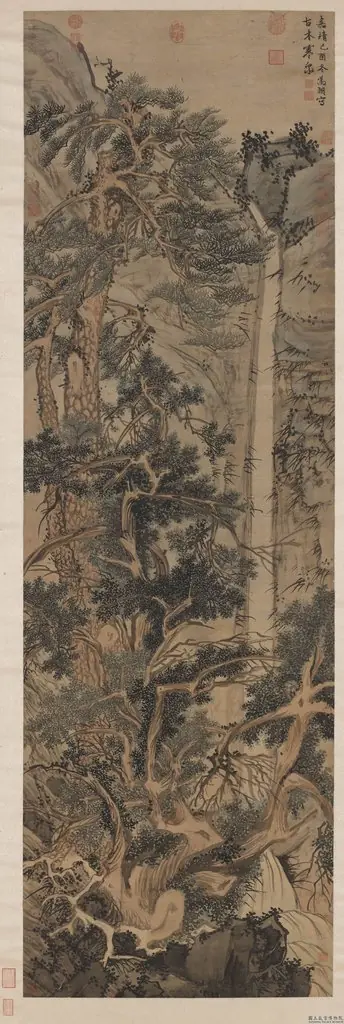 Old Trees by a Cold Waterfall
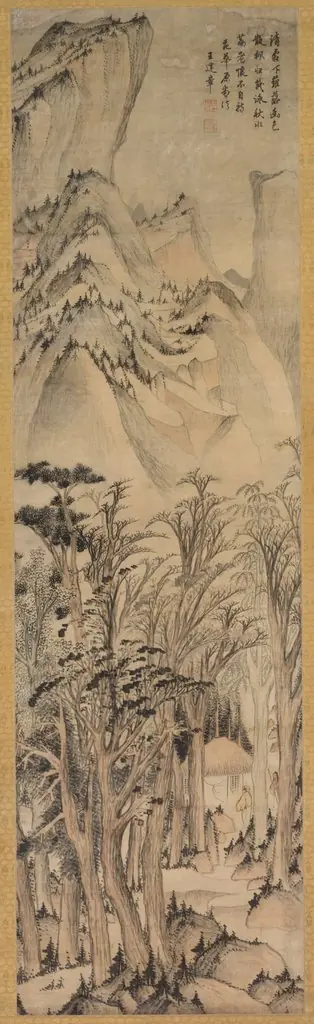 Solitary Colors of the Autumn Woods
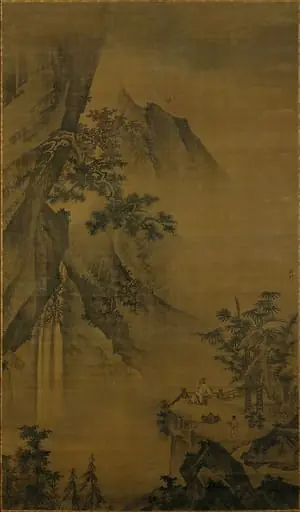 明 鍾禮 觀瀑圖 軸|Li Bai gazing at the waterfall on Mount Lu
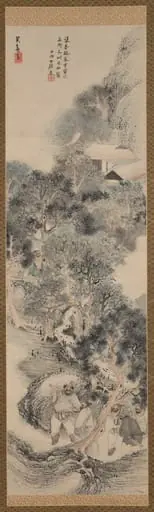 Happy Forest, from Water Margin
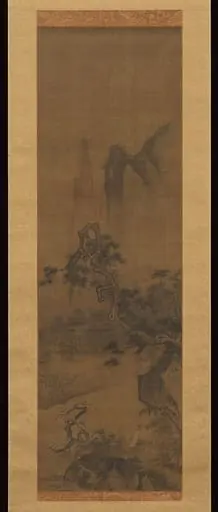 南宋 佚名 賞梅圖 軸|Scholar admiring plum blossoms
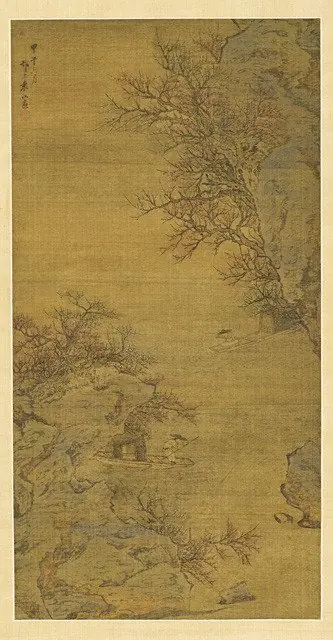 River-Crossing in the Spring
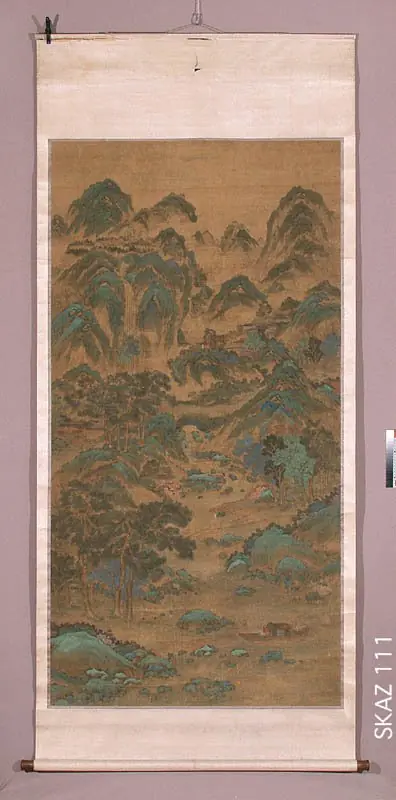 Przeprawa przez górski potok - pejzaż w stylu niebiesko-zielonym
 明? 佚名 傳文徵明 古藤樹石圖 軸|Old Wisteria among Trees and Rocks