Artwork
明清/日本江戶時代 (傳) 陳賢 十六羅漢圖 冊|The Sixteen Luohans
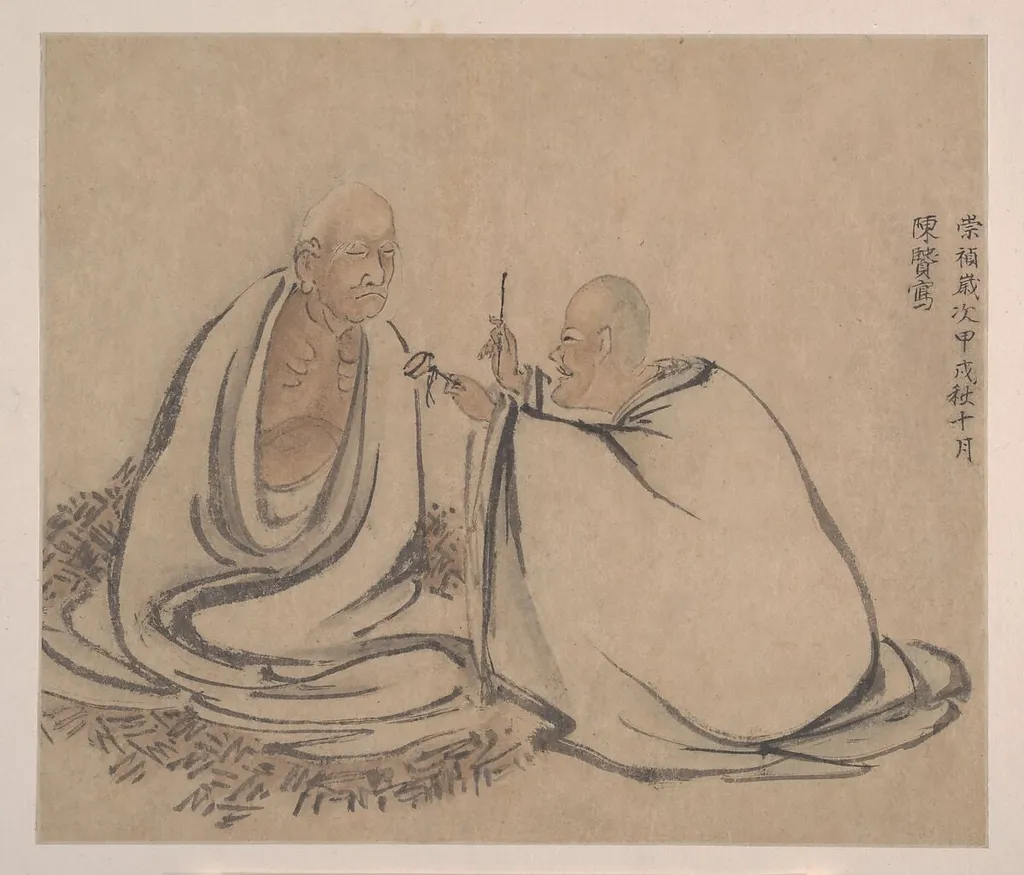
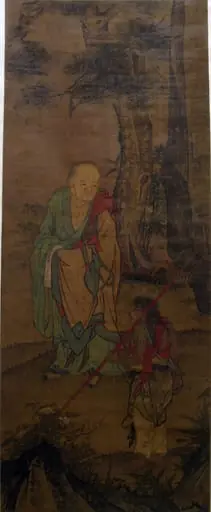
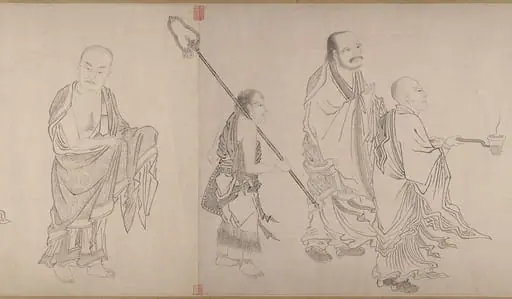
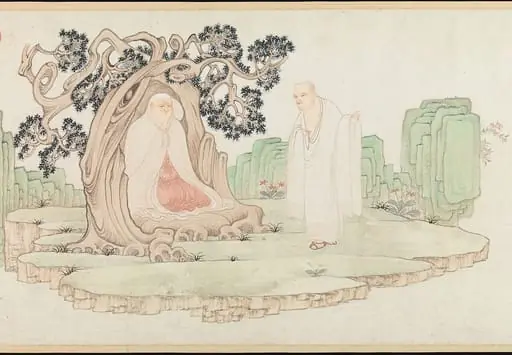
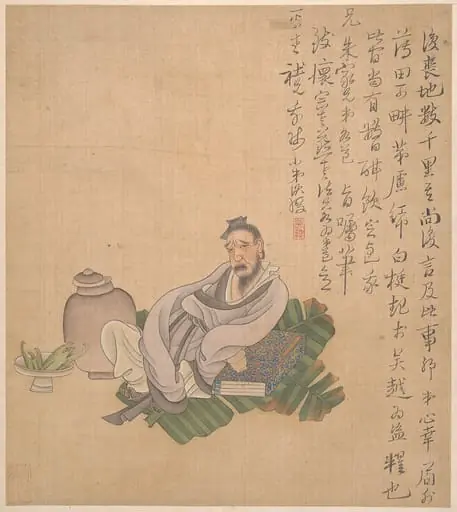
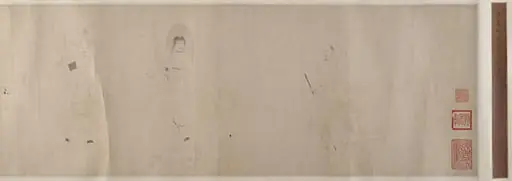
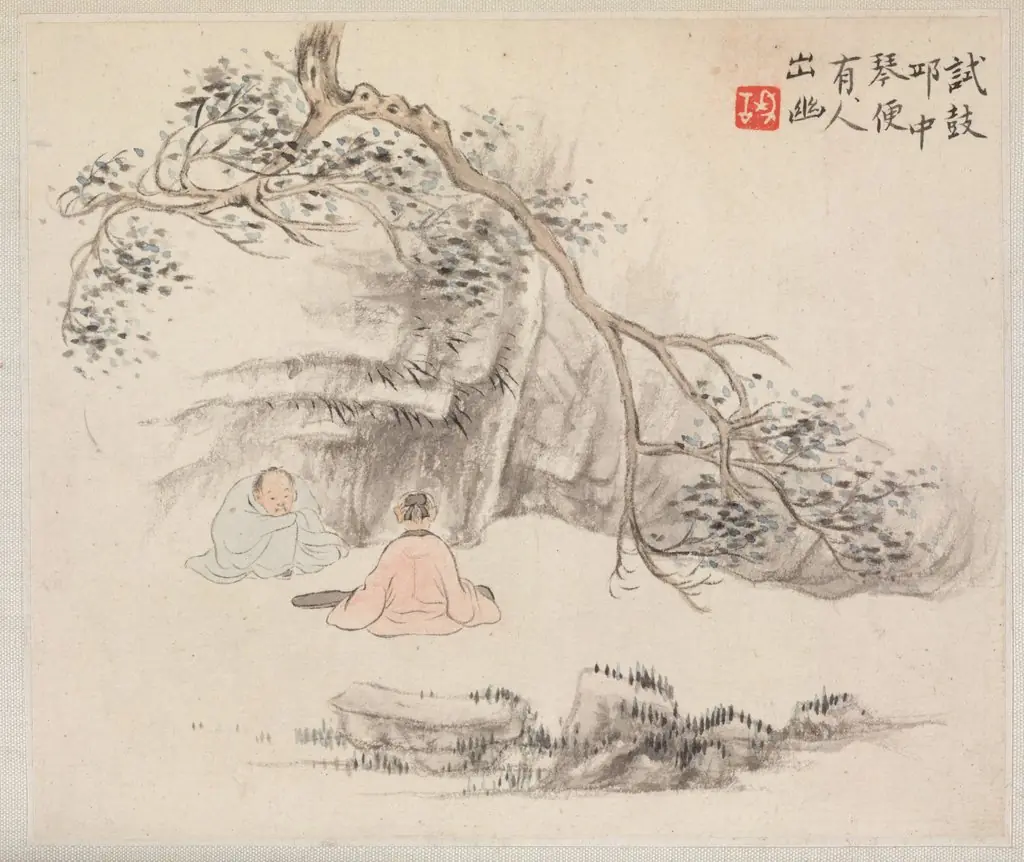
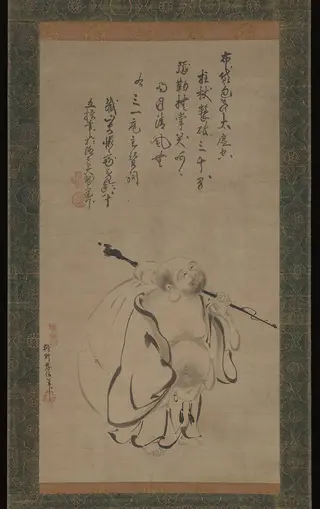
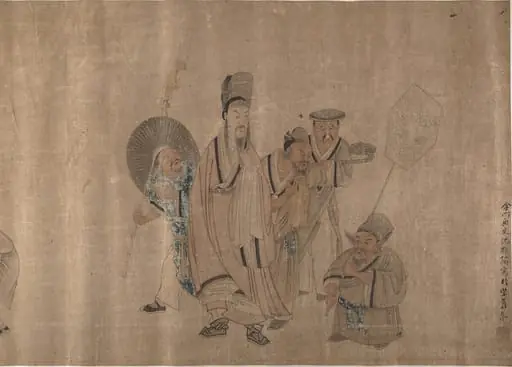
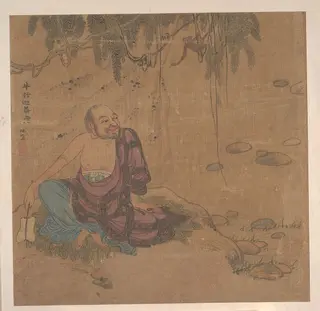
明清/日本江戶時代 (傳) 陳賢 十六羅漢圖 冊|The Sixteen Luohans is an ink painting by the Baroque artist Chen Xian. It dates from 1634 and is held in the collection of the Metropolitan Museum of Art. The work consists of an album containing sixteen individual paintings, each rendered in ink and color on paper.
About this work
Subject & Meaning
The work depicts the Sixteen Luohans, a group of sixteen senior disciples of the Buddha in Buddhist tradition, who are portrayed here as individual male figures. As a religious album created in 1650, the series illustrates these enlightened beings, often referred to as Arhats, who are tasked with protecting the Buddhist Dharma until the arrival of the future Buddha. Each painting within the sixteen-page album focuses on a single man, emphasizing their distinct identities and spiritual status within the iconographic framework of Chinese Buddhist art.
The subject matter serves as a visual representation of the ideal of monastic discipline and the attainment of Nirvana, reflecting the devotional practices and theological concepts prevalent in the mid-seventeenth century.
Technique & Style
The Sixteen Luohans is an album consisting of sixteen individual paintings executed in ink and color on paper. Created in 1650, the work is classified as a religious genre piece depicting male figures. Each leaf measures 25.7 cm in height and 30.2 cm in width.
The medium combines traditional ink wash techniques with applied color to render the subjects on a paper support.
History & Provenance
The Sixteen Luohans is attributed to Chen Xian and dated to 1650, an inception recorded in the work's catalogue data and corroborated by Wikidata records.
The Sixteen Luohans is attributed to Chen Xian and dated to 1650, an inception recorded in the work's catalogue data and corroborated by Wikidata records. The album, executed in ink and color on paper, is held in the collection of the Metropolitan Museum of Art, where it is currently located. No further details concerning an earlier ownership chain, original commission, or intervening provenance prior to its accession at the museum are documented in the available sources.
The album of sixteen paintings titled The Sixteen Luohans, attributed to Chen Xian and dated to 1650, is held in the collection of the Metropolitan Museum of Art. The work, executed in ink and color on paper, measures 25.7 cm in height and 30.2 cm in width. While the sources confirm its current location and physical dimensions within the museum's holdings, no specific inventory or accession number is provided in the available records. Furthermore, the provided documentation does not list any past or future exhibition history for this specific album.
Context
Chen Xian was a Chinese painter active in the mid‑17th century, best known for religious subjects such as The Sixteen Luohans, an album of sixteen paintings completed in 1650. The work, executed in ink and color on paper, belongs to the genre of Buddhist iconography and exemplifies the artistic milieu of the Ming‑Qing transition.
The Metropolitan Museum of Art includes the album in its collection, documenting the transmission of Chinese religious imagery into Japanese Edo artistic circles, and the individual leaf measures 25.7 × 30.2 cm.
Overview
The work consists of an album containing sixteen individual paintings, each rendered in ink and color on paper. Executed in 1634, the series portrays the Buddhist Luohans, holy figures traditionally associated with enlightenment. The pieces are modest in size, forming a cohesive collection that reflects devotional practice.
Artist & collection