Artwork
明? 佚名 舊傳貫休 羅漢圖 軸|Luohan
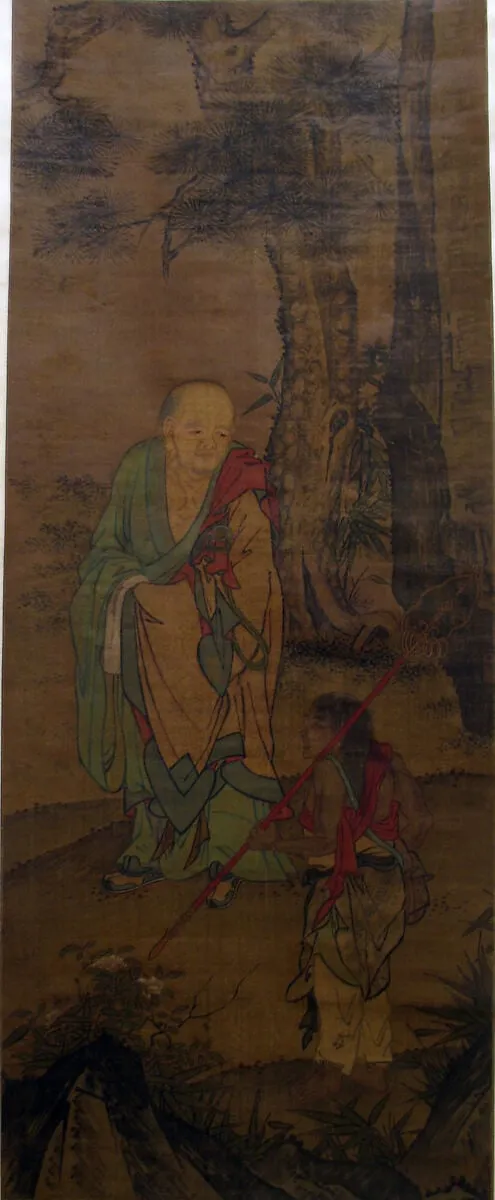
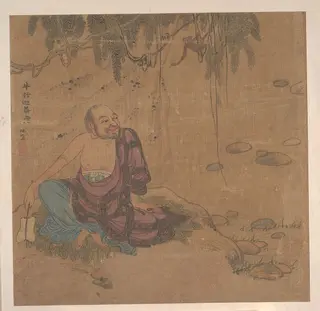
明? 佚名 舊傳貫休 羅漢圖 軸|Luohan is an ink painting by the Ming dynasty painting artist Guanxiu. It is held in the collection of the Metropolitan Museum of Art. This hanging scroll, titled Luohan, is an ink and color on silk painting depicting a Buddhist holy figure.
About this work
Subject & Meaning
The painting portrays a Luohan (Arhat), a Buddhist holy man, as indicated by its title '羅漢圖' (Luohan picture). Both sources identify the work as depicting a Buddhist male figure, emphasizing its religious genre. As a Luohan, the figure symbolizes the Buddhist ideal of enlightenment and the attainment of arhatship, embodying the virtues of wisdom and compassion within the Buddhist tradition.
Technique & Style
The work is held in the collection of the Metropolitan Museum of Art.
The Luohan painting is executed as a hanging scroll in ink and color on silk, a traditional East Asian support that allows for vertical display and the subtle layering of pigment and wash. The use of silk rather than paper contributes to the luminous quality of the colored areas and the crisp definition of the ink lines used to model the Buddhist figure. The work is held in the collection of the Metropolitan Museum of Art.
While the scroll is traditionally attributed to Guanxiu, it is recorded as an anonymous work of the Ming period, suggesting later hands may have applied the ink and color in a manner imitating the earlier style of the Luohan iconographic tradition.
History & Provenance
Traditionally attributed to the artist Guanxiu, this hanging scroll depicting a Luohan is dated to 1449. Executed in ink and color on silk, the work originates from China. While earlier attributions linked the piece directly to Guanxiu, modern classification often lists the creator as unknown, retaining the historical association as a former tradition.
The painting currently resides in the collection of the Metropolitan Museum of Art. Specific details regarding its original commission, intermediate ownership history, or the circumstances of its creation are not established in the available records.
Overview
This hanging scroll, titled Luohan, is an ink and color on silk painting depicting a Buddhist holy figure. While historically attributed to the Tang Dynasty monk-painter Guanxiu, scholarly consensus now suggests it is an anonymous work from the Ming Dynasty, likely a devotional copy. It exemplifies the enduring influence of Guanxiu's distinctive style in later Buddhist art.
Context
This painting belongs to a tradition of Buddhist devotional art, likely produced by monastic artists during the Ming Dynasty around 1449. It directly references the iconic style of the Tang Dynasty painter Guanxiu, whose original luohan depictions were highly revered. Later monks meticulously copied these works, preserving the distinctive, non-naturalistic facial features as a means to emphasize the holy men's spiritual power and detachment from the mundane world.
Artist & collection

 Untitled
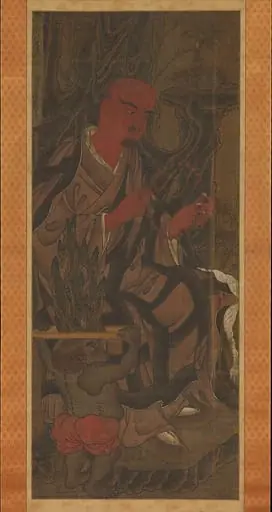 羅漢図 (十六羅漢図の内)|Arhats
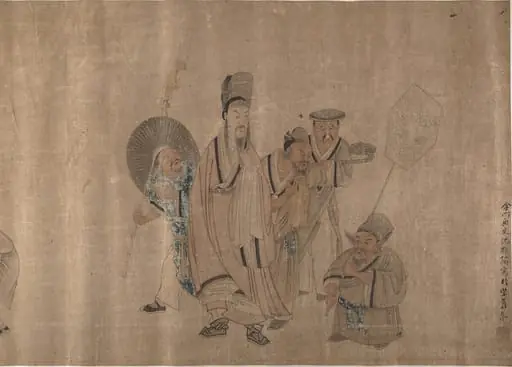
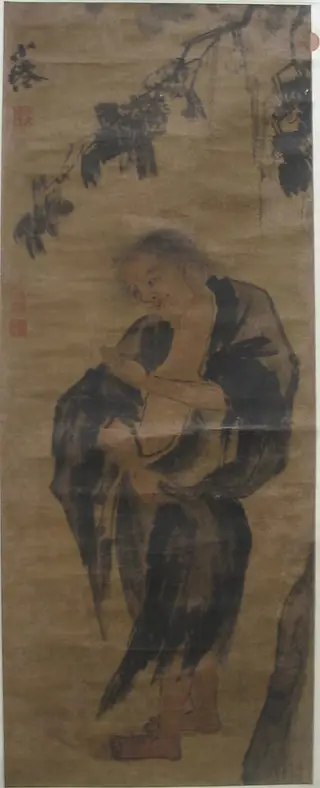 明 佚名 倣吳偉 漢鍾離像 軸|The Immortal, Zhong li
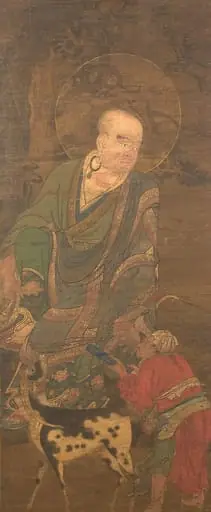 羅漢図|Rakan
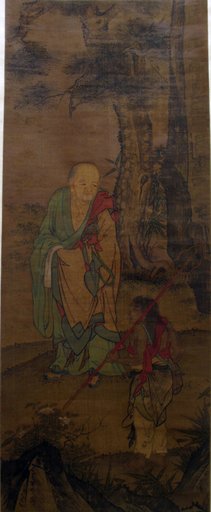
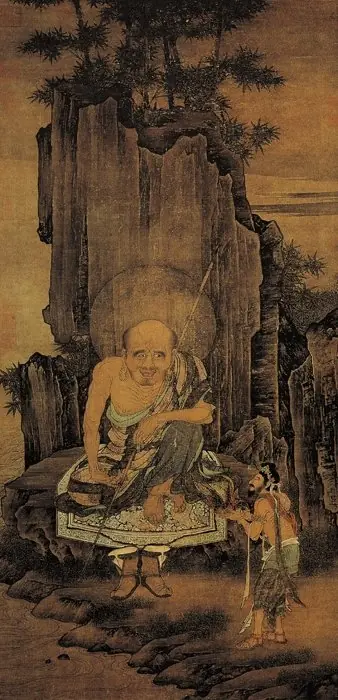 Lohan
Lohan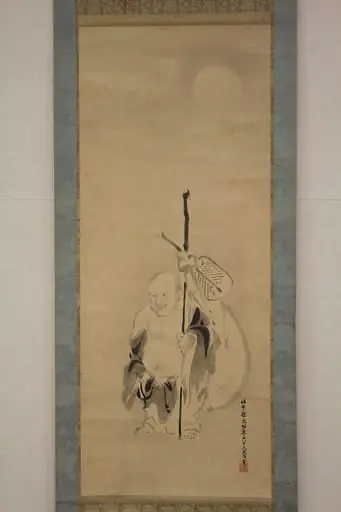 布袋図 (Hotei zu)|Hotei
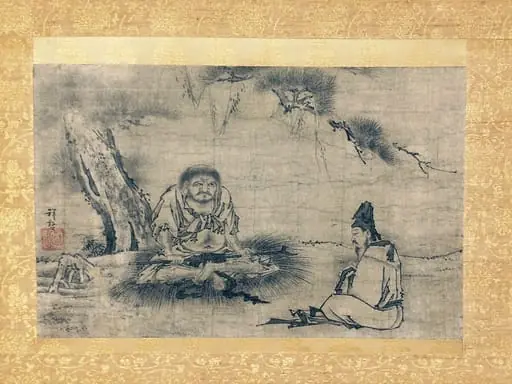 禅機(鳥窠道林・白居昜)|Zen Encounter (Niaoke Daolin and Bai Juyi)
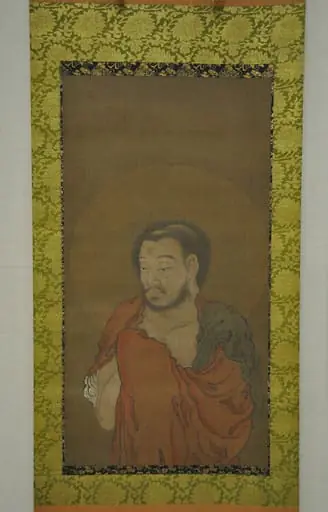 出山釈迦像 (Shussan Shaka zō)|Shaka (Shakyamuni), The Historical Buddha, Descending from the Mountains
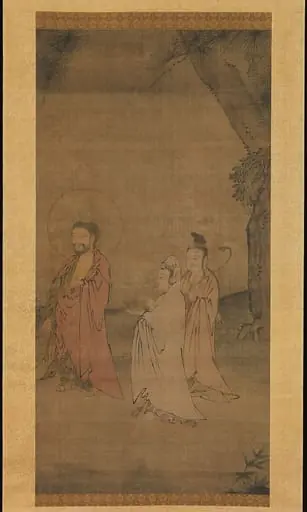 元 佚名 釋迦三尊圖 軸|Shakyamuni coming down from the mountains
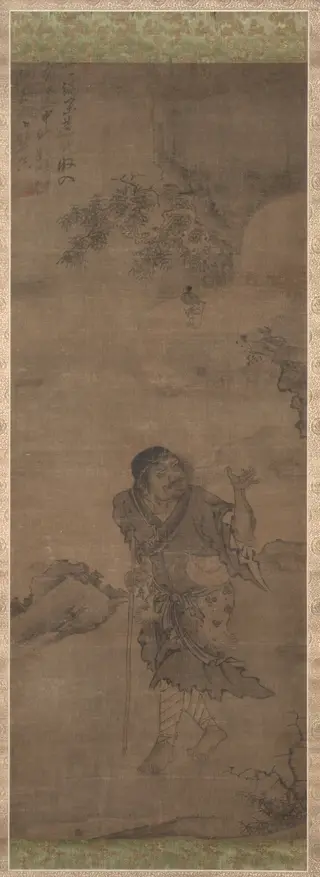 Li Tieguai; Liu Haichan