Artwork
明 傳仇英 十六羅漢圖 卷|The Sixteen Luohans
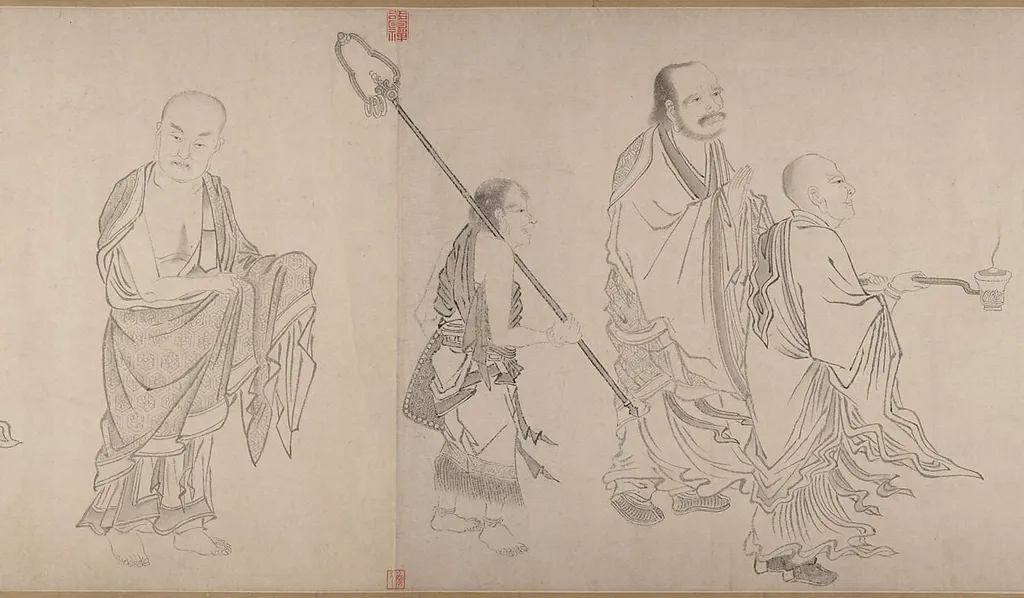
明 傳仇英 十六羅漢圖 卷|The Sixteen Luohans is an ink painting by the Ming dynasty painting artist Qiu Ying. It dates from 1549 and is held in the collection of the Metropolitan Museum of Art.
About this work
Subject & Meaning
As a representation of Buddhism, the painting visualizes the concept of the arhats who serve as guardians of the faith.
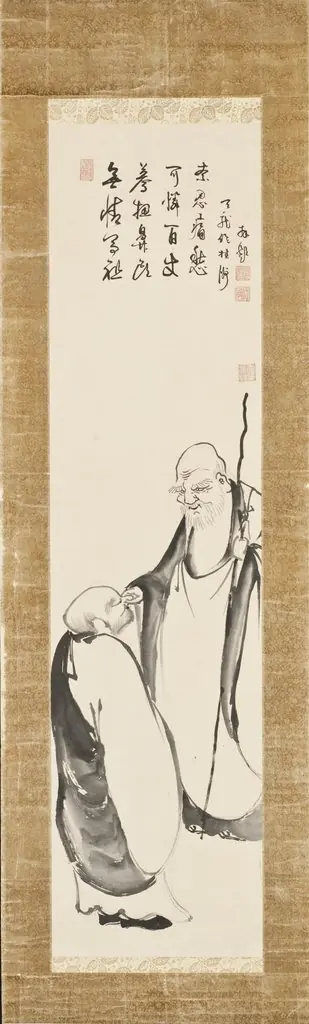
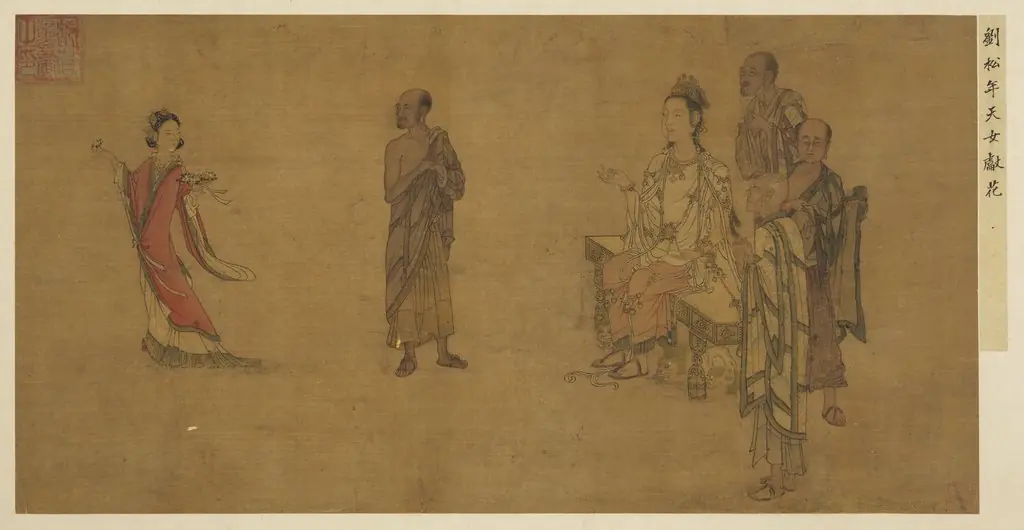
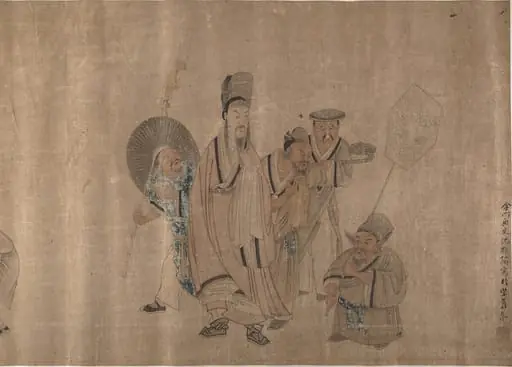
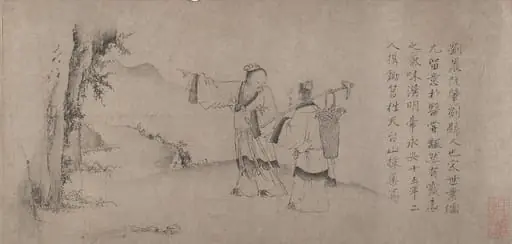
Created in 1549, this handscroll depicts the Sixteen Luohans, a significant subject in Buddhist iconography representing sixteen enlightened monks who were commanded by the Buddha to remain on earth to protect the Dharma. The work falls within the religious genre, illustrating these figures as monks immersed in spiritual practice. As a representation of Buddhism, the painting visualizes the concept of the arhats who serve as guardians of the faith.
The imagery focuses on the individual and collective presence of these holy men, embodying the tradition of venerating the sixteen disciples who achieved liberation yet deferred final nirvana to aid sentient beings.
History & Provenance
Attributed to the Ming dynasty painter Qiu Ying, this handscroll depicting the Sixteen Luohans was created in 1549 in China. Executed in ink on paper, the work is classified as a religious painting within the Buddhist tradition and is held in the collection of the Metropolitan Museum of Art. While the attribution to Qiu Ying is noted in the title and metadata, the specific circumstances of its original commission or the detailed chain of ownership prior to its acquisition by the museum are not detailed in the available records.
The museum's record does not provide an explicit accession or inventory number, and no exhibition history for this piece is documented in the cited sources.
Context
The handscroll painted by Qiu Ying in 1549 exemplifies Ming-dynasty religious art, combining Buddhist iconography with the genre of the sixteen Luohans. Its depiction of monks aligns with contemporary devotional practices and reflects Qiu Ying's broader engagement with both courtly and popular subjects. Scholars have noted the work's technical mastery of ink on paper and its role in illustrating how Buddhist themes were integrated into mainstream Chinese painting of the period.
The piece's inclusion in the Metropolitan Museum of Art's collection has facilitated detailed iconographic studies that position it within the trajectory of Qiu Ying's oeuvre and the evolution of Buddhist visual culture in early modern China.
Overview
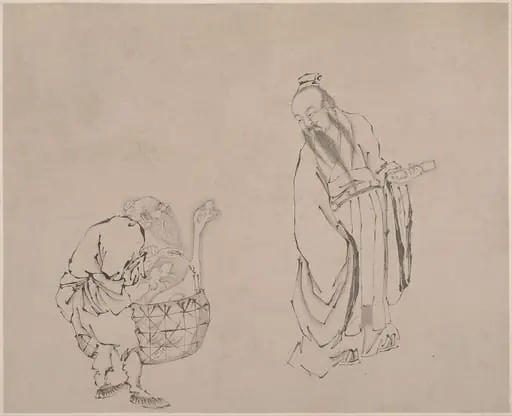
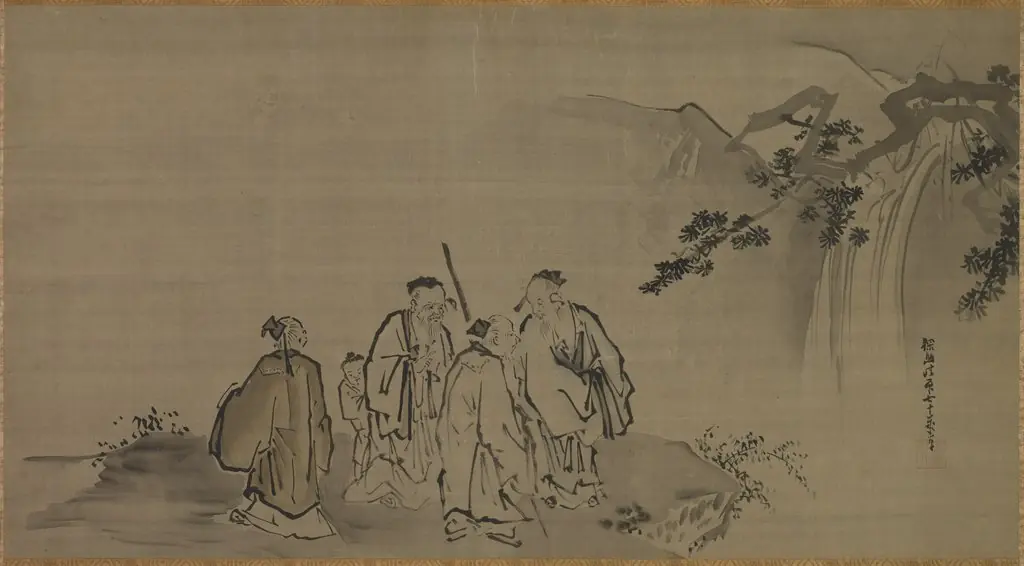
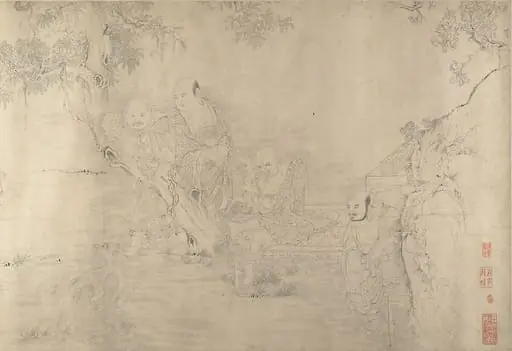
The Sixteen Luohans is an ink-on-paper handscroll attributed to the Ming Dynasty painter Qiu Ying, dating to 1549. This work presents a gathering of sixteen Buddhist monks, known as luohans, rendered with individual expressions and postures within a detailed rocky landscape. As a handscroll, it was designed to be unrolled and viewed section by section, offering a continuous narrative experience.
Technique & Style
Executed in fine black ink on a long paper scroll, the work demonstrates a meticulous approach to drawing. Qiu Ying's technique of 'cross-hatching' is particularly notable; tiny, intersecting ink lines are skillfully employed to build up shadows, create texture, and give the figures a sense of volume and vitality without the use of color. This method contributes to the lifelike quality of the monks.
Artist & collection