Artwork
Windflowers
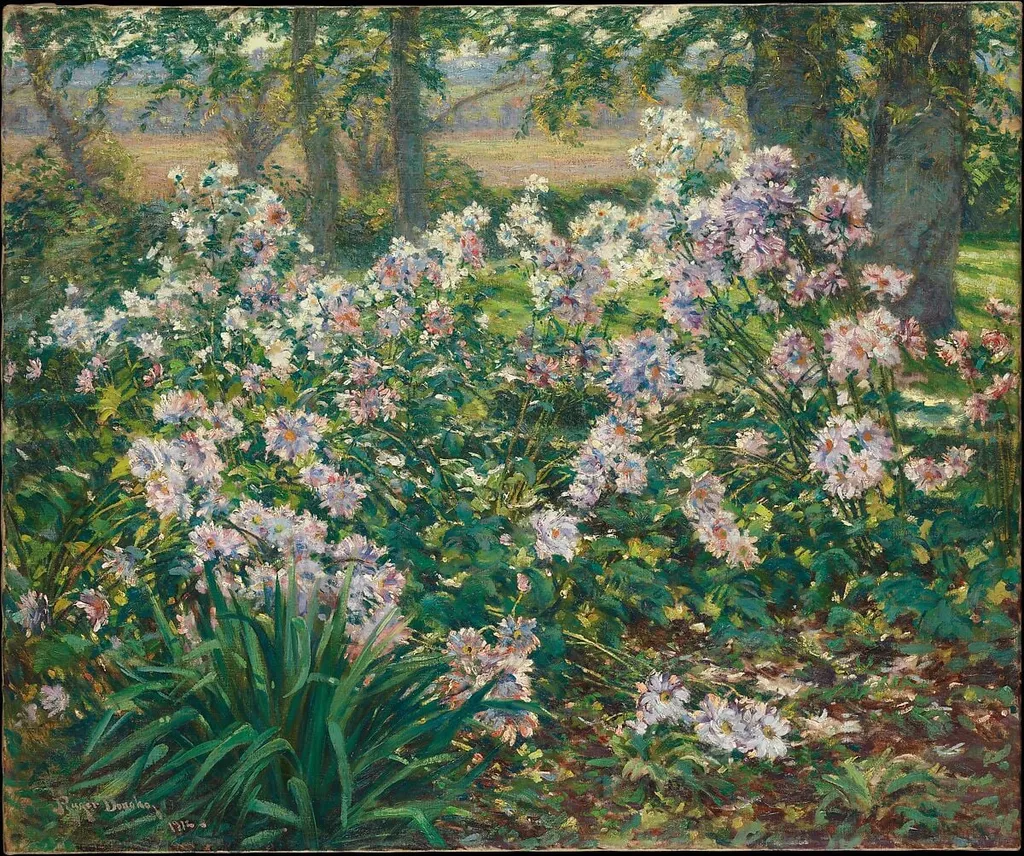
Windflowers is an oil painting by the Impressionist artist Ruger Donoho. It dates from 1912 and is held in the collection of the Metropolitan Museum of Art.
About this work
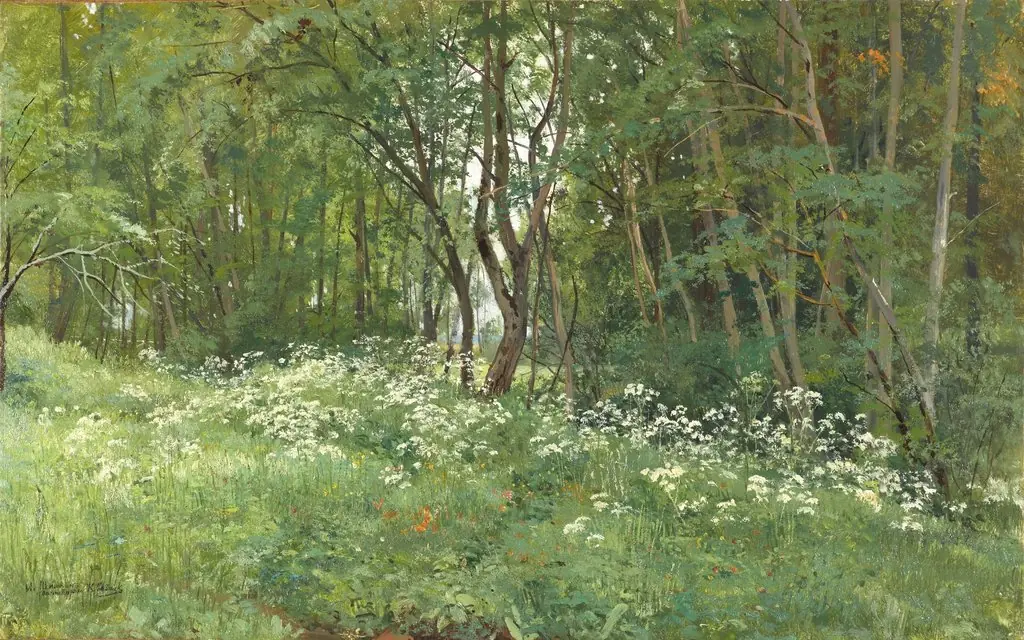
White windflowers grow under a gnarled tree, sunlight dappling the grass. Donoho painted it in 1912 on Long Island, often working outdoors as the light shifted. He left the brushstrokes rough, so the dabbed petals still feel alive.
Subject & Meaning
The depiction of flowers and trees constitutes the core visual subject matter, capturing a moment in nature without additional documented symbolic layers.
Gaines Ruger Donoho's 1912 oil painting Windflowers presents a landscape scene centered on floral and arboreal elements. The composition explicitly depicts flowers and trees set within a natural environment, aligning with the artist's focus on landscape painting. While the title suggests a specific botanical subject, the work functions primarily as a representation of the natural world rather than a narrative scene with complex iconography.
The depiction of flowers and trees constitutes the core visual subject matter, capturing a moment in nature without additional documented symbolic layers. The painting is a representative example of early 20th-century American landscape art, where the meaning is derived from the direct observation and rendering of natural scenery.
Technique & Style
Executed in 1912 by Gaines Ruger Donoho, Windflowers is an oil painting on canvas measuring 76.2 by 91.4 centimeters. The work functions as a landscape composition, formally characterized by its depiction of trees and floral subjects. As a piece held in The American Wing of the Metropolitan Museum of Art, the medium relies on traditional oil paints applied to a woven canvas support.
The visual style centers on naturalistic elements, rendering vegetation and arboreal forms within an outdoor setting. The physical dimensions indicate a moderate-scale horizontal format typical of landscape work of the early twentieth century, using oil pigments to capture the organic textures of the depicted flowers and trees.
History & Provenance
Windflowers is an oil on canvas landscape painted in 1912 by the American artist Gaines Ruger Donoho. The work measures 76.2 cm by 91.4 cm and depicts trees surrounded by flowers within a broader scenery. It entered the collection of the Metropolitan Museum of Art, where it has been displayed in The American Wing.
No records indicate a prior commission or explicit ownership transfer before museum acquisition, and the painting remains part of the museum's permanent holdings.
Overview
Ruger Donoho's Windflowers, painted in 1912, is an oil on canvas landscape. This work, housed in the American Wing, captures a natural scene with delicate white flowers beneath a tree. It exemplifies the artist's engagement with the outdoors and his distinctive approach to rendering light and form through paint.
Context
This landscape was created in 1912 while Donoho was living on Long Island, a location that frequently inspired his artistic output. He often chose to work en plein air, directly engaging with his environment. This practice allowed him to observe and capture the subtle shifts in natural light as he painted, directly influencing the dynamic and atmospheric quality seen in Windflowers.
Artist & collection


![Phlox [a corner of a country garden], by Ernest Albert Chadwick](https://artifactworldgallery.com/img/ernest-albert-chadwick--phlox-a-corner-of-a-country-garden--692a6ad859748433-w320.webp)