Artwork
A Chinese River
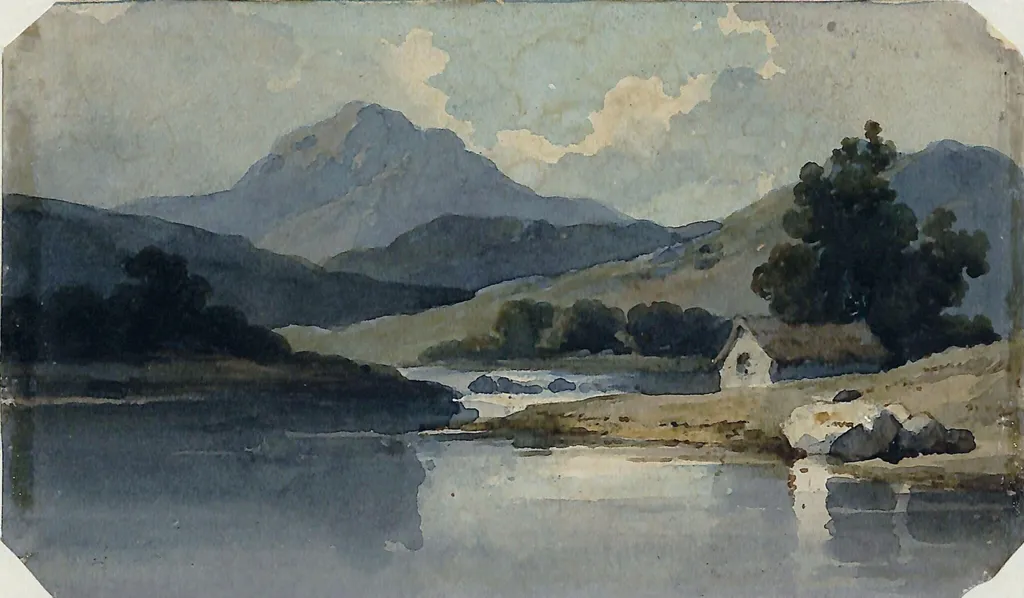
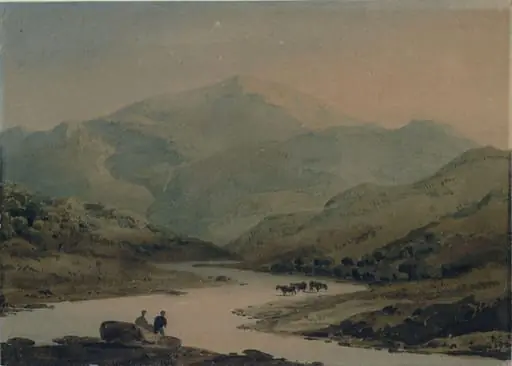
A Chinese River is a watercolor work on paper by the Patna School of Painting artist George Chinnery. It dates from 1805 and is held in the collection of the Victoria and Albert Museum.
About this work
Overview
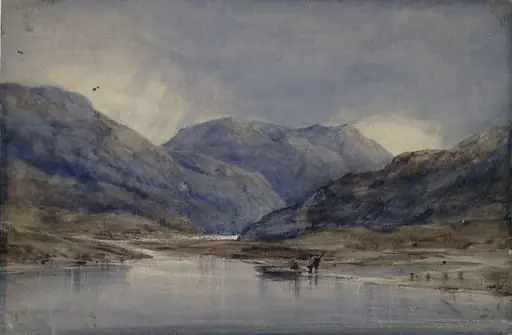
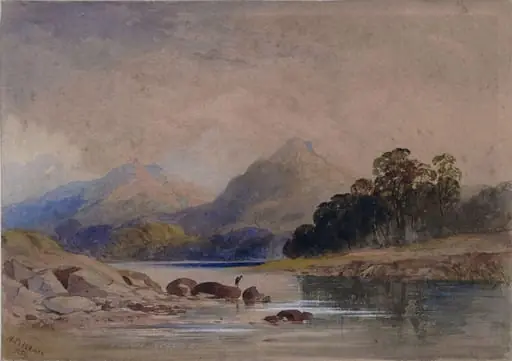
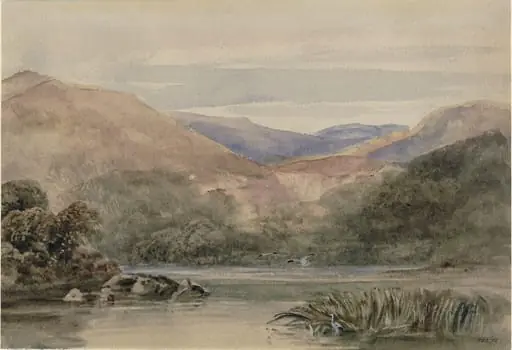
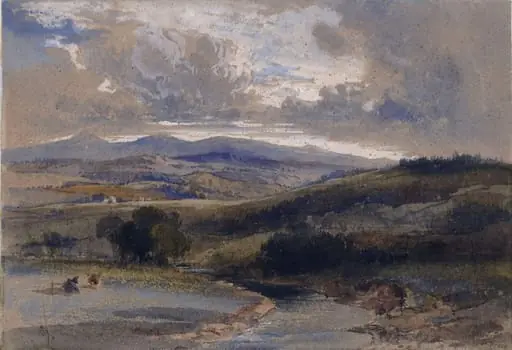
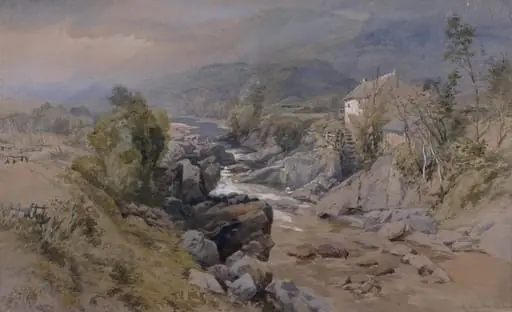
A Chinese River is a watercolour painting created by George Chinnery in 1805, depicting a serene river landscape.
Subject & Meaning
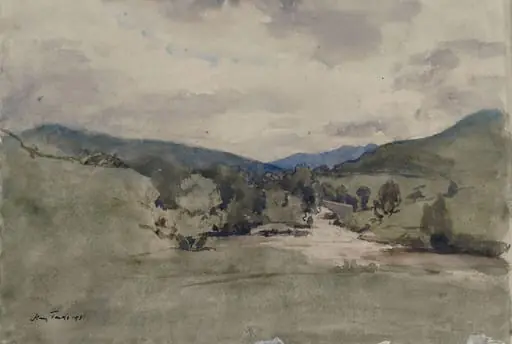
The painting features a winding river, rolling hills, and distant mountains, with a small house near the shore. The precise location is uncertain, potentially being in either China or India.
Technique & Style
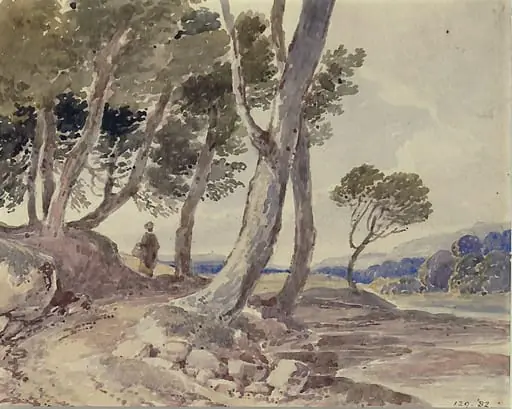
The work is characterized by loose, sketchy brushstrokes and soft color blending, achieved through the use of watercolour. This technique gives the scene a dreamy, ethereal quality.
History & Provenance
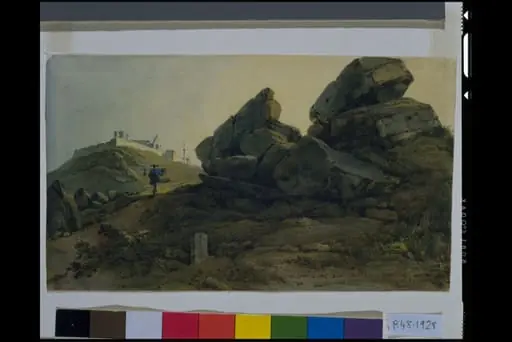
The painting was part of a bequest by James Orange in 1928, who had collected eighteen works by Chinnery, including various mediums and formats.
Artist & collection
Artist
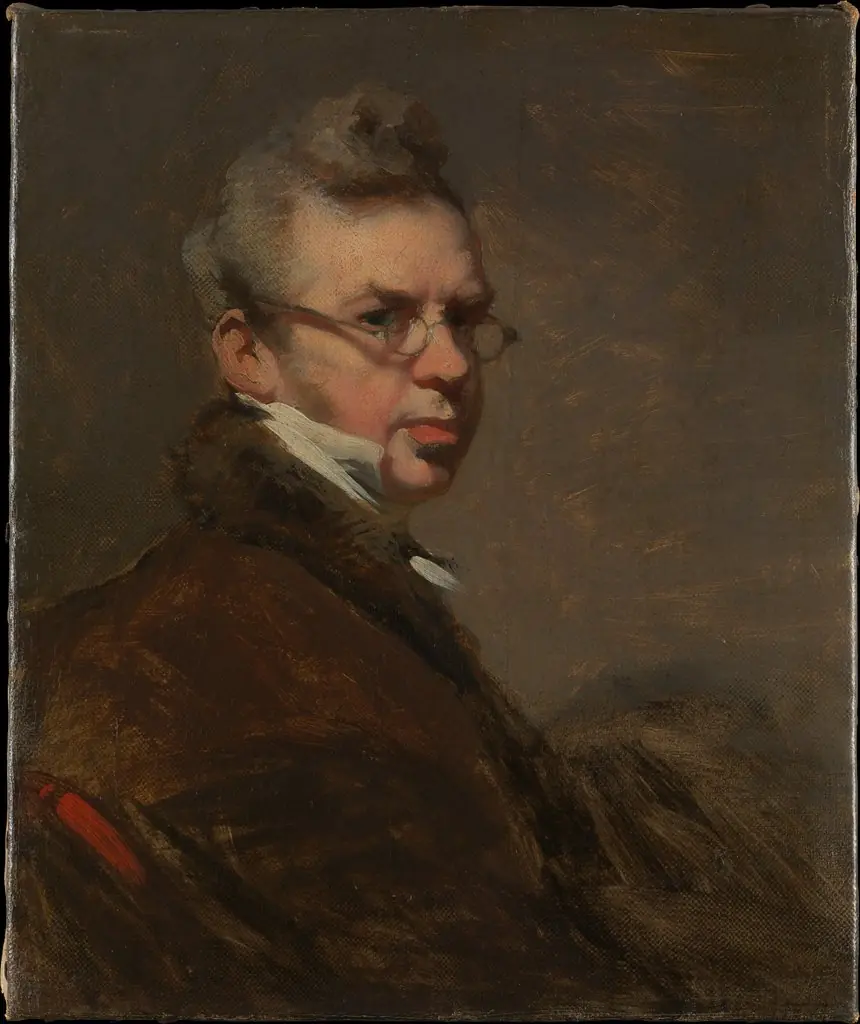
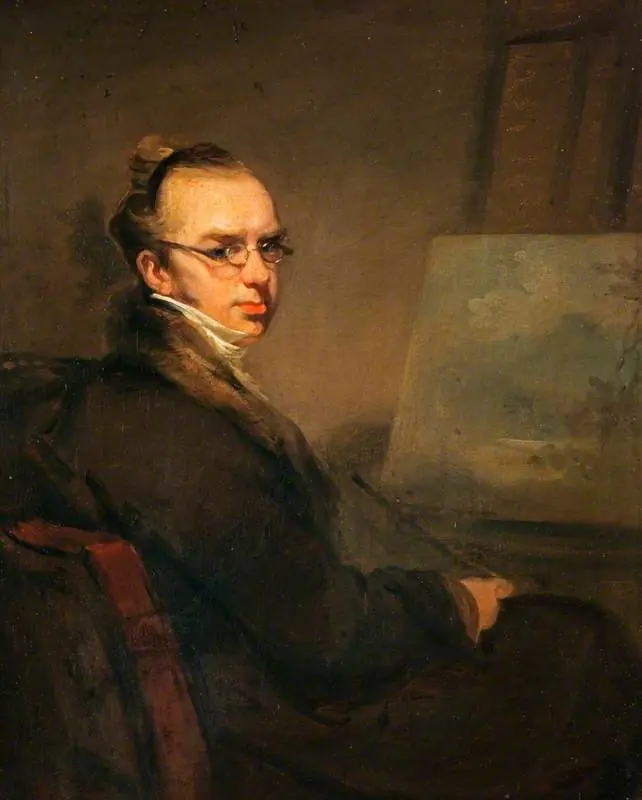
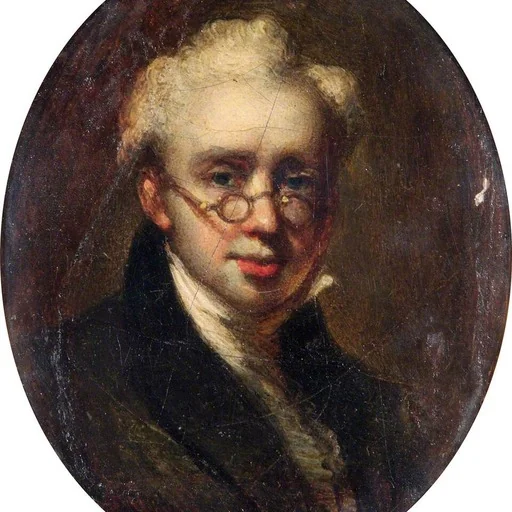
George Chinnery (Chinese: 錢納利; 5 January 1774 – 30 May 1852) was an English painter who spent most of his life in Asia, especially India and southern China.