Artwork
Still life with the heads of two calves
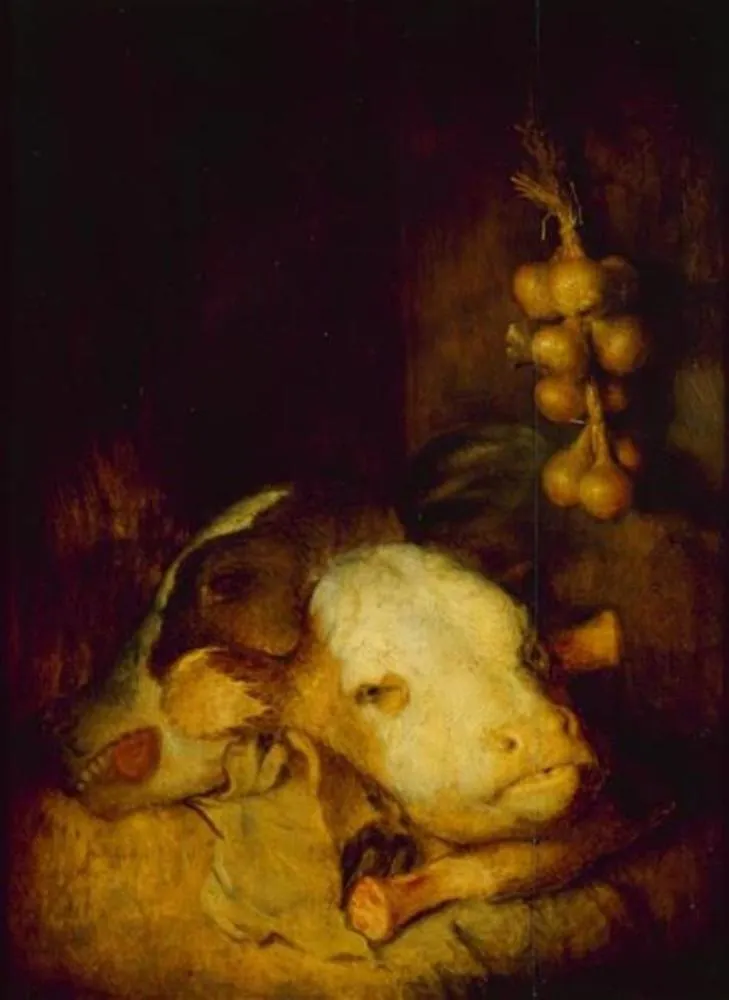
Still life with the heads of two calves is an oil painting by the Dutch Golden Age artist Christopher Paudiß. It dates from 1658 and is held in the collection of the Staatliche Kunstsammlungen Dresden. Created in 1658, this oil painting presents the severed heads of two young calves arranged on a darkened surface.
About this work
Overview
The work is part of the collection of the Gemäldegalerie Alte Meister, exemplifying the still‑life genre of the mid‑seventeenth century.
Created in 1658, this oil painting presents the severed heads of two young calves arranged on a darkened surface. The composition is dominated by the contrast between the pale flesh of the animals and the deep shadows that surround them, drawing immediate focus to the central motif. The work is part of the collection of the Gemäldegalerie Alte Meister, exemplifying the still‑life genre of the mid‑seventeenth century.
Subject & Meaning
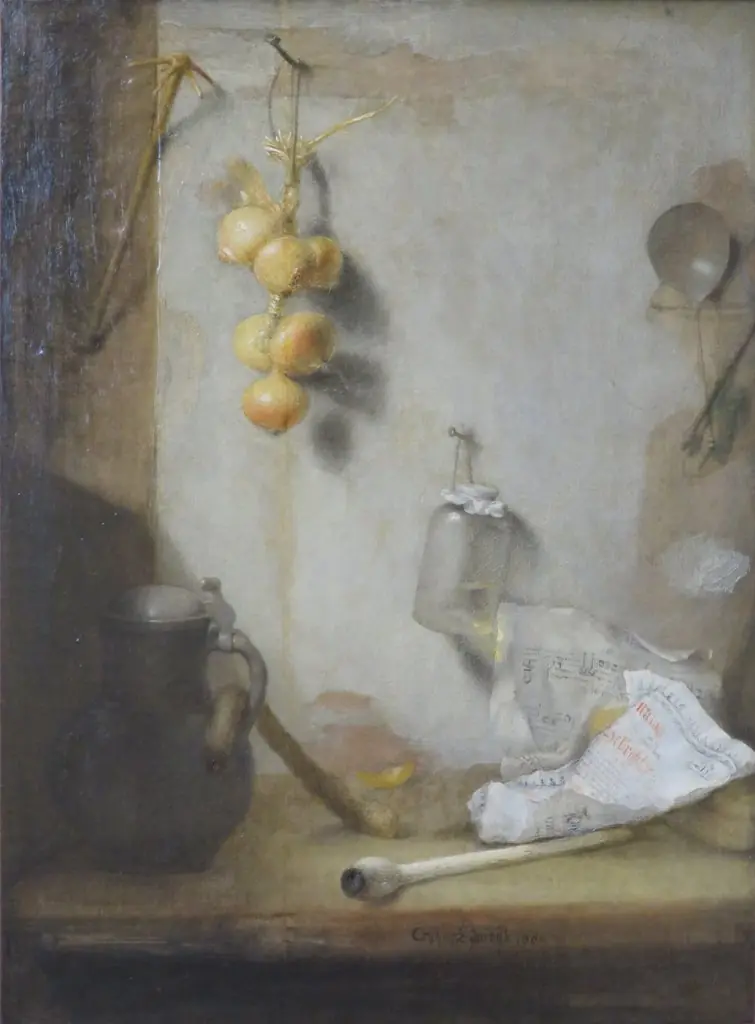
The tableau features two calf heads, one mottled brown and white, the other almost entirely white, both turned toward the right with their eyes closed. Their lifeless posture, set against a somber backdrop, evokes themes of mortality and the fleeting nature of life, common concerns in Baroque still‑life symbolism. Small onions suspended in the upper right corner add a modest, everyday element to the otherwise solemn scene.
Technique & Style
Employing a pronounced chiaroscuro, the artist illuminates the calves from the left, allowing the light to model their contours while the surrounding darkness recedes. The handling of oil paint reveals a meticulous attention to texture, especially in the rendering of fur and the subtle sheen of the meat. The overall effect aligns with the dramatic realism characteristic of the Dutch Golden Age still‑life tradition.
History & Provenance
The painting is attributed to Christoph Paudiß, a Bavarian artist active in the Baroque period who studied under Rembrandt van Rijn. Though Paudiß worked primarily in southern Germany, his oeuvre reflects the influence of Dutch techniques. The work entered the Gemäldegalerie Alte Meister’s holdings in the 20th century, where it remains on display as a representative example of cross‑regional artistic exchange during the 1600s.
Artist & collection
Artist
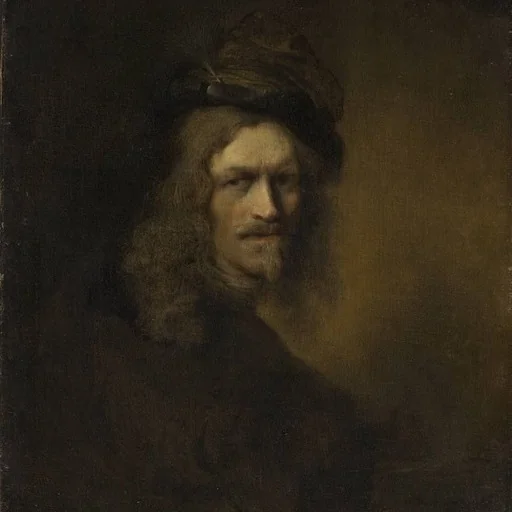
Christoph(er) Paudiß (1630 in Lower Saxony – 1666 in Freising, Upper Bavaria) was a Bavarian Baroque painter and a student of Rembrandt van Rijn.