Artwork
Landscape with Tobias and the Angel
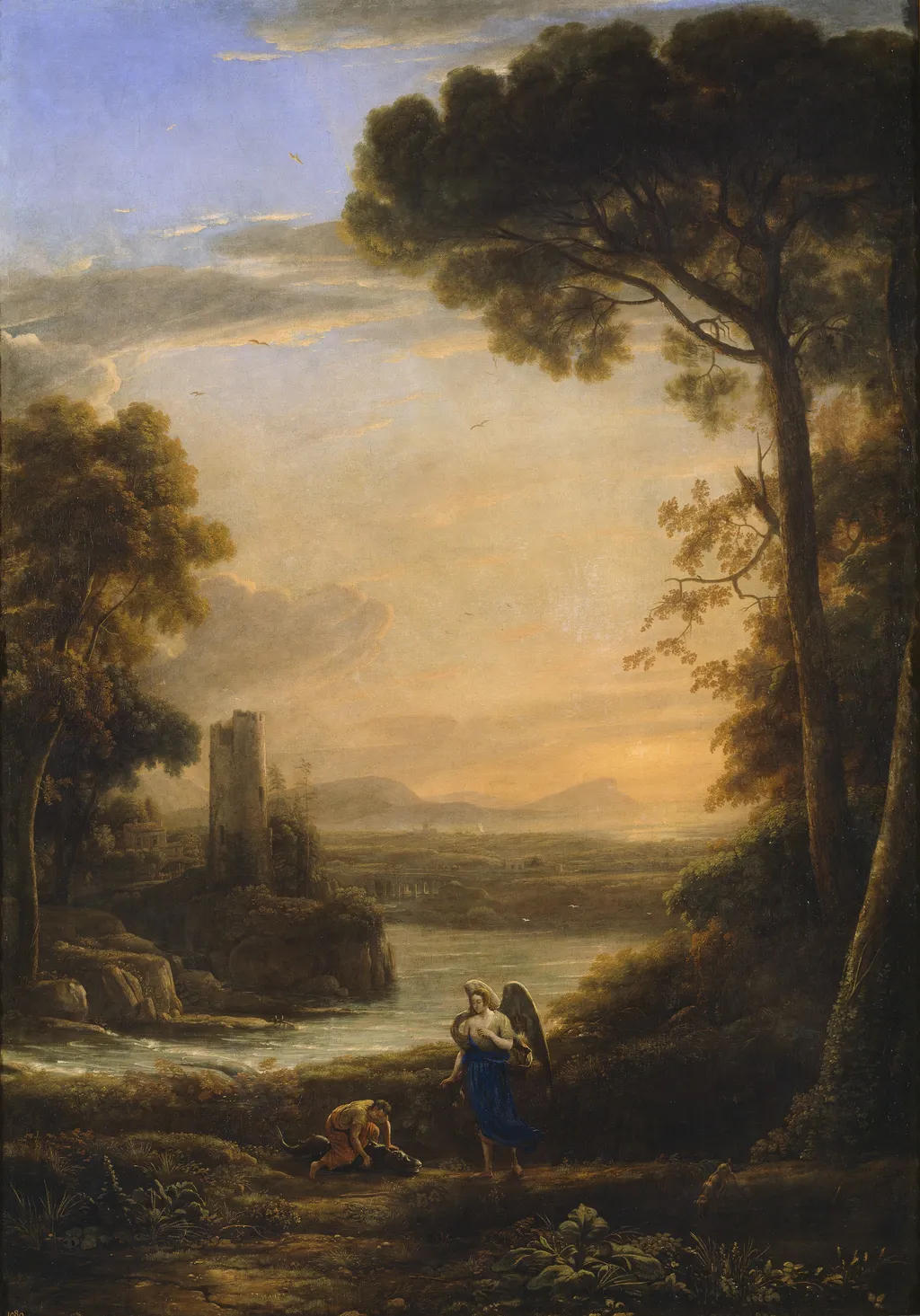
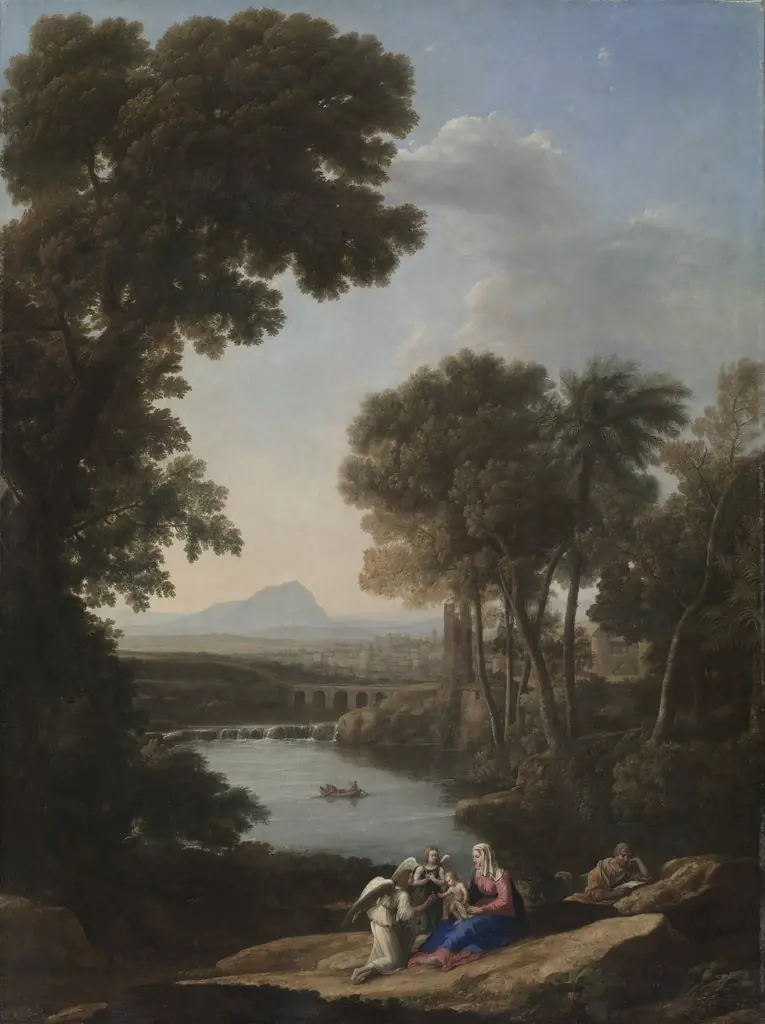
Landscape with Tobias and the Angel is an oil painting by Claude Lorrain. It dates from 1600 and is held in the collection of the Museo del Prado.
About this work
Technique & Style
Executed between 1639 and 1640, this work is an oil painting on canvas measuring 211 cm in height and approximately 143 to 145 cm in width.
Executed between 1639 and 1640, this work is an oil painting on canvas measuring 211 cm in height and approximately 143 to 145 cm in width. The artist employs a coulisse composition, utilizing trees placed at the edges like theatrical wings to guide the viewer's gaze toward the background, creating a strong sense of perspective. Distant architectural elements, including a ruined watchtower, a bridge, and huts, evoke a classical past typical of the painter's style.
Chromatic effects and the representation of light are central to the piece, which depicts a sunset scene. This lighting scheme was designed to function as a pendant to another vertical canvas representing dawn, symbolizing the passage of time. The painting is recorded as number 50 in the artist's Liber Veritatis, a sketchbook used to document his oeuvre and prevent forgeries.
History & Provenance
Commissioned by King Philip IV of Spain to decorate the Palace of the Buen Retiro, specifically its Gallery of Landscapes, this work was executed between 1639 and 1640. The iconographic program, derived from biblical narratives, was selected by the Count-Duke of Olivares. It forms part of a series of eight monumental landscapes by the artist, divided into two groups of four, and was designed as a pendant to "Landscape with the Embarkation of Saint Paula," symbolizing sunset in contrast to the latter's dawn. The painting is recorded as number 50 in the artist's "Liber Veritatis," a sketchbook used to prevent forgeries. Following its time in the royal collection, the canvas entered the holdings of the Museo del Prado in Madrid, where it remains today under catalog number 2255.
Landscape with Tobias and the Angel is held in the collection of the Museo del Prado in Madrid, where it bears the catalog number 2255. Commissioned by King Philip IV of Spain between 1639 and 1640, the work was originally created to decorate the Gallery of Landscapes within the Palacio del Buen Retiro. It formed part of a larger series of monumental landscapes that included contributions from contemporaries such as Nicolas Poussin and Gaspard Dughet. The painting serves as a pendant to The Port of Ostia with the Embarkation of Saint Paula, also located in the Prado, with the pair symbolizing the passage of time through their respective depictions of sunset and dawn. The work is recorded as entry number 50 in the artist's Liber Veritatis.
Context
Landscape with Tobias and the Angel is a 1639-40 oil on canvas history painting commissioned by King Philip IV for the Palacio del Buen Retiro, forming part of a series of landscape works that Claude Lorrain elevated to prestigious narrative subjects through the inclusion of small biblical figures. The work, housed in the Museo del Prado (catalogue no. 2255), depicts the moment when the Archangel Raphael instructs Tobias by the Tigris River, a subject drawn from the Book of Tobit and traditionally associated with themes of divine guidance and healing. Lorrain employs a theatrical compositional device of flanking trees to frame the scene and guide the eye toward a distant classical landscape, using light and atmospheric effects to convey temporal transition, this painting symbolizing evening alongside its pendant, Landscape with the Embarkation of Saint Paula, which represents dawn. The composition reflects Lorrain’s signature synthesis of classical antiquity and Baroque sensibility, as well as his meticulous documentation of works in the Liber Veritatis, where this piece is recorded as number 50. An American interpretation by Washington Allston exists at the Detroit Institute of Arts, underscoring the painting’s enduring influence.
Legacy
The painting holds a central place in Claude Lorrain's documented output, recorded as number 50 in his Liber Veritatis, the artist's own register of works compiled to guard against forgeries. It was produced as part of the ambitious Buen Retiro commission for Philip IV of Spain, a series that also involved Poussin, Swanevelt, Both, Dughet, and Lemaire, situating the work within a major collaborative decorative enterprise of the Spanish court. Its pendant pairing with the Port of Ostia, dawn and sunset symbolizing the passage of time, reflects the carefully orchestrated iconographic program devised by the Count-Duke of Olivares. The composition's influence is attested by a later copy executed by the American painter Washington Allston, now in the Detroit Institute of Arts, demonstrating the work's appeal to subsequent generations. Its transition from the Spanish royal collection to the Museo del Prado, where it remains catalogued as number 2255, secured its place in one of Europe's principal painting collections.
Own this work as a print
Artist & collection
Artist
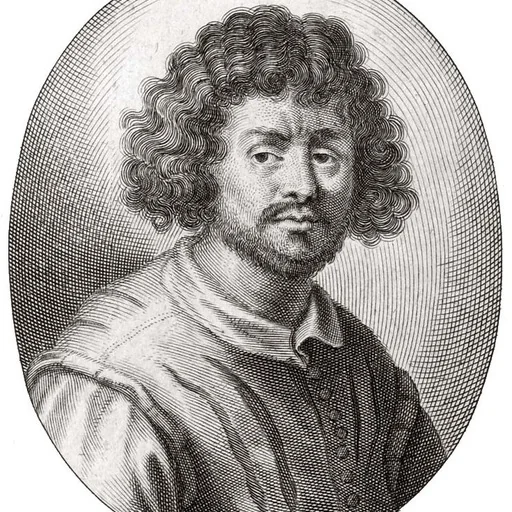
Claude Lorrain (French:; born Claude Gellée, called le Lorrain in French; traditionally just Claude in English; c.

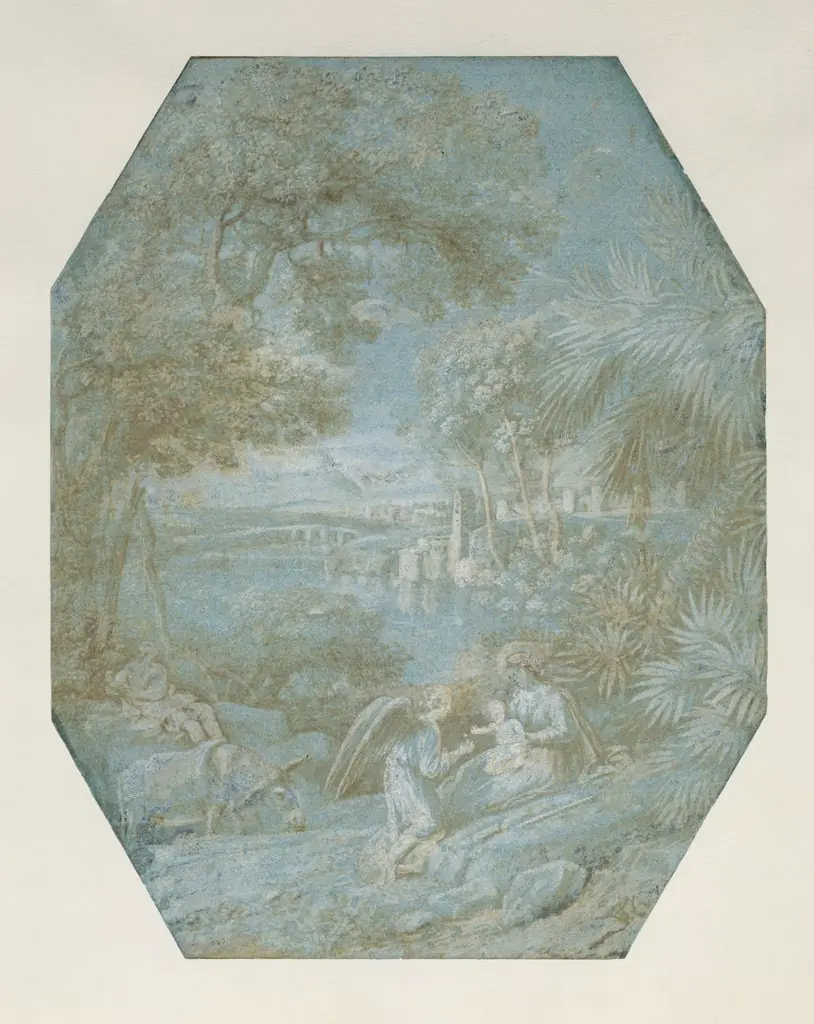
- Landscape with the Finding of Moses
 Setting out with the Herd
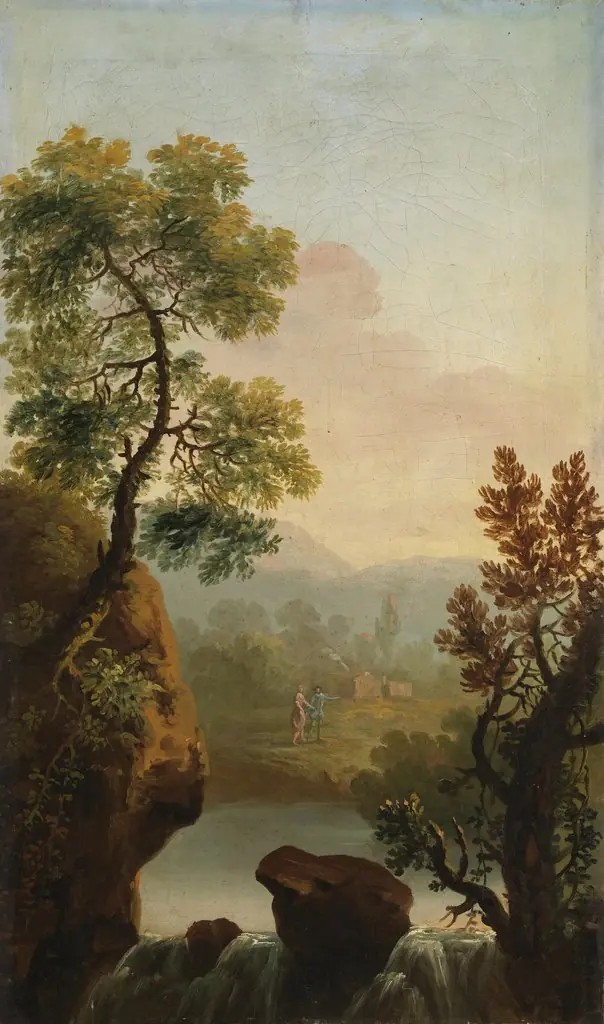 Landscape with Figures in the Background
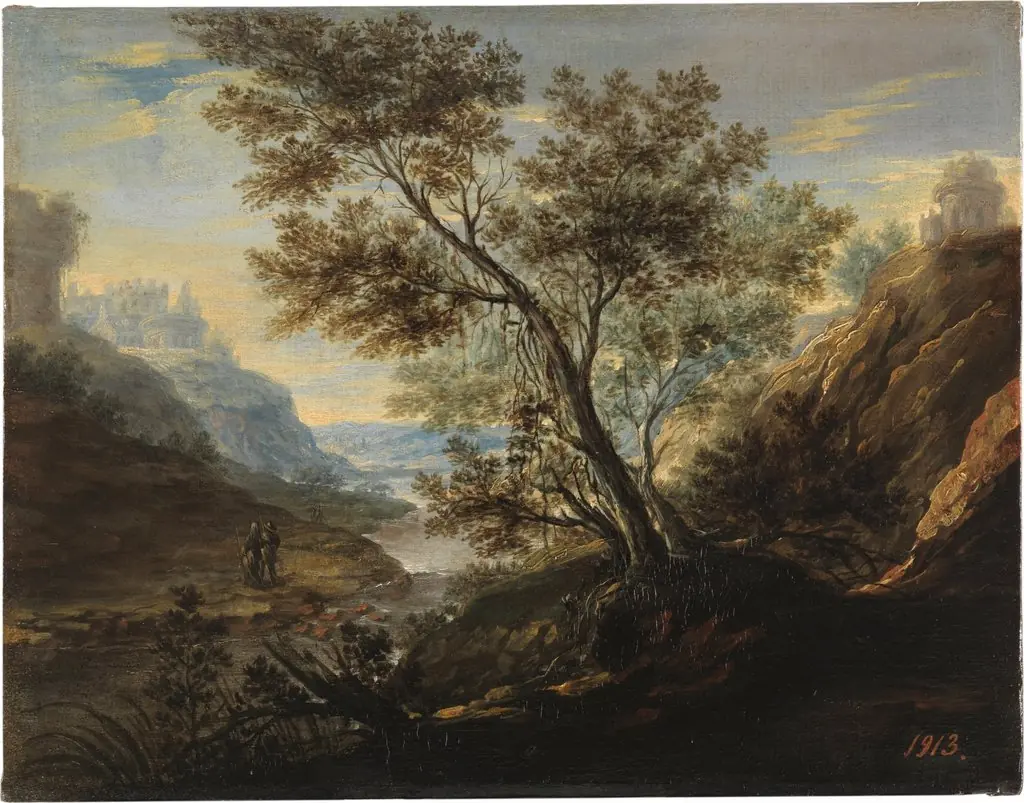 Landscape with Figures
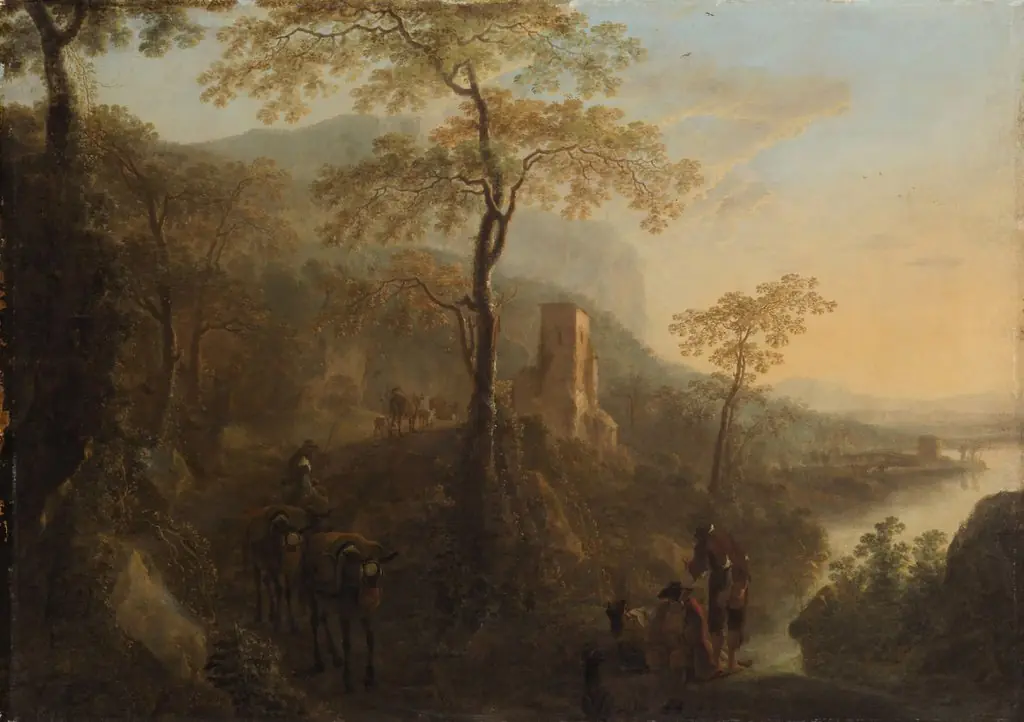 Italienische Landschaft
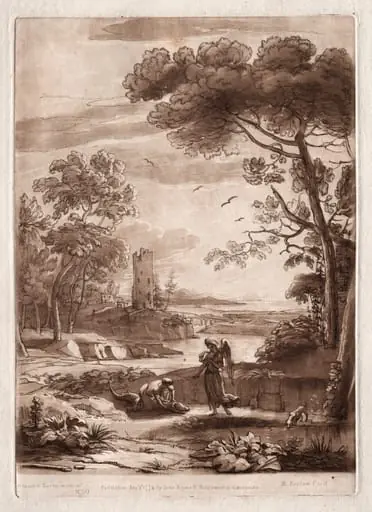 Liber Veritatis: No. 50, A River Scene with Tobias and the Angel
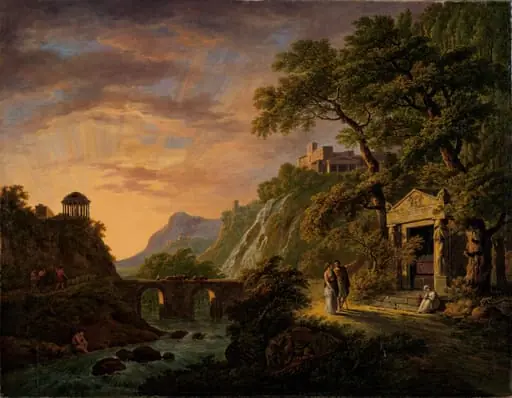 Arcadian Landscape with Setting Sun
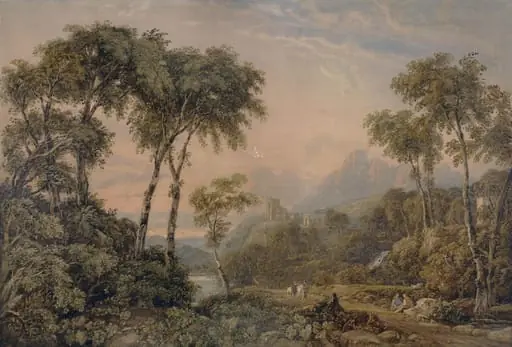 Landscape with Ruined Temple: Sunrise
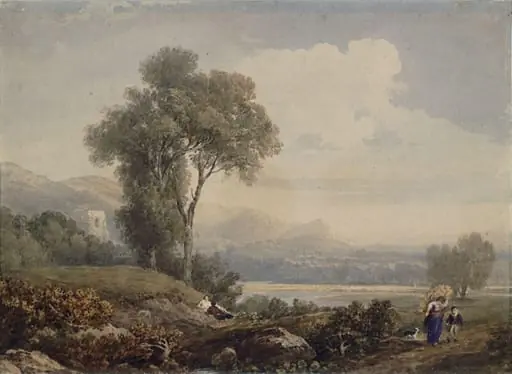 Landscape
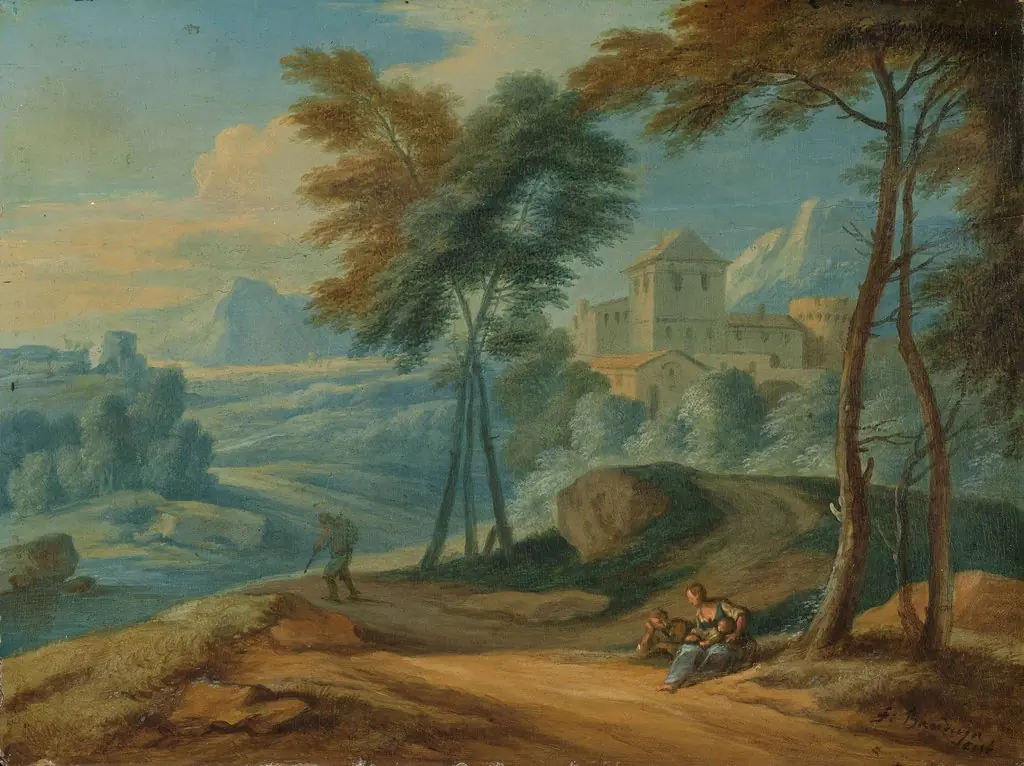 Mountainous landscape
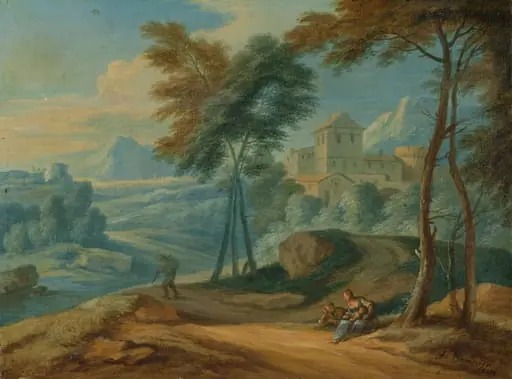 Wooded Italianate Landscape with Figures
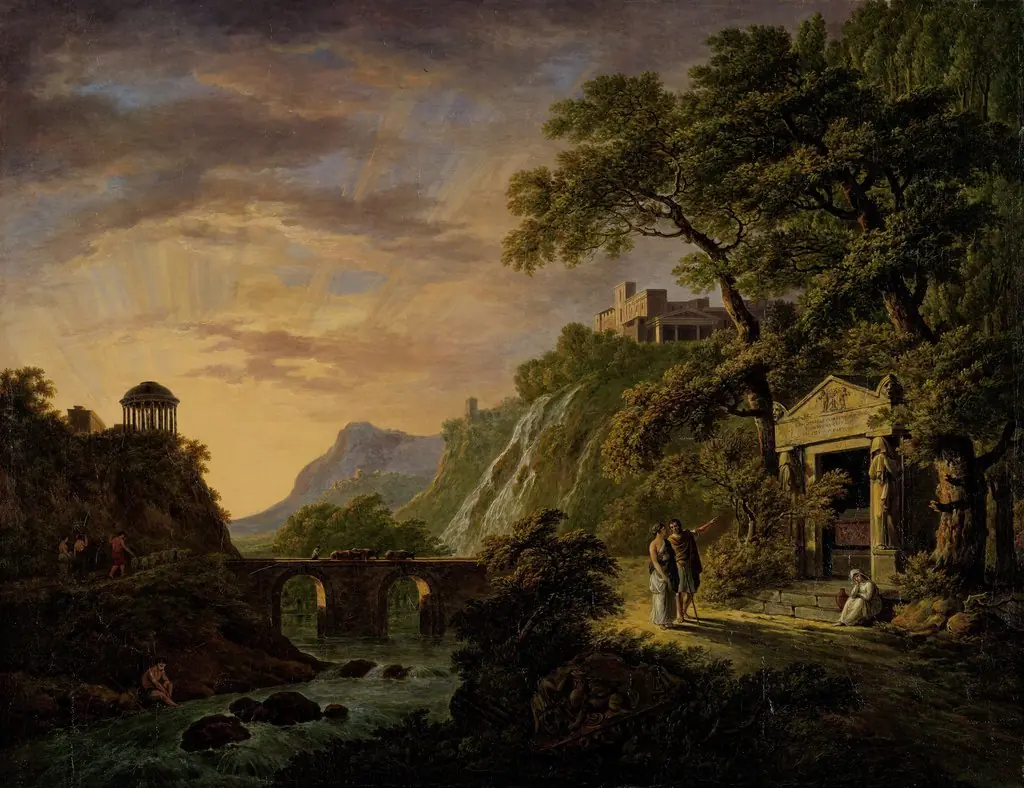 Arcadisch landschap met ondergaande zon