Artwork
Landscape with Erminia
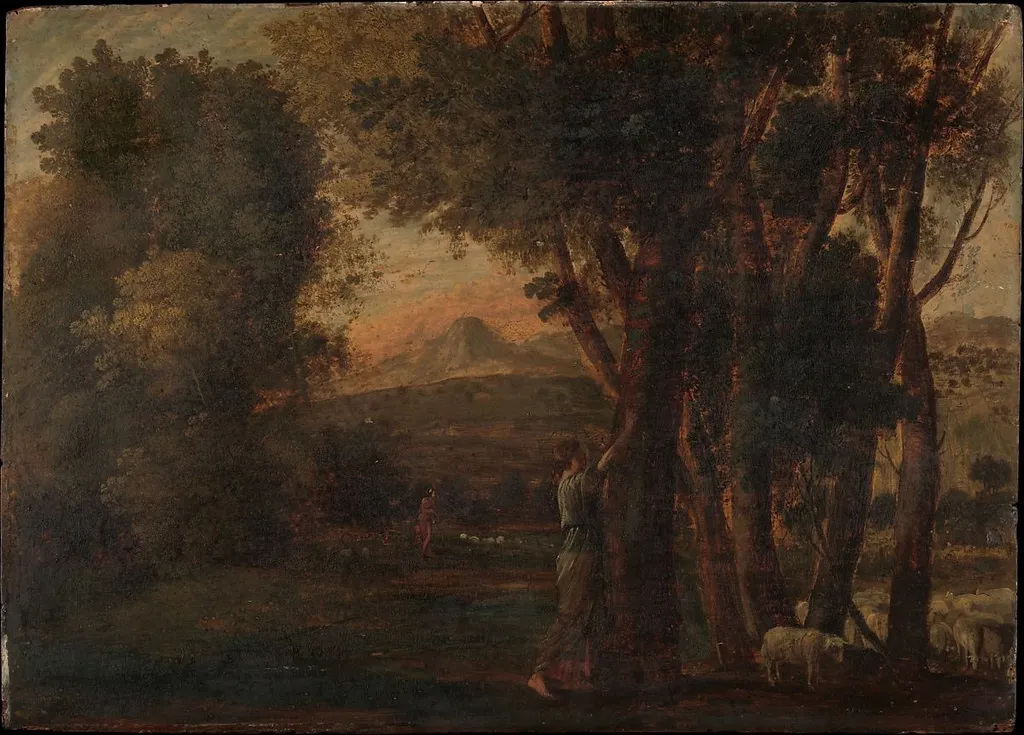
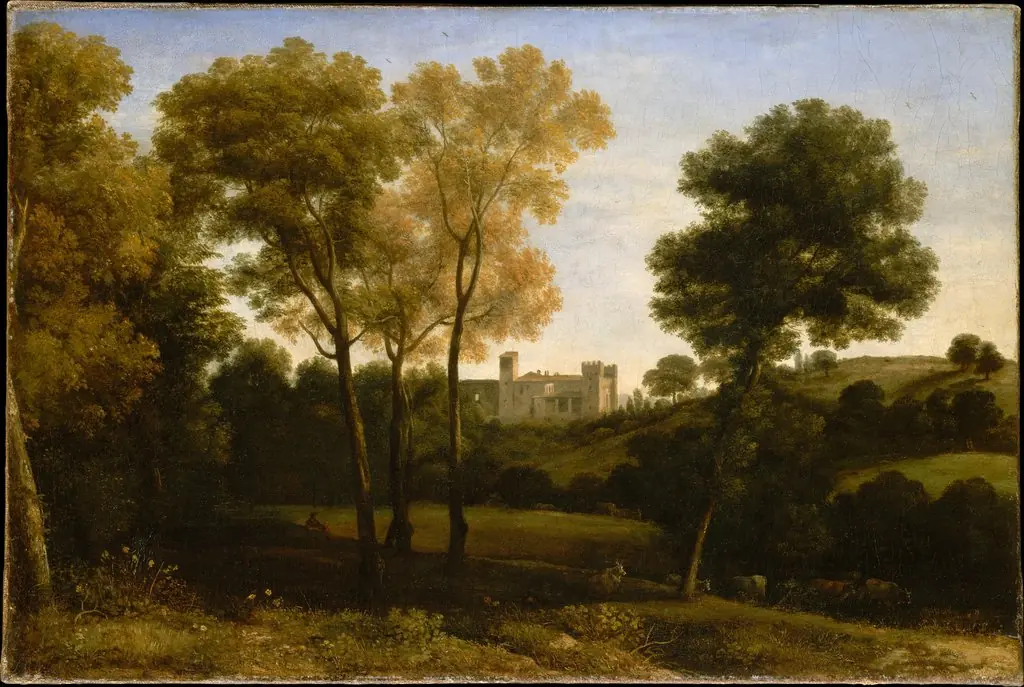
Landscape with Erminia is an oil painting by the French Classical Baroque artist Claude Lorrain. It dates from 1630 and is held in the collection of the Metropolitan Museum of Art.
About this work
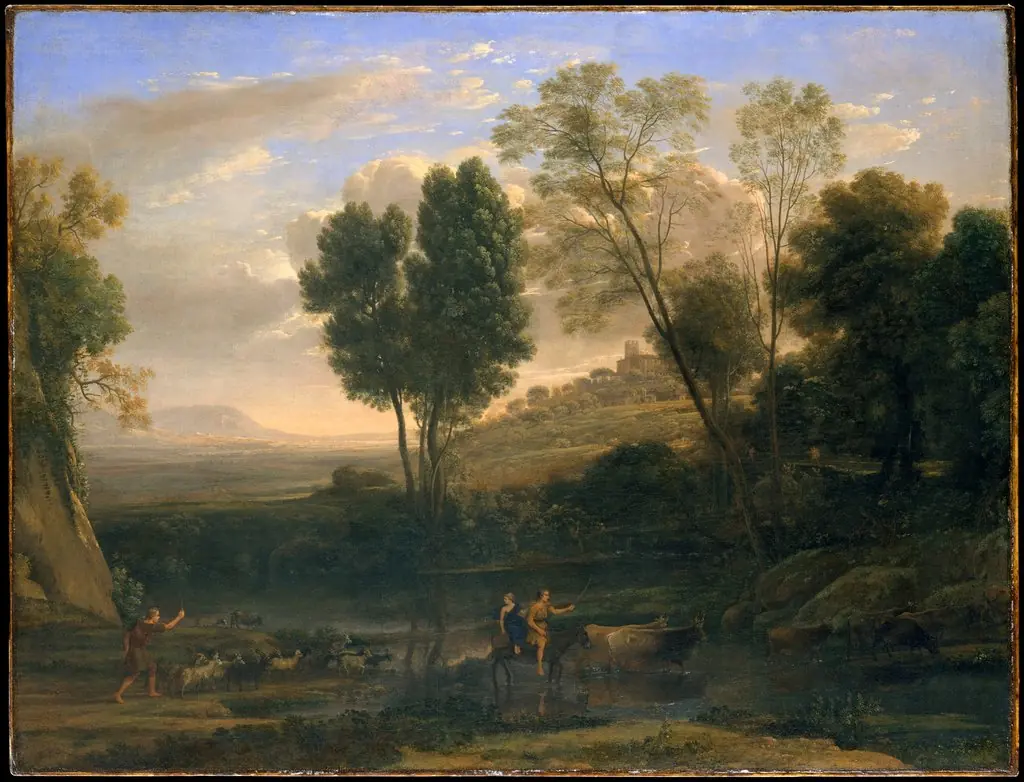
Two figures rest near a river in a quiet wood, one leaning on a tree, while sheep graze in the foreground and a distant mountain glows in warm filtered light. Claude Lorrain painted it in 1630, working the trees and rocks in fine detail while keeping the sky and water simple.
Subject & Meaning
Landscape with Erminia illustrates a narrative drawn from Torquato Tasso's epic poem Jerusalem Delivered, a frequent source for seventeenth-century painters.
Landscape with Erminia illustrates a narrative drawn from Torquato Tasso's epic poem Jerusalem Delivered, a frequent source for seventeenth-century painters. The composition centers on Erminia, a princess who, in the poem, disguises herself in armor to search for her beloved Tancred after the Christian crusaders' defeat. The painting situates this literary episode within a pastoral landscape populated by shepherds and sheep, transforming a moment of romantic longing into an idyllic, contemplative scene.
By embedding a heroic literary subject within a serene rural setting, the work reflects the early Baroque taste for combining classical or chivalric narrative with naturalistic landscape, allowing the emotional weight of Erminia's quest to be conveyed through atmosphere and setting rather than dramatic action.
Technique & Style
The work titled Landscape with Erminia, dated 1630, is executed in oil on a wooden panel, a support typical of early‑Baroque easel paintings. The medium is oil paint applied in thin, translucent layers that create a luminous atmospheric effect. Compositionally, the scene combines a gently receding landscape with figures, a shepherd, a woman, and sheep, arranged in a balanced, classical setting that reflects Claude Lorrain’s idealized treatment of nature.
Light is diffused across the sky, emphasizing depth through aerial perspective, while the meticulous rendering of foliage and terrain demonstrates a refined linear drawing beneath the painterly wash. The painting’s formal qualities thus merge delicate tonal modulation with precise draftsmanship, characteristic of Lorrain’s synthesis of poetic landscape and Baroque spatial order.
History & Provenance
Landscape with Erminia is an oil-on-panel work attributed to Claude Lorrain, dated to 1630. The painting is based on Jerusalem Delivered, situating its creation within the early phase of Lorrain's career. Attribution has historically been shared with Agostino Tassi, reflecting the collaborative or contested authorship of certain early landscapes associated with both artists.
The work is held jointly by the Metropolitan Museum of Art and The Morgan Library & Museum, with documented ownership passing through the dealer and collector Eugene Thaw. Its present location is the Metropolitan Museum of Art. The panel measures 32.7 by 45.7 centimeters.
The painting Landscape with Erminia, dated to 1630, is associated with the collections of the Metropolitan Museum of Art and The Morgan Library & Museum. While some records attribute the work to Agostino Tassi, others identify Claude Lorrain as the creator. The piece, executed in oil on panel, was formerly owned by Eugene Thaw.
The provided sources indicate these institutional associations but do not specify distinct inventory or accession numbers, nor do they list specific past exhibitions or dates of display for the work.
Context
Landscape with Erminia (1630) by Claude Lorrain exemplifies the artist’s mature idealized classical landscape, a hallmark of Baroque painting that blends naturalistic observation with poetic composition. The work draws its narrative from Torquato Tasso’s epic Jerusalem Delivered, reflecting Lorrain’s engagement with contemporary literature and his role in elevating landscape to history painting. Documented in the Metropolitan Museum of Art and formerly owned by Eugene Thaw, the painting’s substantial size and oil‑on‑panel technique underscore its technical mastery.
Scholars have analyzed it as a key example of Lorrain’s synthesis of earlier masters and his influence on later artists, positioning it centrally within the development of European landscape art.
Overview
Claude Lorrain, a French Baroque artist who primarily worked in Italy, completed Landscape with Erminia in 1630. This oil painting exemplifies his characteristic integration of classical or biblical narratives into expansive natural settings, often featuring diminutive figures. The work is a significant example of his landscape tradition and is part of the collection at The Metropolitan Museum of Art.
Artist & collection
Artist
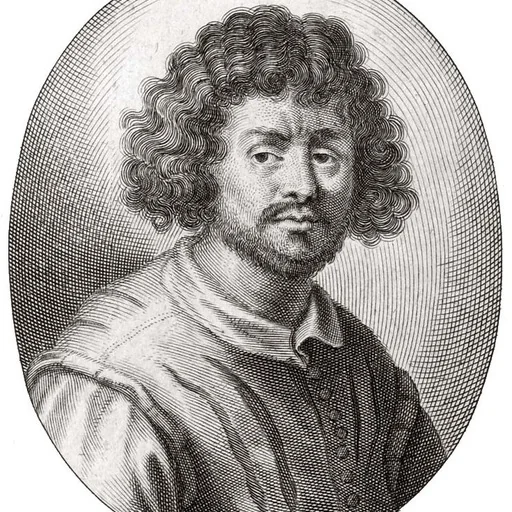
Claude Lorrain (French:; born Claude Gellée, called le Lorrain in French; traditionally just Claude in English; c.

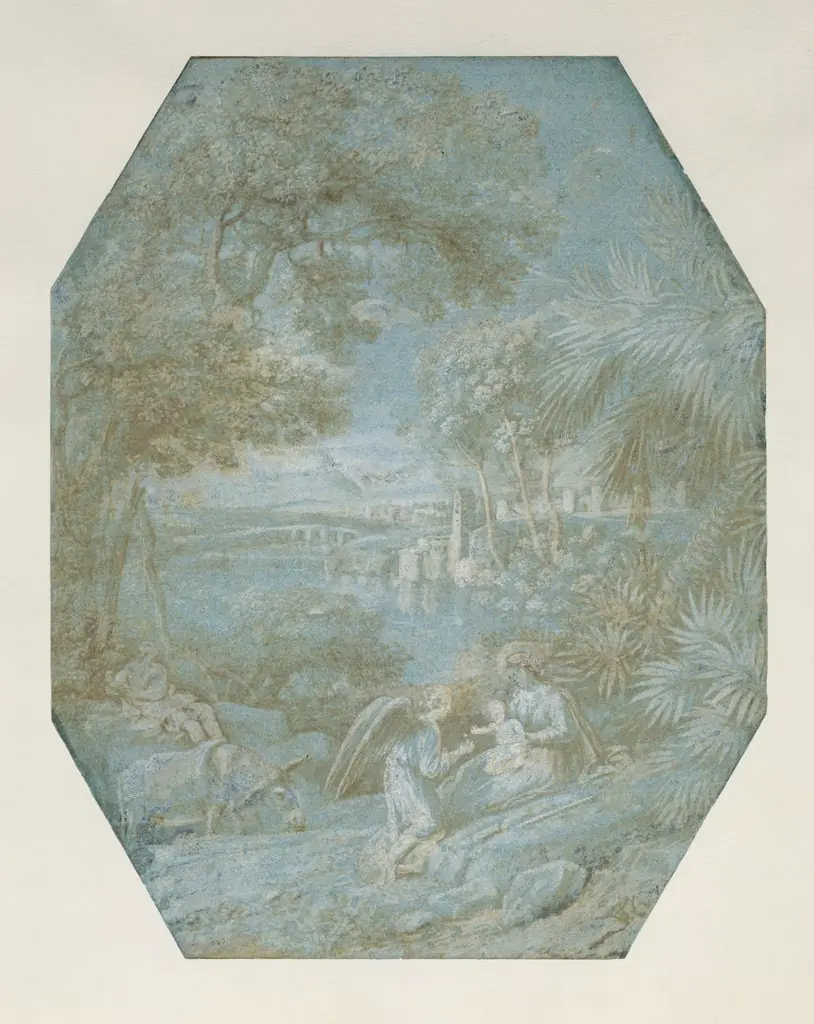
 Komponierte Landschaft mit Bauern und Esel
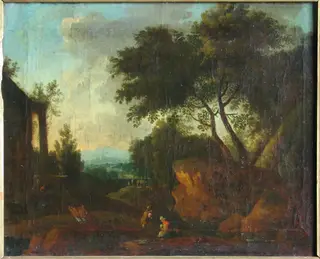 Peisaj cu copaci și ruine antice ; pandant: Peisaj cu copaci și pod
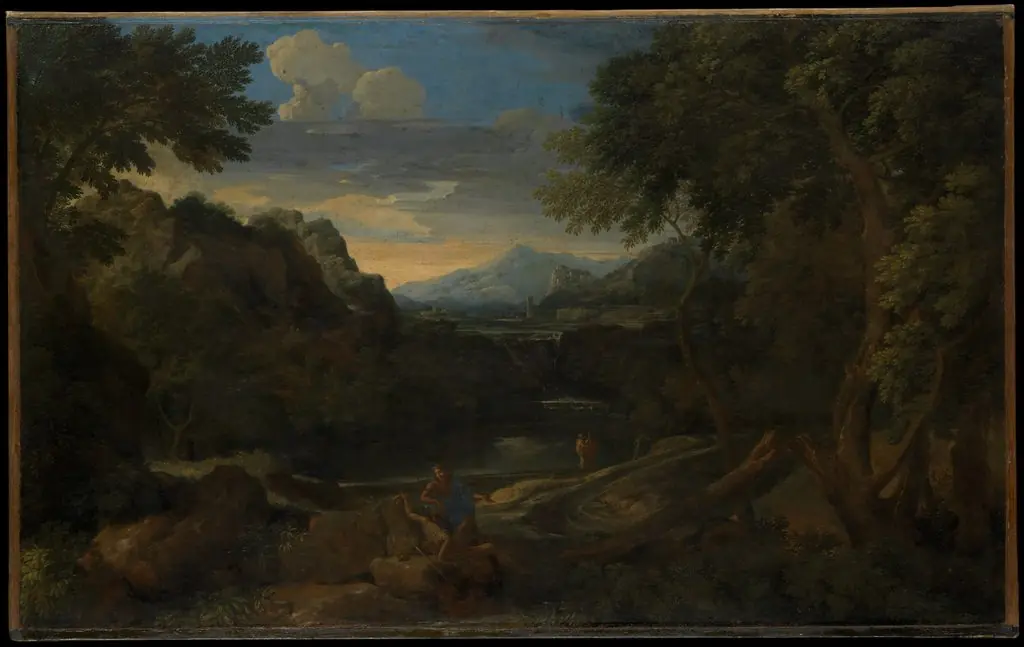 Imaginary Landscape
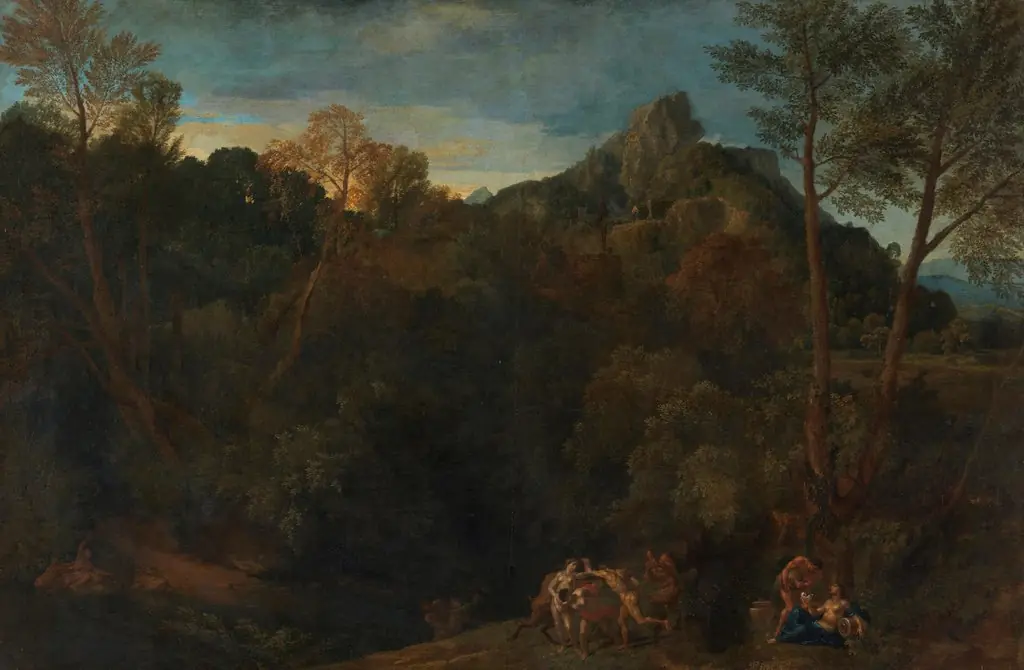 Landschaft
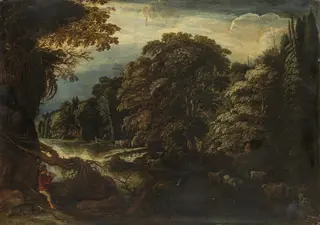 Forest
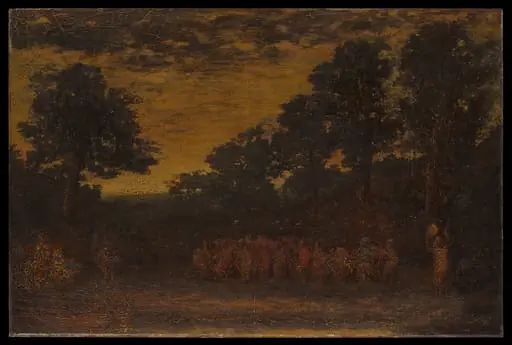 The Pipe Dance
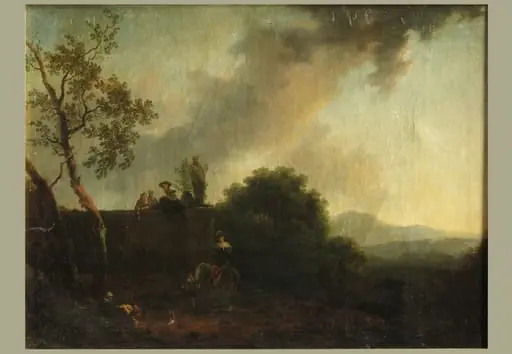 Peisaj cu zidul unei grădini
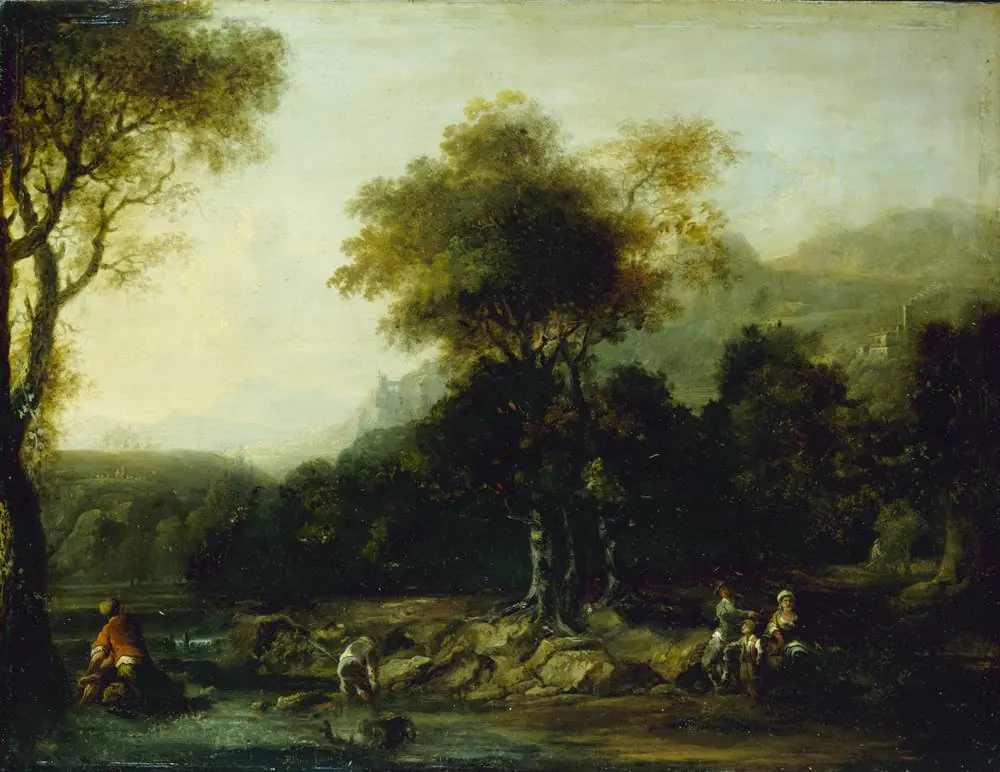 Flusslandschaft mit Fischern
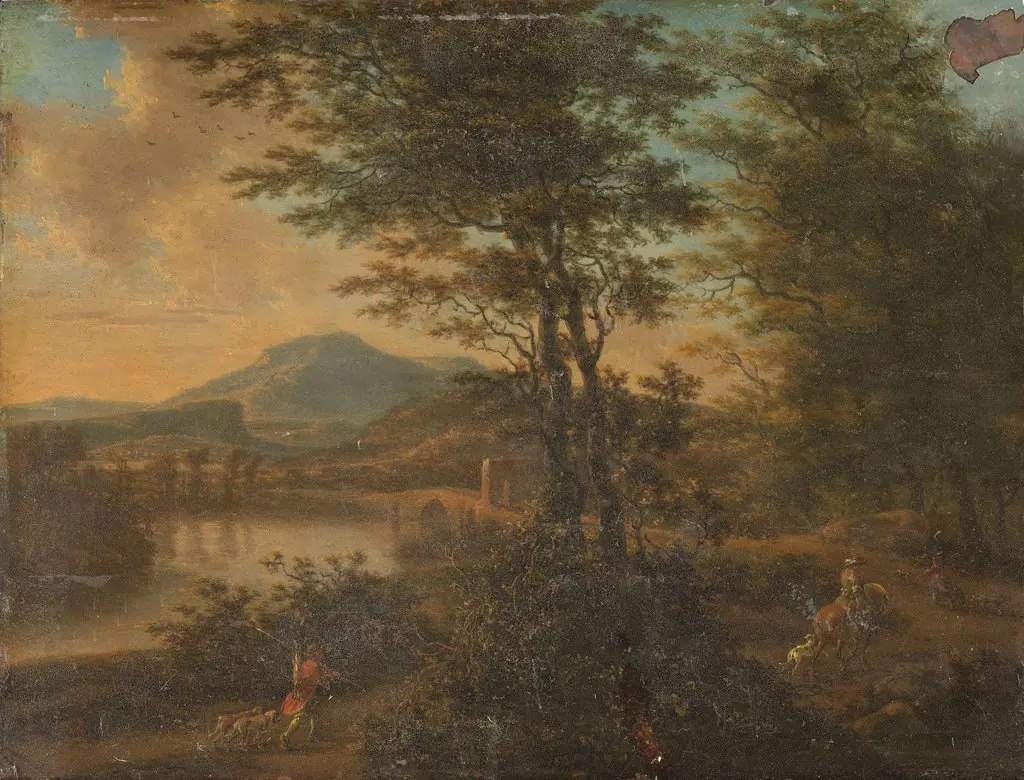 Italian landscape at sunset
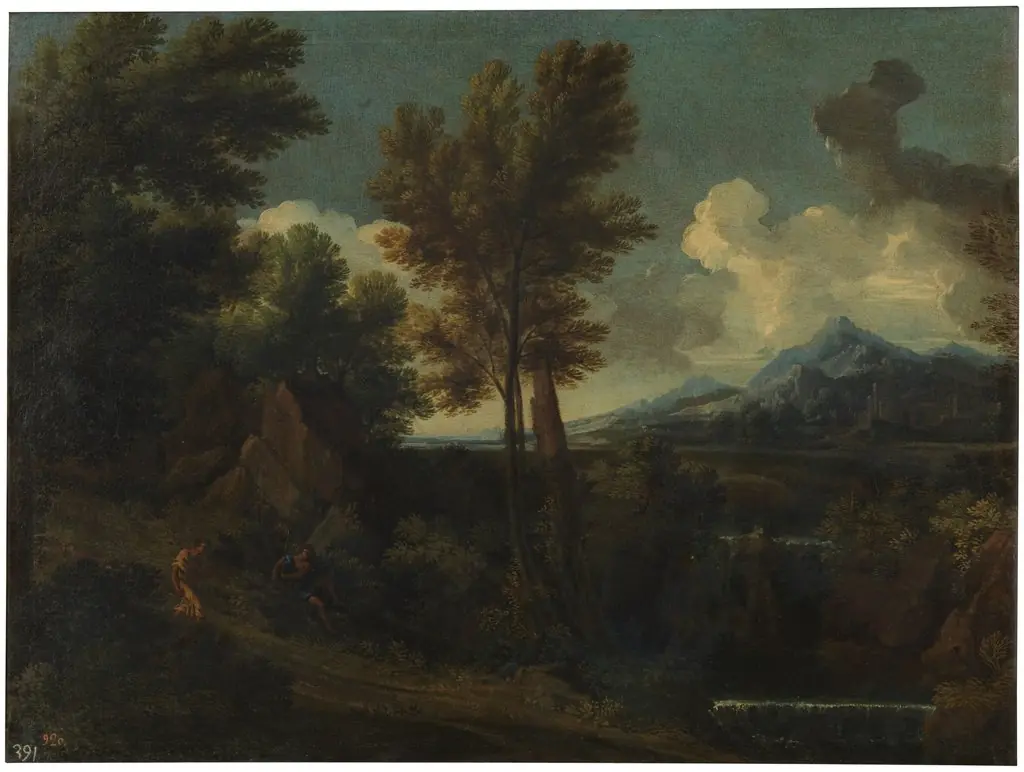 Paisaje con caminante
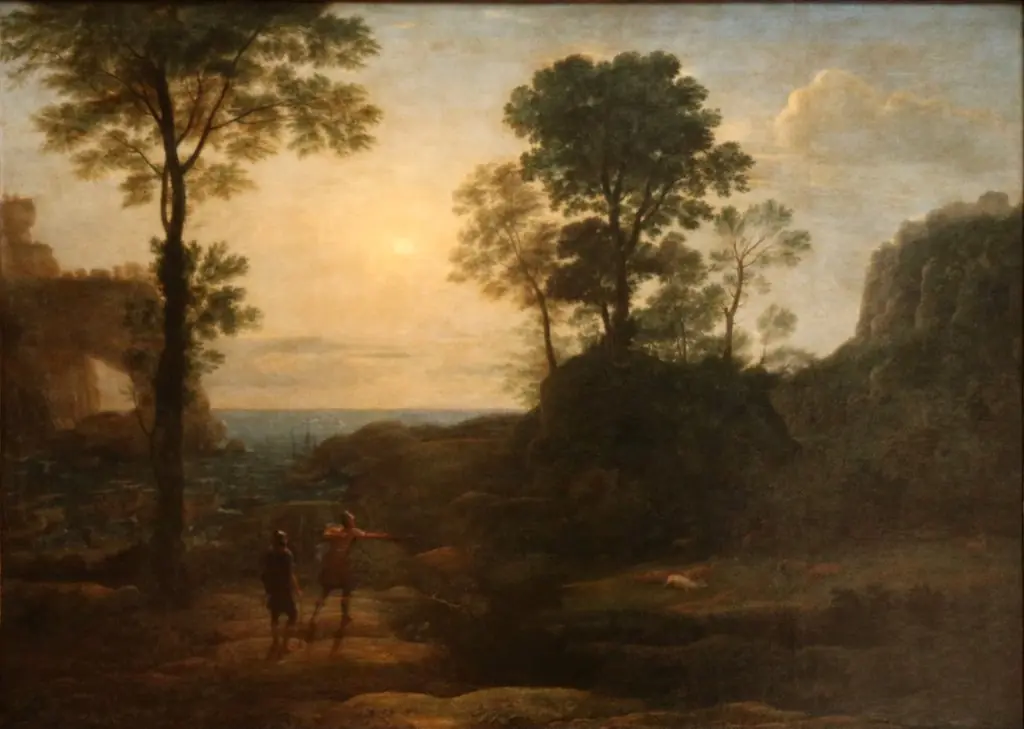 Enée chassant le cerf sur la côte de Libye
- A Landscape