Artwork
The Banishment of Hagar
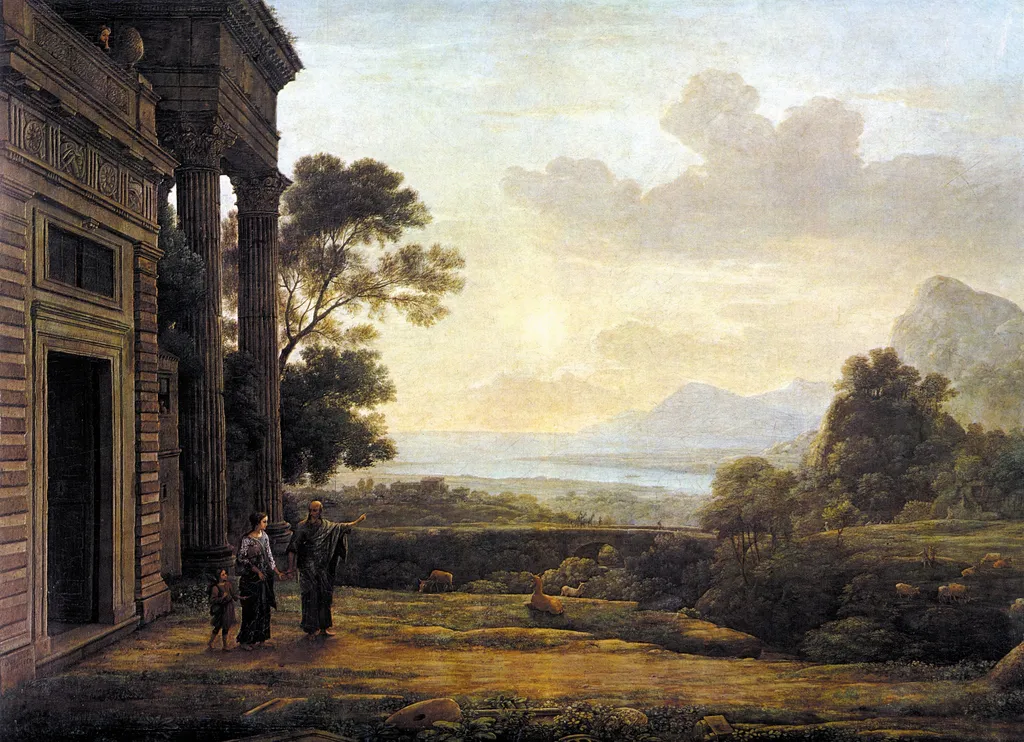
The Banishment of Hagar is an oil painting by the French Classical Baroque artist Claude Lorrain. It dates from 1668 and is held in the collection of the Bavarian State Painting Collections.
About this work
Subject & Meaning
The barren terrain and sparse vegetation surrounding the figures amplify the narrative’s themes of exile and divine providence.
The painting depicts the biblical episode in which Hagar and her son Ishmael are expelled from the household of Abraham and Sarah, an event recounted in Genesis 21. In Lorrain’s composition, the figures are positioned at the edge of a sunlit landscape, with Hagar and the child moving toward a distant path while Abraham gestures from the right, underscoring the moment of separation. The barren terrain and sparse vegetation surrounding the figures amplify the narrative’s themes of exile and divine providence.
The scene is rendered within a luminous, classical landscape that frames the human drama with an idealized natural world, characteristic of Lorrain’s mature style. The work conveys both the emotional weight of the expulsion and the promise of divine care for Hagar and Ishmael, aligning with the religious genre classification noted in contemporary records.
Technique & Style
Executed in oil on canvas in 1668, the work measures 106.5 cm in height and 140.3 cm in width. The composition demonstrates Lorrain’s characteristic handling of light and landscape, organizing the scene around a luminous foreground where Hagar kneels in grief while Ishmael is guided away, framed by a rhythmic arrangement of trees and classical architecture.
The palette is subdued yet luminous, with silvery greens and earth tones punctuated by the warm glow of sunset. Brushwork is fluid and atmospheric, creating recession through delicate glazing and softly blended foliage that dissolves into the distant horizon, a hallmark of Lorrain’s mature style.
History & Provenance
The Banishment of Hagar is an oil-on-canvas painting created by Claude Lorrain in 1668. The work depicts the biblical narrative of Hagar and Abraham, focusing on the banishment of Hagar and Ishmael. It is currently held within the collection of the Bavarian State Painting Collections, specifically located at the Alte Pinakothek in Munich. The painting measures 106.5 cm in height and 140.3 cm in width.
The Banishment of Hagar is part of the Bavarian State Painting Collections and is housed in the Alte Pinakothek in Munich. Its accession number is not specified in the provided sources.
The work was created in 1668 and was first exhibited in the artist’s lifetime, later entering the collection of the Bavarian State Painting Collections, where it remains on display.
It was included in the 1925 exhibition "Claude Lorrain: A Retrospective" at the Alte Pinakothek and has been featured in subsequent shows of 17th-century religious paintings at the same institution.
Context
The Banishment of Hagar by Claude Lorrain, painted in 1668, is a religious work depicting the biblical moment of Hagar and Ishmael's expulsion, housed in the Alte Pinakothek in Munich. The painting is part of the Bavarian State Painting Collections and exemplifies Lorrain's mastery of classical landscape composition within the religious genre. Scholarship on the work emphasizes its technical precision in rendering light and atmosphere, as well as its significance within Lorrain's broader oeuvre of historical paintings, which solidified his influence on 17th-century European art.
Its enduring presence in major collections and exhibitions underscores its canonical status in art historical narratives of the period.
Overview
Claude Lorrain’s 1668 oil painting The Banishment of Hagar presents a biblical episode in which Abraham, Hagar, and their child are shown at a moment of departure. Set before a classical portico with towering columns, the composition balances a luminous sky with darker, distant hills, river, and trees, creating a layered sense of space.
Own this work as a print
Artist & collection
Artist
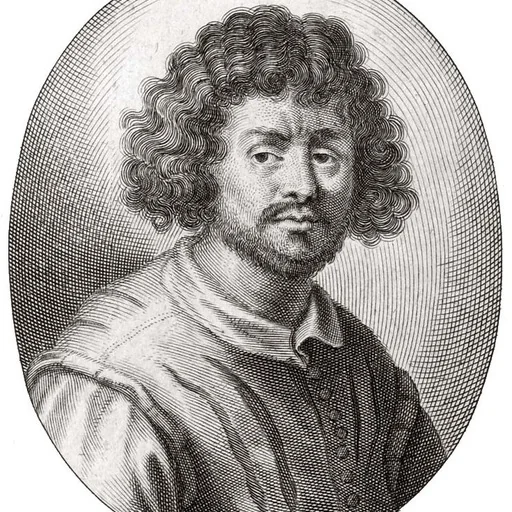
Claude Lorrain (French:; born Claude Gellée, called le Lorrain in French; traditionally just Claude in English; c.

- Landscape with the Burial of Saint Serapia
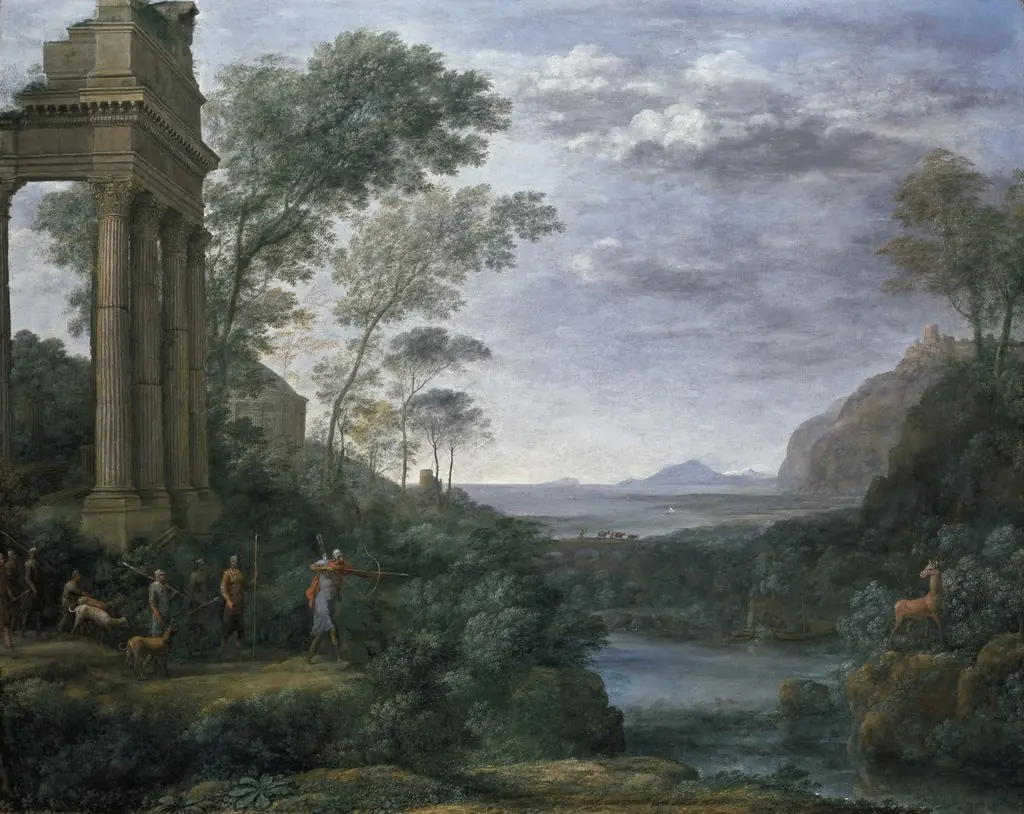 Ascanius Shooting the Stag of Sylvia
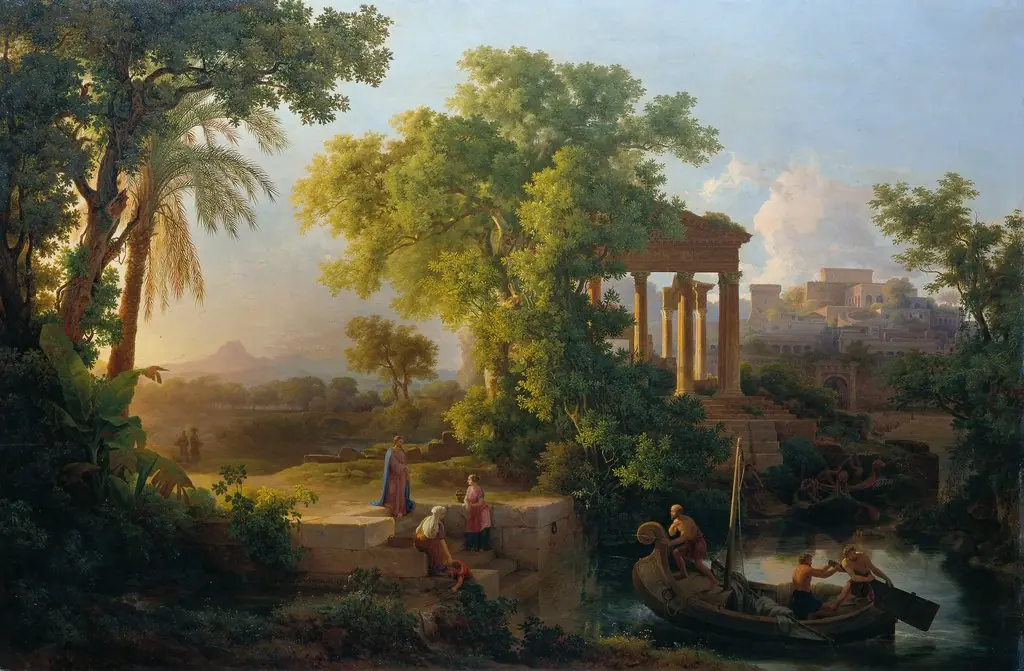 Landscape with the Vocation of St Peter
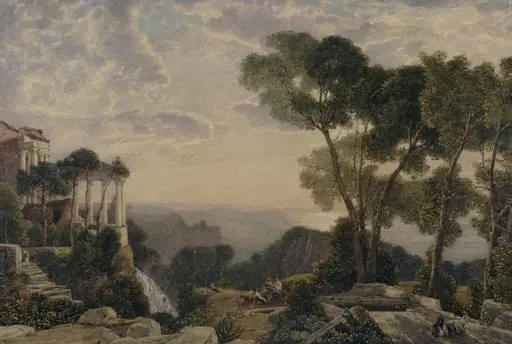 Landscape: A classical composition
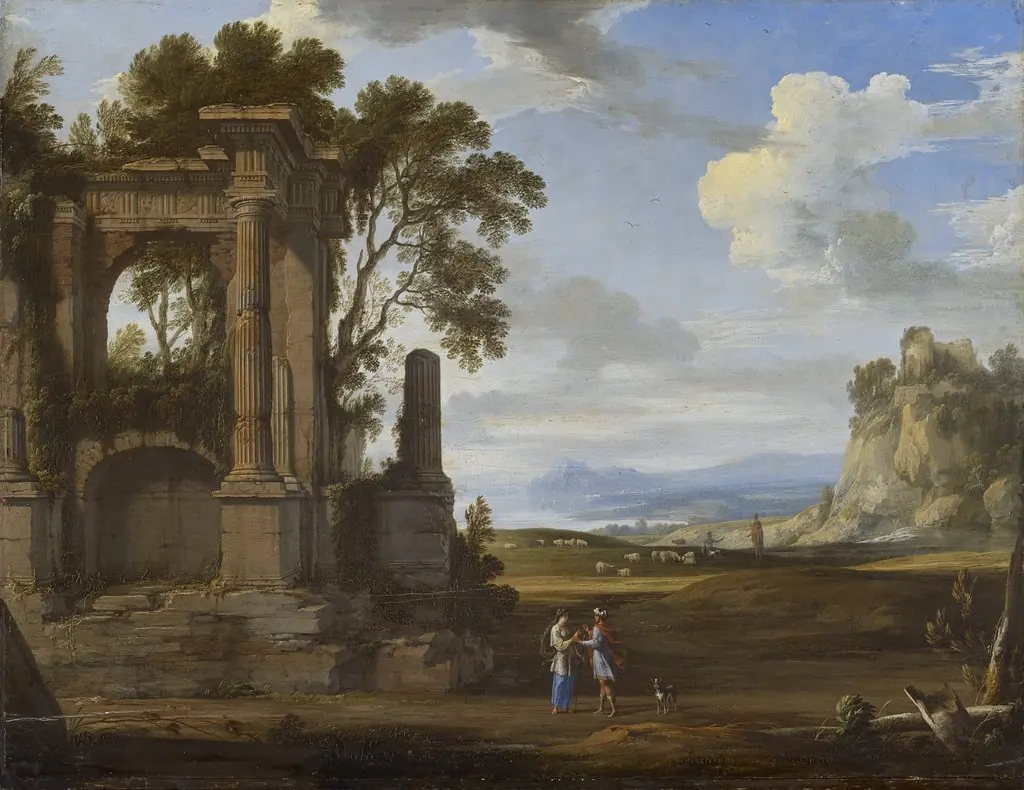 A Classical Landscape with Judah and Tamar
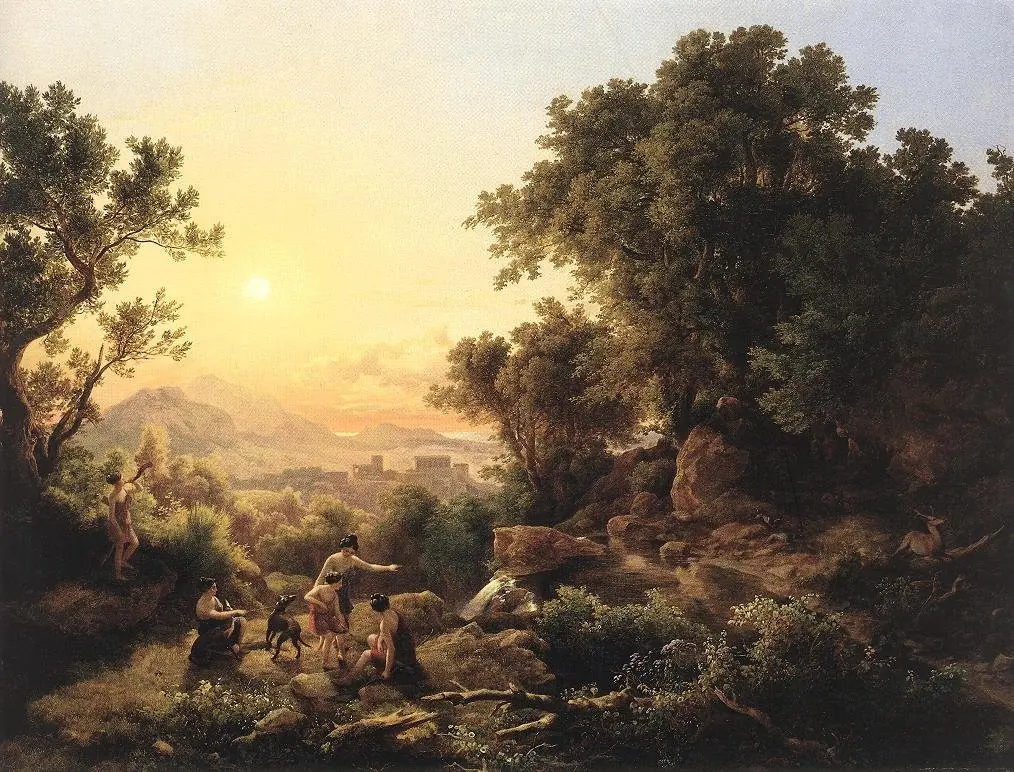 Diana at the Hunt (Hunting Nymphs)
 Ideal Landscape with Temple Buildings
 Ideal Landscape
 Aeneas's Farewell to Dido in Carthage
 View of the Jesuit Church at Olinda, Brazil
 View of a Town in the Sabine Hills
 Italian Coastal Landscape