Artwork
Ascanius Shooting the Stag of Sylvia
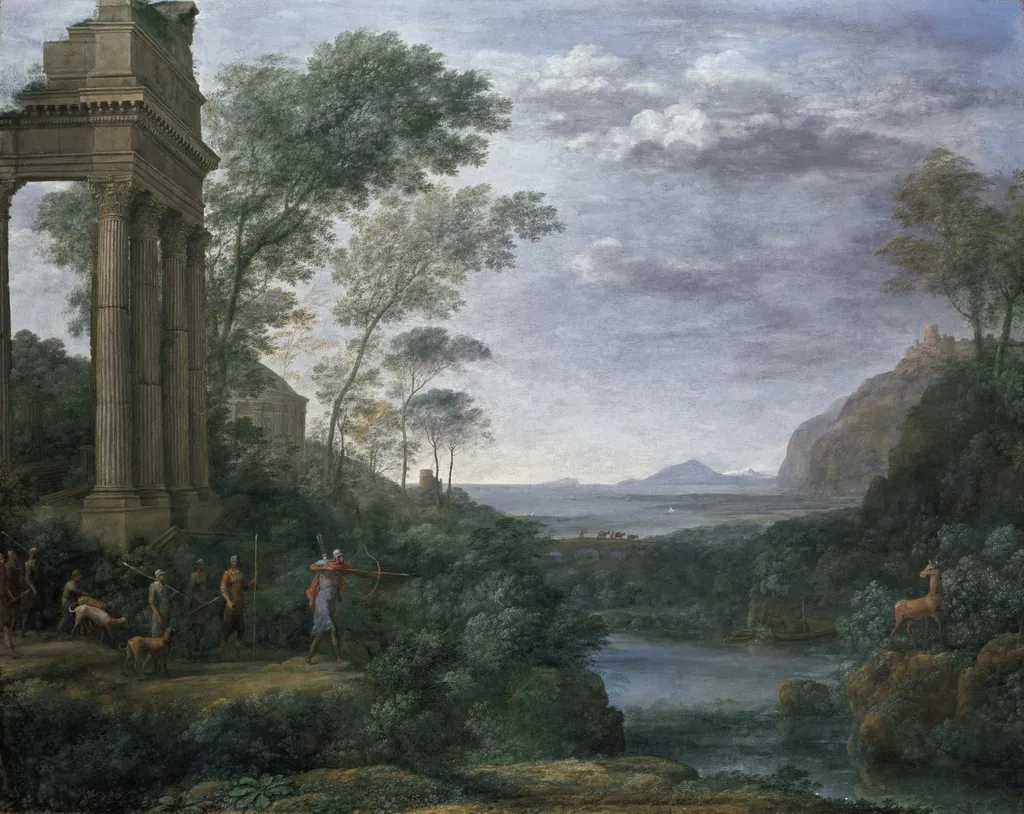
Ascanius Shooting the Stag of Sylvia is an oil painting by Claude Lorrain. It is held in the collection of the Ashmolean Museum.
About this work
Overview
Landscape with Ascanius Shooting the Stag of Sylvia is an oil on canvas painting by Claude Lorrain (Claude Gellée, 1600-1682), the preeminent French classical landscape painter of the seventeenth century. Measuring 120 by 150 cm, it was painted in Rome in 1682, the year of the artist's death, and is now held by the Ashmolean Museum in Oxford under accession number WA1926.1. The work is Claude's last known painting and may remain unfinished; it does not appear in his Liber Veritatis, the drawn record he maintained of his completed works. Commissioned by Prince Lorenzo Onofrio Colonna (1637-1689), the artist's most significant patron in his final years, the painting occupies a pivotal position in Claude's oeuvre as the culmination of his lifelong exploration of the ideal classical landscape, and as a meditation on the full arc of Roman civilization from its mythic origins to its ruined aftermath.
Subject & Meaning
This act, instigated by the goddess Juno through the Fury Allecto, provokes the war between Trojans and Latins that will determine the future site of Rome.
The painting depicts a scene from Virgil's Aeneid, Book VII, verses 483-499: Ascanius, son of Aeneas, draws his bow to shoot the tame stag of Silvia, daughter of Tyrrheus, chief ranger to the King of the Latins. This act, instigated by the goddess Juno through the Fury Allecto, provokes the war between Trojans and Latins that will determine the future site of Rome. The moment captured is one of suspended tension: Ascanius takes aim while the stag, too trusting in its protected status, looks toward him. The composition is notably rare in art history; while Peter Paul Rubens treated the same subject in a painting at Girona and an oil sketch at the Philadelphia Museum of Art, his version shows the aftermath with Silvia nursing the dying stag as fighting erupts behind. Claude may have known the Vergilius Romanus, a fifth-century illustrated manuscript in the Vatican Library (Cod. Vat. lat. 3867, f. 163 recto), which depicts a similar moment with Ascanius already wounding the stag for a second shot. The painting's iconography extends beyond literal narrative. The elaborate Corinthian temple in ruins, visible on the left, constitutes a deliberate anachronism for a scene predating Rome's foundation, yet it reflects the actual state of ancient Roman monuments in Claude's own era. Thus the painting compresses Roman history, juxtaposing its mythic dawn with its material decay. The overcast sky and wind-bent trees, unusual in Claude's work, suggest the storm of war to come, while the tranquil coastal landscape stretching behind the figures will soon be disrupted by the conflict Virgil describes. The columned architecture also carries a heraldic pun: the Colonna family, the painting's patrons, bore a column in their coat of arms.
Technique & Style
The painting is executed in oil on canvas, measuring 120 by 150 cm. The composition is horizontally oriented, with a vast sky occupying the upper two-thirds of the picture plane. On the left, a monumental ruined temple with tall fluted columns dominates the foreground, functioning as a repoussoir element that draws the eye deep into the pictorial space. The central action is divided by a river: Ascanius and his hunting party occupy the left bank, while the stag stands on rocky terrain to the right. Dense green foliage and trees fill the middle ground, opening to a calm body of water with small boats, distant mountains, a bridge with tiny figures, and a coastal horizon receding into atmospheric haze. The palette is restrained: muted greens, soft blues, grayish clouds, and earthy browns predominate. Anthony Blunt observed that in this late phase, Claude reduced his color range to silvery green trees, pale grey-blue sky, grey architecture, and neutral-colored dresses for the figures. The brushwork is smooth and blended, creating atmospheric depth and an idealized, serene finish. The trees are rendered so diaphanously and the portico left so open that they barely interrupt the continuity of the air. The composition evolved through preparatory drawings, including sheets now at Chatsworth House (dated 1671 or 1678) and the Ashmolean (1682), with the final river-divided arrangement arrived at only late in the process. As in the pendant painting in Hamburg, two large repoussoir elements at each side establish a diagonal from left to right, balanced by the river flowing in the opposite direction. The figures show the extreme elongation characteristic of Claude's final years; even the painting's owner noted that the hunters are impossibly elongated, with Ascanius particularly absurdly top-heavy. This stylistic trait, shared with the pendant, has been subject to speculation about optical conditions, though medical diagnosis through art has been rejected by doctors and critics alike.
History & Provenance
The painting was commissioned by Prince Lorenzo Onofrio Colonna, Prince of Paliano and Constable of Naples, for whom Claude painted at least eight other works. It was conceived as a pendant to View of Carthage with Dido and Aeneas (or Aeneas's Farewell to Dido in Carthage, 1676, now Kunsthalle, Hamburg), another scene from the Aeneid. When hung together with the Oxford painting on the left, the figure groups face inward and the main buildings frame the exterior of the pair. The painting bears a signature, date, and inscription at center bottom, reading in part: CLAVDIO. I, V, F, A ROMAE 1682 Come. Ascanio saetta il. Cervo di Silvia figliuola di. Tirro lib. 7 Vig. A partially covered secondary signature reads CLAVDIO ROM. An inscription recorded on the reverse in the 1801 Ottley sale catalogue, Quadro per l'Illmo et excellmo Sig. Contestabile Colonna questo di 5 Ottobre 1681, is no longer extant. The painting remained at the Palazzo Colonna until 1783, and was acquired in 1798 by the English collector, dealer, writer, and curator William Young Ottley, who transported it to London at a time when Claude's works commanded enormous prices. It was sold at Christie's on 16 May 1801 for 462 guineas, separated from its pendant which fetched 840 guineas. Between 1801 and 1826 it belonged to the Porter family, then passed to Sir Thomas Baring, 2nd Baronet, who installed it at Stratton Park, Hampshire, in 1837. It remained with the Baring family until 1866, then with the Northbrooks (1866-1919). Thomas Baring, 2nd Earl of Northbrook, sold it at Christie's in 1919 for 588 guineas, by which time Claude's market had collapsed due to inflation. After passing through Buttery and Weldon collections, it was presented to the Ashmolean Museum in 1926 by Mrs. F. Weldon (Florence Weldon, née Tebb).
Context
Claude Lorrain belongs to the Baroque period, specifically the French Classical tradition, within which he distinguished himself as the preeminent landscape painter. His work reflects a new concept in landscape elaboration based on classical referents: the ideal landscape, an intellectual and poetic construction that expresses the artist's inner vision of a perfected natural world. In his final years, Claude concentrated increasingly on religious and mythological subjects, interpreted with simplicity. The Aeneid became his principal source of inspiration, yielding a series of works of great originality and vigor that depict majestic landscapes staging already-vanished mythic places: Pallantium, Delphi, Carthage, Mount Parnassus. The Ashmolean painting exemplifies this late phase, uniting structural solidity of architecture and landscape with a fineness of detail perceptible only in his final works. Despite the acknowledged weakness of his figures, a limitation recognized by Claude himself, who reportedly joked that he charged for landscapes but gave figures for free, the painting has been among the most admired of his works. Anthony Blunt praised it for revealing all the qualities of the artist's last phase, with color reduced to its utmost limits and air achieving an almost unbroken continuity. The painting's critical fortunes have tracked broader valuations of Claude's achievement: commanding enormous prices in the early nineteenth century when English collectors dominated the market, suffering collapse with postwar inflation, and achieving renewed scholarly attention as his late style has been reassessed.
Legacy
As Claude Lorrain's final painting, Landscape with Ascanius Shooting the Stag of Sylvia stands as a definitive statement of his artistic legacy and a touchstone for understanding the late development of European landscape painting. Its influence operates on multiple registers: as the culmination of the ideal landscape tradition that Claude himself had largely created; as a model for the integration of mythological narrative with atmospheric naturalism; and as a demonstration of how architectural ruin could serve as temporal compression, collapsing origin and end into a single contemplative field. The painting's paired relationship with the Hamburg Dido and Aeneas established a model for programmatic Aeneid cycles in landscape that would inform subsequent academic practice. Its provenance history, from Colonna patronage through Ottley's speculative acquisition, the Baring collection's country-house display, and final museum donation, traces the migration of Old Master paintings from aristocratic European collections to public museums, and the fluctuating market valuations that accompanied this transition. The work's absence from the Liber Veritatis, due to its possibly unfinished state, has made it a crucial case study for understanding Claude's working methods and the boundaries of his autograph oeuvre. For modern viewers, the painting offers a meditation on civilization's fragility that resonates beyond its seventeenth-century origins: the stag's innocent trust, the archer's inevitable violence, and the ruined temple's silent witness compose a narrative about consequence and transience that transcends its specific Virgilian source.
Own this work as a print
Artist & collection
Artist
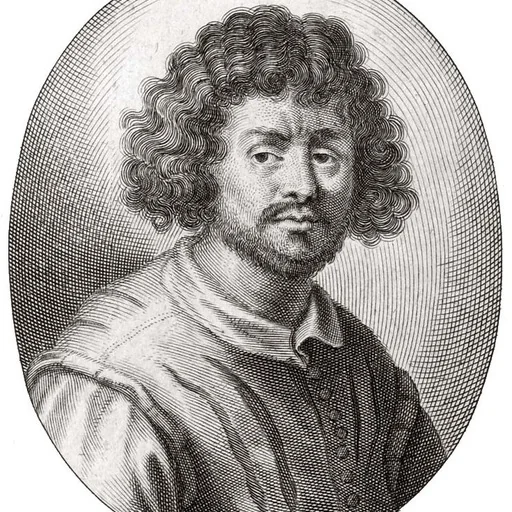
Claude Lorrain (French:; born Claude Gellée, called le Lorrain in French; traditionally just Claude in English; c.

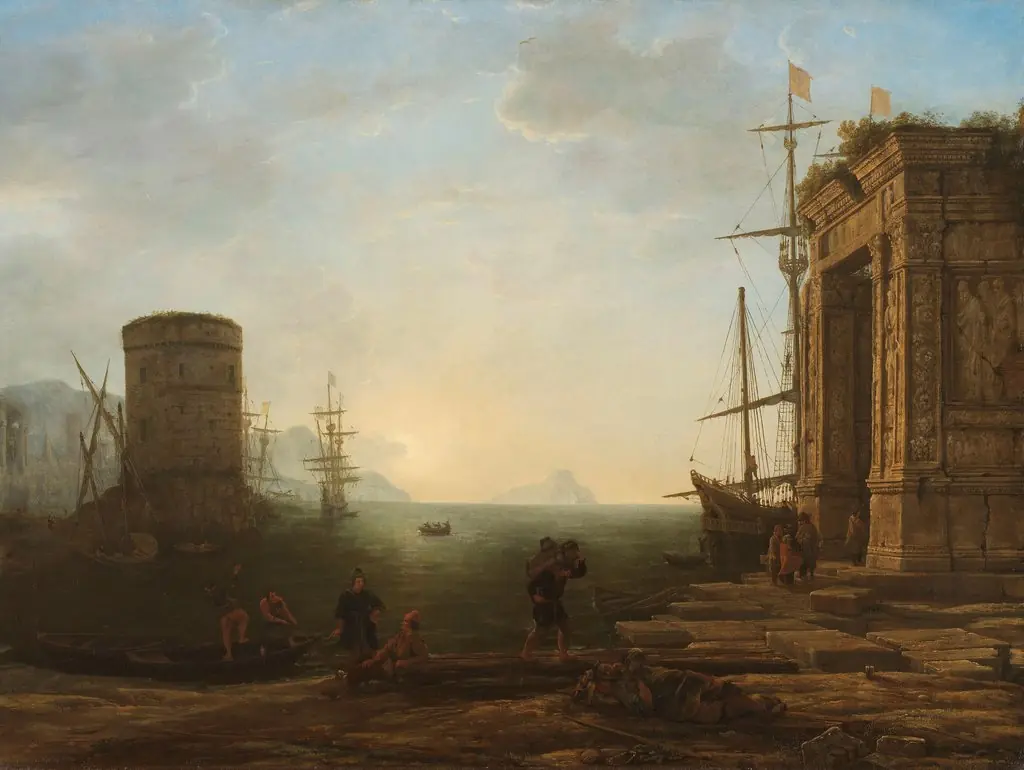
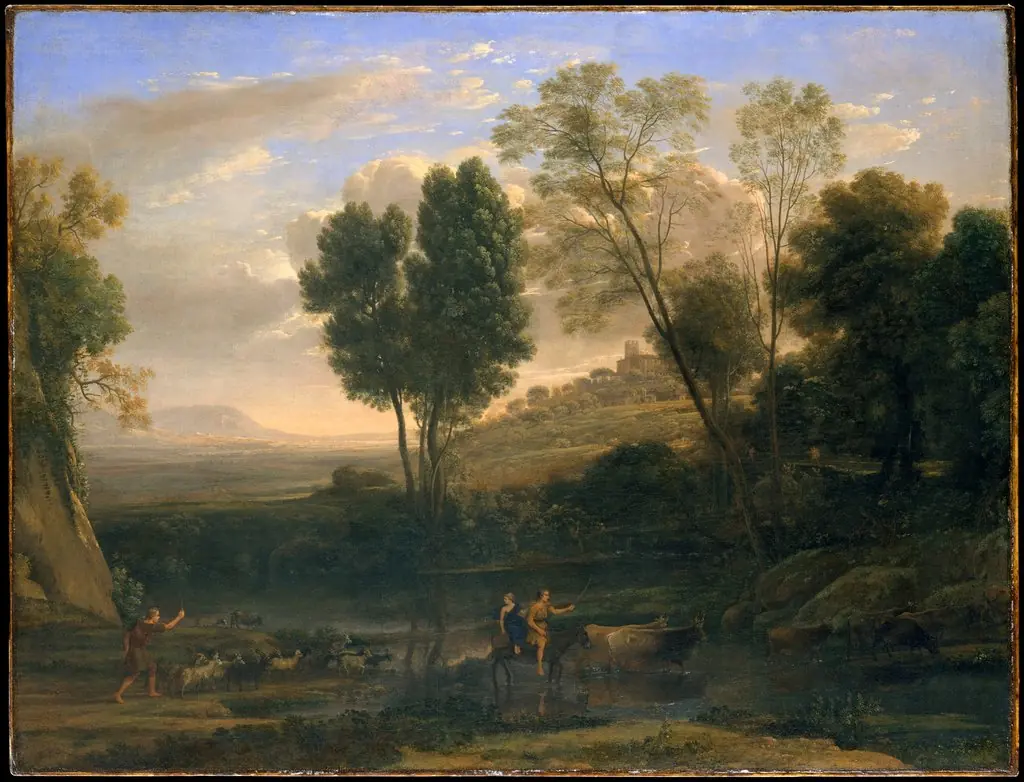
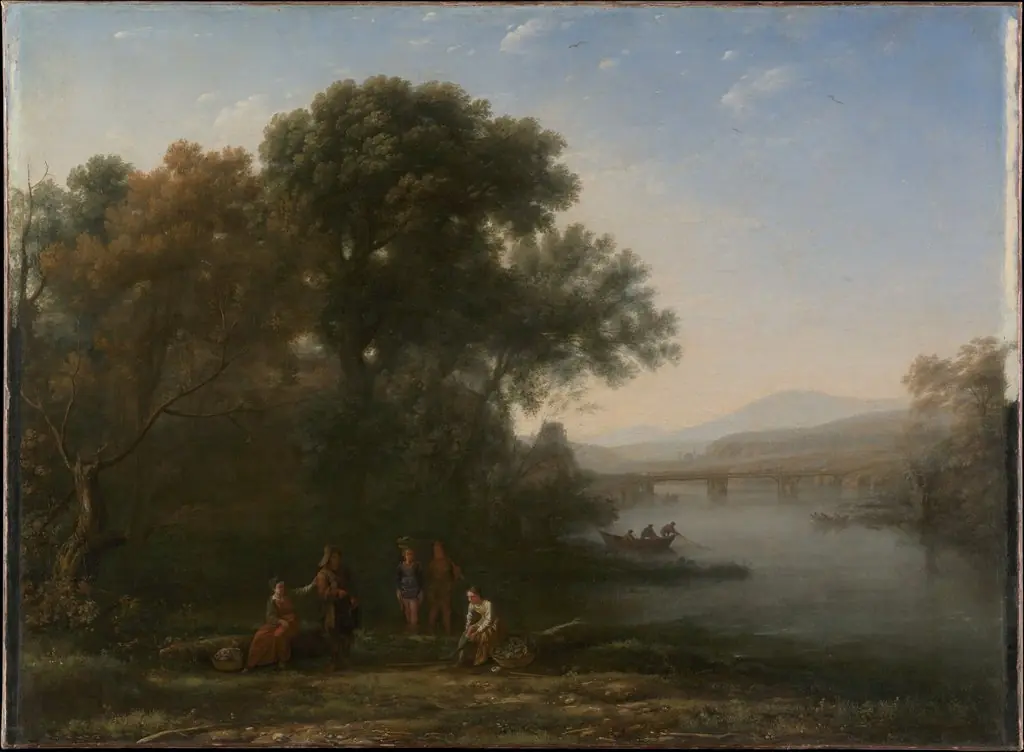
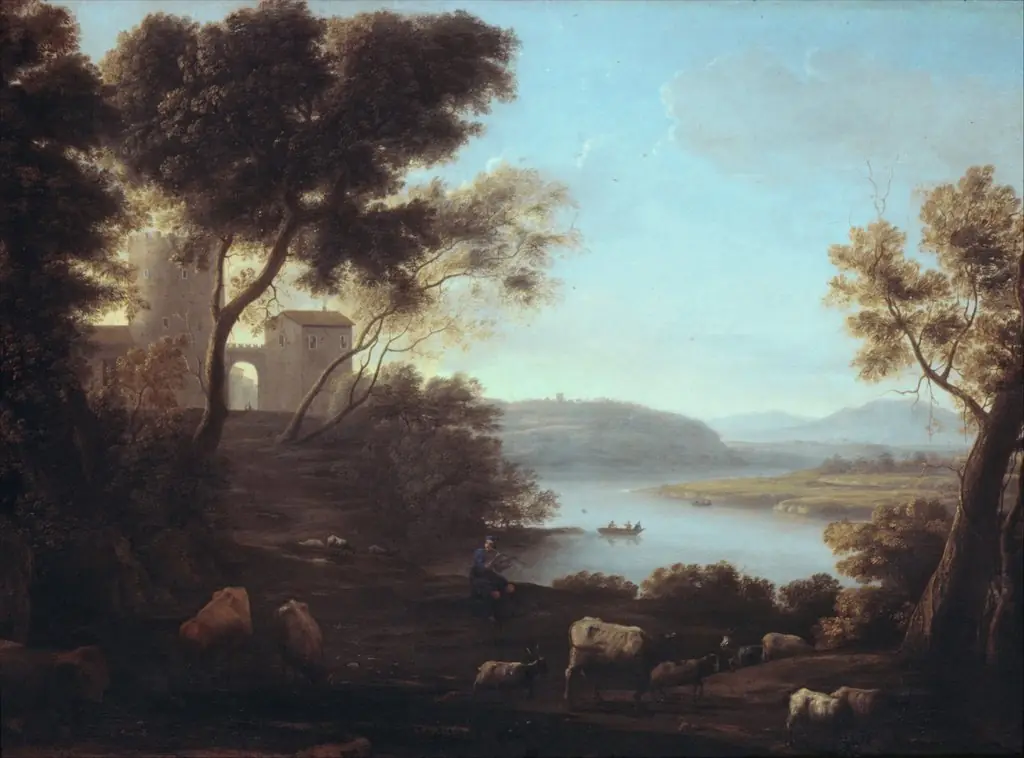
- Apollo and the Muses on Mount Helicon
 A Classical Landscape with Judah and Tamar
 Italian Landscape
 The Banishment of Hagar
 Landscape with sarcophagus
 Mount Athos Carved as a Monument to Alexander the Great
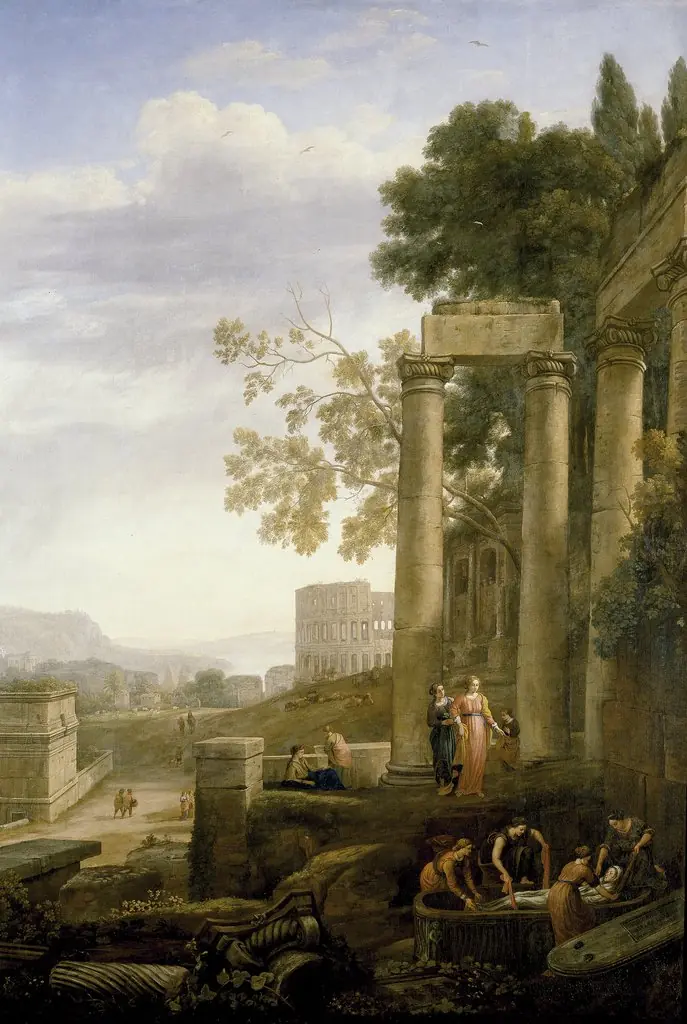 Landscape with the Burial of Saint Serapia
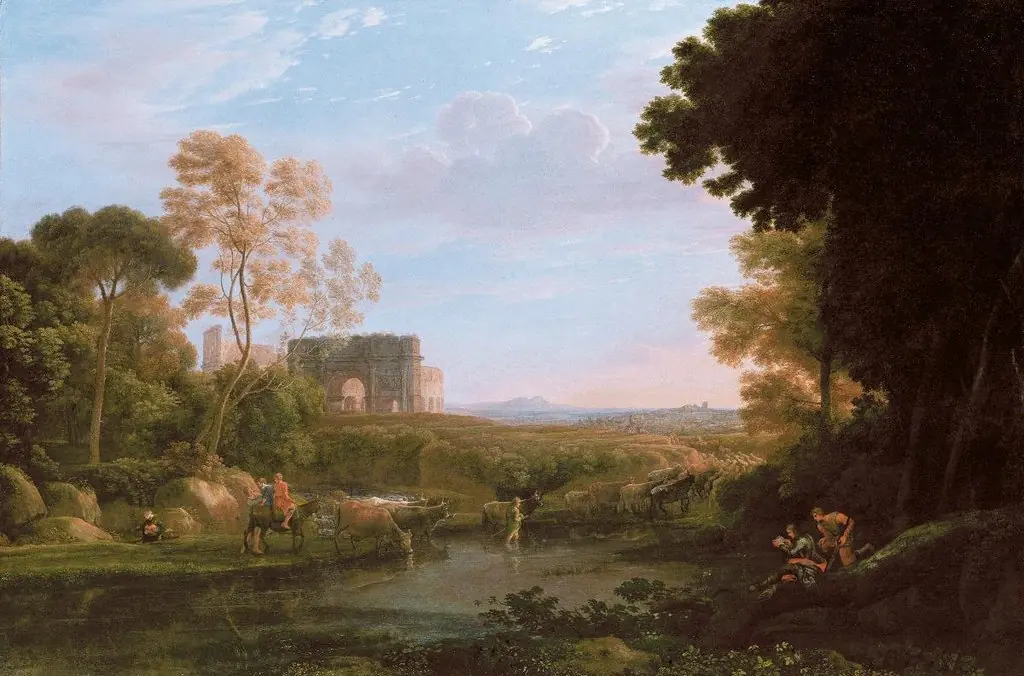 Pastorale avec l’Arc de Constantin
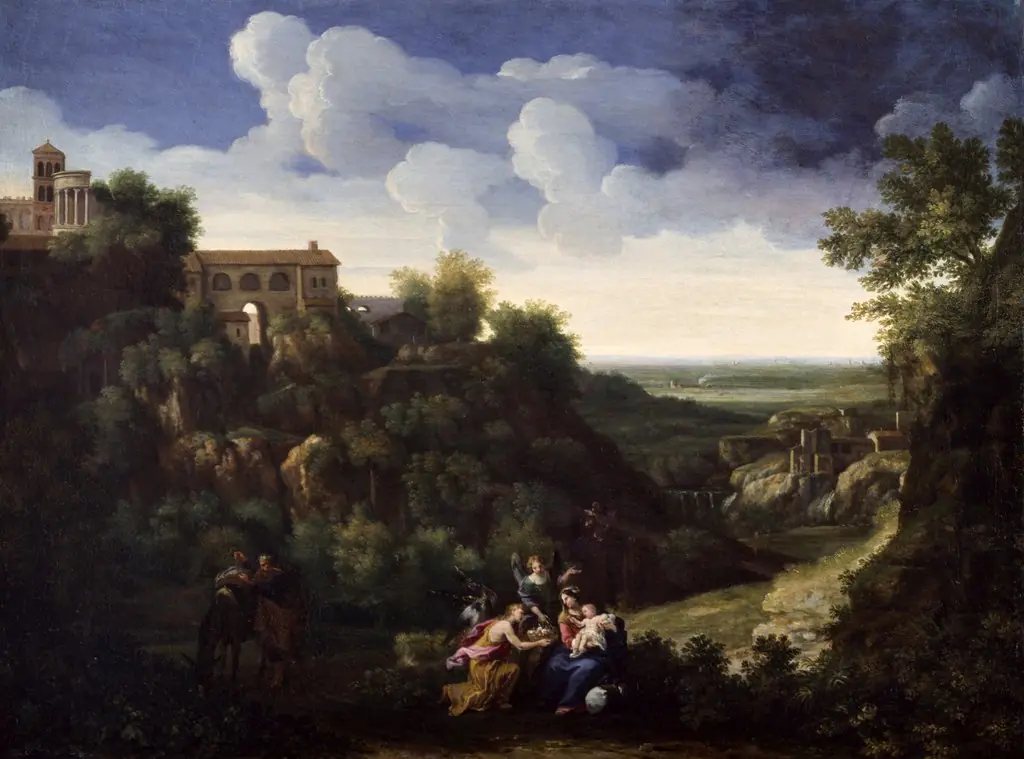 View of Tivoli with the Flight into Egypt
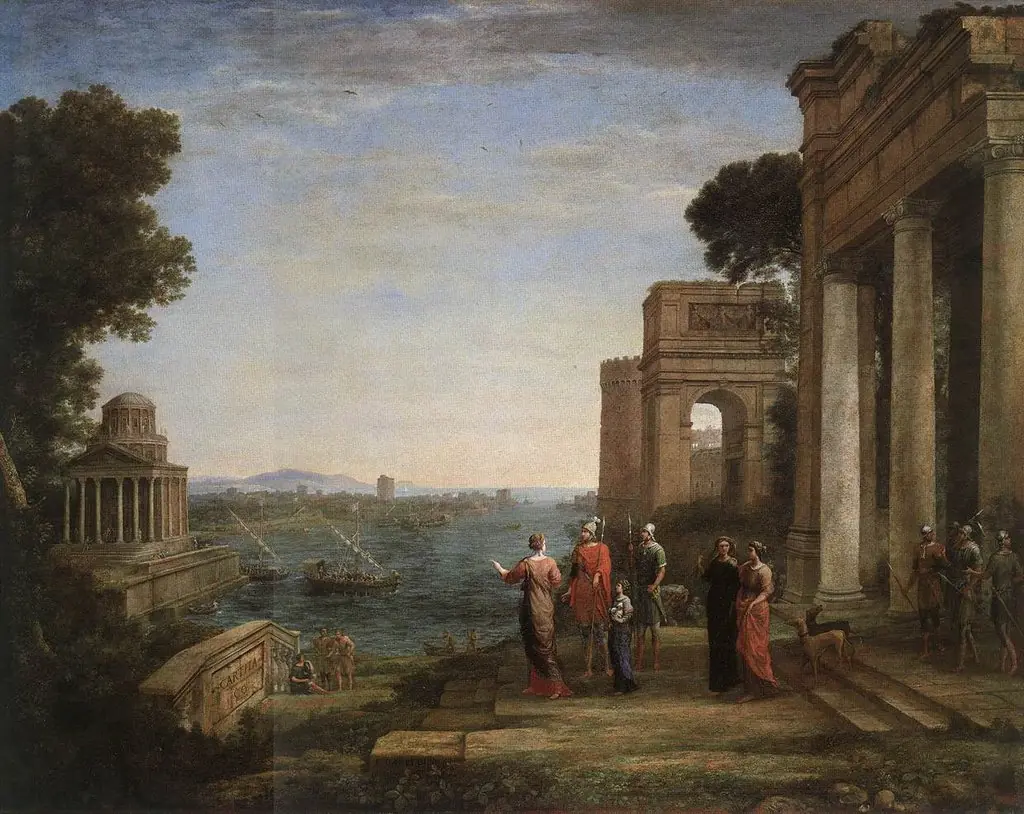 Aeneas's Farewell to Dido in Carthage
 Landscape with Polyphemus
 Pastoral landscape