Artwork
Streatham Common
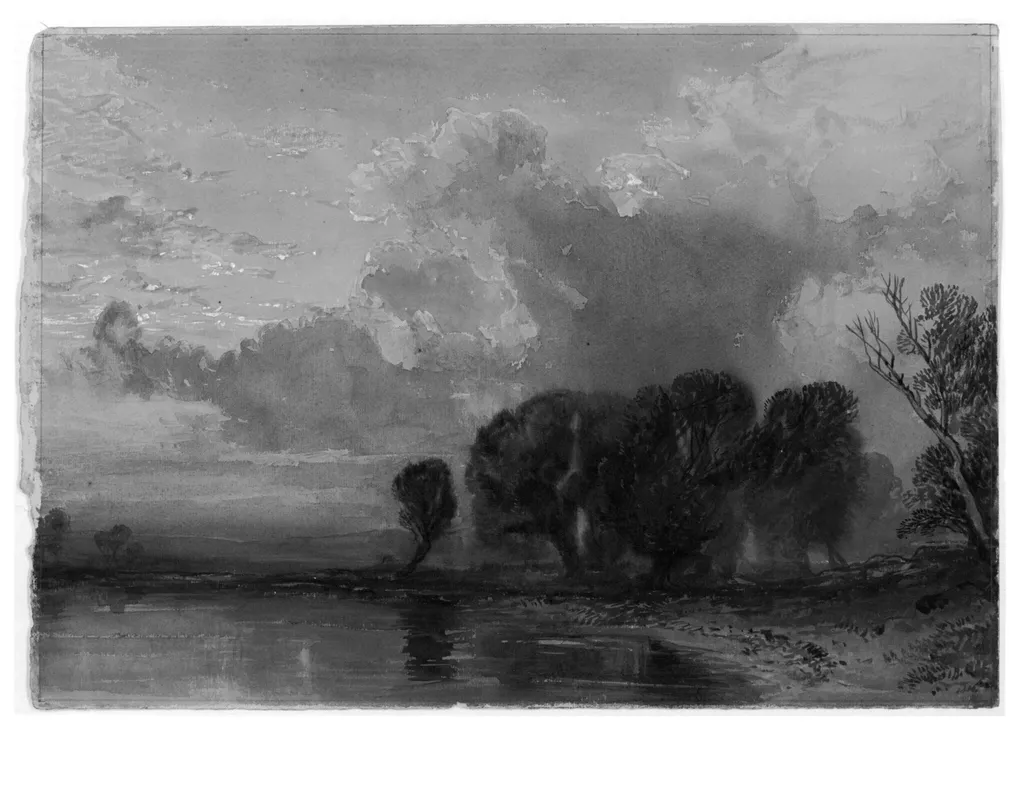
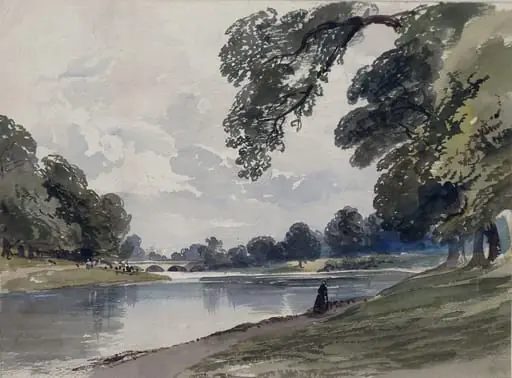
Streatham Common is a watercolor work on paper by the Impressionist artist William Collingwood Smith. It dates from 1871 and is held in the collection of the Victoria and Albert Museum.
About this work
Overview
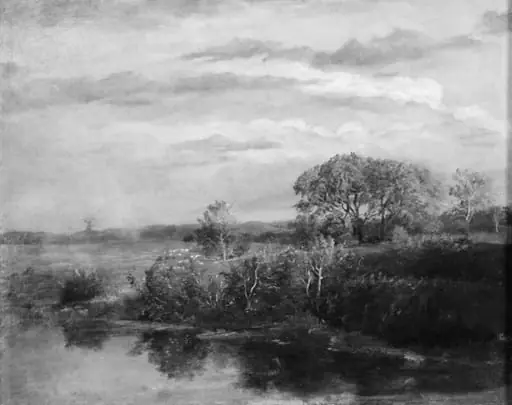
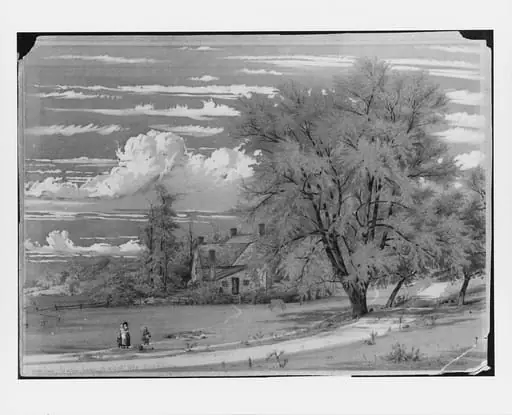
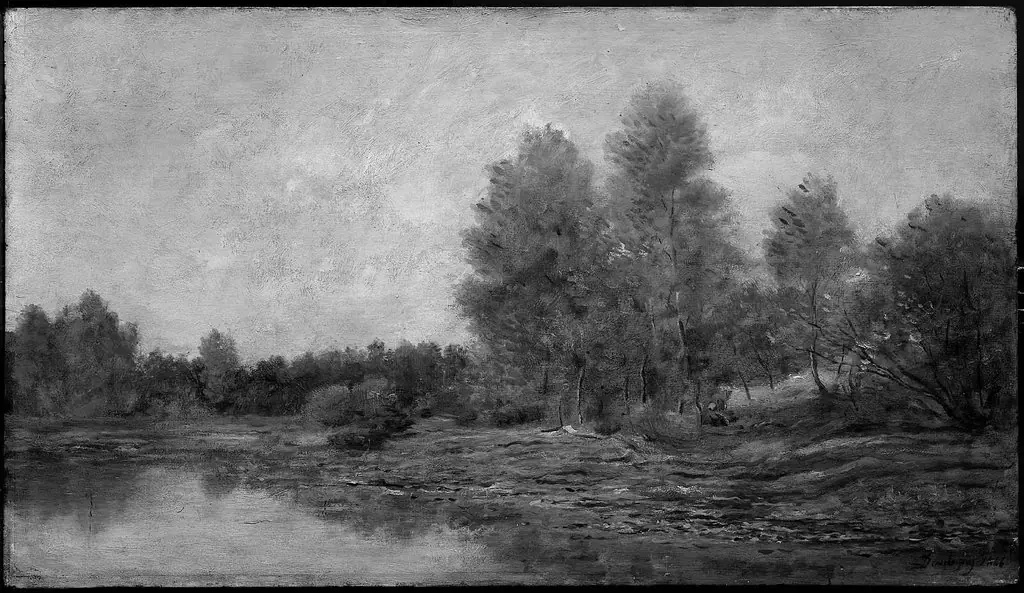
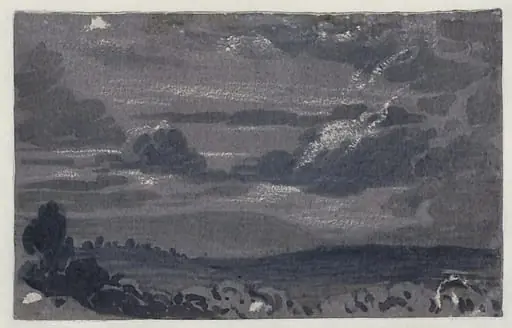
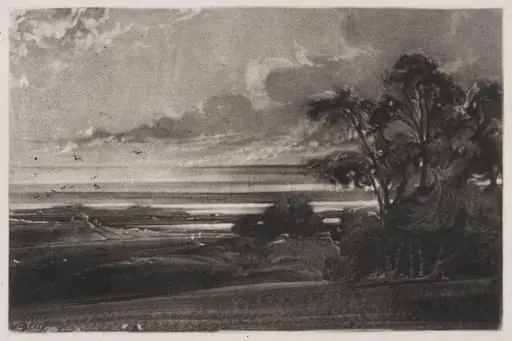
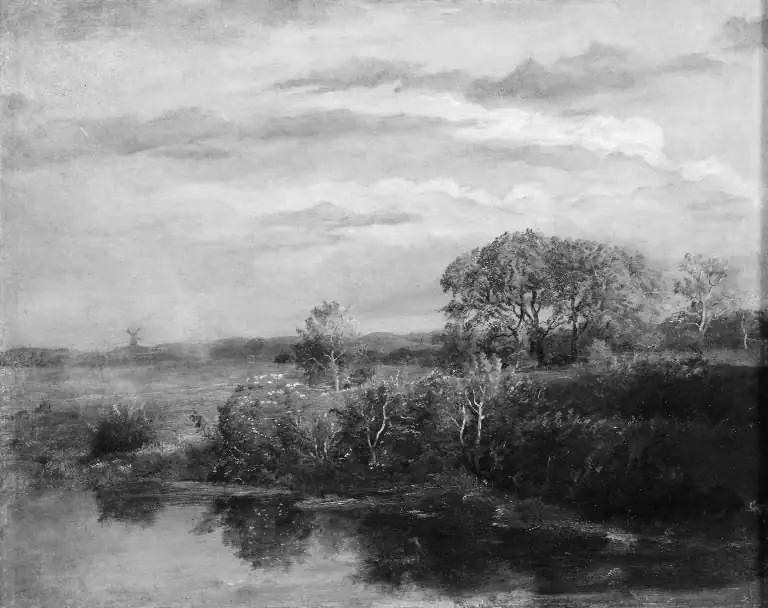
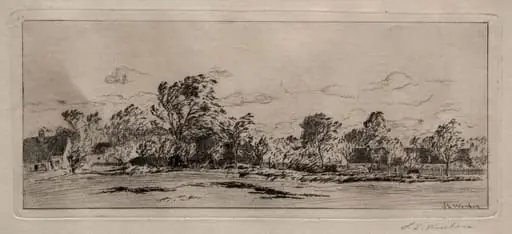
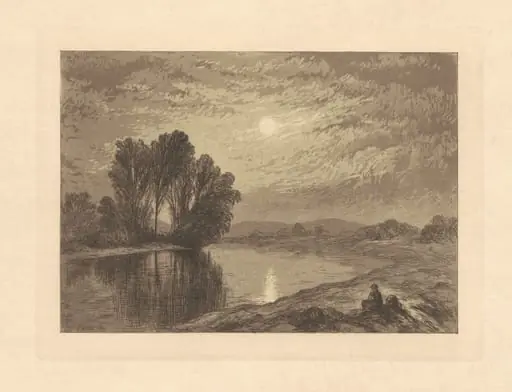
Painted in 1871 by William Collingwood Smith, this watercolour captures a tranquil view of Streatham Common. The composition emphasizes stillness and subtle atmospheric shifts, with muted tones and delicate washes that evoke early morning light. The medium’s transparency enhances the sense of air and moisture, grounding the scene in quiet observation rather than dramatic effect.
Subject & Meaning
The painting presents a quiet stretch of common land, where dark, slender trees line the edge of a still body of water. Their forms are simplified into silhouettes, contrasting gently with the pale sky and distant hills. There is no human presence, suggesting a contemplative engagement with nature’s quiet rhythms rather than a narrative or social statement.
Technique & Style
Smith employed loose, fluid brushwork typical of 19th-century British watercolour practice. Colours are applied in thin layers, allowing the paper’s white to suggest light and haze. The edges between elements blur softly, creating a sense of depth through tone rather than sharp definition. The technique prioritizes mood over detail, embracing the medium’s inherent spontaneity.
History & Provenance
The work dates from the later years of Smith’s career, when he focused on landscapes of southern England. While not widely exhibited during his lifetime, it reflects the growing interest in topographical watercolours among amateur and professional artists of the period. Its current location is not documented in public records, though similar works reside in regional collections.
Context
Streatham Common, then a semi-rural area on London’s southern edge, was a familiar subject for local artists.
In the 1870s, watercolour was widely used for both artistic expression and topographical recording. Streatham Common, then a semi-rural area on London’s southern edge, was a familiar subject for local artists. Smith’s approach aligns with the tradition of quiet, observational landscape painting that valued subtlety over grandeur, distinguishing it from more dramatic Romantic or Pre-Raphaelite styles.
Legacy
Smith’s work contributes to a broader archive of English watercolours that document changing landscapes on the urban periphery. Though not influential in avant-garde circles, his paintings offer insight into the aesthetic preferences of middle-class art patrons and the quiet, everyday beauty they sought to preserve on paper.
Own this work as a print
Artist & collection
Artist
English watercolourists of the 1800s captured parks and lanes with quiet detail. William Collingwood Smith painted Streatham Common in 1871 and earlier strolled Kensington Gardens in 1849, both in transparent washes on…