Artwork
Martyrium (Martyrdom)
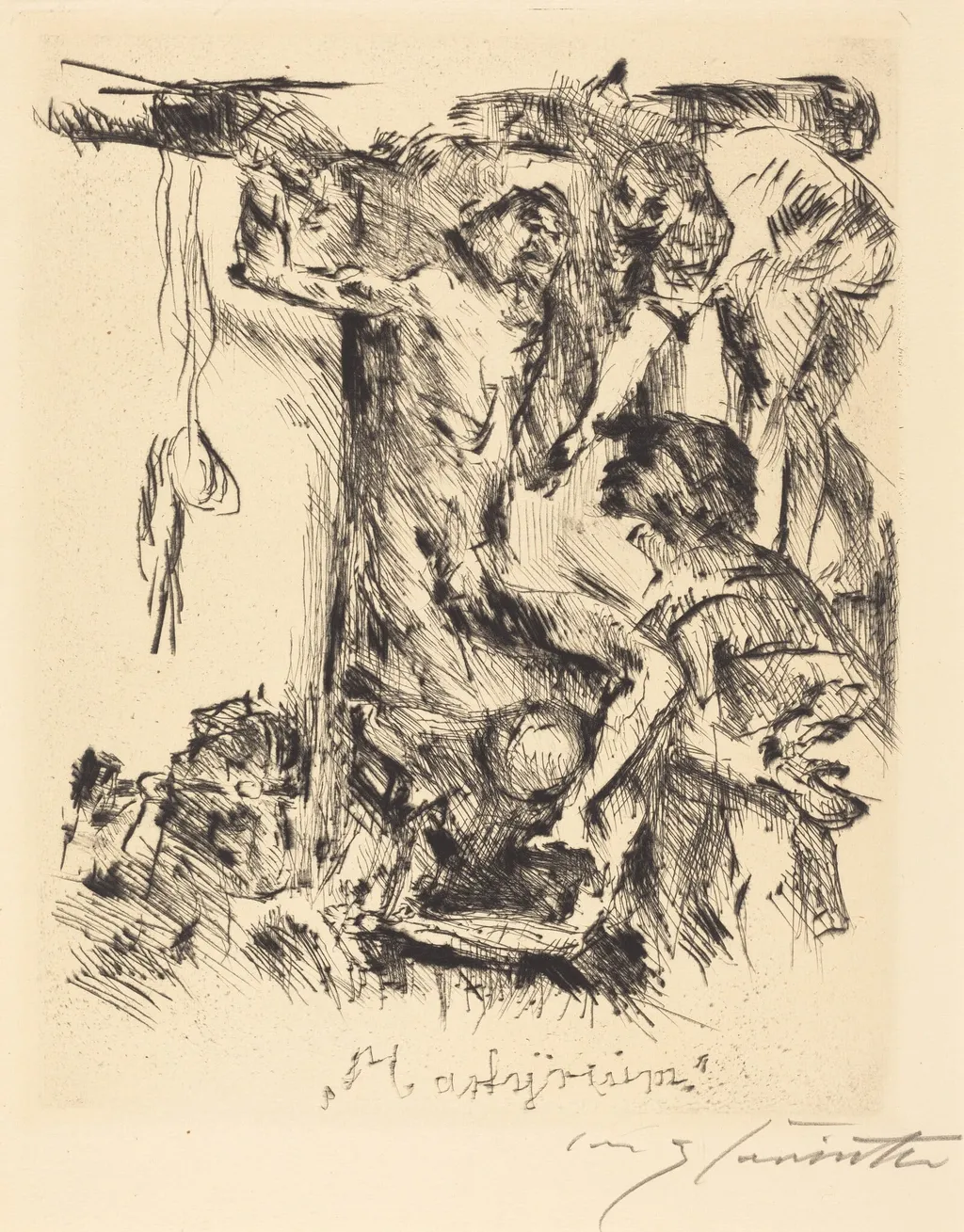
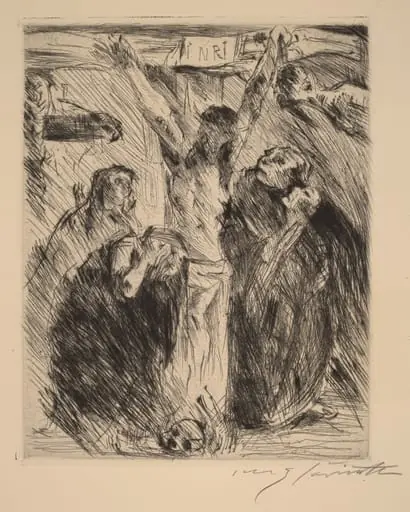
Martyrium (Martyrdom) is an ink print by Lovis Corinth. It dates from 1921 and is held in the collection of the National Gallery of Art.
- Inscription
- Inscribed:lower center in plate: "Martyrium"; lower right in graphite: Lovis Corinth
About this work
Overview
Martyrium (Martyrdom) is a 1921 drypoint print executed on laid paper. The work is rendered entirely in black, employing the characteristic incised lines of the drypoint technique to convey a stark, graphic composition.
Subject & Meaning
The image presents a tightly packed group of figures in various postures, standing, kneeling, and leaning, suggesting a scene of collective suffering or sacrifice. The tangled arrangement and heavy, burdened figure at the front evoke the intensity of a martyrdom narrative.
Technique & Style
Corinth employed a drypoint needle to cut uneven, jagged lines into the paper, producing a rough, scratchy texture. This approach aligns with his later expressive manner, favoring spontaneous, gestural marks over precise rendering, and emphasizes urgency and emotional rawness.
Context
After a debilitating stroke in 1911, the German artist shifted from naturalistic representation toward a more expressionist vocabulary, marked by looser handling and heightened emotional content. Martyrium reflects this post‑stroke period, illustrating his adoption of bold, sketch‑like qualities.
History & Provenance
Created during Corinth’s tenure as a leading figure in the Berlin Secession, the print was produced in the early 1920s, a time when he was actively exploring printmaking alongside his painting practice. Its exact ownership trail remains limited to the artist’s own distribution.
Own this work as a print
Artist & collection
Artist
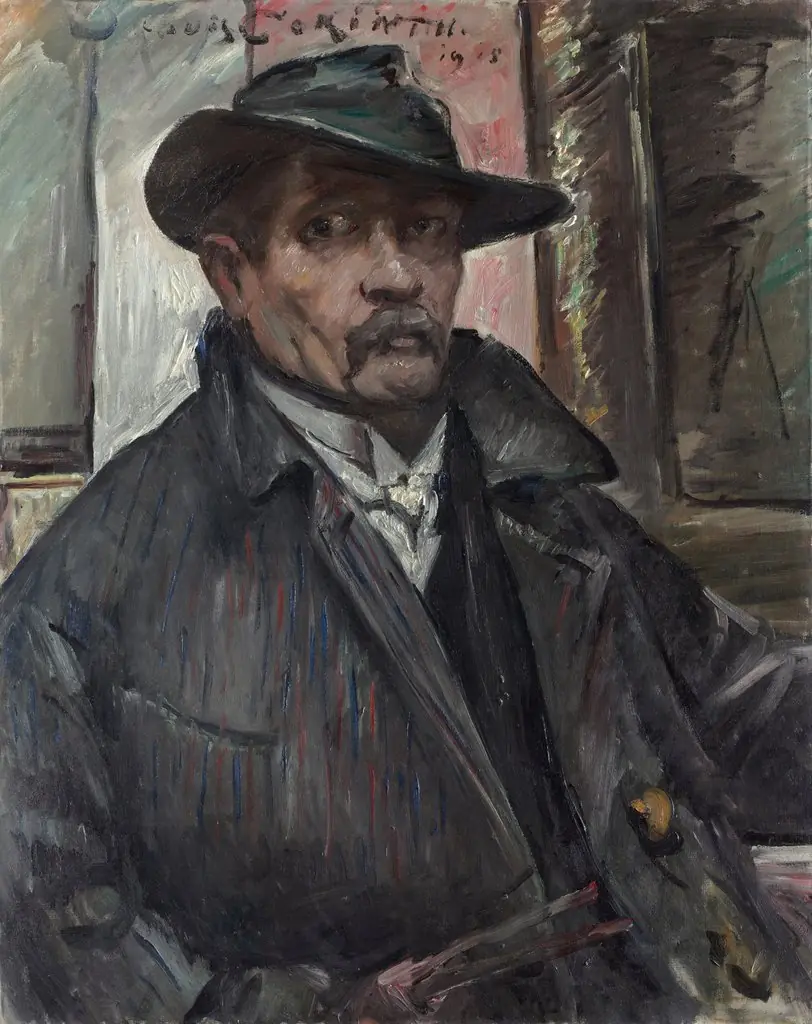
Lovis Corinth (21 July 1858 – 17 July 1925) was a German artist and writer whose mature work as a painter and printmaker realized a synthesis of impressionism and expressionism.

 Kreuzigung, nach dem Altarbild in Tölz (Crucifixion, after the Altarpiece at Tölz)
 Untitled
 Die Opferung Isaacs (The Sacrifice of Isaac)
 Porgy
Porgy The Pear Thief, No. 1
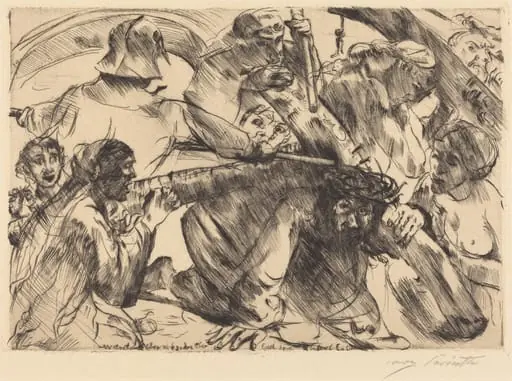 Christ Bearing the Cross (Kreuztragung)
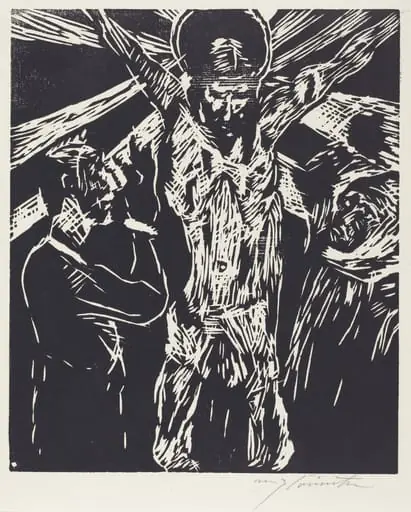 Christus am Kreuz (The Crucifixion)
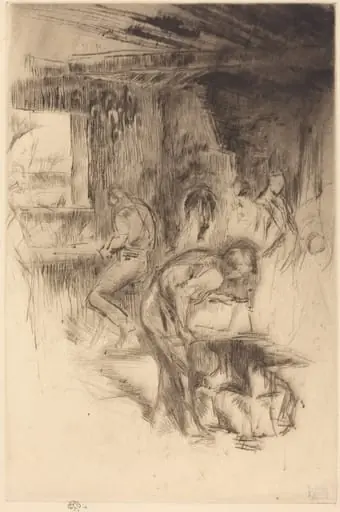 The Little Forge
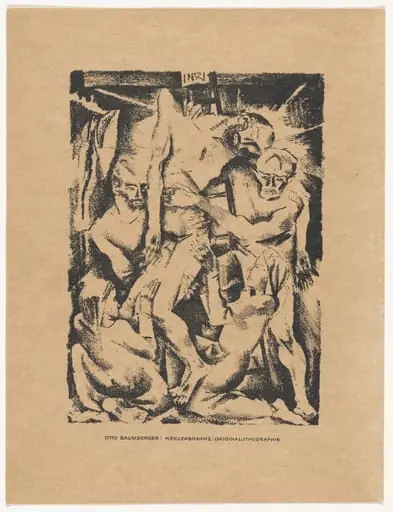 Untitled
 Untitled
 Rudolf Rittner als Florian Geyer (Rudolf Rittner as Florian Geyer)
- Die Katze des Propheten (The Cat of the Prophet)