Artwork
Weiblicher Akt in Abwehr (Female Nude Defending Herself)
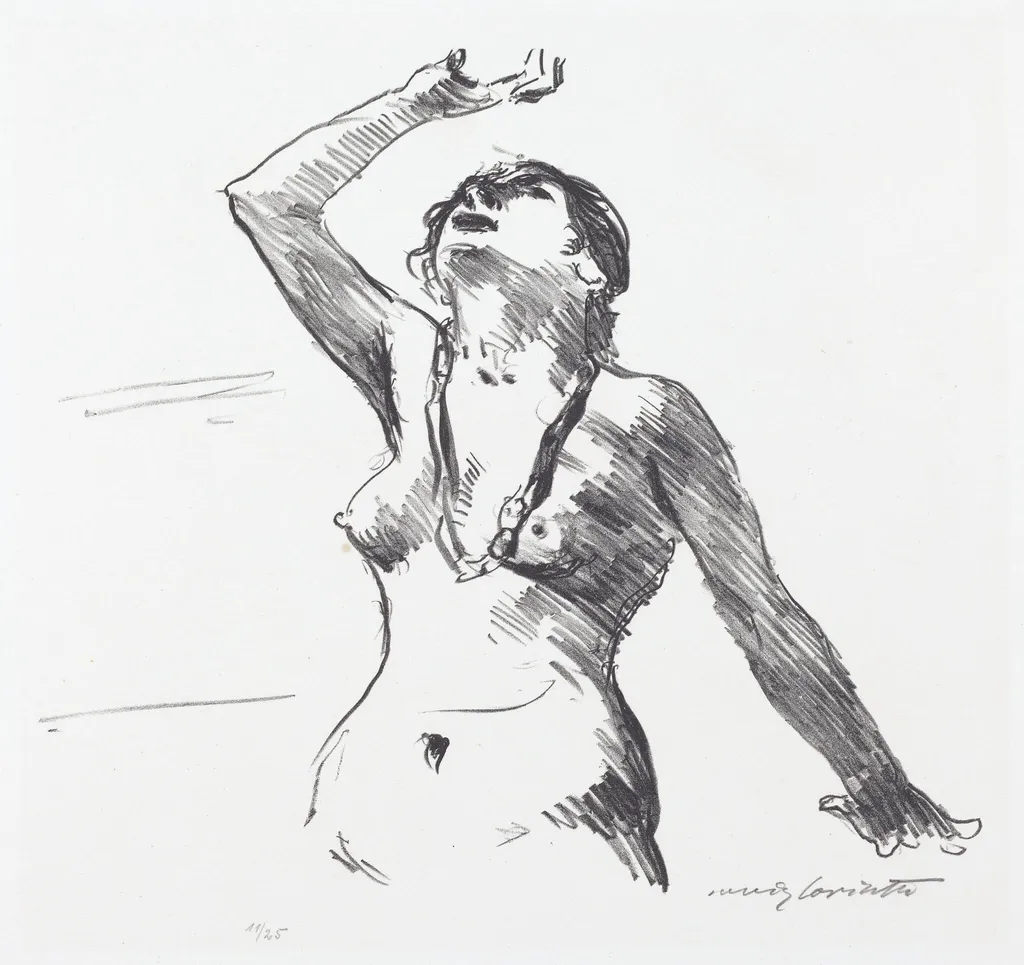
Weiblicher Akt in Abwehr (Female Nude Defending Herself) is an ink print by Lovis Corinth. It dates from 1913 and is held in the collection of the National Gallery of Art.
- Inscription
- Inscribed:lower right in graphite: Lovis Corinth; lower left in graphite: 11/25; lower left verso in graphite by unknown hand: Schw. 136
About this work
The lines are loose and fast, almost like scribbles, no small details, just big shapes and energy.
This sketch shows a woman’s body mid-motion, one arm raised like she’s blocking something. Her other arm bends at the elbow, fingers curled. The lines are loose and fast, almost like scribbles, no small details, just big shapes and energy.
The artist left out background and extra features, focusing only on the body’s twist and weight. The signature in the corner reads "Lovis Corinth," and the date looks like 1913.
Next, check out lithography to see how this print was made.
Overview
Lovis Corinth’s 1913 lithograph Weiblicher Akt in Abwehr presents a solitary nude figure caught in a defensive gesture. Rendered in stark black on wove paper, the image isolates the body from any setting, emphasizing the tension of the pose and the immediacy of the line work.
Subject & Meaning
The composition captures a woman mid‑movement, one arm lifted as if to ward off an unseen force, while the opposite arm bends with a clenched hand. The twisted torso and shifted weight convey a sense of self‑preservation, inviting viewers to consider the psychological undercurrents of vulnerability and resistance.
Technique & Style
Executed as a lithograph, Corinth employs rapid, gestural strokes that prioritize mass and energy over fine detail. The absence of background and the reliance on bold, sweeping lines reflect his post‑stroke shift toward a more expressionistic approach, where form is driven by emotional intensity rather than precise rendering.
History & Provenance
Corinth, born in 1858, trained in Paris and Munich before becoming a leading figure in the Berlin Secession. After a stroke in 1911 altered his artistic direction, he produced a series of prints that explored new expressive possibilities. This work, signed and dated 1913, belongs to that later period and exemplifies his engagement with printmaking.
Context
The early 1910s saw German artists grappling with modernist currents and the aftermath of personal crises. Corinth’s lithograph aligns with contemporary explorations of the nude as a vehicle for psychological inquiry, situating the piece within broader debates about the body, identity, and the evolving language of expressionism.
Own this work as a print
Artist & collection
Artist
Lovis Corinth (21 July 1858 – 17 July 1925) was a German artist and writer whose mature work as a painter and printmaker realized a synthesis of impressionism and expressionism.

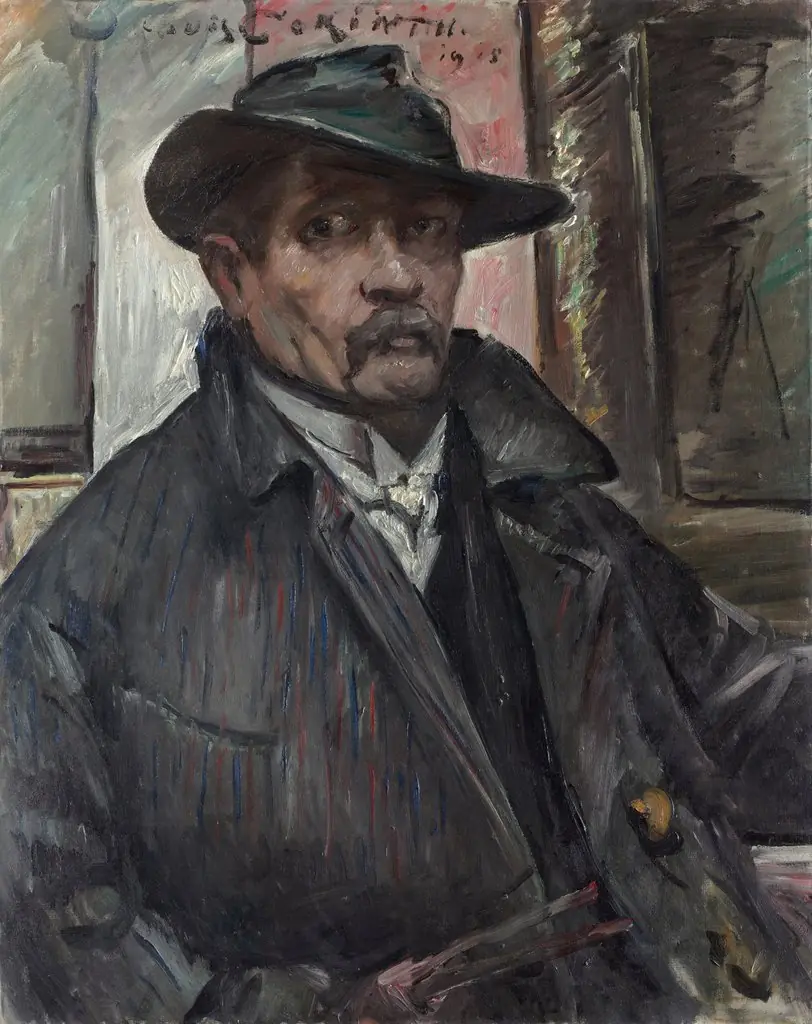
- Liegender Weiblicher Akt II (Reclining Female Nude II )
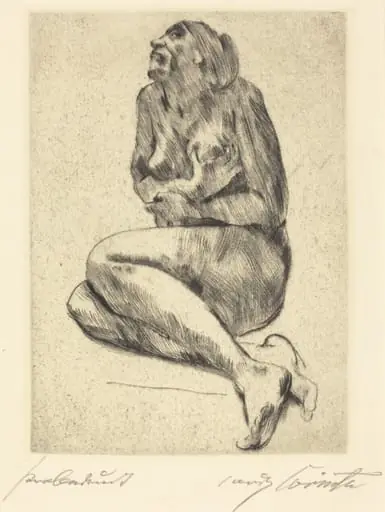 Kauernder weiblicher akt (Crouching Female Nude)
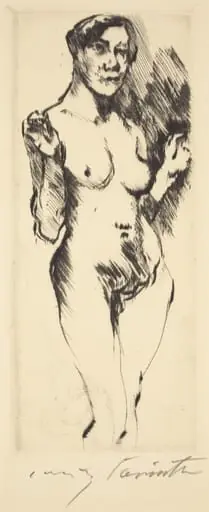 Stehende Weibliche akte (Standing Female Nude)
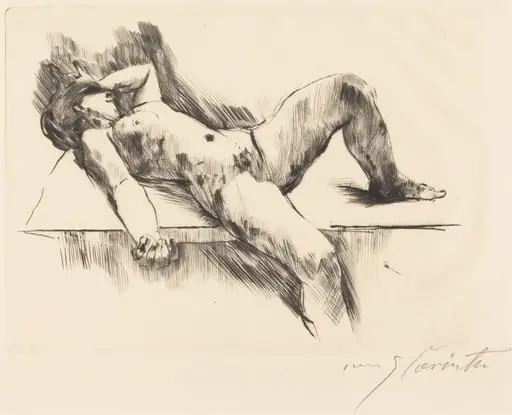 Liegender Weiblicher Akt III (Reclining Female Nude III )
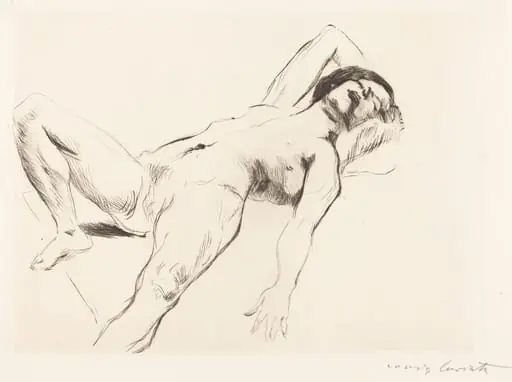 Liegender Weiblicher Akt I (Reclining Female Nude I)
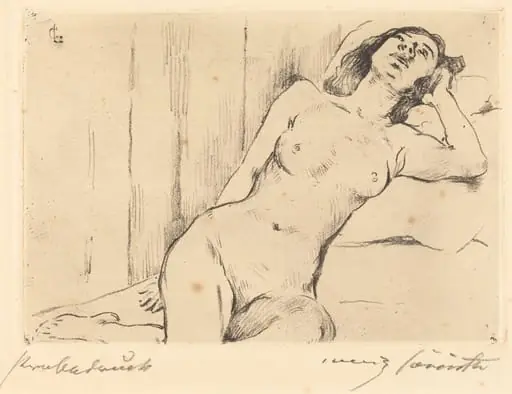 Ruhende Dreiviertel Akt (Reclining Female Nude)
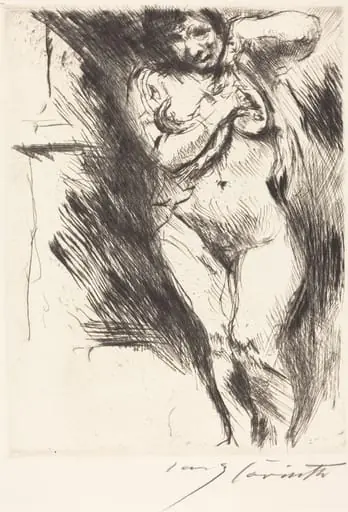 Akt mit hochgehobenem Hemd (Woman Undressing)
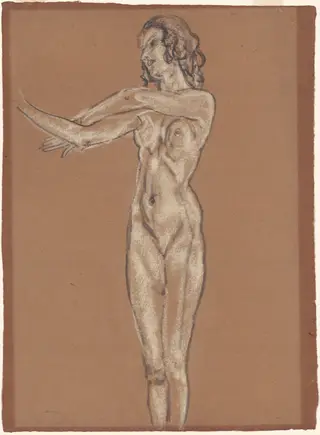 Female Nude
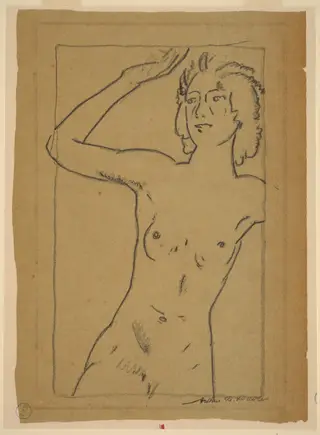 Nude Woman