Artwork
Musidora
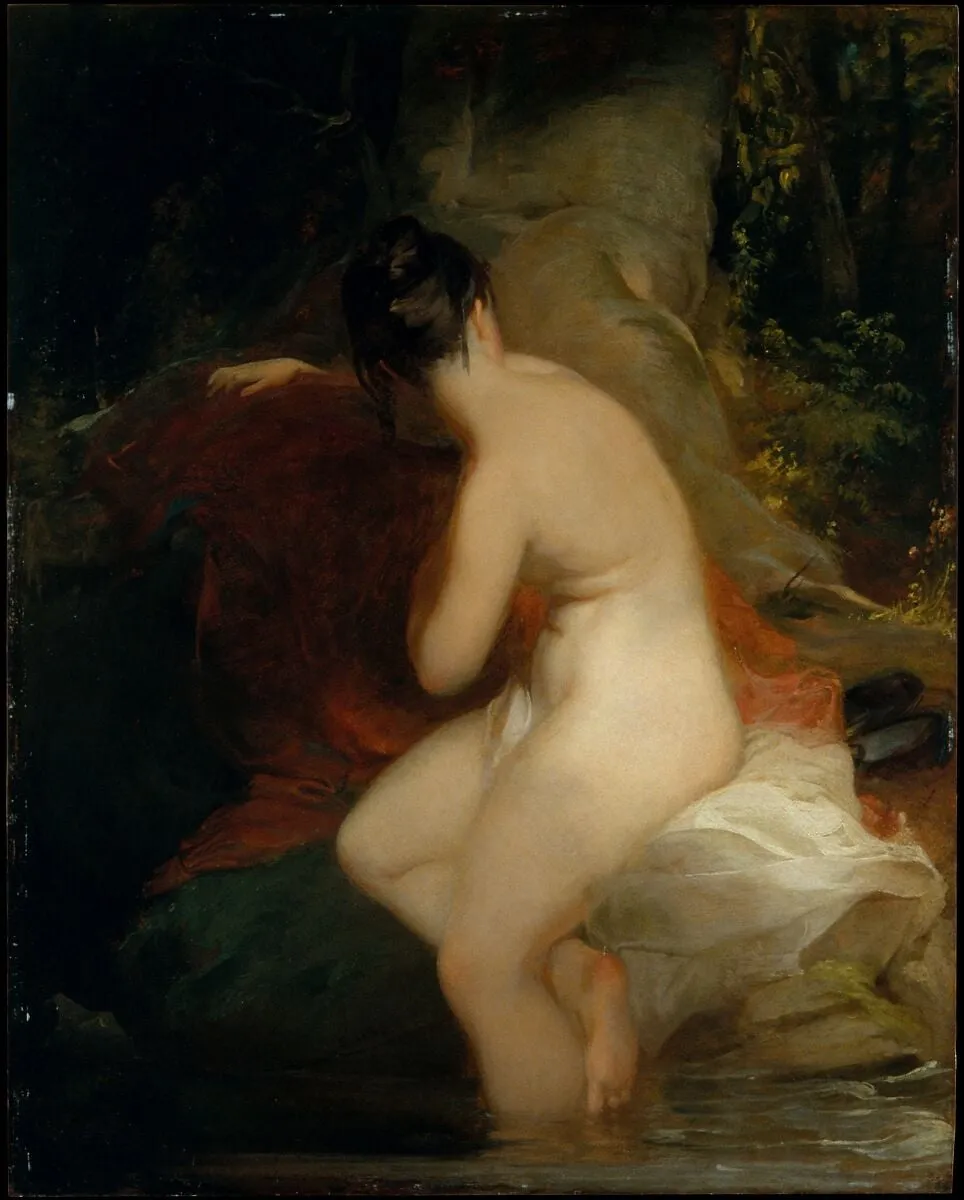
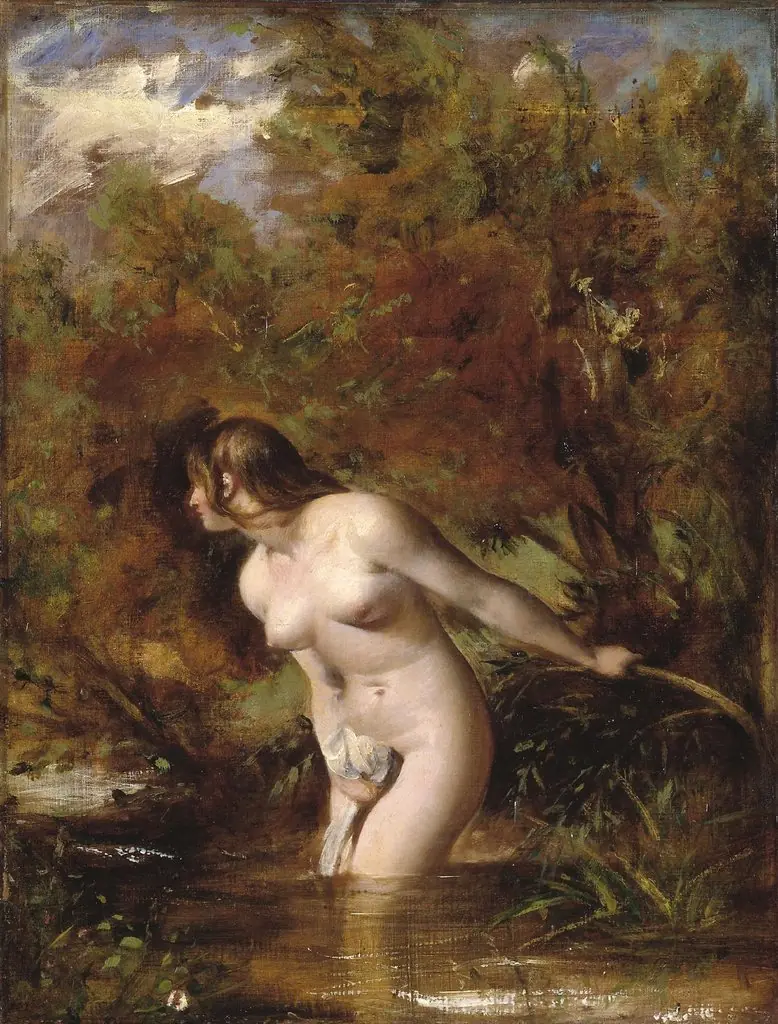
Musidora is an oil painting by the Romanticist artist Thomas Sully. It dates from 1824 and is held in the collection of the Metropolitan Museum of Art.
About this work
Subject & Meaning
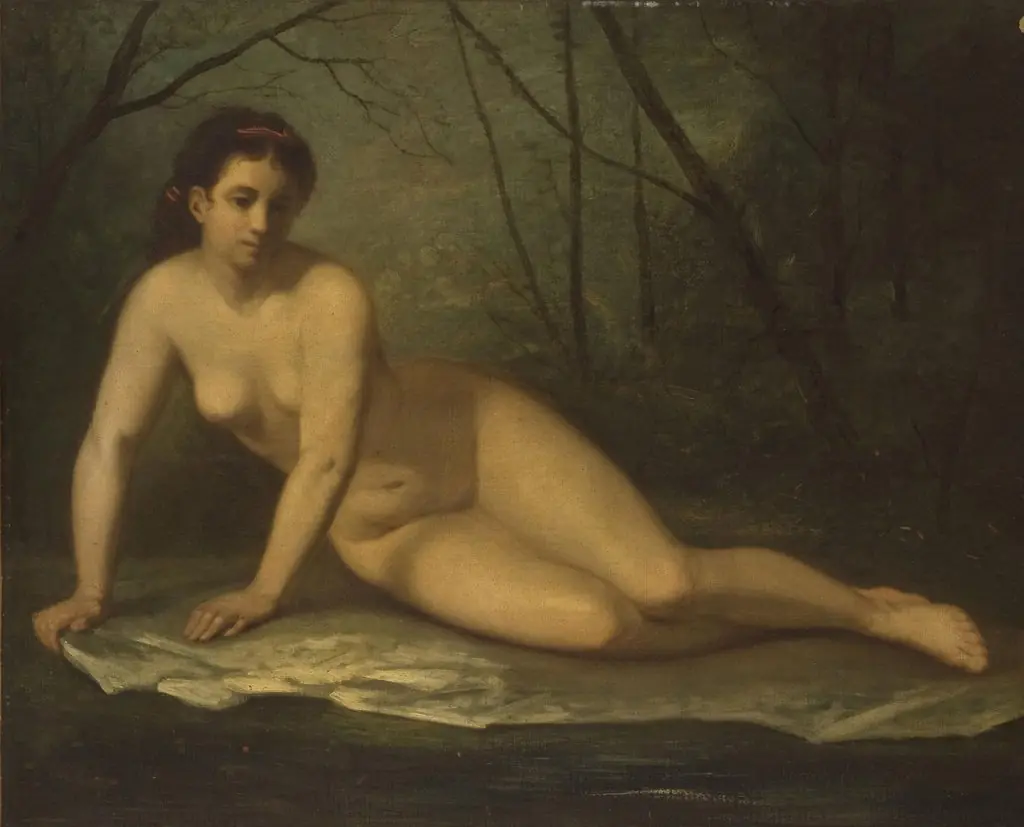
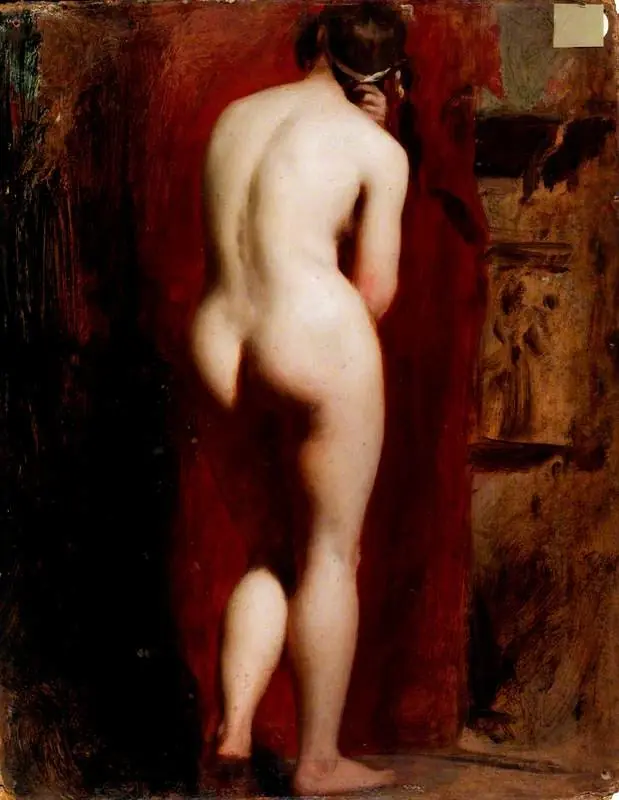
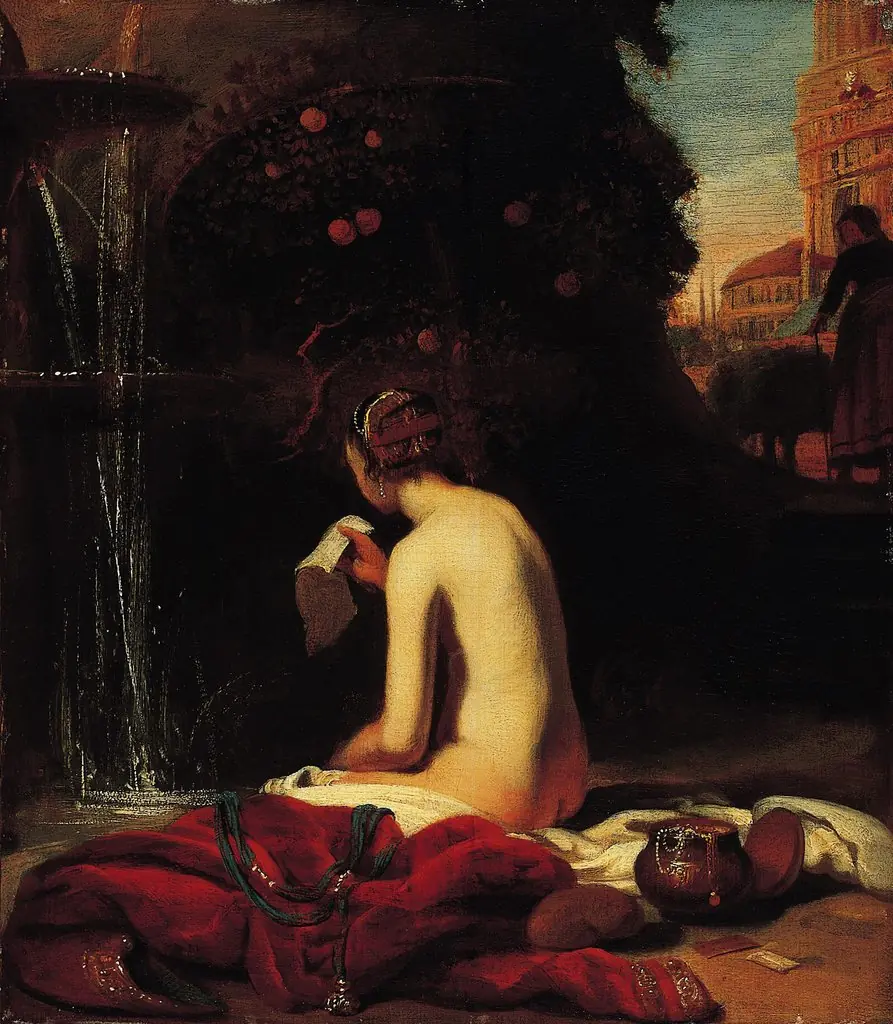
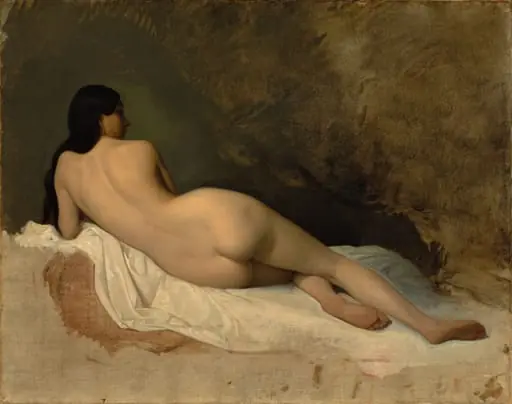
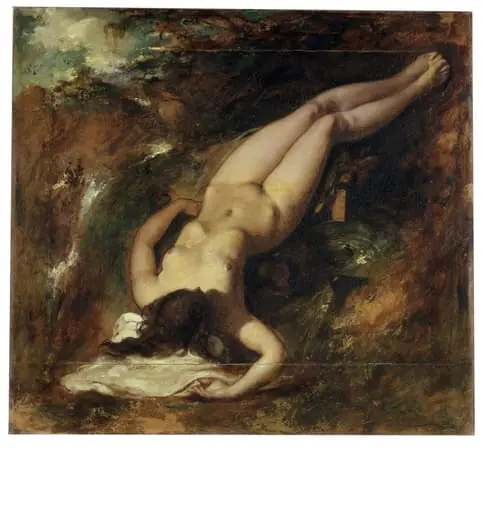
Sully presents her as a bathing nude, capturing the moment of vulnerable intimacy that defines the literary source.
The painting depicts Musidora, a character from James Thomson's 1727 poem "The Seasons," specifically the episode in which the young woman bathes unwittingly before a hidden admirer. Sully presents her as a bathing nude, capturing the moment of vulnerable intimacy that defines the literary source. The subject's nudity and the act of bathing are central to the work's iconography, reflecting the popular Romantic-era fascination with sensual, literary subjects drawn from pastoral poetry.
The painting thus represents both an illustration of a specific textual episode and a broader engagement with themes of beauty, nature, and voyeurism that characterized much early nineteenth-century figurative art.
Technique & Style
Musidora is executed in oil on wood panel, measuring 71.4 × 57.2 cm. The medium and support reflect the practices common in early nineteenth-century American painting, where wooden panels provided a stable, smooth surface suited to the detailed handling of figure subjects.
Sully depicts his subject as a bathing nude, placing the work within the longstanding tradition of the female nude in Western art. The smooth panel support would have allowed for refined brushwork and subtle tonal transitions in the rendering of flesh.
History & Provenance
Musidora is an 1824 oil painting on wood panel by American artist Thomas Sully. The work, measuring 71.4 cm by 57.2 cm, portrays a nude female figure in a bathing scene. The painting entered the collection of the Metropolitan Museum of Art, where it has been held since acquisition as part of the American Wing collection.
Its provenance traces from the artist's ownership to the museum's custody, with the date of creation firmly established as 1824.
Overview
Thomas Sully's 'Musidora' (1824) depicts the literary character Musidora from James Thomson's poem 'The Seasons' in a moment of private contemplation. The composition centers on a nude female figure seated on a rock within a lush, natural landscape. Musidora is portrayed with her head bowed and gaze directed downward, suggesting a state of introspection or modesty as she prepares to bathe.
Sully executes the figure with a focus on the soft modeling of the skin and the delicate rendering of light, demonstrating his mastery of the female nude, a genre less common among American artists of the early nineteenth century. The work reflects Sully's engagement with British Romanticism and his ability to adapt European academic traditions to an American context. Painted during a period when the artist was establishing his reputation as a leading portraitist in Philadelphia, 'Musidora' stands as a significant example of his narrative and allegorical work, distinct from his more numerous commissioned portraits.
The painting highlights Sully's technical skill in capturing texture and atmosphere, bridging the gap between portraiture and idealized history painting.
Artist & collection

Artist
Thomas Sully was an English-American portrait painter. He was born in England, became a naturalized American citizen in 1809, and lived most of his life in Philadelphia, Pennsylvania, including in the Thomas Sully…