Artwork
The Baptism of Christ
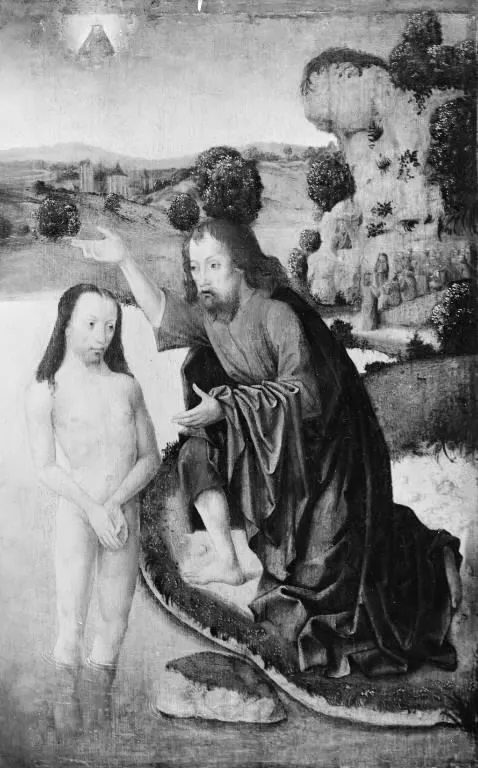
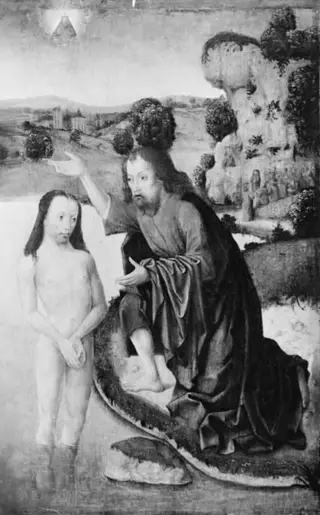
The Baptism of Christ is an unspecified painting by the Northern Renaissance artist Cornelis Engebrechtsz.. It dates from 1501 and is held in the collection of the Statens Museum for Kunst.
About this work
Subject & Meaning
The scene conveys the sacrament’s theological meaning, spiritual rebirth and Christ’s messianic identity, through these emblematic figures and their gestures.
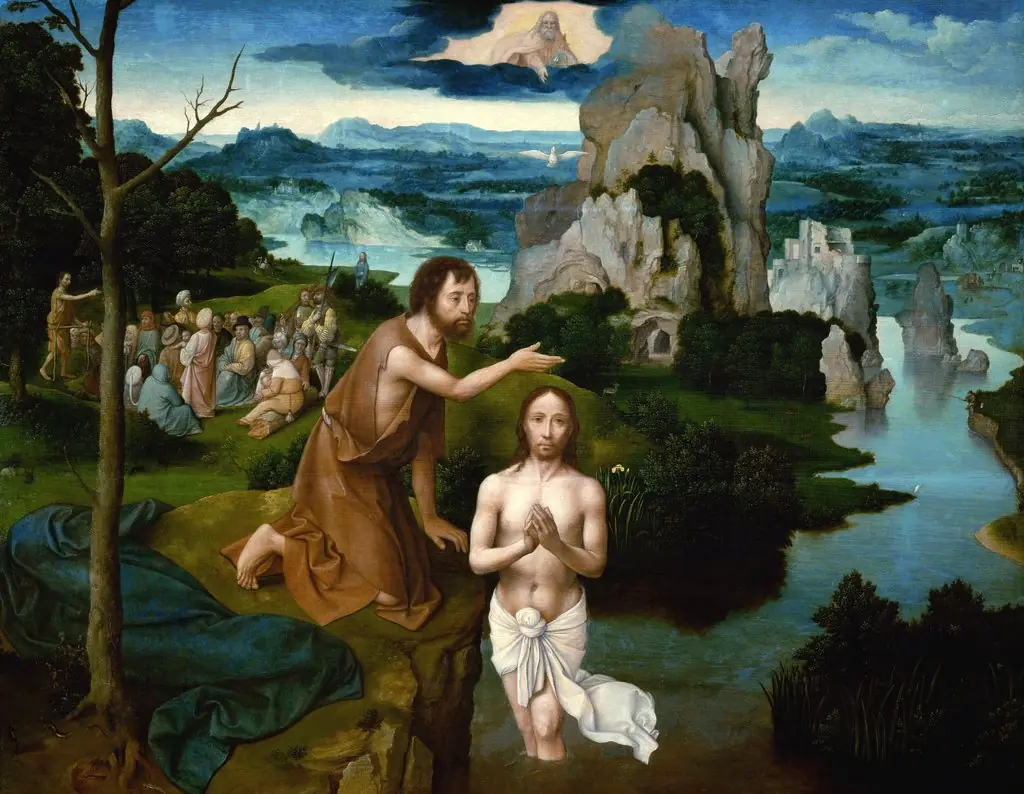
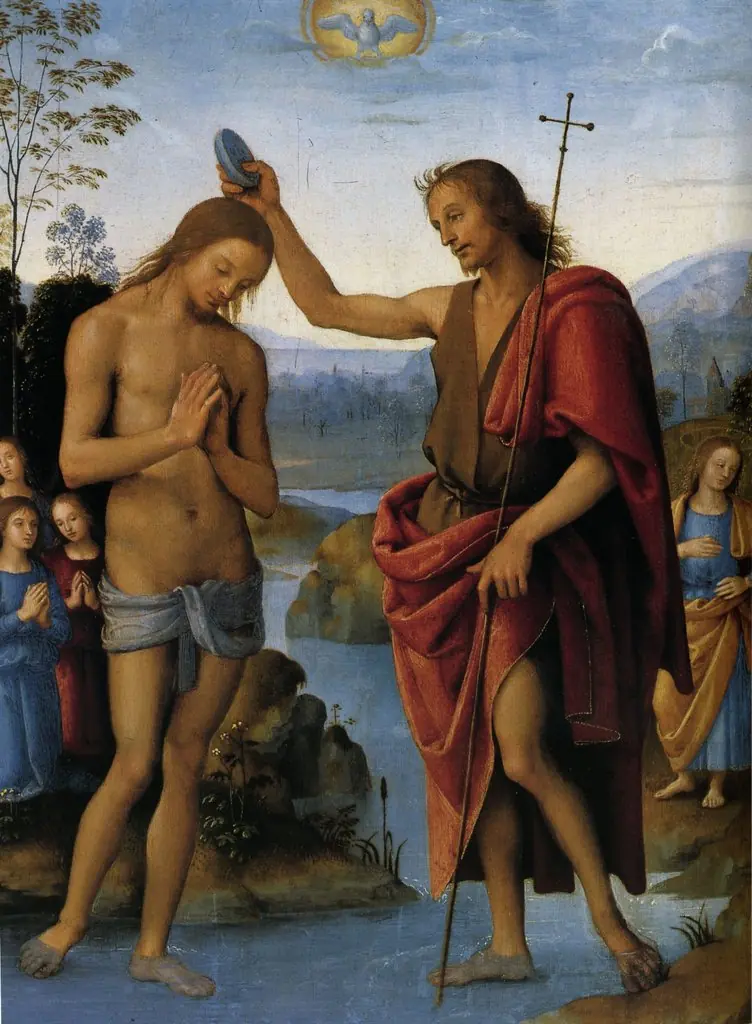
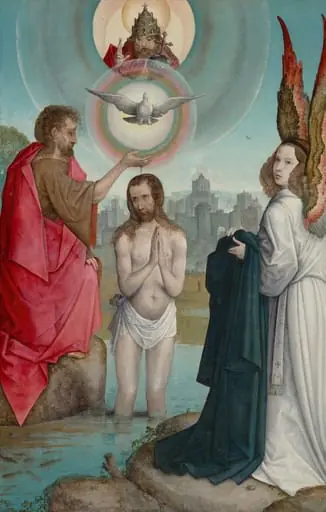
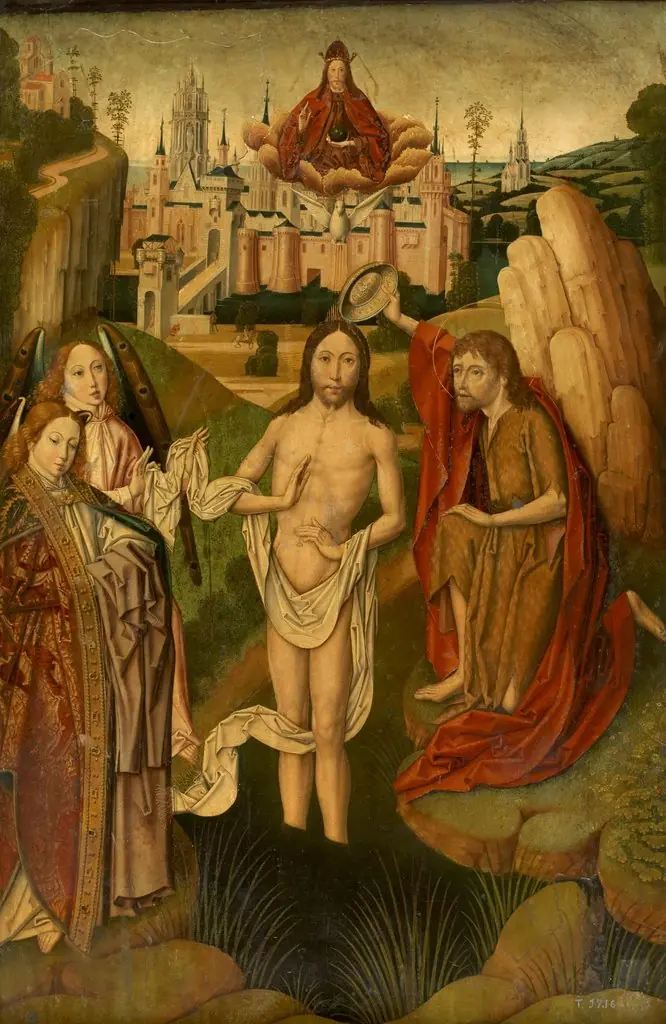
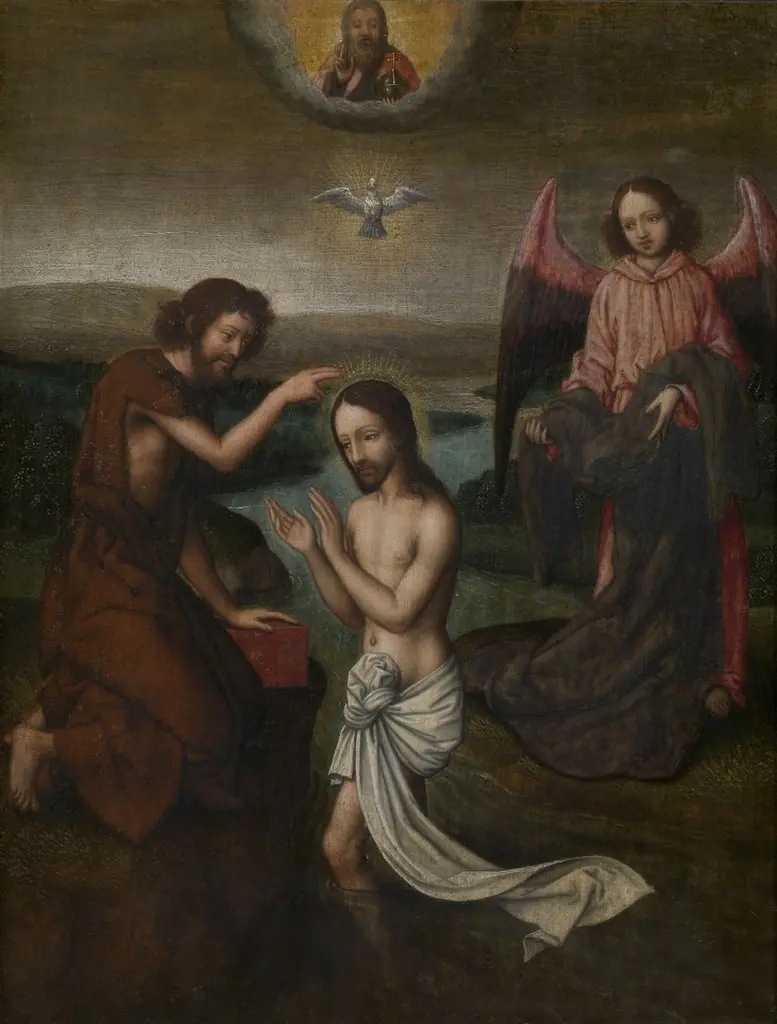
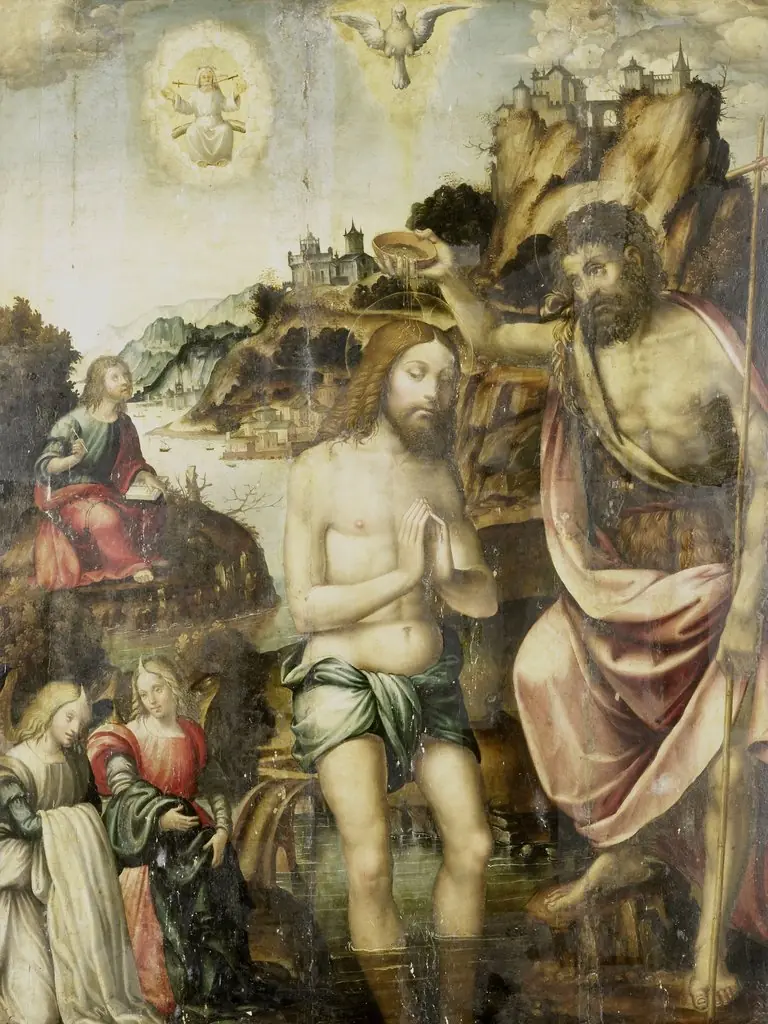
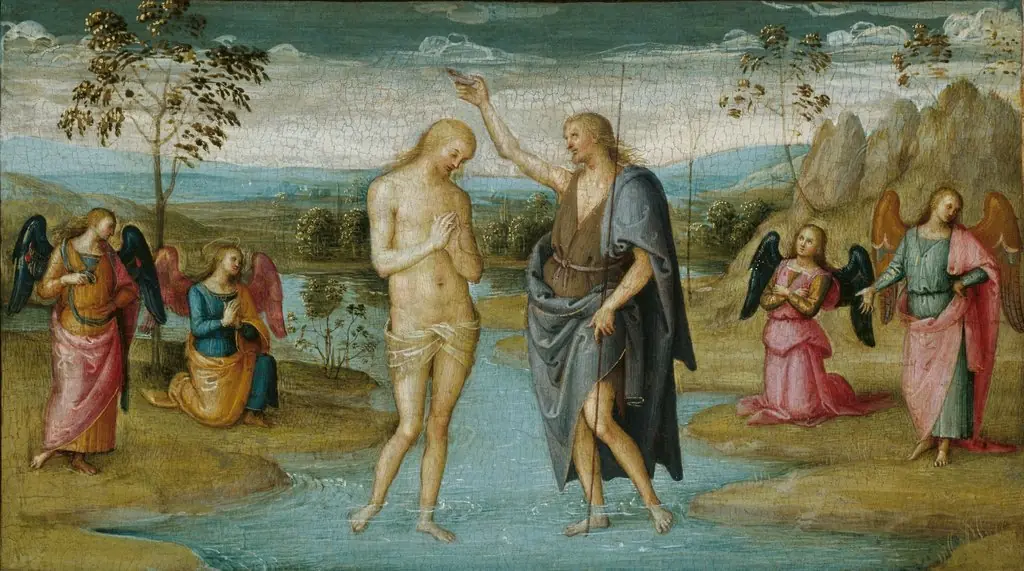
The painting depicts the New Testament episode in which John the Baptist pours water over the head of Jesus in the Jordan River, identifying him as the Son of God. Engebrechtsz’s composition follows traditional iconography: Christ stands centrally, nude but for a draped loincloth, while John, robed in animal skins, administers the baptismal water. The dove of the Holy Spirit descends above Christ’s head, and God the Father appears in a burst of radiant clouds, signifying divine approval of the event.
The scene conveys the sacrament’s theological meaning, spiritual rebirth and Christ’s messianic identity, through these emblematic figures and their gestures.
History & Provenance
The painting known as The Baptism of Christ was created in 1501 by the Dutch artist Cornelis Engebrechtsz. Classified as a religious work, it depicts the biblical scene of Jesus Christ being baptized by John the Baptist. The artwork is currently held in the collection of the Statens Museum for Kunst, where it remains on display.
While the specific circumstances of its original commission and the detailed chain of ownership prior to its arrival at the museum are not detailed in the available records, the work's inception is firmly established at the beginning of the sixteenth century.
The Baptism of Christ is held in the collection of Statens Museum for Kunst in Copenhagen. It is accessioned under the inventory number that identifies it within the museum's holdings. The work has been part of the museum's exhibition schedule, appearing in displays focused on Dutch and Flemish painting from the early 16th century.
Context
Cornelis Engebrechtsz. painted Baptism of Christ in 1501, a religious work now held by Statens Museum for Kunst in Copenhagen. The painting depicts Jesus Christ and John the Baptist during the baptismal scene. Art historians situate this early work within the Northern Renaissance context of the Netherlands, reflecting devotional practices of the period.
Its composition and iconography have been analyzed for stylistic influences from early Dutch religious art, though specific scholarly commentary on reception remains sparse in available sources.
Legacy
The Baptism of Christ by Cornelis Engebrechtsz. exerted early influence on Dutch religious painting through its devotional clarity and narrative precision, qualities that informed later interpretations of the subject in the Netherlands. Its placement in the Statens Museum for Kunst has preserved its visibility within Northern European art traditions, contributing to sustained scholarly attention to Engebrechtsz.'s role in transitional Renaissance aesthetics. The work's formal treatment of baptismal symbolism remains referenced in studies of early 16th-century devotional art.
Overview
Cornelis Engebrechtsz., an early 16th‑century painter from Leiden, executed The Baptism of Christ in 1501. The work belongs to the Northern Renaissance and is presently conserved in the Statens Museum for Kunst in Copenhagen.
Technique & Style
Engebrechtsz. employs a clear chiaroscuro, rendering John’s face in partial light against a darker backdrop, while Christ’s skin is depicted with a smooth, luminous pallor. The distant architecture and trees are rendered with a muted palette, emphasizing the central figures.
Artist & collection
Artist
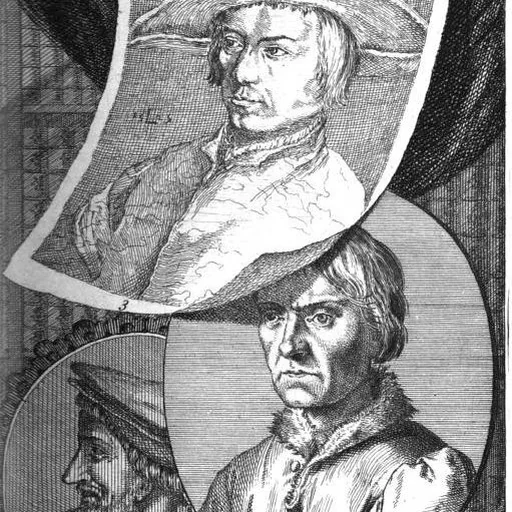
Cornelis Engebrechtsz., also known as Cornelis Engelbrechtsz. (c.1462–1527) was an early Dutch painter. He was born and died in Leiden, and is considered the first important painter from that city. Engebrechtsz. taught…

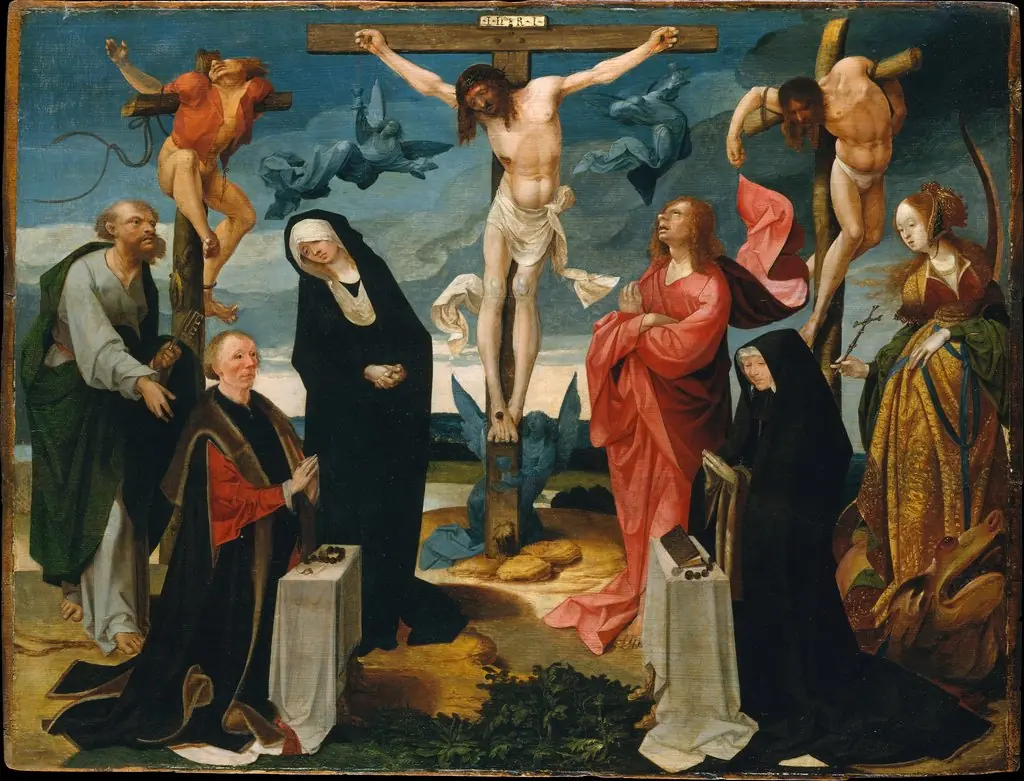 The Crucifixion with Donors and Saints Peter and Margaret
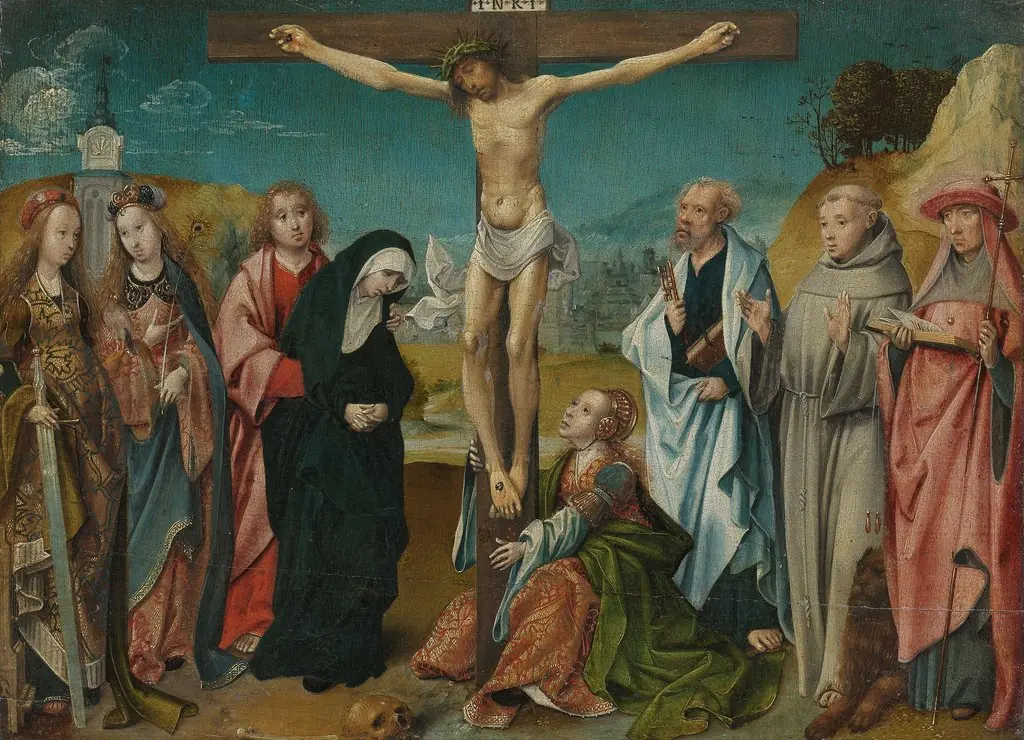 Christ on the cross with the Virgin, St John the Evangelist, Mary Magdalen, and Sts Cecilia and Barbara (left), and Sts Peter, Francis and Jerome (right)
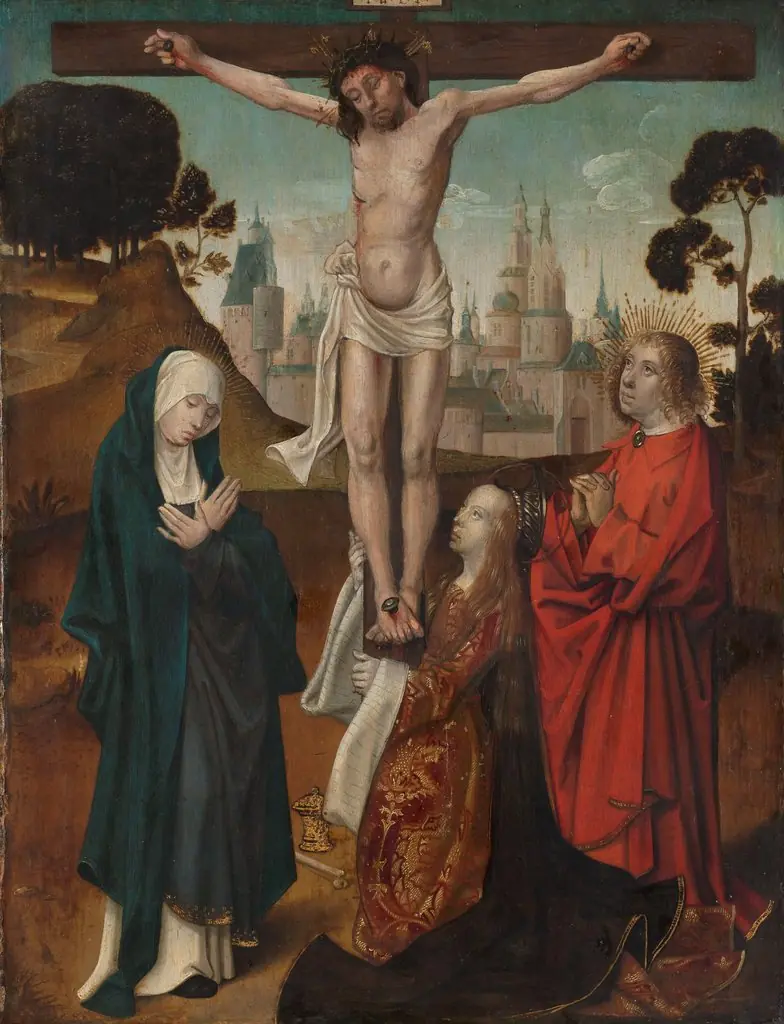 Crucifixion with the Virgin, Mary Magdalen and St John the Evangelist
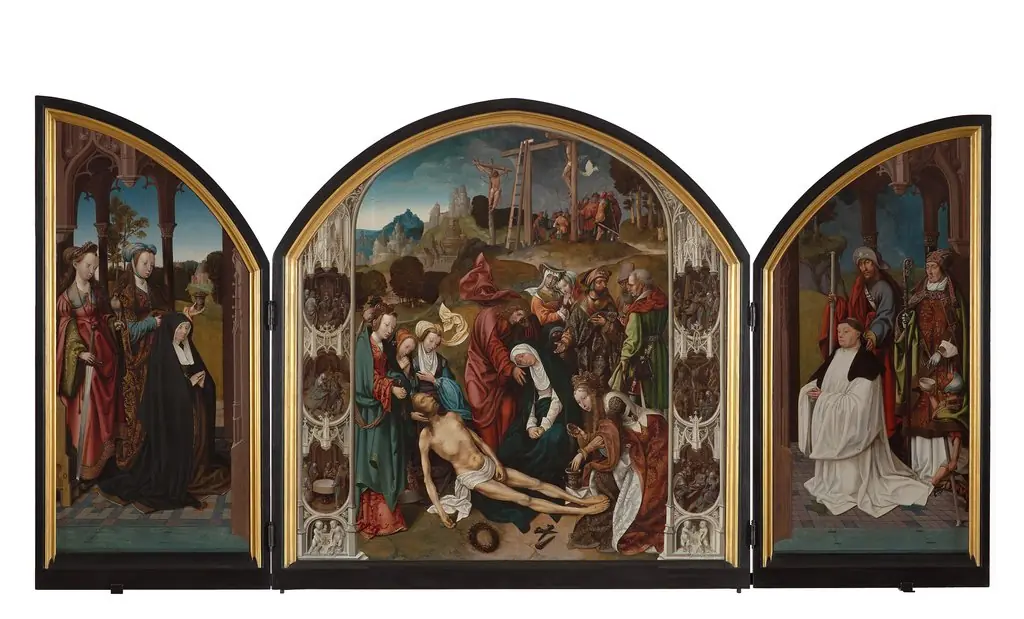 Ss Cecilia,Mary Magdalene with donatrix,lamentation flanked by other six Sorrows of Mary, Ss James Great,Martin of Tours an Augustine monk