Artwork
Horse Standing on a Mound
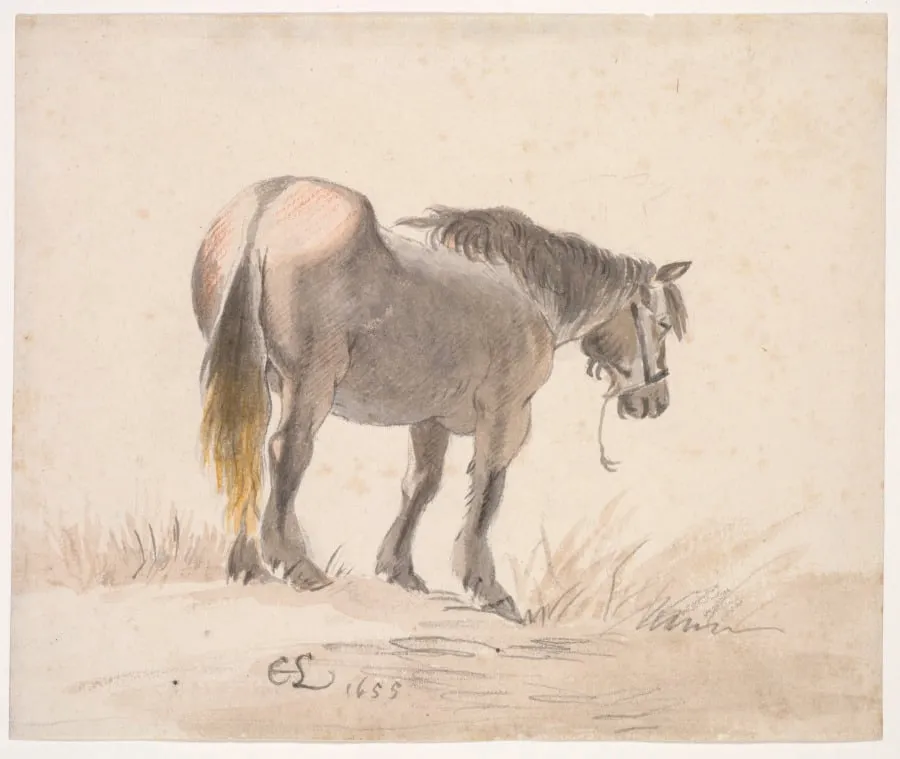
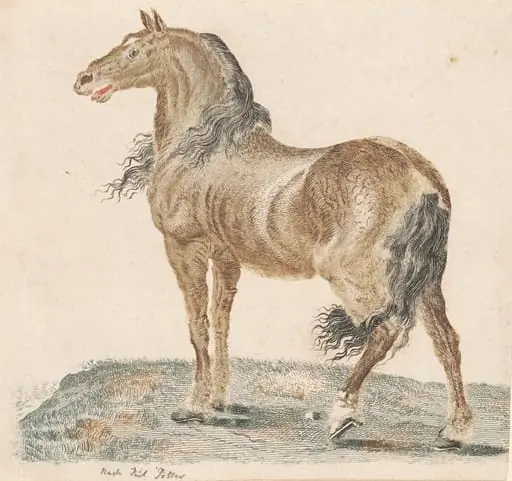
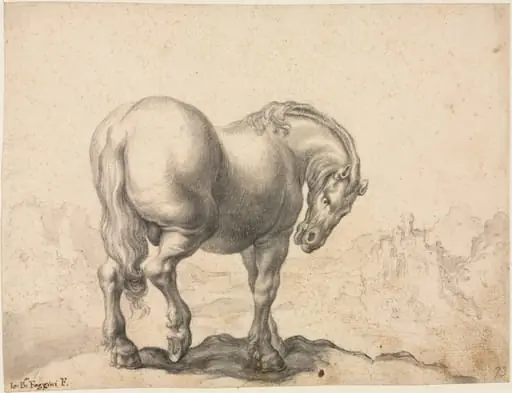
Horse Standing on a Mound is a drawing by the Baroque artist Cornelis Saftleven. It dates from 1655 and is held in the collection of the Cleveland Museum of Art.
- Accession no.
- 2019.12
- Credit line
- John L. Severance Fund
About this work
Overview
Unlike grand equestrian portraits common elsewhere, this work focuses on an ordinary animal in a quiet, unidealized moment.
Cornelis Saftleven created this detailed drawing of a horse viewed from behind, likely intended for sale. The inclusion of his initials and the date suggests commercial intent, while the refined execution, layering yellow watercolor with red chalk, reflects careful preparation. Unlike grand equestrian portraits common elsewhere, this work focuses on an ordinary animal in a quiet, unidealized moment.
Subject & Meaning
The horse, standing on a modest mound with one hind leg slightly bent and tail gently swishing, embodies the Dutch preference for unembellished realism. There is no myth, nobility, or drama, just a common animal in a routine posture. This quiet observation reflects a cultural appreciation for the mundane, valuing authenticity over spectacle in depictions of rural life.
Technique & Style
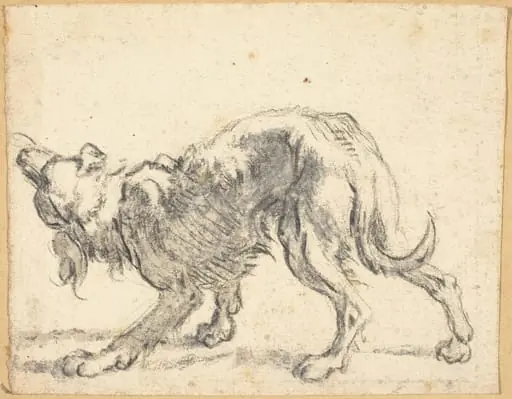
Saftleven employed red chalk for structural definition and yellow watercolor to suggest soft fur texture and subtle shading. The blending of media creates a tactile surface, giving the animal’s coat a slightly fuzzy, lifelike quality. Delicate linework and controlled washes convey weight and posture without theatricality, aligning with the period’s emphasis on observational accuracy.
History & Provenance
The drawing bears Saftleven’s signature and date, indicating it was produced as a discrete object for collectors or dealers rather than as a preparatory sketch. Such finished animal drawings were actively traded in 17th-century Dutch markets, where interest in domestic and farm animals as subjects flourished alongside landscape and genre painting.
Context
In the Netherlands of the 1600s, animals were frequently depicted not as symbols of power but as familiar presences in daily life. Horses, cattle, and poultry appeared in drawings and paintings as subjects of quiet study, reflecting a society that valued empirical observation and the dignity of the ordinary over classical ideals.
Legacy
Saftleven’s work contributes to a broader tradition of Dutch animal drawing that prioritized naturalism over idealization. His approach influenced later artists who continued to explore domestic animals with the same attentive, unromanticized gaze, helping to establish a distinctly Northern European visual language centered on everyday reality.
Artist & collection
Artist
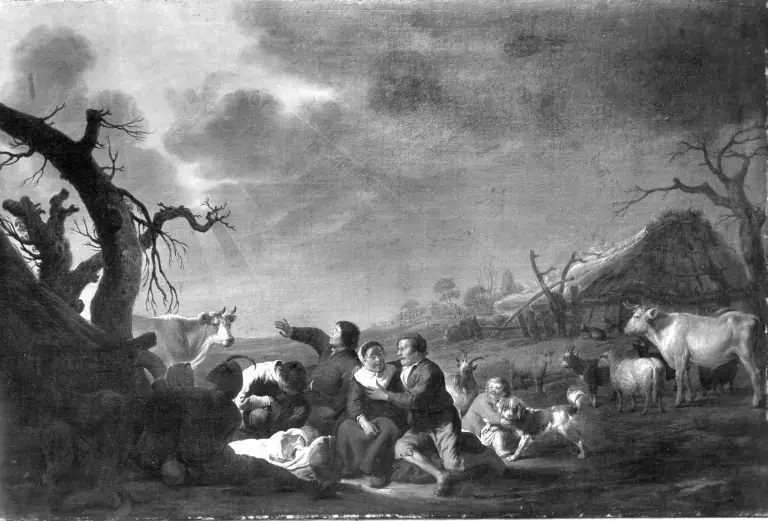
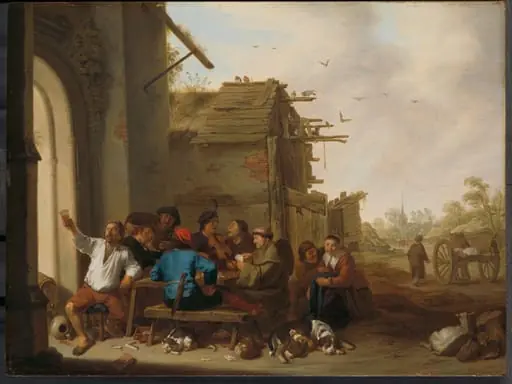
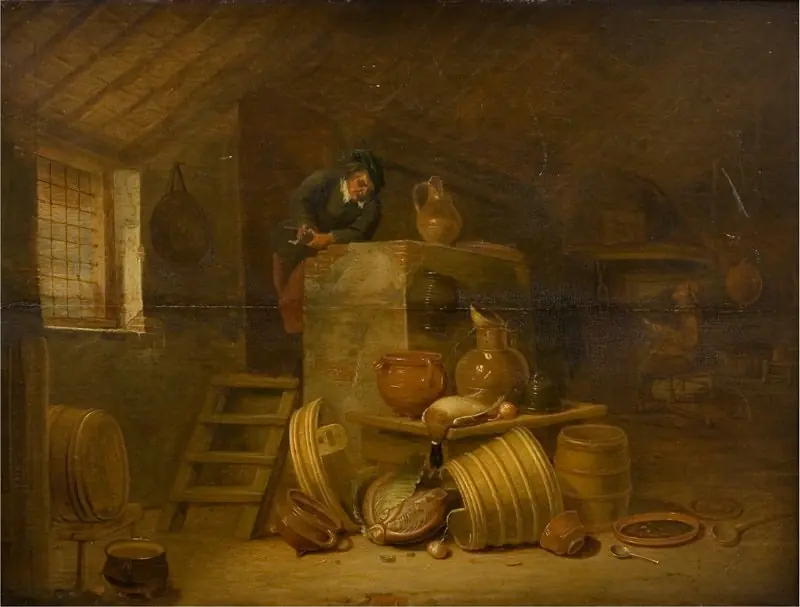
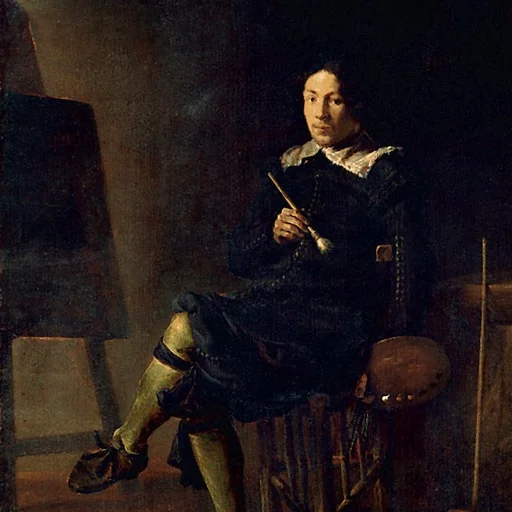
Cornelis Saftleven (c. 1607 in Gorinchem – 1 June 1681 in Rotterdam) was a Dutch painter who worked in a great variety of genres. Known in particular for his rural genre scenes, his range of subjects was very wide and…