Artwork
The Forest of Coubron
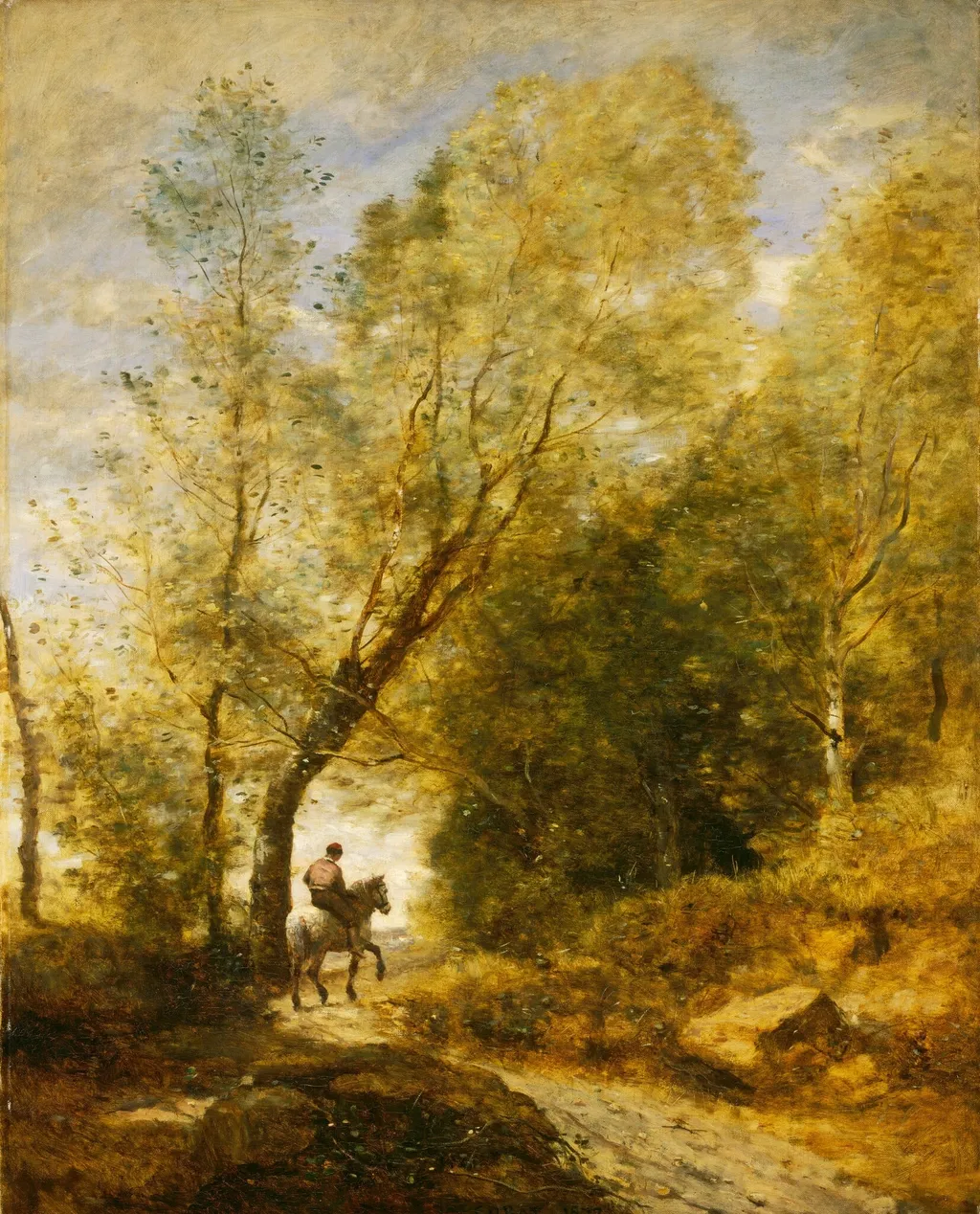
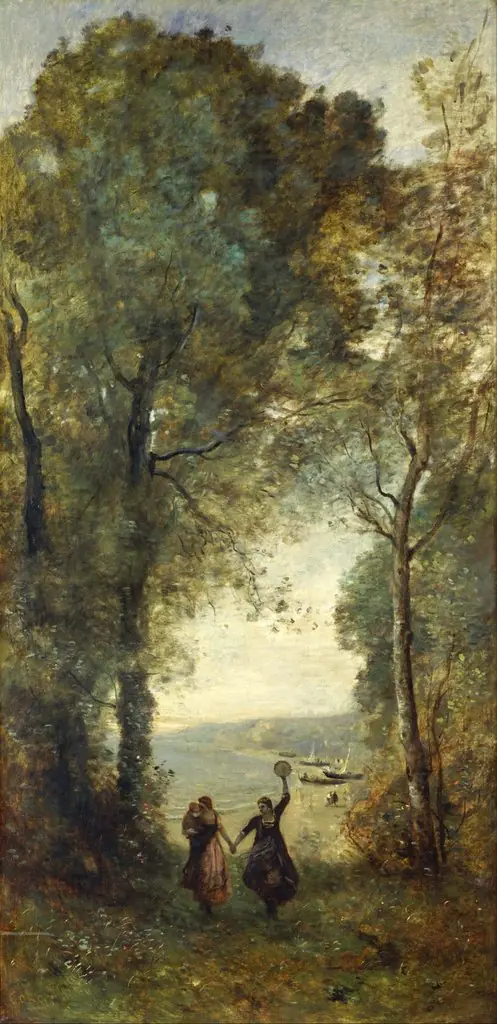
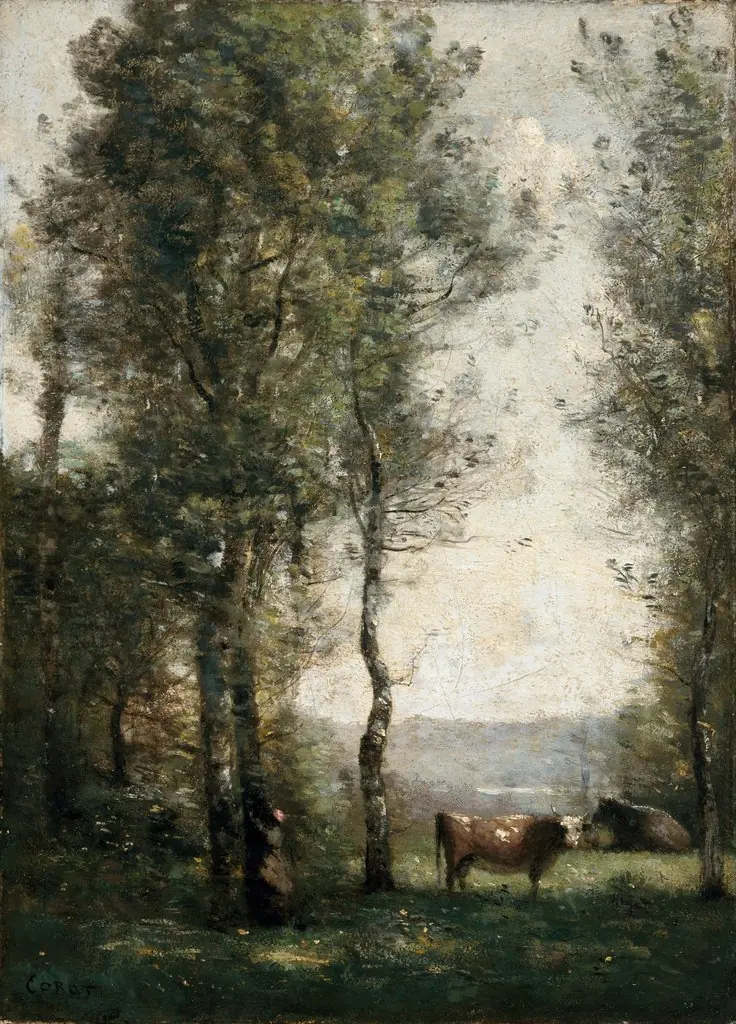
The Forest of Coubron is an oil painting by the Barbizon school artist Jean Baptiste Camille Corot. It dates from 1872 and is held in the collection of the National Gallery of Art.
- Inscription
- Inscribed:lower center: COROT 1872
About this work
Subject & Meaning
The Forest of Coubron is a landscape painting that depicts a tree within the wooded area of Coubron.
The Forest of Coubron is a landscape painting that depicts a tree within the wooded area of Coubron. Originally titled Entrée du bois Coubron, par une mantinée de printemps (Entrance to the Coubron woods, on a spring morning) during its 1873 sale, the work represents a springtime view of this specific forested locale. The painting's iconography centers on the natural, rustic elements of the French countryside, focusing on the solitary tree as the primary subject within the landscape genre.
Through this emphasis on the quiet, atmospheric qualities of a spring morning in the woods, the work embodies the 19th-century landscape tradition's reverence for unadorned nature and the serene, contemplative meaning found in rural environments.
Technique & Style
The Forest of Coubron is executed in oil on canvas, a medium Corot handled with characteristic subtlety. The support measures 96 by 77.8 centimeters, oriented as a vertical landscape. The painting, classified as a landscape genre work, depicts trees as its primary subject.
While the sources confirm the medium and dimensions, they do not provide specific details regarding Corot's brushwork, palette, surface condition, or stylistic handling beyond the basic classification.
History & Provenance
The Forest of Coubron was painted by Jean-Baptiste-Camille Corot in 1872, executed in oil on canvas. Its earliest documented owner was F. Stumpf, a friend of Corot and collector of Barbizon painters, from whose collection the work was sold at the Hôtel Drouot in Paris on 28 February 1873 (lot 8, under the title Entrée du bois Coubron, par une matinée de printemps), as identified by Alfred Robaut. The painting was acquired by Maurice Kann of Paris, who retained it at least through 1878.
It subsequently passed through the stock of M. Knoedler & Co. in London, New York, and Paris, which sold it in 1892 to Peter A.B. Widener of Lynnewood Hall, Elkins Park, Pennsylvania. The work then descended through inheritance to Joseph E. Widener at Elkins Park, before being given to the National Gallery of Art in 1942.
The Forest of Coubron is held by the National Gallery of Art in Washington, D.C. The painting entered the museum's collection in 1942 as a gift from the estate of Peter A.B. Widener through the power of appointment of Joseph E. Widener. Prior to its acquisition by the gallery, the work was exhibited at the Hôtel Drouot in Paris on February 28, 1873, during the sale of the collection of F. Stumpf, where it was listed as lot 8 under the title Entrée du bois Coubron, par une mantinée de printemps.
Legacy
The Forest of Coubron has been repeatedly cited in Corot scholarship as a representative example of his mature landscape style, with Alfred Robaut’s 1905 catalogue referencing it as a key work of the Barbizon school and later catalogues, including the 1931 Widener collection catalogue, documenting its provenance and inclusion in major collections. Its presence in the National Gallery of Art’s holdings since 1942 has ensured ongoing academic attention, and the painting is frequently mentioned in studies of 19th‑century French landscape painting, underscoring its lasting reputation among artists and historians.
Overview
The Forest of Coubron, painted by Jean-Baptiste-Camille Corot in 1872, is an oil on canvas landscape depicting a tranquil woodland. This work exemplifies Corot's distinctive style, which blended traditional compositional rigor with an immersive engagement with nature. It showcases the artist's ability to capture the subtle atmospheric qualities of a specific moment, reflecting his important role in the transition from classical landscape painting towards more modern approaches.
Context
Corot's work, including this painting, represents a significant bridge between the established Neo-Classical landscape traditions and the emerging emphasis on direct observation. His affinity for painting natural scenes aligns him with the Barbizon School, a group of artists dedicated to capturing the French countryside. This blend of structured composition and atmospheric rendering laid groundwork for later artistic movements, particularly Impressionism, through its focus on light and momentary perception.
Own this work as a print
Artist & collection
Artist
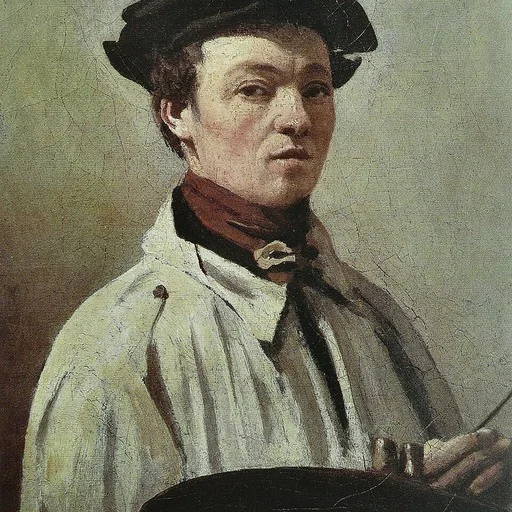
Jean-Baptiste-Camille Corot (UK: KORR-oh, US: kə-ROH, kor-OH; French:; 16 July 1796 – 22 February 1875), or simply Camille Corot, was a French landscape and portrait painter as well as a printmaker in etching.