Artwork
The Eel Gatherers
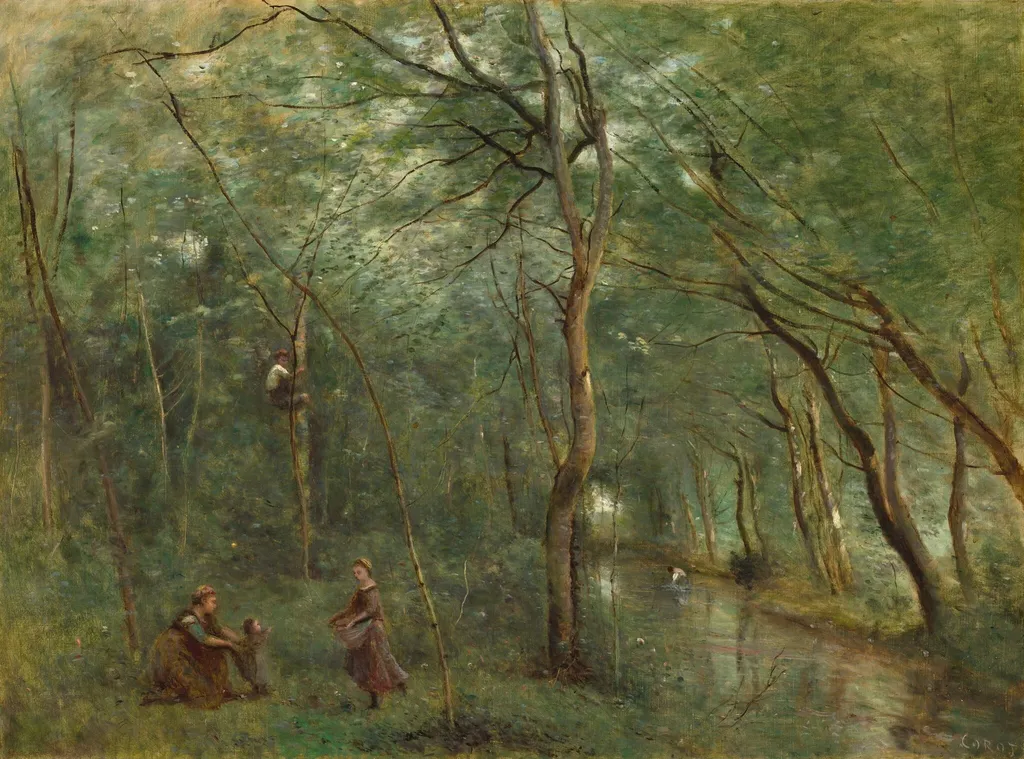
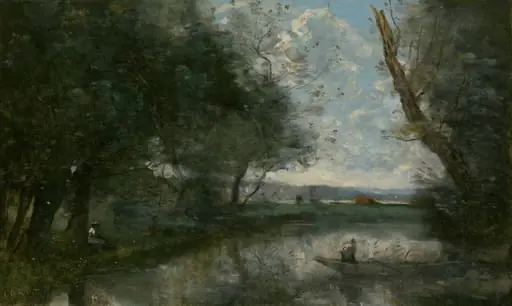
The Eel Gatherers is an oil painting by the Barbizon school artist Jean Baptiste Camille Corot. It dates from 1862 and is held in the collection of the National Gallery of Art.
- Inscription
- Inscribed:lower right: COROT
About this work
Technique & Style
Stylistically, the composition focuses on natural elements, specifically depicting trees within the scene.
Executed in 1862, The Eel Gatherers is an oil painting on canvas by Jean-Baptiste-Camille Corot. The work measures 60.5 by 81.5 centimeters and is classified as a landscape. Stylistically, the composition focuses on natural elements, specifically depicting trees within the scene.
As a mid-career work by the artist, it utilizes traditional support and medium conventions of the period, though specific details regarding surface condition or unique handling techniques are not enumerated in the available records beyond its material constitution.
History & Provenance
The Eel Gatherers was painted by Jean-Baptiste-Camille Corot in 1862 as an oil-on-canvas landscape measuring 60.5 × 81.5 cm. It remained in the collection of Alfred de Knyff in Paris, who lent it to the 1878 Exposition universelle (no. 204). In 1893 the painting passed through the dealer Erwin Davis before being sold to Durand‑Ruel et Cie. (stock no. 1070) and, the same day, acquired by Henry Osborn Havemeyer and his wife, Louisine Waldron Elder Havemeyer. It descended to their daughter, Adaline Havemeyer (Mrs. P. H. B. Frelinghuysen), who gave it to the National Gallery of Art, Washington, D.C., in 1943, where it is recorded under accession number 1943.3.11.
Overview
The Eel Gatherers, an oil on canvas painting from 1862, was created by the French artist Jean-Baptiste-Camille Corot. This work exemplifies the Barbizon School's focus on naturalistic portrayals of rural environments. It depicts a tranquil, wooded landscape where two figures engage in a simple activity by a stream, characteristic of Corot's approach to capturing the subtle beauty of nature.
Subject & Meaning
The painting presents a serene woodland setting, where two women are depicted bending over a stream, one holding a jar. Sunlight filters through the dense foliage, illuminating parts of the scene and highlighting a prominent tree that anchors the composition. This quiet interaction with nature reflects the Barbizon School's interest in depicting everyday rural life without overt drama, emphasizing the harmony between figures and their environment.
Context
Jean-Baptiste-Camille Corot was a significant figure in 19th-century landscape painting, known for his contributions to the Barbizon School. This movement championed the naturalistic depiction of rural life and landscapes, often portraying humble scenes with an emphasis on atmospheric effects. Corot's work, including The Eel Gatherers, embodies this focus, moving away from idealized classical landscapes towards a more direct and intimate engagement with the natural world.
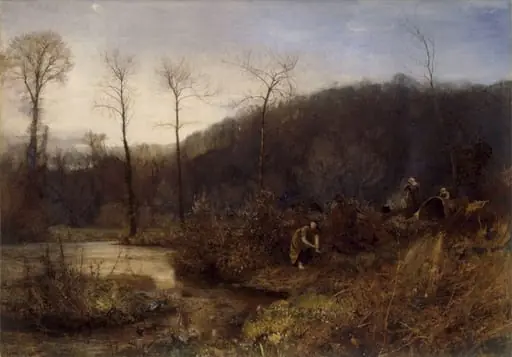
Own this work as a print
Artist & collection
Artist
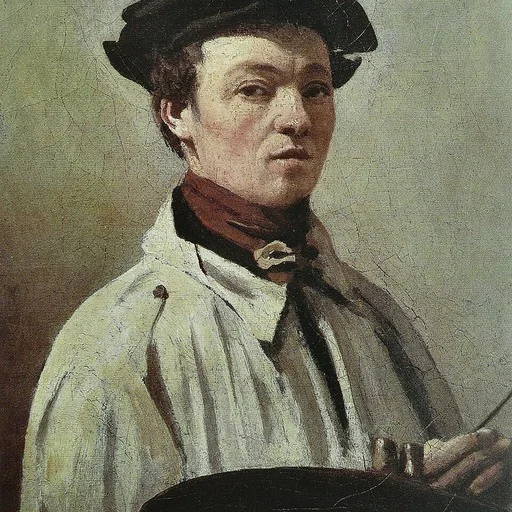
Jean-Baptiste-Camille Corot (UK: KORR-oh, US: kə-ROH, kor-OH; French:; 16 July 1796 – 22 February 1875), or simply Camille Corot, was a French landscape and portrait painter as well as a printmaker in etching.

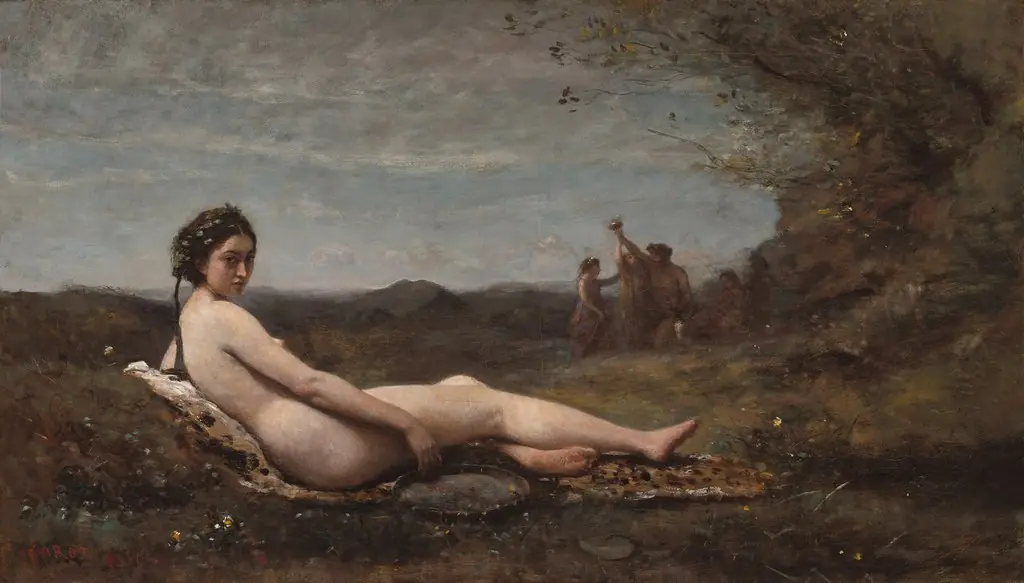
- The Gipsy Encampment
 Landscape.
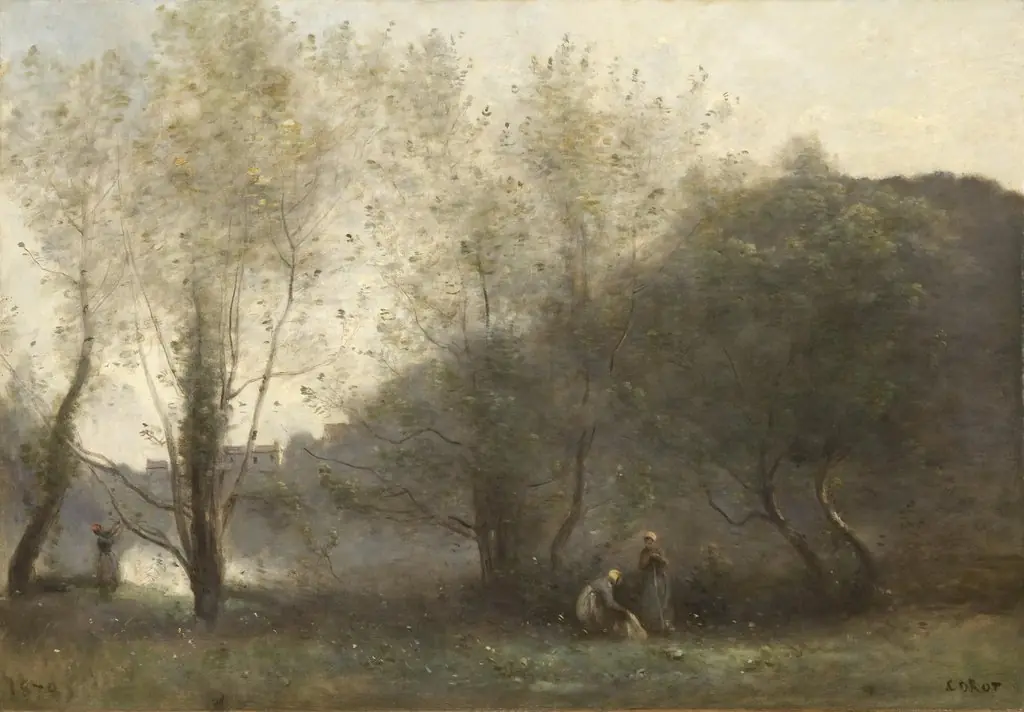 Morning on the Estuary, Ville d'Avray
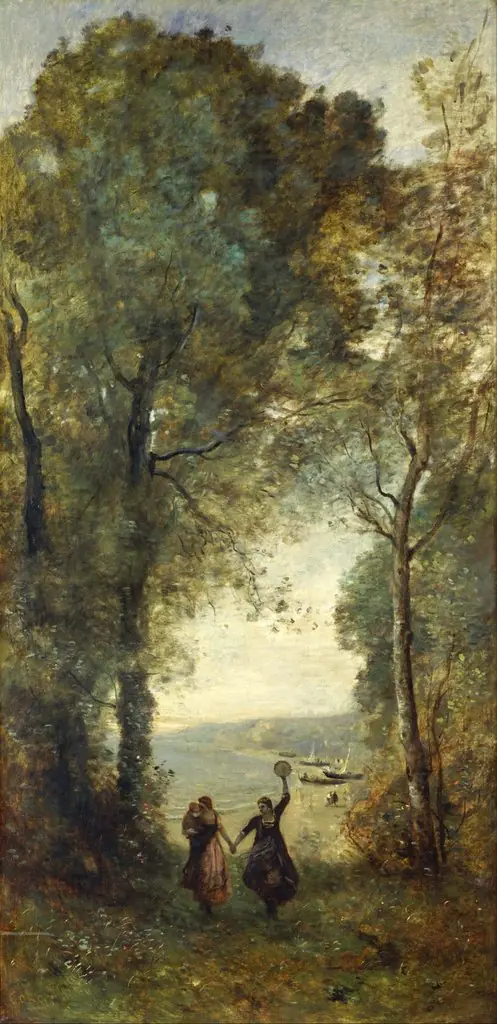 Reminiscence of the Beach of Naples
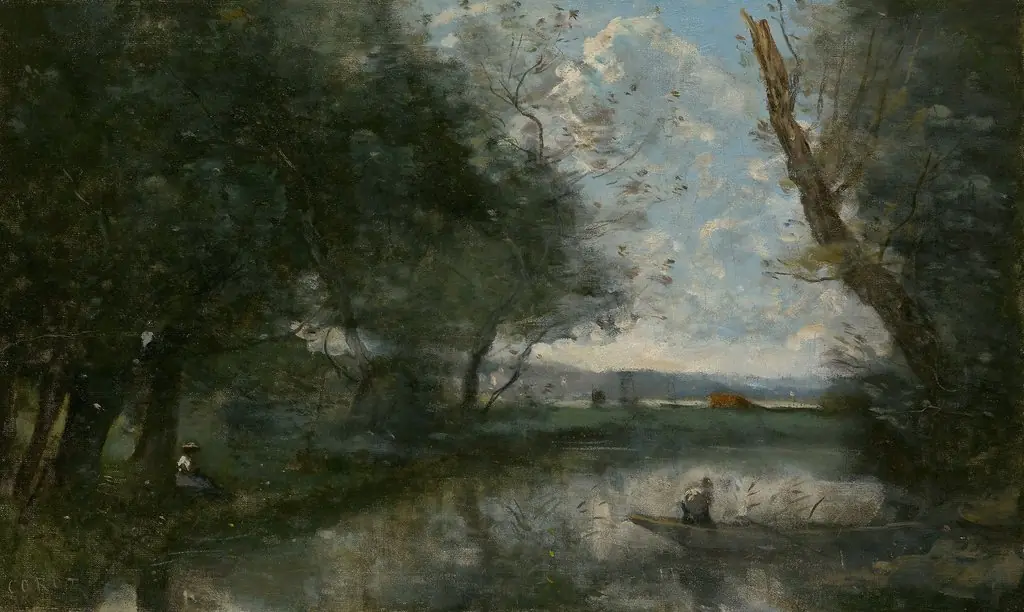 Landscape
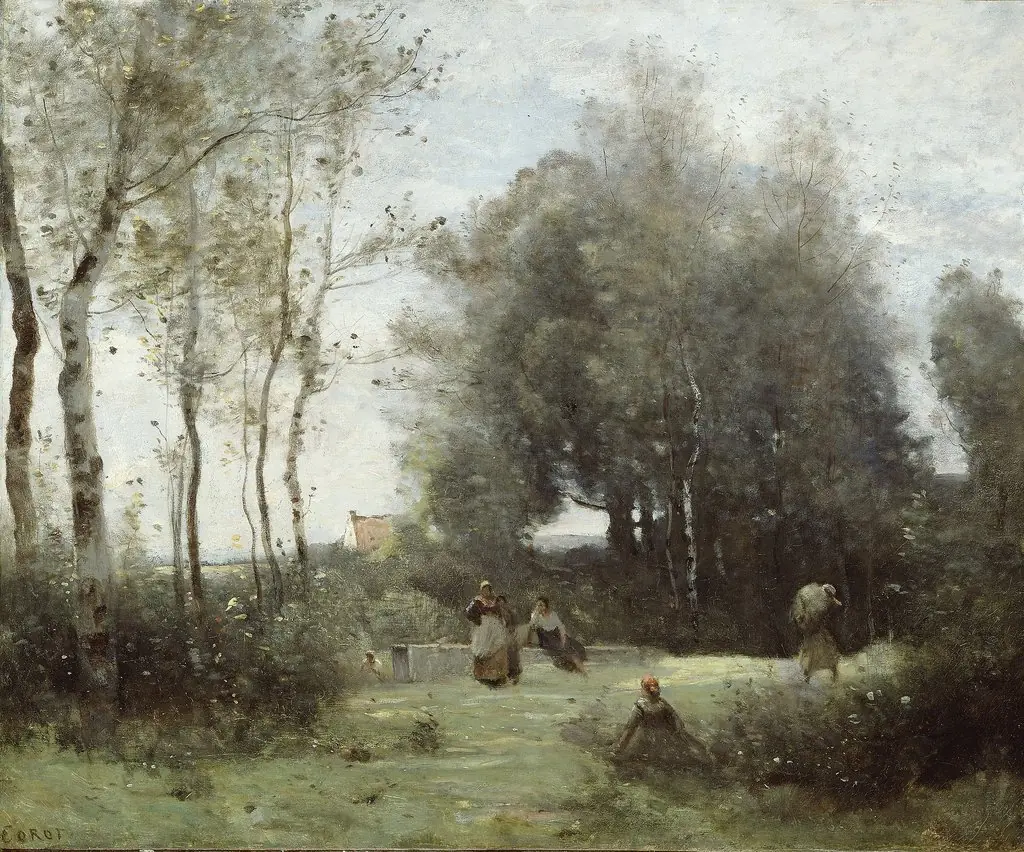 Arleux-Palluel, The Bridge of Trysts
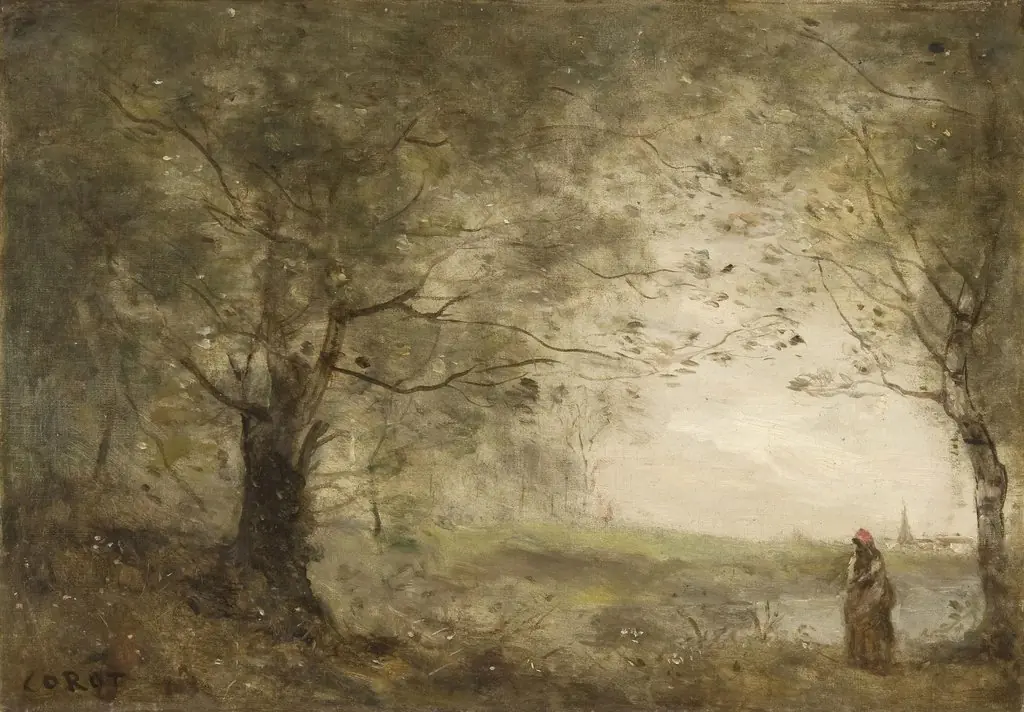 Landscape with a Distant Village Spire
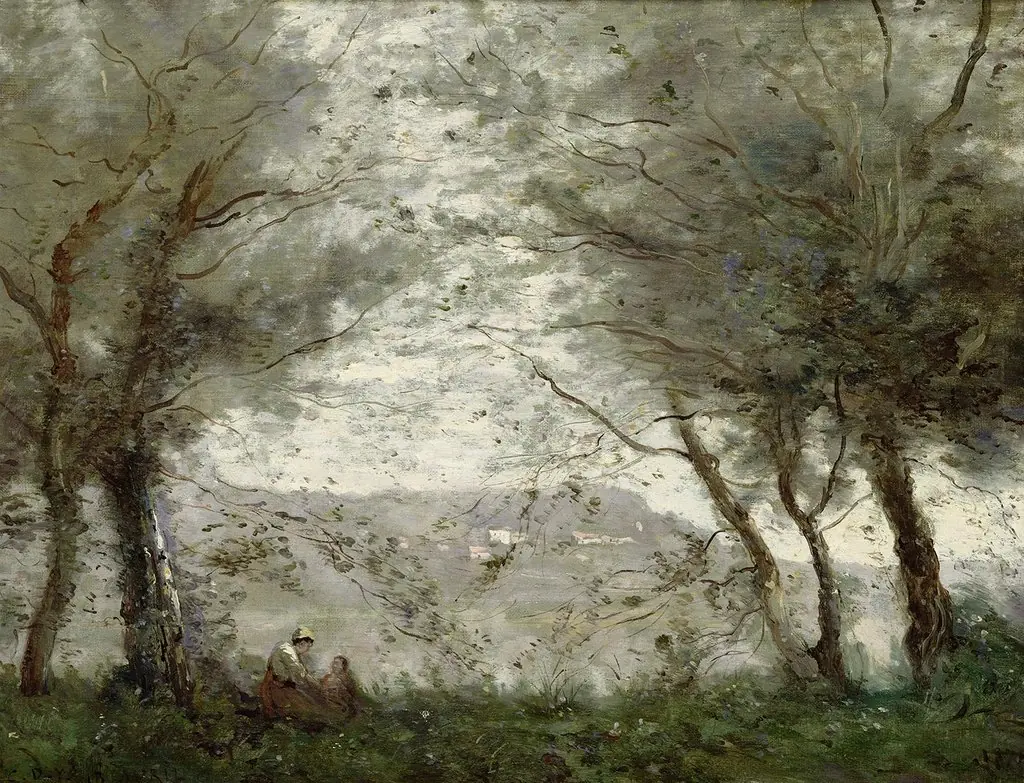 L'Étang de Ville-d'Avray vu à travers les feuillages
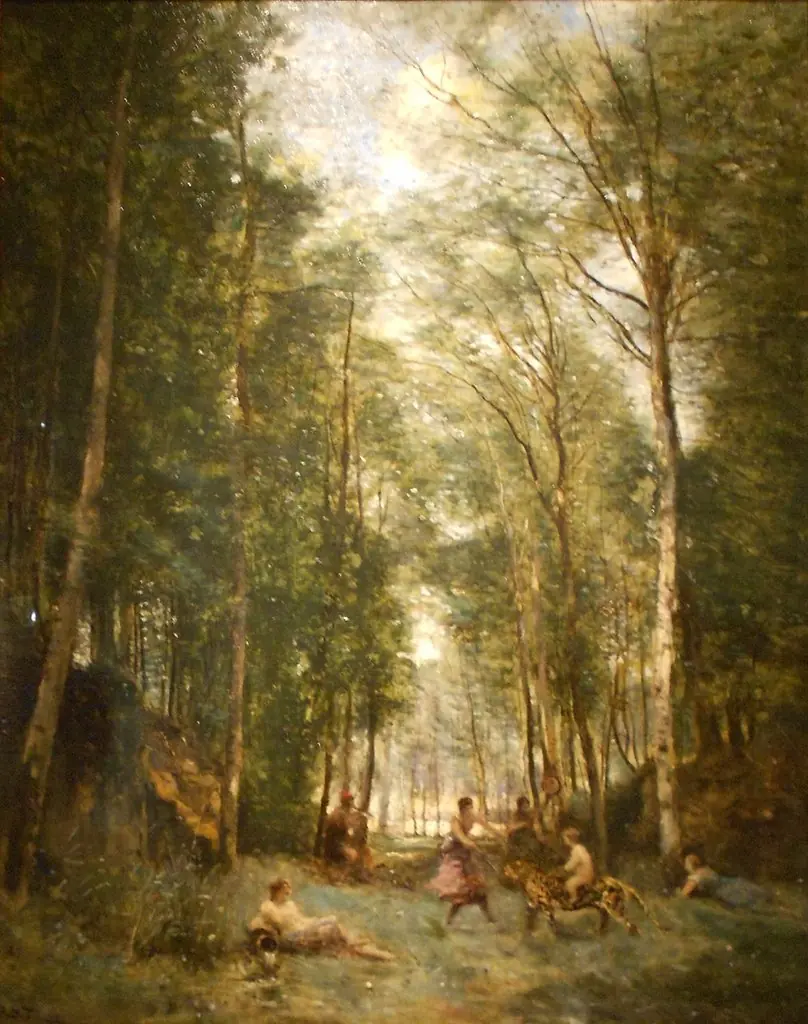 Bacchanal at the Spring: Souvenir of Marly-le-Roi
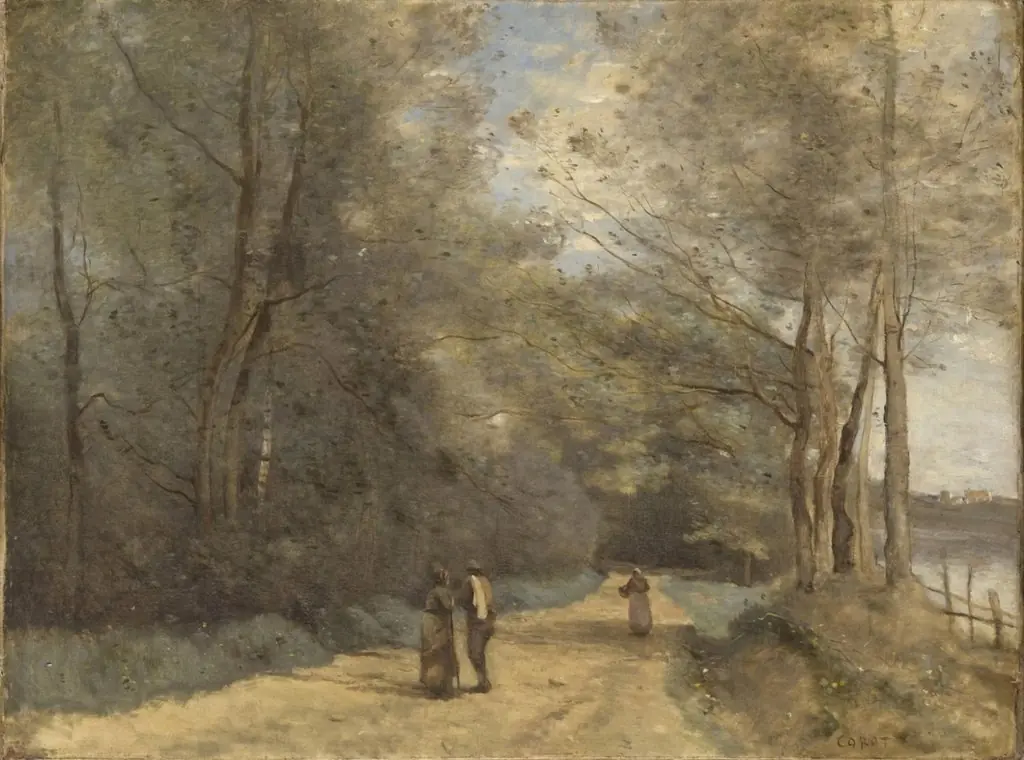 Wooded Path near Ville d'Avray
 Landscape
 Bei der Aumühle