Artwork
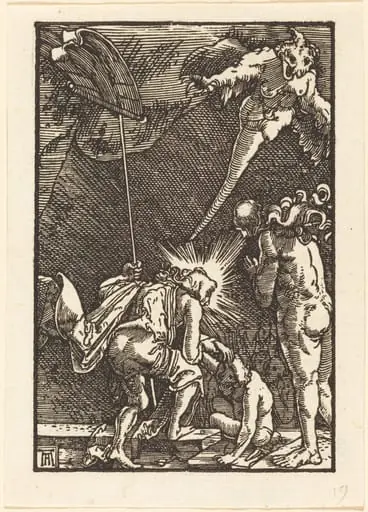
Christ in Limbo
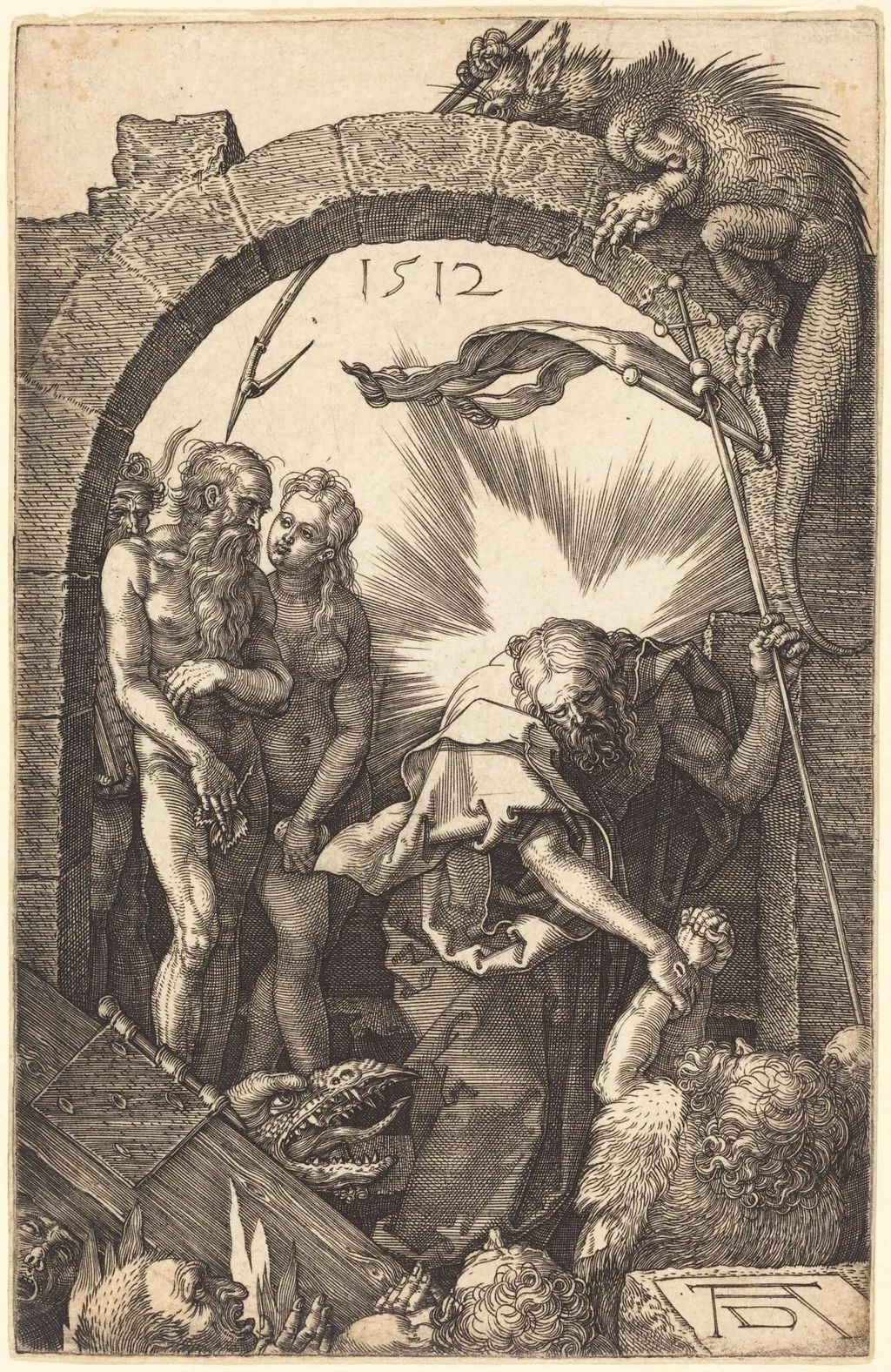
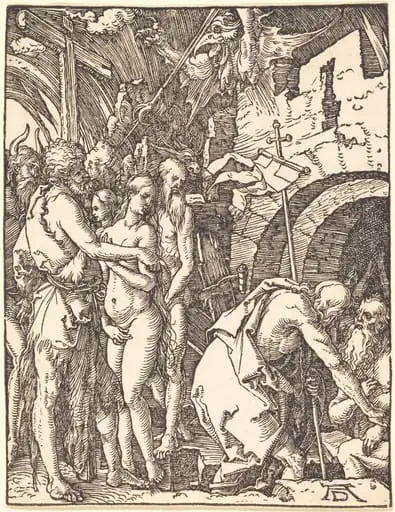
Christ in Limbo is an ink print by the Northern Renaissance artist Albrecht Dürer. It dates from 1512 and is held in the collection of the National Gallery of Art.
- Inscription
- Inscribed:in plate, upper center: 1512; in plate, bottom right, on stone: AD [artist's monogram]; verso, lower right, in graphite by a later hand: 8 [upside down]; verso, bottom left, in graphite by a later hand: NR [?] 25146; verso, bottom center, in graphite by a later hand: B.16
- Markings
- Marked:none
About this work
Subject & Meaning
The figure stands triumphantly amidst fallen souls, embodying medieval theological concepts of Christ's victory over death and the liberation of the righteous.
The print portrays the moment of Christ's descent into the limbo of the dead, illustrating the Harrowing of Hell. The figure stands triumphantly amidst fallen souls, embodying medieval theological concepts of Christ's victory over death and the liberation of the righteous. Symbolically, the work conveys redemption and divine authority, aligning with German Renaissance interpretations of apocalyptic imagery.
Technique & Style
Christ in Limbo is an engraving executed on laid paper by Albrecht Dürer in 1512. As a work of the German Renaissance, this religious print depicts the Harrowing of Hell, illustrating the descent of Jesus Christ into the underworld. The image measures 11.7 cm in height and 7.6 cm in width.
Created in Nuremberg, the piece utilizes the engraving technique to render its narrative scene, characteristic of Dürer's mastery in printmaking during this period.
History & Provenance
Albrecht Dürer produced the engraving in Nuremberg in 1512, depicting the Harrowing of Hell as described in the New Testament. The work entered the Brentano‑Birckenstock Collection in Vienna and Frankfurt before passing to Arthur Friederich Theodor Bohnenberger in Stuttgart. In 1928 it was acquired by Lessing J. Rosenwald, who later gifted it to the National Gallery of Art in 1943.
Christ in Limbo is held by the National Gallery of Art in Washington, D.C., as part of the Prints in the National Gallery of Art and the Rosenwald Collection. The print entered the NGA as a gift from Lessing J. Rosenwald in 1943. Rosenwald had acquired it in 1928, and earlier provenance traces through Arthur Friederich Theodor Bohnenberger of Stuttgart and the Brentano-Birckenstock Collection in Vienna and Frankfurt.
Beyond the NGA impression, the engraving is also located at the Cleveland Museum of Art, Museum Boijmans Van Beuningen, the Chester Beatty Library, and the Los Angeles County Museum of Art.
Context
Albrecht Dürer's 1512 engraving 'Christ in Limbo' portrays the Harrowing of Hell, depicting Christ liberating souls in the underworld. The work is part of Dürer's broader religious engraving series and exemplifies his mastery of Northern Renaissance printmaking techniques. Its provenance traces from the Brentano-Birckenstock Collection through private ownership to the National Gallery of Art, reflecting its established place in European print collecting history.
Overview
Christ in Limbo is an engraving on laid paper created by Albrecht Dürer in 1512.
Own this work as a print
Artist & collection
Artist
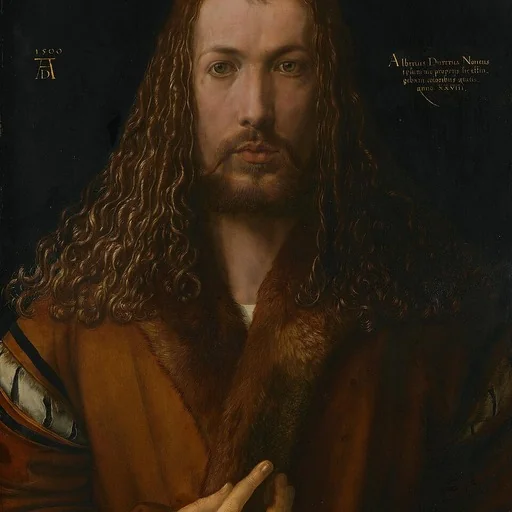
Albrecht Dürer spent his life in Nuremberg, a busy German city where artists traded prints like currency.

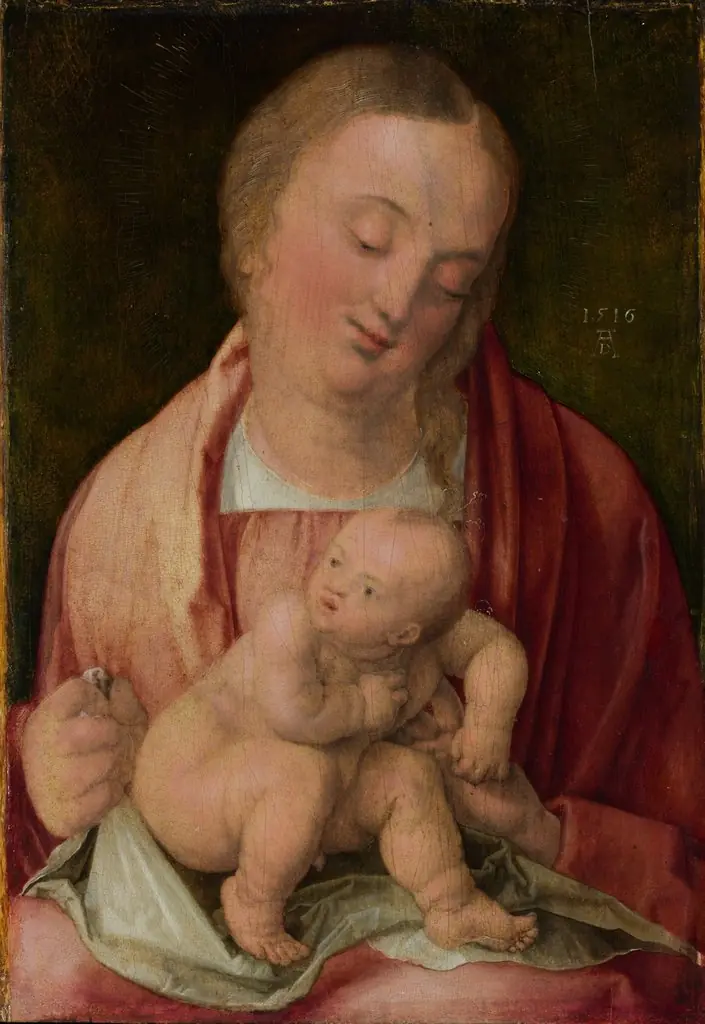
![Madonna and Child [obverse], by Albrecht Dürer](https://artifactworldgallery.com/img/albrecht-durer--madonna-and-child-obverse--d7b8ebf05d22ebe5-w320.webp)
![Lot and His Daughters [reverse], by Albrecht Dürer](https://artifactworldgallery.com/img/albrecht-durer--lot-and-his-daughters-reverse--b4ebf9b282faa17a-w320.webp)