Artwork
Christ in Limbo
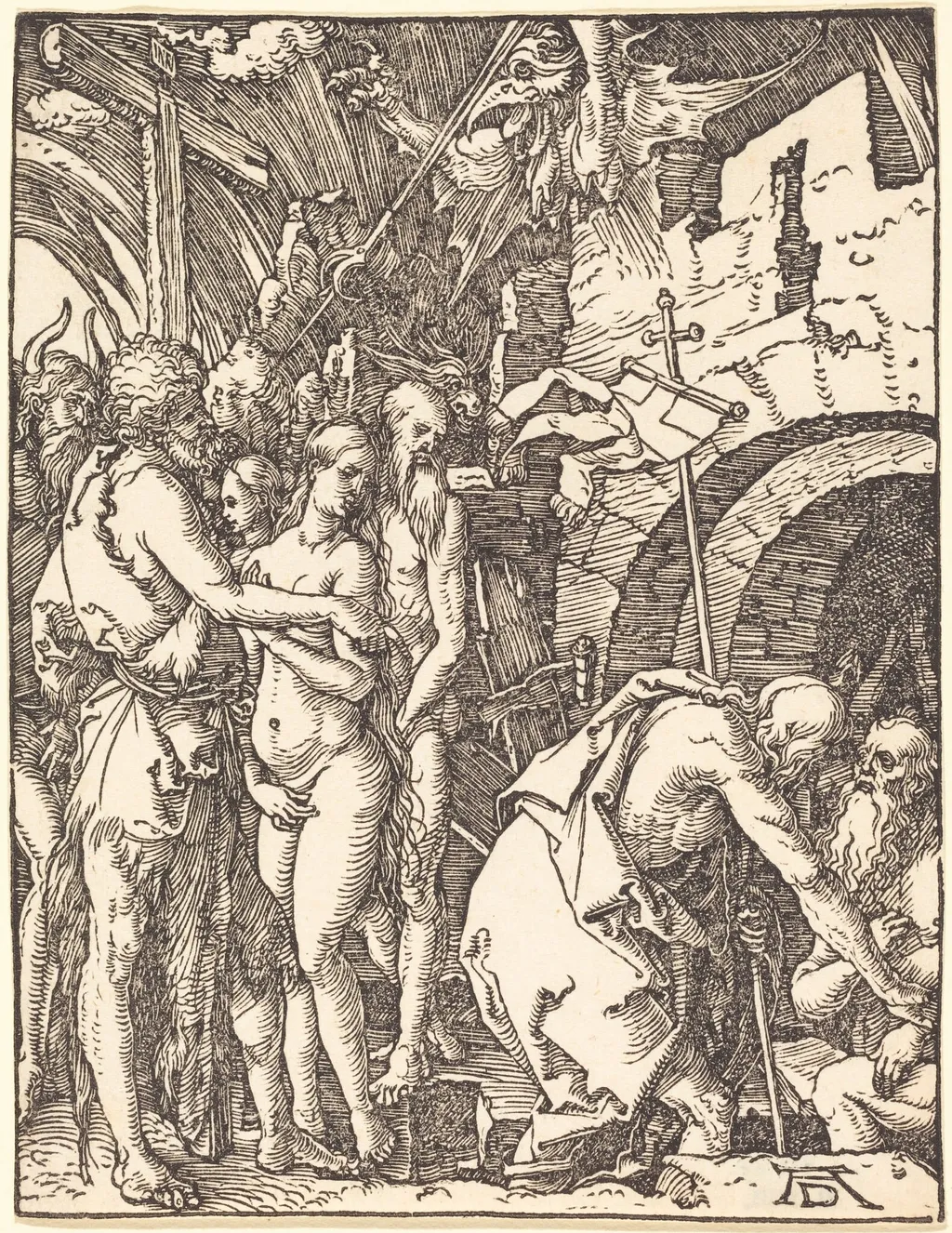
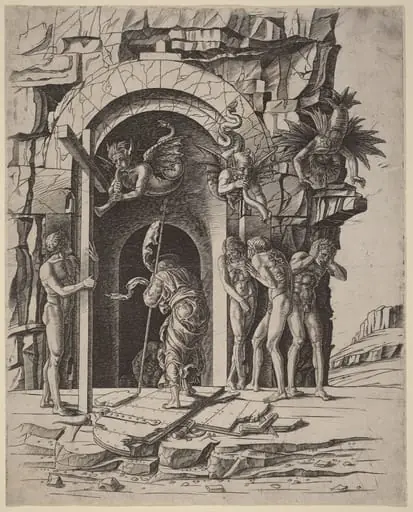
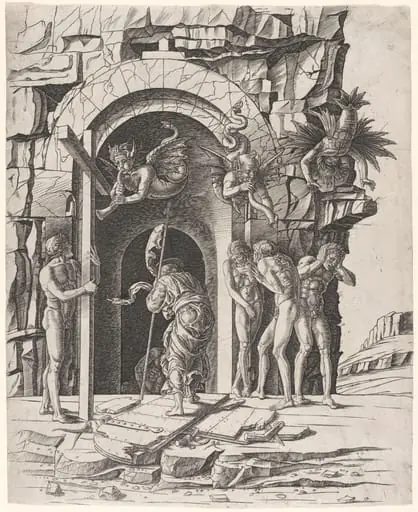
Christ in Limbo is an ink print by the Northern Renaissance artist Albrecht Dürer. It dates from 1510 and is held in the collection of the British Museum.
- Inscription
- Inscribed:in block, bottom right, on ground: AD [artist's monogram]; verso, lower center, in graphite by a later hand: 627; verso, bottom left, in graphite by a later hand: B 41; verso, bottom center, in graphite by a later hand: 26
About this work
Subject & Meaning
The work functions as a visual narrative of redemption, emphasizing Christ's triumph over death and his role as savior within German Renaissance religious art.
This woodcut illustrates the Harrowing of Hell, a subject derived from the New Testament depicting Jesus Christ's descent into Limbo. As part of Albrecht Dürer's Little Passion series, the image captures the moment Christ liberates the righteous souls who died before his crucifixion. The work functions as a visual narrative of redemption, emphasizing Christ's triumph over death and his role as savior within German Renaissance religious art.
By focusing on this specific biblical event, the print conveys theological concepts regarding salvation and the power of the resurrected figure to break the bonds of hell.
Technique & Style
Christ in Limbo is a woodcut printed on laid paper, executed by Albrecht Dürer in 1509 as part of the Little Passion series. The sheet measures roughly 124 by 95 mm, a modest format typical of the small-scale devotional prints in this cycle. The work belongs stylistically to the German Renaissance, depicting the Harrowing of Hell with a religious subject drawn from the New Testament.
As a relief print, it was produced by cutting the design into a wooden block, inking the raised surface, and transferring the image under pressure onto laid paper, a technique Dürer refined to allow dense, finely articulated linework within a compact composition.
History & Provenance
Created by Albrecht Dürer in 1509, the woodcut known as Christ in Limbo belongs to the artist's Little Passion series. The work depicts the Harrowing of Hell as part of the New Testament narrative. Its documented ownership chain begins with Joseph Daniel Böhm in Vienna, followed by Robert Scholtz in Budapest.
The print later entered the collection of William Schab in New York before being purchased by Lessing J. Rosenwald in Jenkintown, Pennsylvania, in 1940. Rosenwald subsequently gifted the piece to the National Gallery of Art in Washington, D.C., in 1943, where it remains part of the Rosenwald Collection.
The print Christ in Limbo is held in the National Gallery of Art's collection in Washington, D.C. Its provenance traces from Joseph Daniel Böhm in Vienna to Robert Scholtz in Budapest, then through dealers before being acquired by Lessing J. Rosenwald in 1940 and gifted to the National Gallery of Art in 1943.
Context
Christ in Limbo belongs to Albrecht Dürer's Little Passion, a woodcut series produced in the early sixteenth century, and the print is dated to 1509. The work is classified within the German Renaissance movement and treats the Harrowing of Hell as its main subject, drawing its narrative from the New Testament. As a religious print depicting Jesus Christ, it sits within Dürer's broader devotional output, which helped shape the visual language of Northern European religious imagery during the Renaissance.
The sheet is held by the National Gallery of Art in Washington, D.C., as part of the Rosenwald Collection, with additional impressions recorded at the British Museum, situating the composition within major public print holdings.
Overview
This woodcut, dated around 1510, is attributed to Albrecht Dürer and represents a scene from Christian theology. Executed on laid paper, the print exemplifies the period’s growing reliance on reproducible imagery to disseminate religious narratives. Dürer’s composition merges devotional content with the technical demands of early printmaking.
Own this work as a print
Artist & collection
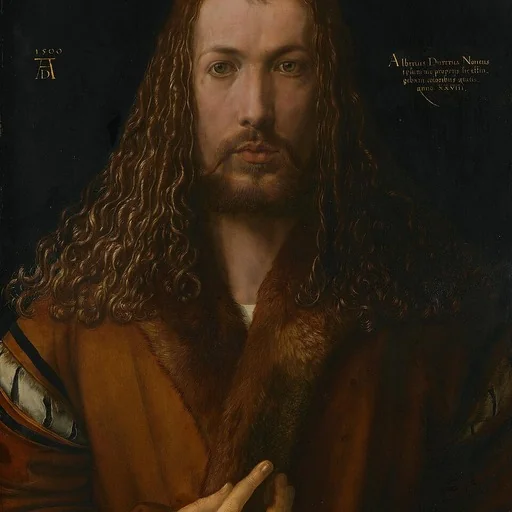
Artist
Albrecht Dürer spent his life in Nuremberg, a busy German city where artists traded prints like currency.

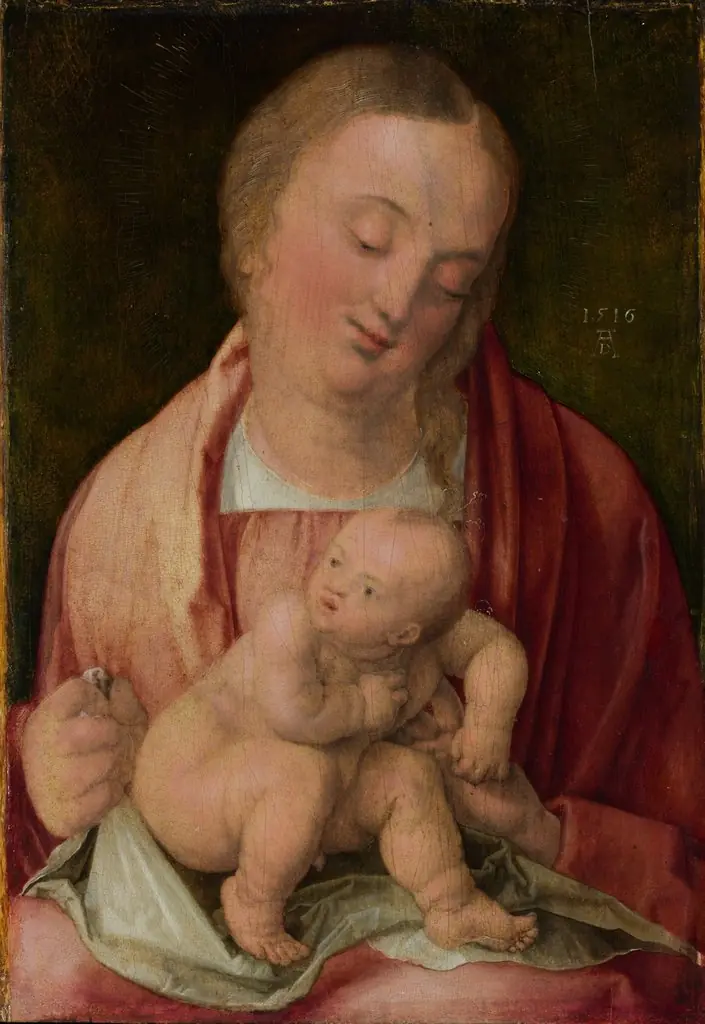
![Madonna and Child [obverse], by Albrecht Dürer](https://artifactworldgallery.com/img/albrecht-durer--madonna-and-child-obverse--d7b8ebf05d22ebe5-w320.webp)
![Lot and His Daughters [reverse], by Albrecht Dürer](https://artifactworldgallery.com/img/albrecht-durer--lot-and-his-daughters-reverse--b4ebf9b282faa17a-w320.webp)