Artwork
Ecce Homo
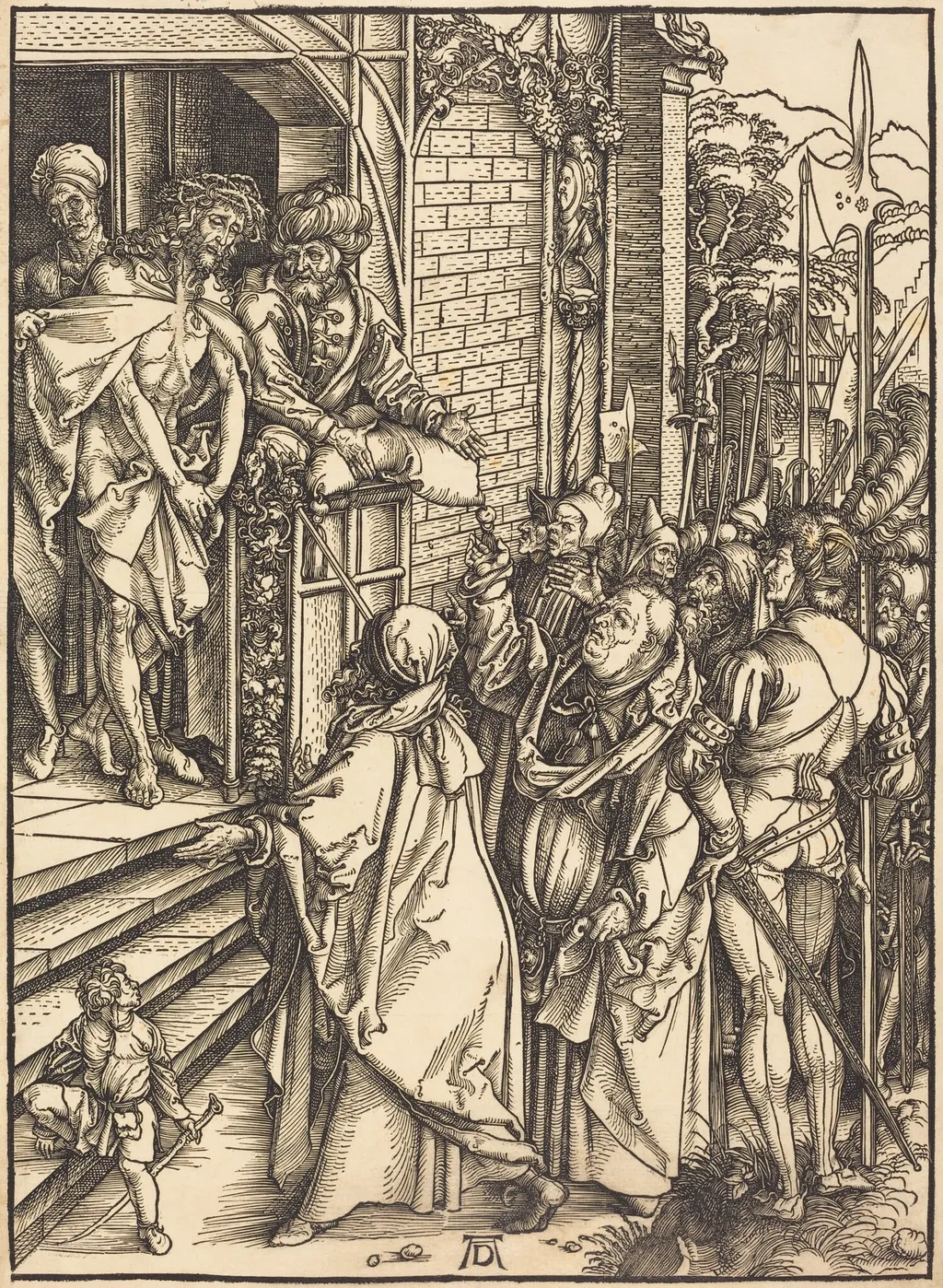
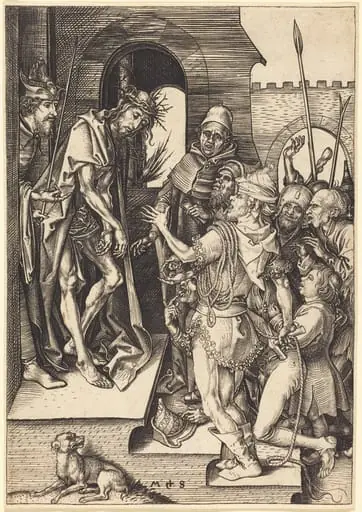
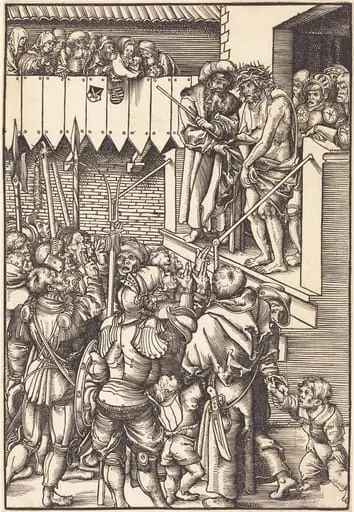
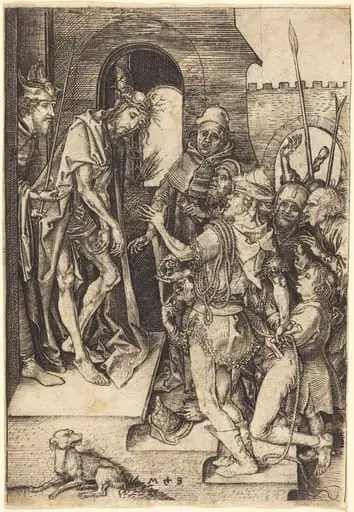
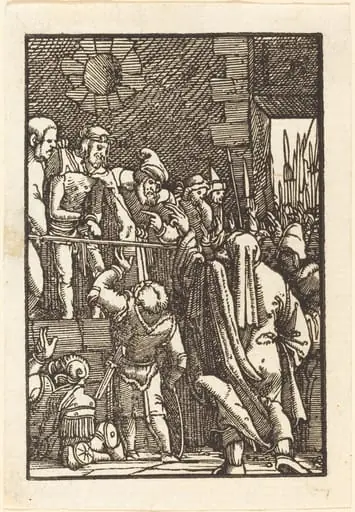
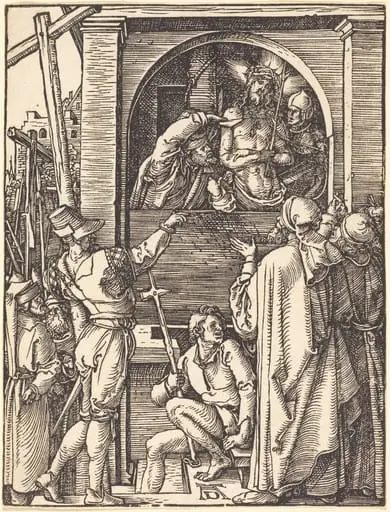
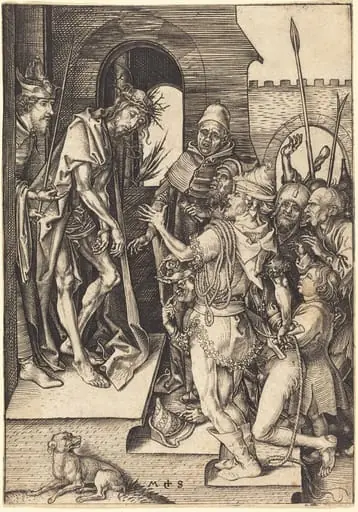
Ecce Homo is an ink print by the Northern Renaissance artist Albrecht Dürer. It dates from 1498 and is held in the collection of the National Gallery of Art.
About this work
Subject & Meaning
The depiction isolates the figure of Christ to emphasize his physical and spiritual endurance, functioning as a visual aid for contemplation on the Passion.
Albrecht Dürer's woodcut depicts Jesus Christ as the central figure of the Ecce Homo scene, a subject drawn directly from the New Testament narratives. The work illustrates the moment Pontius Pilate presents the scourged Christ to the crowd, though the print focuses iconographically on the suffering of Jesus himself. As part of the Great Passion series, the image serves as a religious meditation on Christ's humiliation and impending sacrifice, embodying the devotional intensity characteristic of the German Renaissance.
The depiction isolates the figure of Christ to emphasize his physical and spiritual endurance, functioning as a visual aid for contemplation on the Passion.
Technique & Style
Executed as a woodcut print, this work belongs to Albrecht Dürer's Great Passion series. Created during the German Renaissance, the piece utilizes the relief printing technique typical of the medium, where an image is carved into a wood block and transferred to paper. The composition focuses on the religious subject of Jesus Christ, depicting the Ecce Homo scene derived from the New Testament.
Surviving impressions, such as those held by the National Gallery of Art and the Albertina, demonstrate the linear precision characteristic of Dürer's approach to printmaking in the late fifteenth and early sixteenth centuries.
History & Provenance
Albrecht Dürer's woodcut Ecce Homo was created in 1490 as part of the series Great Passion, a cycle of religious prints depicting scenes from the New Testament. The work belongs to the German Renaissance movement and portrays Jesus Christ, with the scene of Ecce Homo as its main subject.
The woodcut is held in the collection of the National Gallery of Art in Washington, D.C., where it forms part of the Prints in the National Gallery of Art, Rosenwald Collection. A further impression of the print is held by the Albertina in Vienna.
Ecce Homo is a woodcut print by Albrecht Dürer, created in 1490 as part of his series of Passion scenes. It is held in the National Gallery of Art in Washington, D.C., where it is cataloged under the Rosenwald Collection. The work has been exhibited at major institutions including the National Gallery of Art and the Albertina, reflecting its significance within the German Renaissance and its enduring presence in scholarly and public exhibitions.
Context
The woodcut titled Ecce Homo by Albrecht Dürer, created around 1490, is part of his influential Great Passion series and exemplifies the German Renaissance's integration of religious narrative with technical mastery of printmaking. The work, housed in the National Gallery of Art's Rosenwald Collection in Washington, D.C., reflects Dürer's engagement with New Testament themes and his innovative approach to depicting Christ's Passion, situating it within broader scholarly discussions of his role in advancing print as a medium for spiritual storytelling.
Legacy
Ecce Homo, a woodcut by Albrecht Dürer created around 1490, established a powerful visual interpretation of the moment of Christ's condemnation. Dürer emphasized the physical and spiritual anguish of Jesus, portraying him with a crown of thorns and a tormented expression, reflecting the psychological depth characteristic of German Renaissance printmaking. The work's intense emotional resonance and technical mastery contributed to its enduring reputation, influencing later religious imagery across Northern European art and shaping scholarly discourse on Dürer's role in elevating printmaking to fine art.
Its presence in major collections, including the National Gallery of Art, underscores its continued significance in art historical narratives.
Overview
Ecce Homo is a woodcut print created by Albrecht Dürer around 1498. It is a representation of a pivotal scene from Christian iconography.
Own this work as a print
Artist & collection
Artist
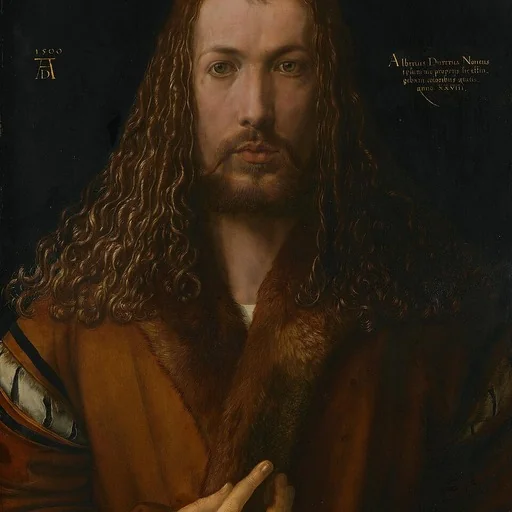
Albrecht Dürer spent his life in Nuremberg, a busy German city where artists traded prints like currency.

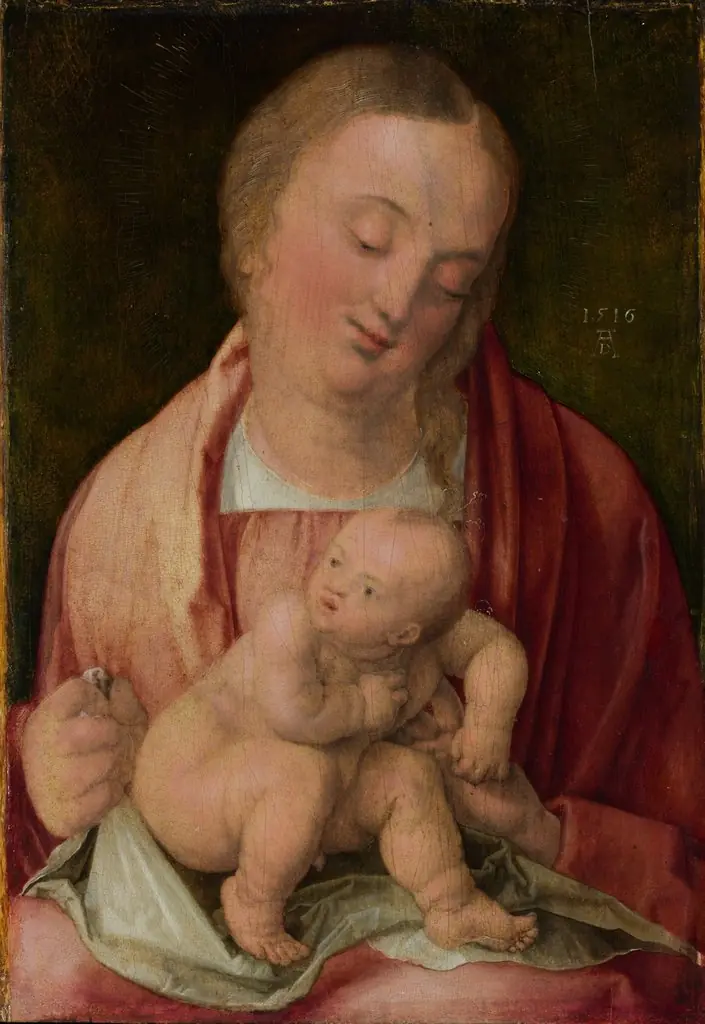
![Madonna and Child [obverse], by Albrecht Dürer](https://artifactworldgallery.com/img/albrecht-durer--madonna-and-child-obverse--d7b8ebf05d22ebe5-w320.webp)
![Lot and His Daughters [reverse], by Albrecht Dürer](https://artifactworldgallery.com/img/albrecht-durer--lot-and-his-daughters-reverse--b4ebf9b282faa17a-w320.webp)