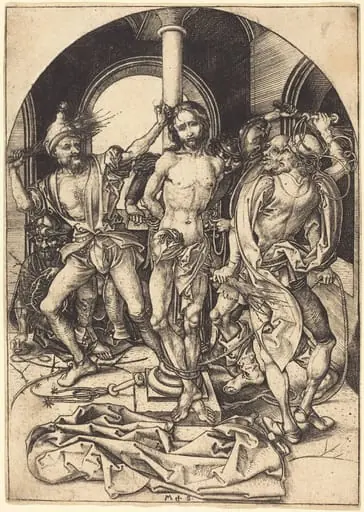
Artwork
The Flagellation
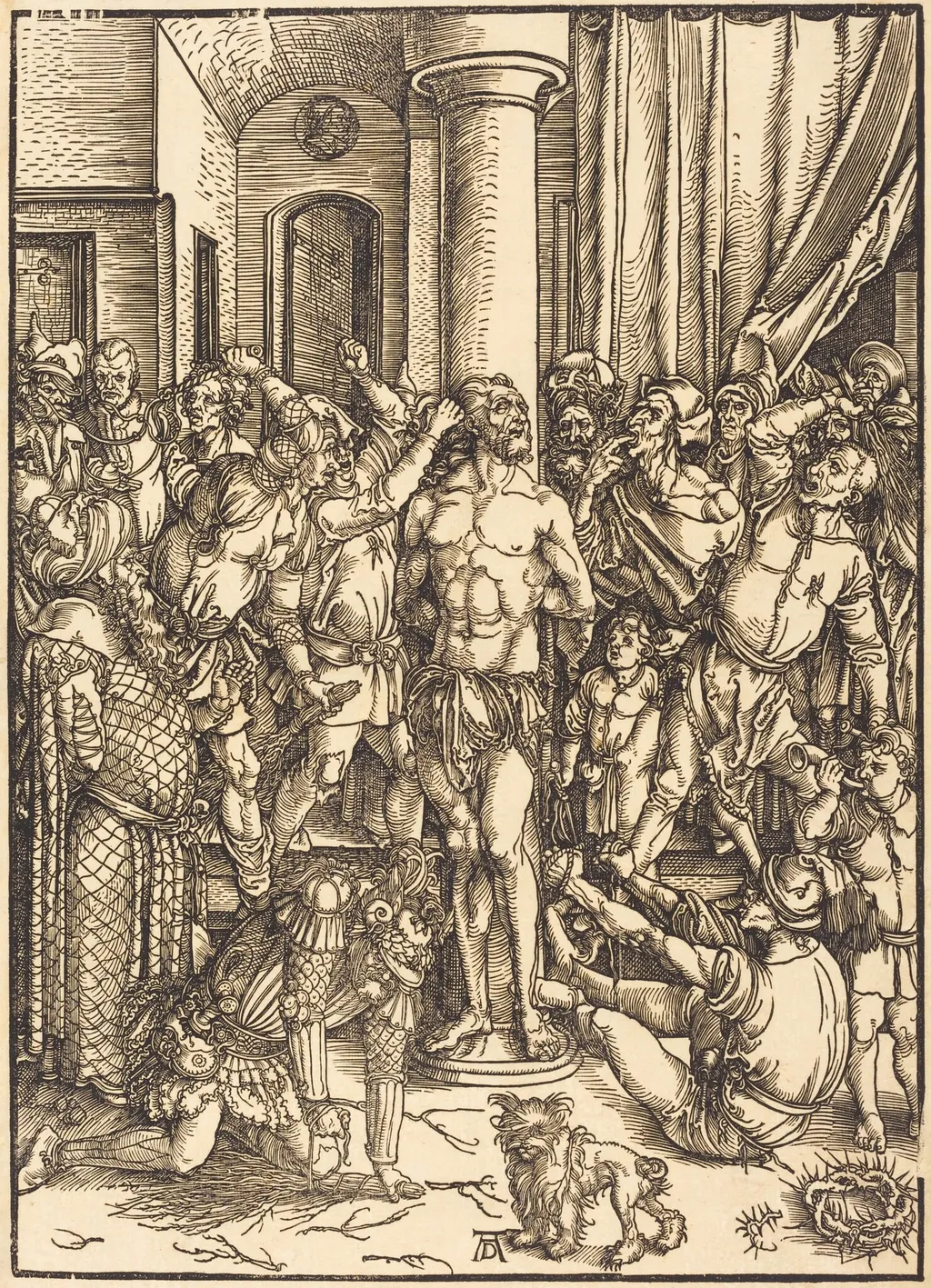
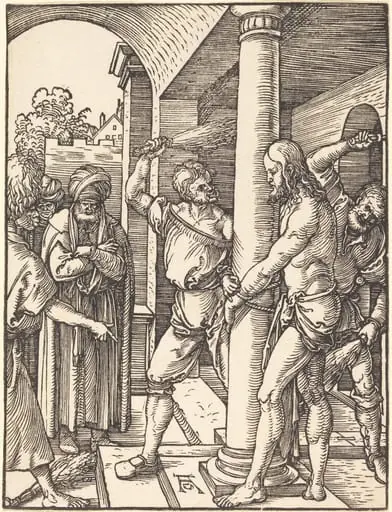
The Flagellation is an ink print by the Northern Renaissance artist Albrecht Dürer. It dates from 1497 and is held in the collection of the Metropolitan Museum of Art.
About this work
Dürer used cross-hatching to create darkness and depth, a trick he learned from Italian artists.
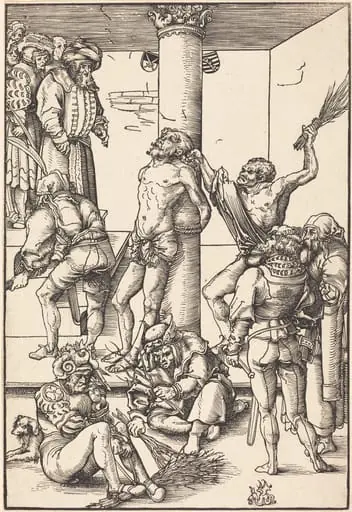
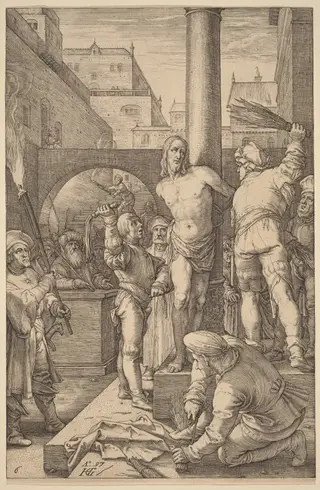
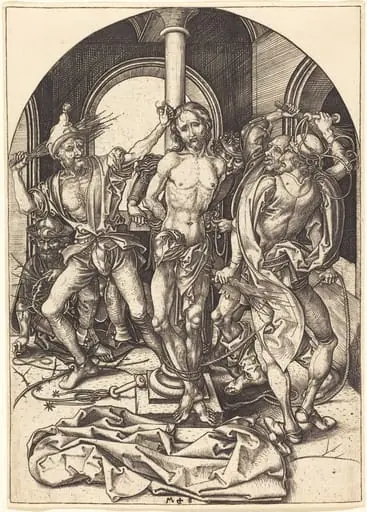
Albrecht Dürer carved this print in 1497. It shows Jesus tied to a column while three figures watch. The woodblock feels busy yet precise, with tiny figures and detailed folds in the cloth.
This scene isn’t just a moment in time. It’s a study in how light hits Jesus’ skin and shadows pool on the ground. Dürer used cross-hatching to create darkness and depth, a trick he learned from Italian artists.
Look up woodcut if you want to see how prints like this were made.
Subject & Meaning
The woodcut depicts the Flagellation of Christ, the episode in which Jesus is scourged prior to his crucifixion. The subject is drawn from the New Testament and belongs to the devotional tradition of Passion imagery, a recurring theme in late medieval and Renaissance religious art.
As part of the Great Passion series, the print is intended to function as a meditative aid, inviting the viewer to contemplate Christ's suffering. The composition centers on the bound figure of Jesus at the column, surrounded by his tormentors, a standard iconographic arrangement that emphasizes the physical brutality of the event and its redemptive significance within Christian theology.
Technique & Style
Albrecht Dürer created The Flagellation in 1497 as a woodcut print executed on paper. The work measures 39 cm in height and 28 cm in width. As part of the Great Passion series, the piece exemplifies the technical precision and linear clarity characteristic of the German Renaissance.
The artist utilized the woodcut medium to render the religious narrative of the Flagellation of Christ with intricate detail, balancing the stark contrasts inherent to the printmaking process with complex figural composition.
History & Provenance
The Flagellation is a woodcut by Albrecht Dürer dated to 1497 and part of the Great Passion series. It was produced in Nuremberg during the late 1490s, aligning with Dürer’s early mature printmaking period. The work entered major public collections through later donations and acquisitions: the National Gallery of Art, Washington, D.C., holds it via the Rosenwald Collection, while the Cleveland Museum of Art also owns a copy.
These institutional holdings trace back to dispersed impressions from the original edition, which circulated widely after its creation.
Albrecht Dürer's woodcut The Flagellation, created in 1497 as part of the Great Passion series, is held in multiple public collections. The National Gallery of Art in Washington, D.C., houses a version of the work within its Prints collection. The Cleveland Museum of Art also maintains a copy in its holdings.
Additional institutional records indicate the print is present in the collections of the Metropolitan Museum of Art, the Albertina in Vienna, the Los Angeles County Museum of Art, and the Rosenwald Collection at the National Gallery of Art.
Overview
The Flagellation is a woodcut print created by Albrecht Dürer around 1497, depicting a pivotal moment in the narrative of Jesus Christ.
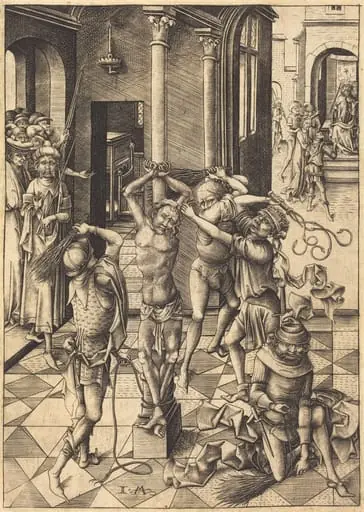
Own this work as a print
Artist & collection
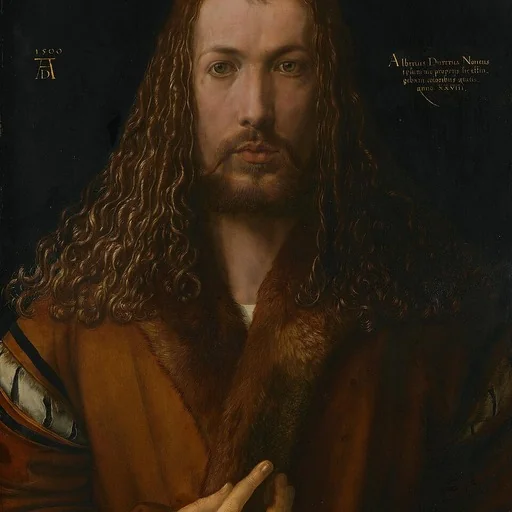
Artist
Albrecht Dürer spent his life in Nuremberg, a busy German city where artists traded prints like currency.

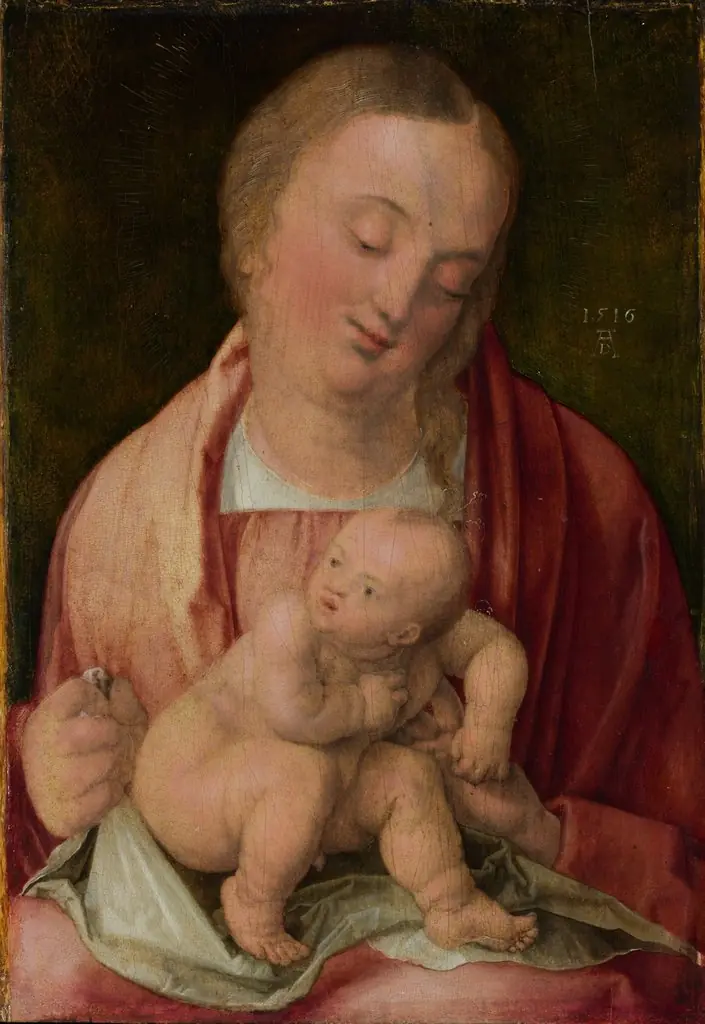
![Madonna and Child [obverse], by Albrecht Dürer](https://artifactworldgallery.com/img/albrecht-durer--madonna-and-child-obverse--d7b8ebf05d22ebe5-w320.webp)
![Lot and His Daughters [reverse], by Albrecht Dürer](https://artifactworldgallery.com/img/albrecht-durer--lot-and-his-daughters-reverse--b4ebf9b282faa17a-w320.webp)