Artwork
Saint Anthony and Saint Paul in the Wilderness
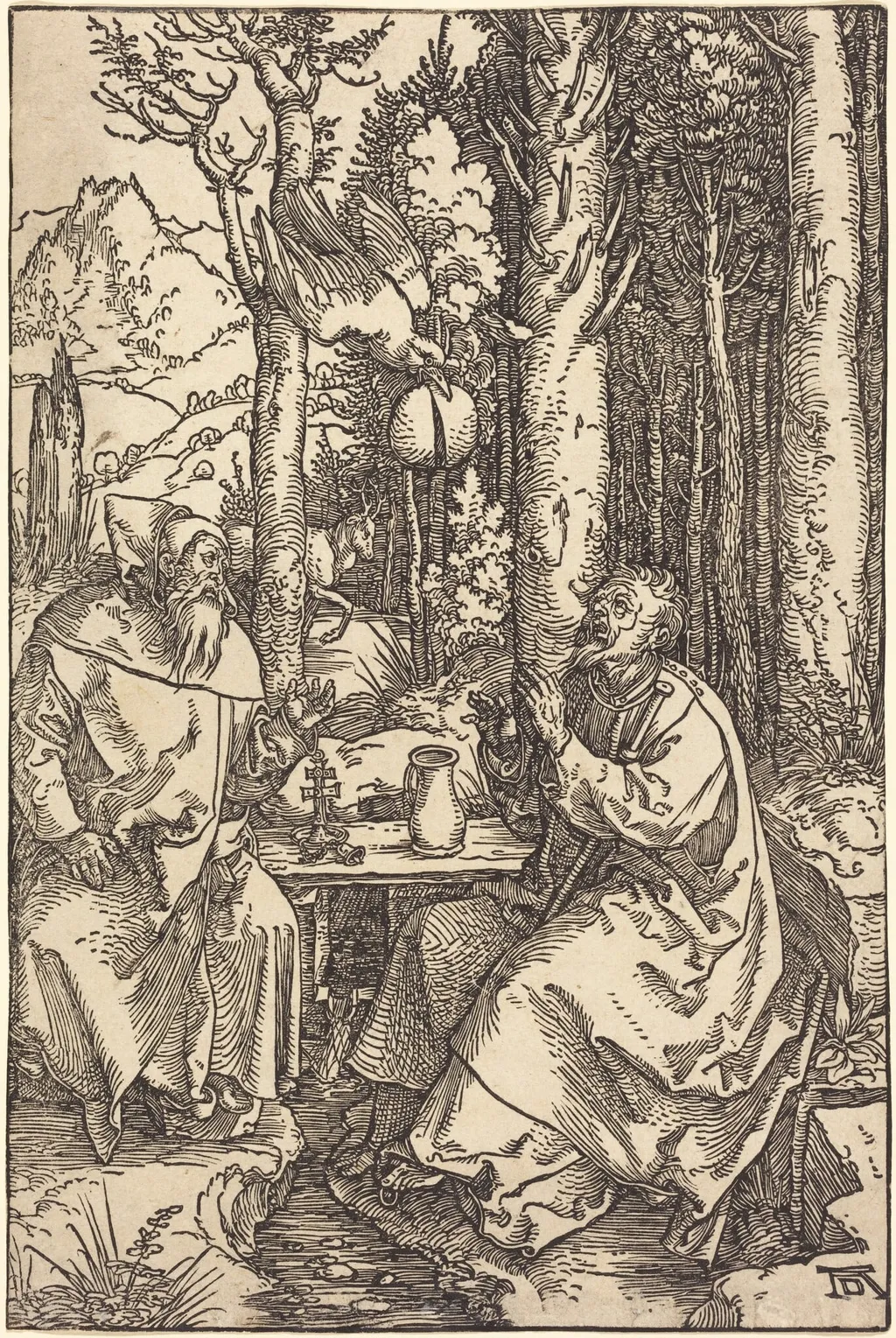
Saint Anthony and Saint Paul in the Wilderness is an ink print by the Northern Renaissance artist Albrecht Dürer. It dates from 1504 and is held in the collection of the Rosenwald Collection.
- Inscription
- Inscribed:in block, bottom right: AD [artist's monogram]; verso, center, in graphite by a later hand: 56 [upside down] [erased]; verso, lower center, in graphite by a later hand: B 107 / C 14574; verso, lower right, in graphite by a later hand: 138
About this work
This woodcut shows two old men in a dark cave. One feeds a raven. The other kneels to pray.
Dürer carved it in 1504 using fine lines on wood. The raven brings bread to Saint Paul, a desert hermit. Saint Anthony, another hermit, watches from the shadows. Tiny details like the men’s wrinkles and the raven’s feathers show Dürer’s skill.
Check out the technique used here: woodcut.
Subject & Meaning
The composition places these figures within a wilderness setting, emphasizing their identity as ascetics who withdrew from society for spiritual devotion.
Created in 1503, this woodcut by Albrecht Dürer illustrates a religious narrative featuring two specific hermits: Anthony the Great and Paul of Thebes. The composition places these figures within a wilderness setting, emphasizing their identity as ascetics who withdrew from society for spiritual devotion. As a work of the German Renaissance, the print utilizes the medium of woodcut on laid paper to disseminate this hagiographic subject matter.
The depiction focuses on the presence of these two saints together in a desolate landscape, representing the eremitic tradition central to their lives.
Technique & Style
Albrecht Dürer executed this work as a woodcut printed on laid paper, a technique characteristic of early 16th‑century German printmaking. The composition portrays the hermits Anthony the Great and Paul of Thebes amid a stark, rocky landscape, rendered with fine line work that emphasizes texture and spatial depth. The print measures 213 mm in height and 142 mm in width, reflecting the standard dimensions of Dürer’s woodcut sheets from this period.
Its handling and condition are typical of well‑preserved early prints in the National Gallery of Art’s Rosenwald Collection, where it has been part of the permanent holdings since its acquisition in 1943.
History & Provenance
Albrecht Dürer created the woodcut Saint Anthony and Saint Paul in the Wilderness in 1503 while working in Nuremberg. Although some records suggest a creation window extending into 1504, the canonical date for the work is established as 1503.
The specific provenance of the impression held by the National Gallery of Art traces back to 1929, when it was acquired by Lessing J. Rosenwald of Jenkintown, Pennsylvania. Rosenwald retained ownership of the print until 1943, at which point he donated it to the museum, where it remains part of the institution's collection.
The National Gallery of Art holds the woodcut Saint Anthony and Saint Paul in the Wilderness, accessioned as 1943.6.66. The work entered the collection through the Rosenwald family: purchased by Lessing J. Rosenwald in 1929 and gifted to the museum in 1943. It has been exhibited at the National Gallery of Art in Washington, D.C.
Overview
Created in 1504, Albrecht Dürer's woodcut 'Saint Anthony and Saint Paul in the Wilderness' depicts the legendary meeting of two desert hermits. The composition centers on Saint Paul the Hermit, who is shown kneeling in prayer within a dark, rocky cave, while Saint Anthony of Egypt stands nearby. A raven, a recurring symbol in Dürer's work, is captured in the act of dropping a loaf of bread to sustain Saint Paul, referencing the saint's miraculous provision.
Dürer executes the scene with the technical mastery characteristic of his mature period, utilizing dense cross-hatching and fine parallel lines to render deep shadows and intricate textures. The artist meticulously details the weathered faces and tattered garments of the saints, emphasizing their ascetic lives and advanced age. This work exemplifies the German Renaissance's fusion of Northern European attention to naturalistic detail with Italianate compositional balance and humanist themes.
As part of Dürer's extensive printmaking output, the piece demonstrates his ability to translate complex narrative and spiritual introspection into the graphic medium of woodcut, securing his reputation as a master of the form.
Own this work as a print
Artist & collection
Artist
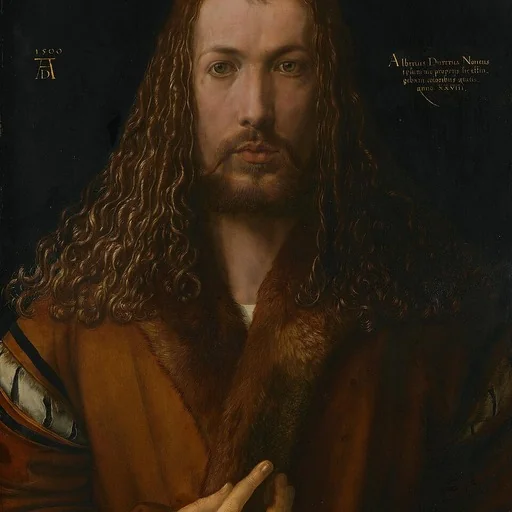
Albrecht Dürer spent his life in Nuremberg, a busy German city where artists traded prints like currency.
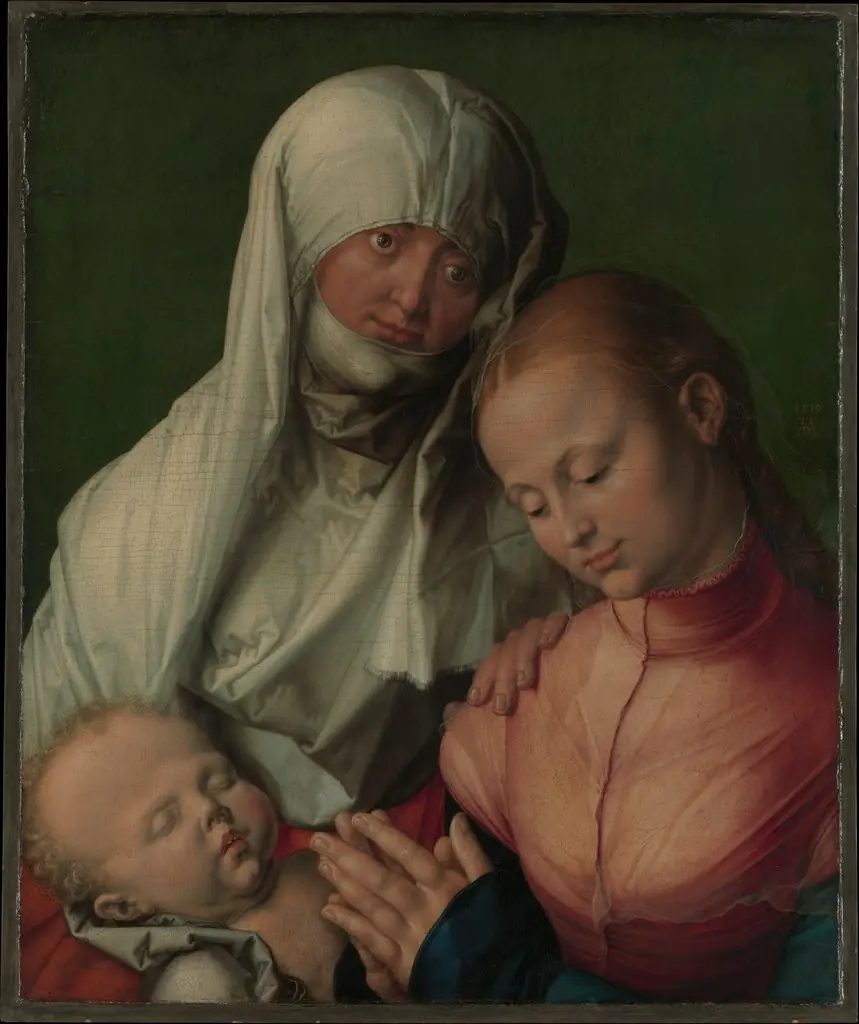
![Madonna and Child [obverse], by Albrecht Dürer](https://artifactworldgallery.com/img/albrecht-durer--madonna-and-child-obverse--d7b8ebf05d22ebe5-w320.webp)
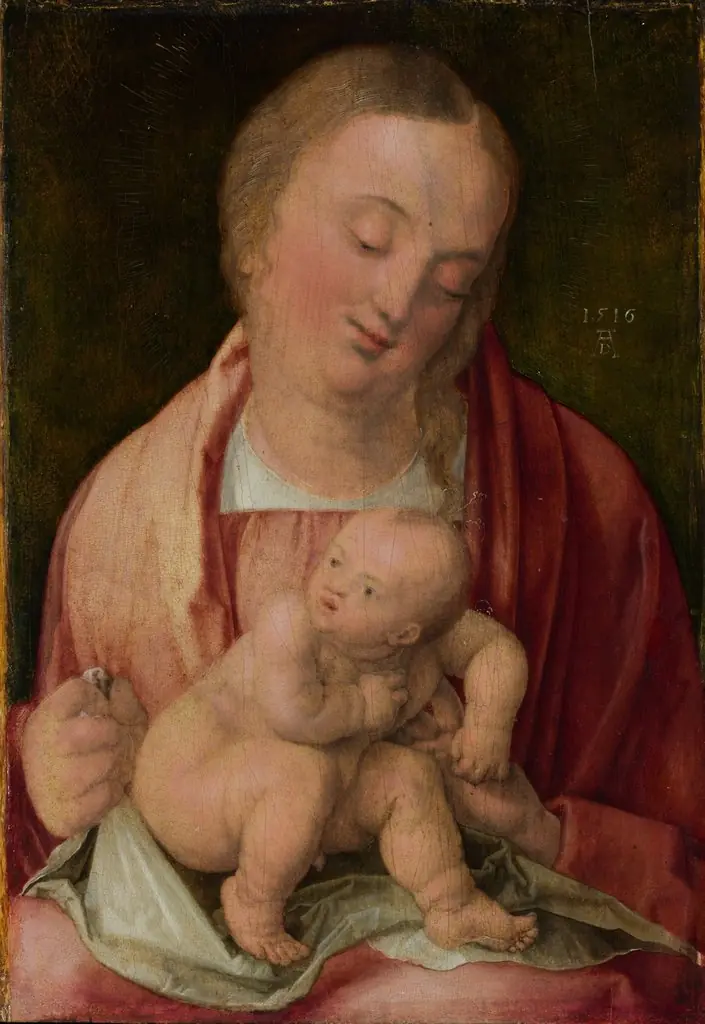
![Lot and His Daughters [reverse], by Albrecht Dürer](https://artifactworldgallery.com/img/albrecht-durer--lot-and-his-daughters-reverse--b4ebf9b282faa17a-w320.webp)
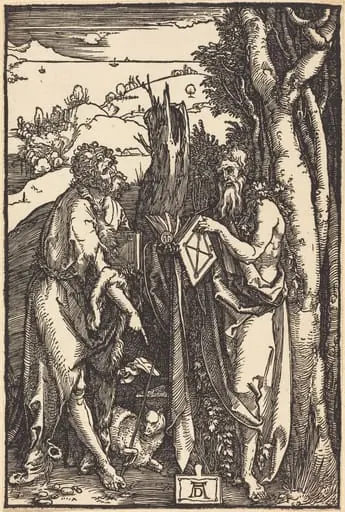 Saint John the Baptist and Saint Onuphrius
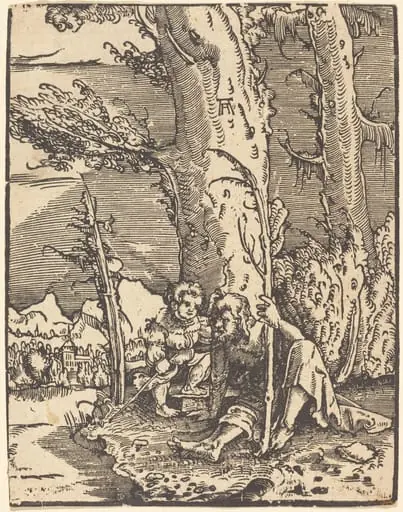 Saint Christopher Seated by a River Bank
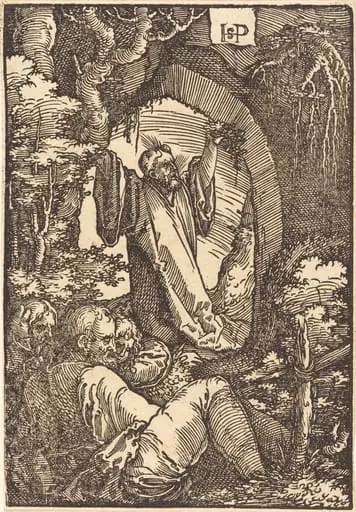 The Agony in the Garden
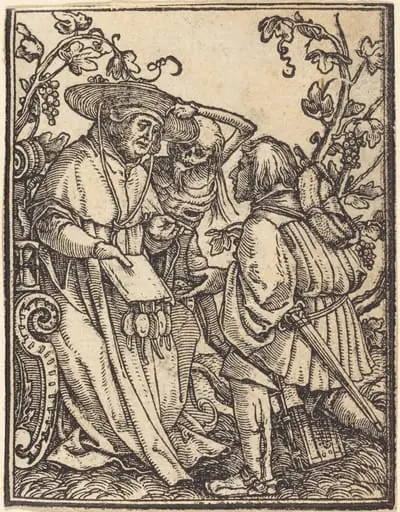 The Cardinal
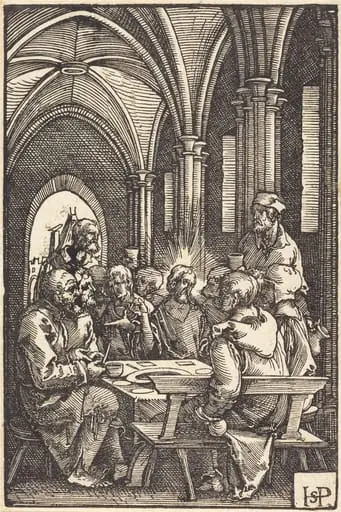 The Last Supper
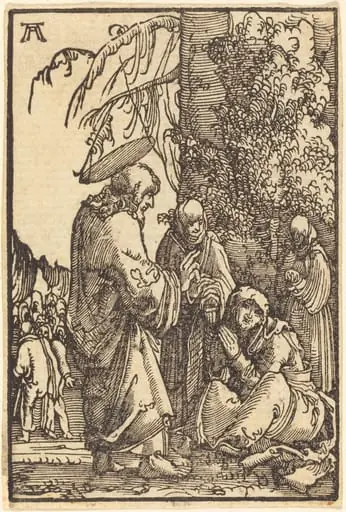 Christ Taking Leave of his Mother
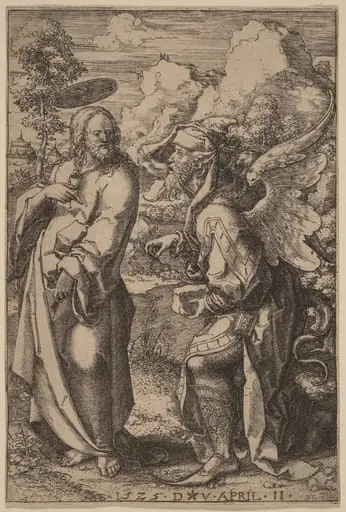 The Temptation of Christ
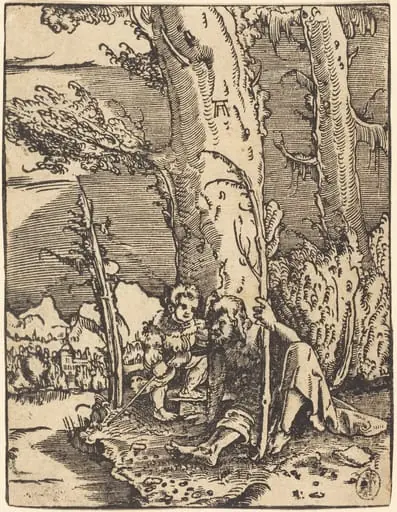 Saint Christopher Seated by a River Bank
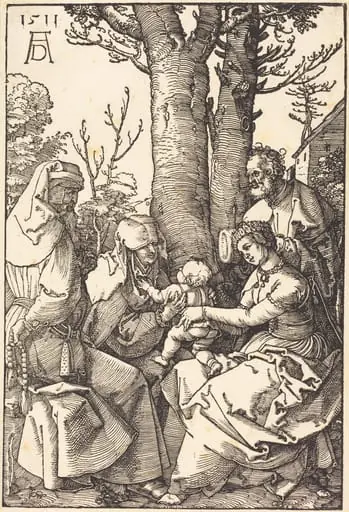 The Holy Family with Joachim and Anne under a Tree
- The Visit of St. Anthony to St. Paul the Hermit