Artwork
Saint John the Baptist and Saint Onuphrius
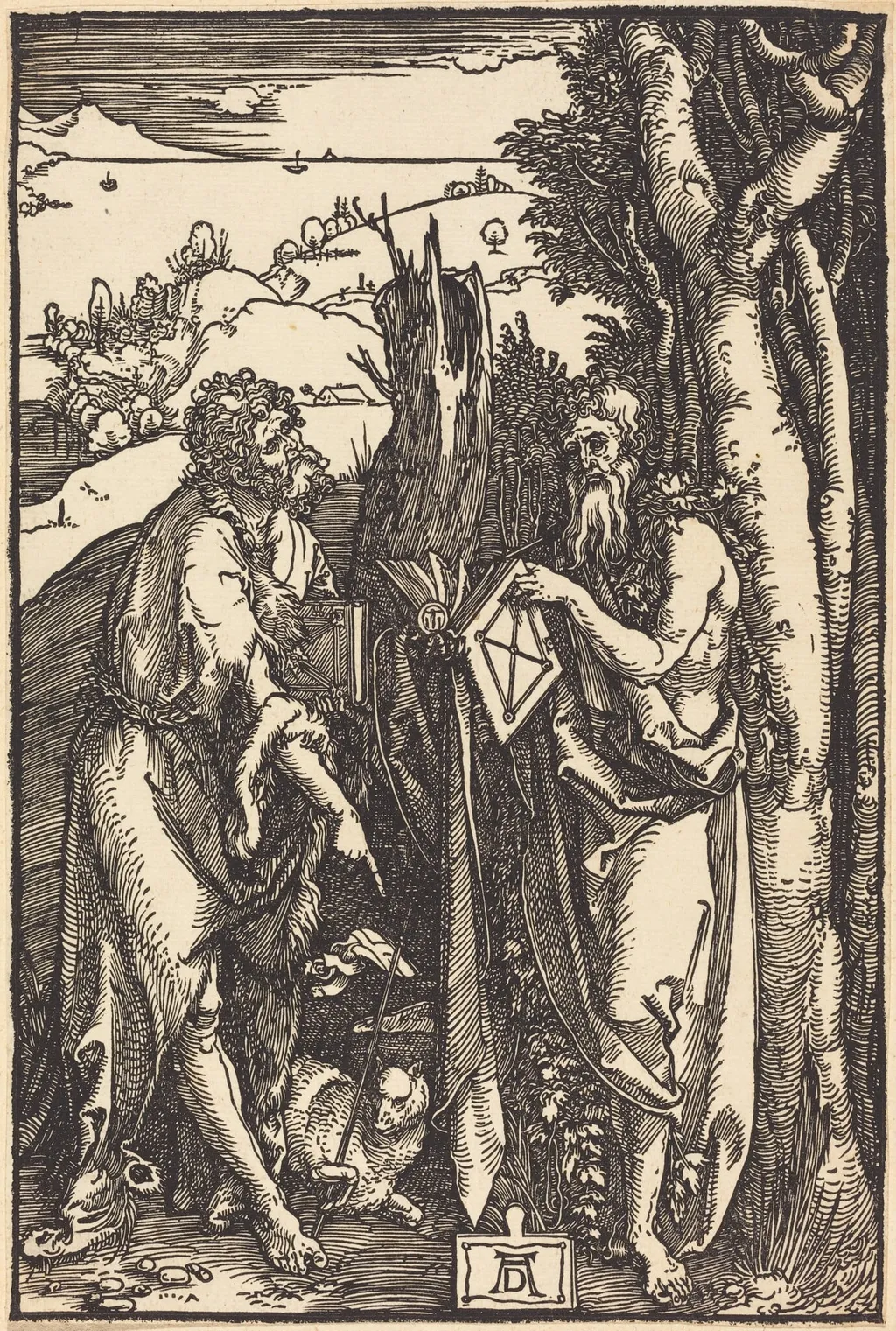
Saint John the Baptist and Saint Onuphrius is an ink print by the Northern Renaissance artist Albrecht Dürer. It dates from 1504 and is held in the collection of the Metropolitan Museum of Art.
- Inscription
- Inscribed:lower center in image, in tablet: AD (in monogram); in later hand, on old mount, in graphite: from Mr. Beard's(?) Collection(?) / fine
About this work
Subject & Meaning
The composition underscores the symbolic dialogue between the forerunner of Christ and a model hermit, reinforcing the narrative of prophetic anticipation.
The print portrays John the Baptist in a landscape with the ascetic saint Onuphrius, a pairing that emphasizes their shared role as solitary figures in the wilderness. Dürer’s rendering highlights their spiritual preparation and isolation, reflecting themes of penitence and divine revelation within the German Renaissance’s religious art tradition. The composition underscores the symbolic dialogue between the forerunner of Christ and a model hermit, reinforcing the narrative of prophetic anticipation.
Technique & Style
Albrecht Dürer created the print Saint John the Baptist and Saint Onuphrius using woodcut technique on laid paper support. Executed in 1502 in Nuremberg, the work measures 21.2 cm in height by 14.1 cm in width. It is classified as a religious print within the German Renaissance movement and depicts the figures John the Baptist and Onuphrius.
The print is held in the National Gallery of Art collection in Washington, D.C., with documented provenance including ownership by Christopher Mendez in London prior to its 2001 acquisition. The composition demonstrates formal qualities characteristic of Dürer’s precise line work and intricate detail typical of early 16th-century printmaking.
History & Provenance
The print was created in Nuremberg around 1502 by Albrecht Dürer, depicting John the Baptist and Onuphrius. It entered the collection of Christopher Mendez in London before being acquired by the National Gallery of Art in Washington, D.C. in 2001. The work is part of the National Gallery of Art's Prints collection and is catalogued as a product of the German Renaissance movement.
The print measures 21.2 cm in height and 14.1 cm in width, and was made on paper using woodcut technique.
The National Gallery of Art (Washington, D.C.) holds the print in its collection, which includes works from the Staatliche Kunsthalle Karlsruhe and the Metropolitan Museum of Art.
Saint John the Baptist and Saint Onuphrius is held in the collection of the National Gallery of Art in Washington, D.C. According to provenance records, the print passed through Christopher Mendez in London before being purchased by the NGA in 2001. Wikidata entries also associate the work with the Prints in the National Gallery of Art, the Staatliche Kunsthalle Karlsruhe, and the Metropolitan Museum of Art, indicating that impressions of the woodcut are held by these institutions as well. No specific exhibition history is documented in the available sources.
Legacy
The print has been cited as an early example of Dürer’s integration of saintly figures within a unified compositional space, influencing later printmakers who sought to blend narrative clarity with intricate detail. Its dual portrayal of John the Baptist alongside the hermit Onuphrius informed subsequent religious imagery in Northern European art, particularly in works that emphasized solitary contemplation within broader theological contexts. The piece is held in major collections including the National Gallery of Art and the Staatliche Kunsthalle Karlsruhe, underscoring its recognized significance within the German Renaissance canon.
Overview
Created in 1504, 'Saint John the Baptist and Saint Onuphrius' is a woodcut by the German Renaissance master Albrecht Dürer. The composition features two standing figures in a vertical format, rendered with the artist's characteristic precision in line and texture. On the left stands John the Baptist, identifiable by his traditional camel-hair garment and the cross staff he holds, representing his role as the forerunner of Christ.
To his right stands Saint Onuphrius, a desert hermit depicted with long, matted hair and a loincloth, reflecting his ascetic life in the wilderness. Dürer juxtaposes these two figures to contrast their distinct forms of piety: the prophetic mission of John and the solitary penance of Onuphrius. The work exemplifies Dürer's mastery of the woodcut medium during his mature period, utilizing fine hatching and cross-hatching to model volume and create detailed surface textures in the hair and drapery without the use of color.
This print is part of a series of religious works produced around the time of Dürer's second Italian journey, showcasing his ability to synthesize Northern European detail with Italianate compositional balance and anatomical study.
Context
Created during the transition from the late Gothic to the Northern Renaissance, the woodcut reflects Dürer’s engagement with both traditional iconography and emerging humanist interests. The pairing of a biblical prophet with a desert hermit mirrors contemporary theological discussions about the nature of sanctity.
Own this work as a print
Artist & collection
Artist
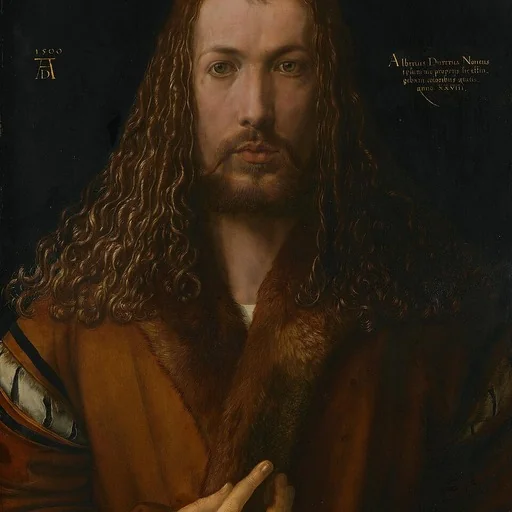
Albrecht Dürer spent his life in Nuremberg, a busy German city where artists traded prints like currency.

![Madonna and Child [obverse], by Albrecht Dürer](https://artifactworldgallery.com/img/albrecht-durer--madonna-and-child-obverse--d7b8ebf05d22ebe5-w320.webp)
![Lot and His Daughters [reverse], by Albrecht Dürer](https://artifactworldgallery.com/img/albrecht-durer--lot-and-his-daughters-reverse--b4ebf9b282faa17a-w320.webp)
- Saint Anthony and Saint Paul in the Wilderness
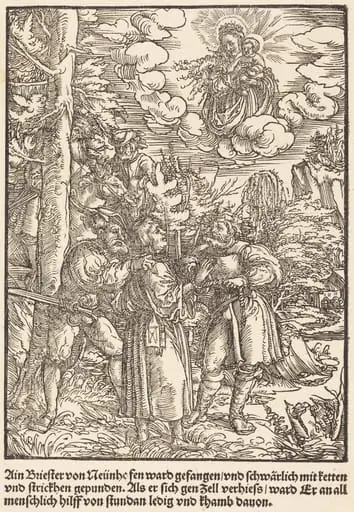 Ain Briester von Neunhe ...
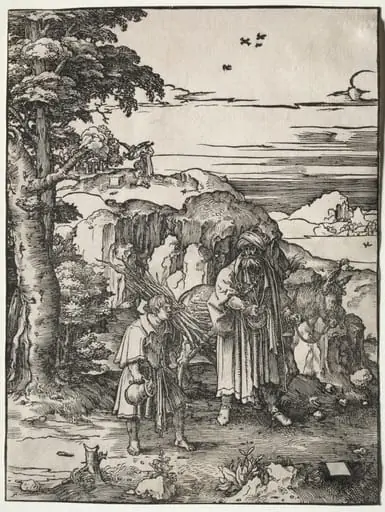 Abraham Going to Sacrifice Isaac
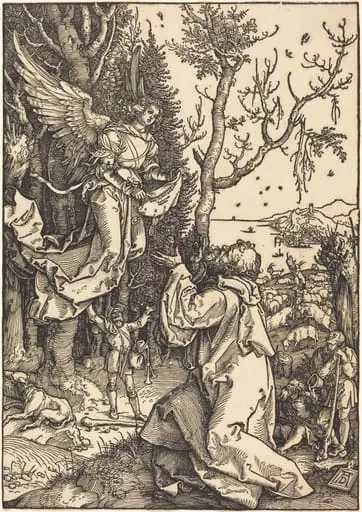 Joachim and the Angel
 Saint Christopher Seated by a River Bank
 The Agony in the Garden
 Saint Jerome in the Desert
 The Angel with the Key to the Bottomless Pit
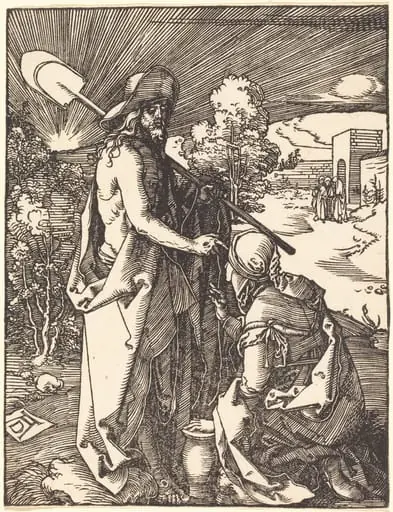 Christ Appearing to Mary Magdalene
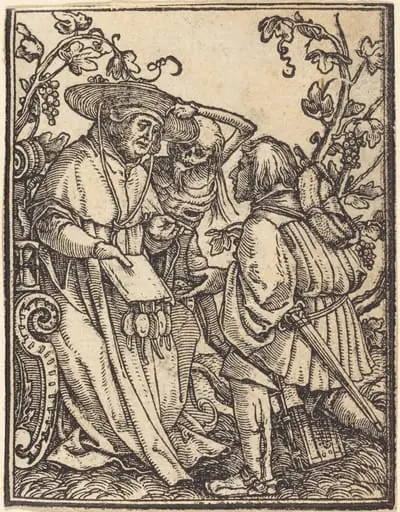 The Cardinal
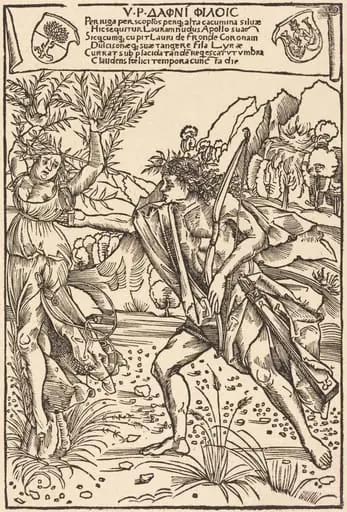 Apollo and Daphne
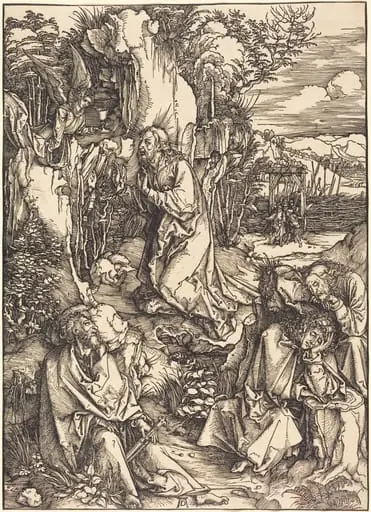 Christ on the Mount of Olives