Artwork
Ein Jungling von Friderschpach ...
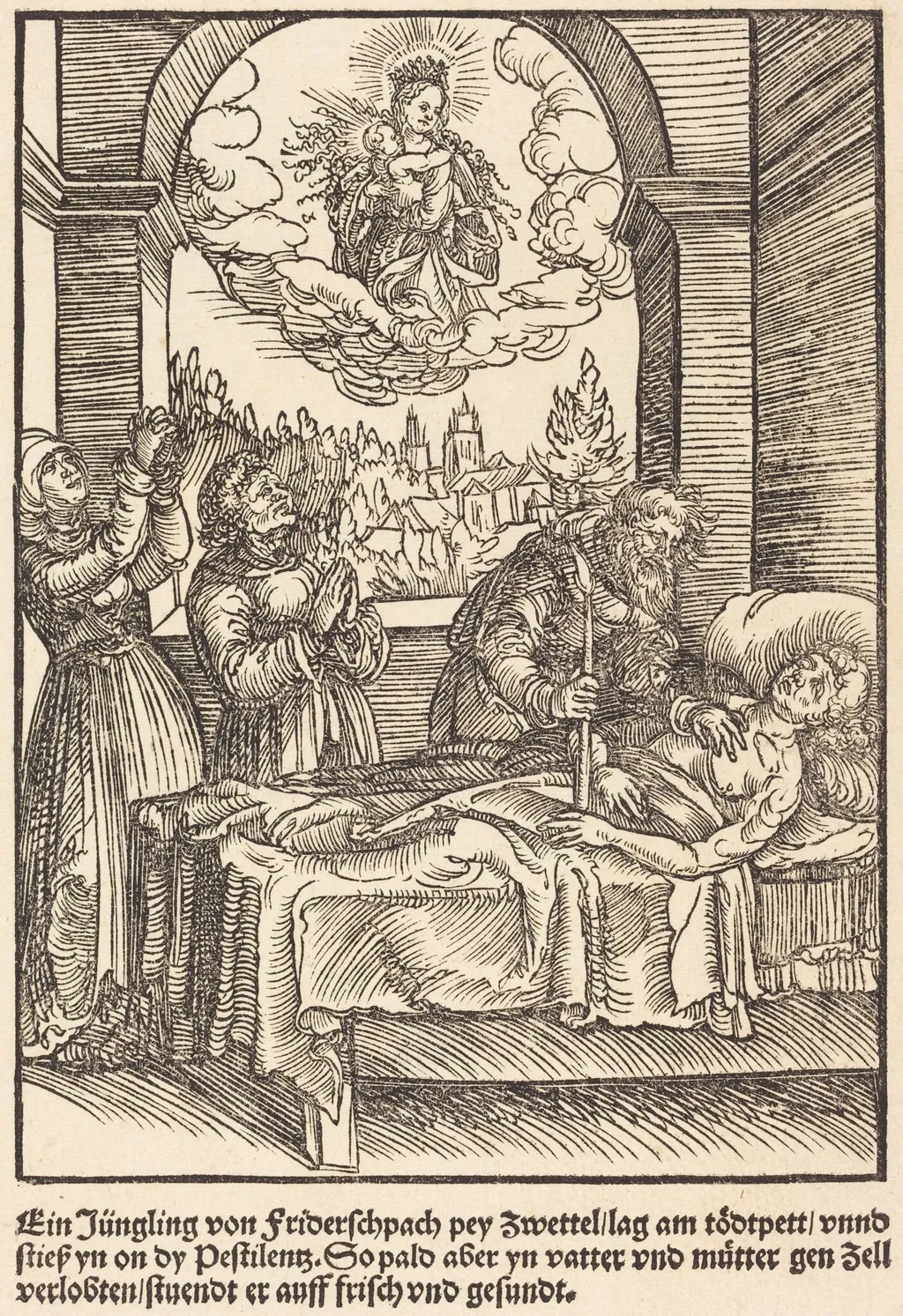
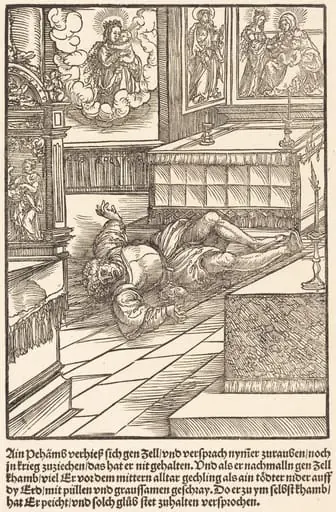
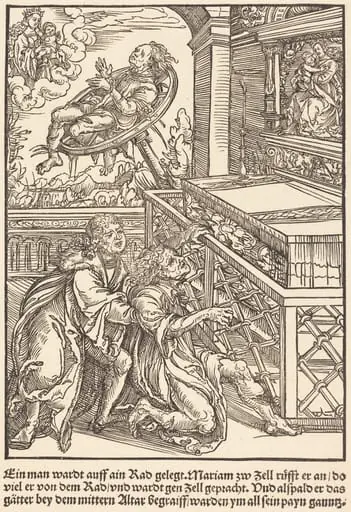
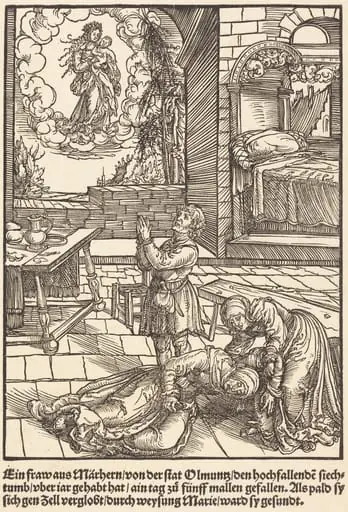
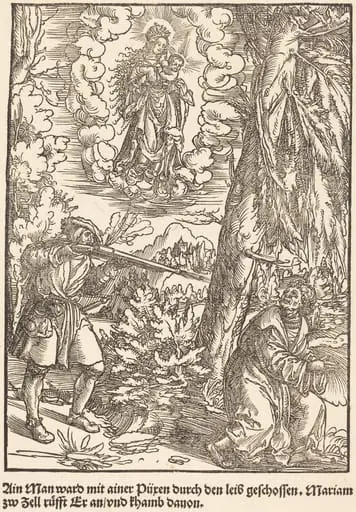
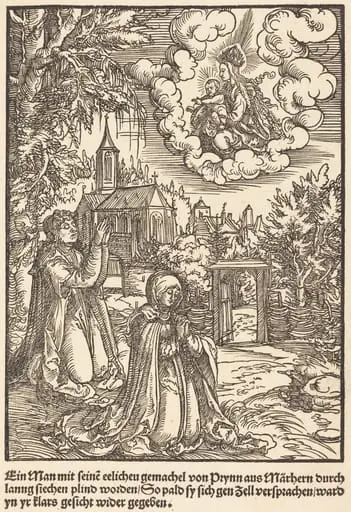
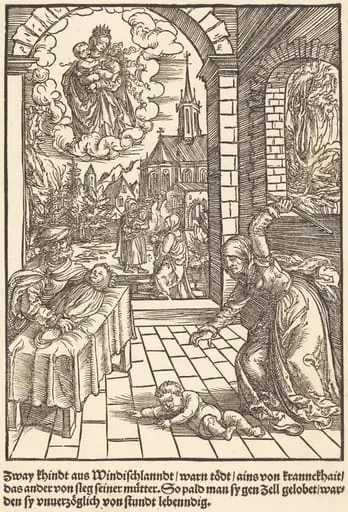
Ein Jungling von Friderschpach ... is an ink print by the Renaissance artist Master of the Miracles of Mariazell. It dates from 1503 and is held in the collection of the National Gallery of Art.
- Inscription
- Inscribed:Lettered LC: Ein Jüngling von friderschpach pey zwettel/ lag am tödtpett/ unnd stieß yn on dy Pestilentz. So pald aber yn vatter und mütter gen Zell verlobten/ Stuendt er auff frisch und gesundt.
About this work
Overview
This woodcut, dated around 1503, is attributed to the Master of the Miracles of Mariazell. Executed on laid paper, it depicts a moment of spiritual crisis amid communal distress. The composition centers on a sick youth in bed, surrounded by a tense crowd, while supernatural elements loom above. The technique relies on bold, incised lines and dense shadows to heighten emotional intensity.
Subject & Meaning
The scene illustrates a plague-era miracle, with a celestial figure hovering above the bed, cradling an infant, likely the Christ Child or an angel.
The scene illustrates a plague-era miracle, with a celestial figure hovering above the bed, cradling an infant, likely the Christ Child or an angel. Below, mourners gesture in prayer, clutching crosses, while the boy’s parents kneel in anguish. The burning city in the distance suggests widespread calamity. The image merges earthly suffering with divine intervention, reflecting devotional responses to epidemic fear.
Technique & Style
The artist employed the woodcut medium with precision, carving sharp, angular lines to define figures and architecture. Contrasts between deep black areas and untouched paper create dramatic lighting, guiding the viewer’s eye toward the central miracle. The crowded composition is tightly packed, with overlapping bodies and dynamic gestures that convey urgency and collective prayer.
History & Provenance
The print originates from the early sixteenth century, likely produced in southern Germany or Austria, where devotion to the Virgin of Mariazell was widespread. It may have served as a devotional aid or a printed relic, distributed to communities affected by plague. No early ownership records are documented, but its style aligns with regional religious prints of the period.
Context
Created during a time of recurring epidemics, the image responds to widespread anxiety over disease and divine punishment. Popular piety emphasized Marian intercession and miraculous healings, often linked to specific shrines. This print taps into that tradition, offering visual reassurance that prayer could invoke heavenly aid amid uncontrollable suffering.
Legacy
Though the artist’s identity remains anonymous, the print exemplifies the role of woodcuts in spreading religious narratives to non-literate populations. Its emotional directness and symbolic clarity influenced later devotional imagery in Central Europe. Few comparable works survive, making it a rare witness to early print culture’s engagement with public health crises.
Own this work as a print
Artist & collection

Artist
Master of the Miracles of Mariazell
Master of the Miracles of Mariazell (1500–1503) was an artist.