Artwork
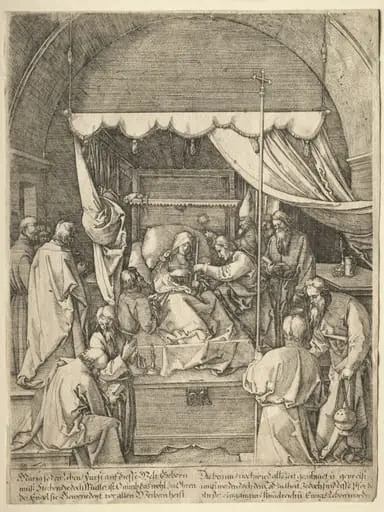
The Death of the Virgin
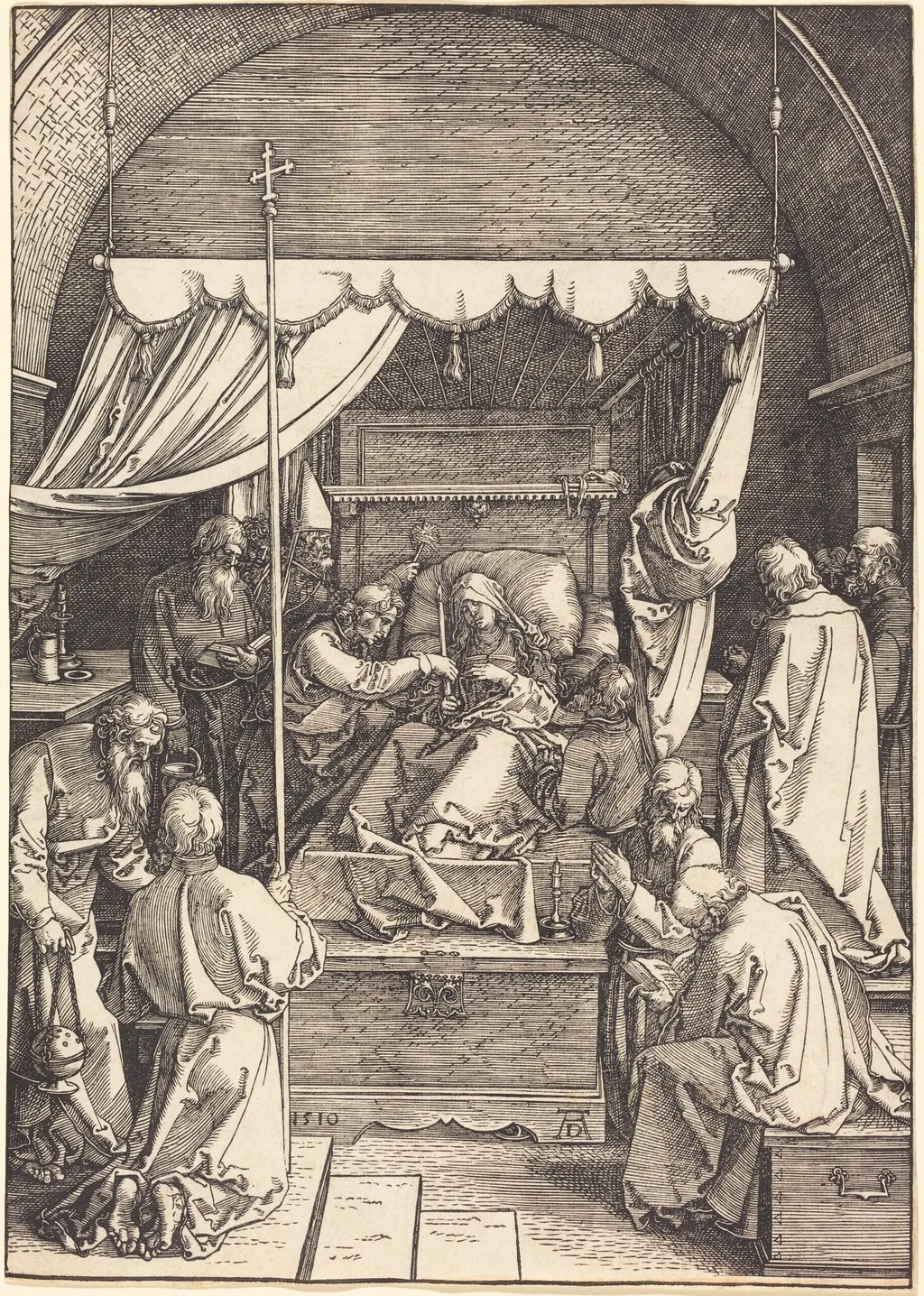
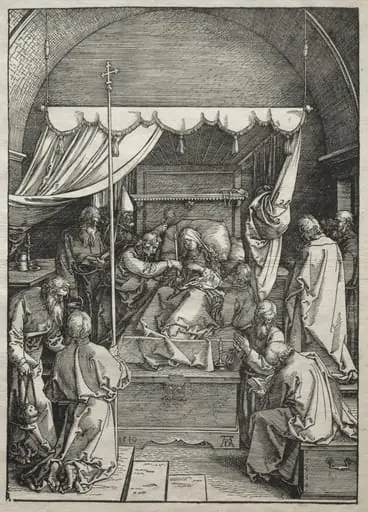
The Death of the Virgin is an ink print by the Northern Renaissance artist Albrecht Dürer. It dates from 1510 and is held in the collection of the Metropolitan Museum of Art.
About this work
Subject & Meaning
Created in Nuremberg during the German Renaissance, the composition serves as a visual meditation on mortality and divine grace within the Christian tradition.
Albrecht Dürer's 1510 woodcut illustrates the Death of the Virgin, a religious subject derived from New Testament narratives. As part of the artist's celebrated Life of the Virgin series, the print focuses on the final moments of Mary, the mother of Jesus. The work functions as a devotional image, capturing the solemnity of the event through the medium of paper printmaking.
Created in Nuremberg during the German Renaissance, the composition serves as a visual meditation on mortality and divine grace within the Christian tradition.
Technique & Style
Created in 1510 by Albrecht Dürer in Nuremberg, The Death of the Virgin is a woodcut print executed on paper. As a work of the German Renaissance, the piece measures 29.3 cm in height and 20.8 cm in width. The medium relies on the intricate handling of the woodcut technique to render a complex religious scene depicting the death of the Virgin Mary. This format allowed for detailed linear expression characteristic of Dürer's printmaking style during this period.
History & Provenance
The woodcut titled The Death of the Virgin was created by Albrecht Dürer in 1510 in Nuremberg. It forms part of his Life of the Virgin series, depicting the biblical scene of the Virgin's death. The work has been held in several major institutions, including Museum Boijmans Van Beuningen, the National Gallery of Art in Washington, D.C., the Cleveland Museum of Art, and the Staatliche Kunsthalle Karlsruhe.
It is also part of the Rosenwald Collection and has been featured in holdings at the Los Angeles County Museum of Art and the Davison Art Center. The print measures 29.3 cm by 20.8 cm and was made on paper.
The dating of the print is firmly established as 1510, aligning with the broader creation period of the Life of the Virgin series. Its subject derives from the New Testament narrative of the Virgin Mary's death, reflecting the religious themes characteristic of the German Renaissance.
Albrecht Dürer's woodcut The Death of the Virgin, produced in 1510, is held by several major print collections. According to Wikidata, the work is located at the Museum Boijmans Van Beuningen in Rotterdam, the National Gallery of Art in Washington, D.C., and the Cleveland Museum of Art. The same record lists additional institutions holding impressions in their collections, including the Metropolitan Museum of Art, the Staatliche Kunsthalle Karlsruhe, the Los Angeles County Museum of Art, the Davison Art Center, and the Prints in the National Gallery of Art / Rosenwald Collection. No specific inventory or accession numbers, nor any exhibition history, are provided in the available sources.
No exhibition history is recorded in the provided sources.
Context
Albrecht Dürer's woodcut The Death of the Virgin, created in 1510 in Nuremberg, stands as a significant work within the German Renaissance. As part of his Life of the Virgin series, the print synthesizes religious narrative with the artist's distinctive technical mastery of the medium. The work depicts the biblical event of the Virgin Mary's death, drawing its subject matter directly from the New Testament.
Its enduring scholarly importance is reflected in its widespread presence across major public collections, including the Metropolitan Museum of Art, the National Gallery of Art in Washington, D.C., and the Cleveland Museum of Art. These holdings underscore the piece's status as a canonical example of early 16th-century printmaking and its continued relevance in the study of Dürer's broader artistic output.
Overview
The Death of the Virgin is a 1510 woodcut print by Albrecht Dürer, portraying a pivotal moment in Christian iconography.
Own this work as a print
Artist & collection
Artist
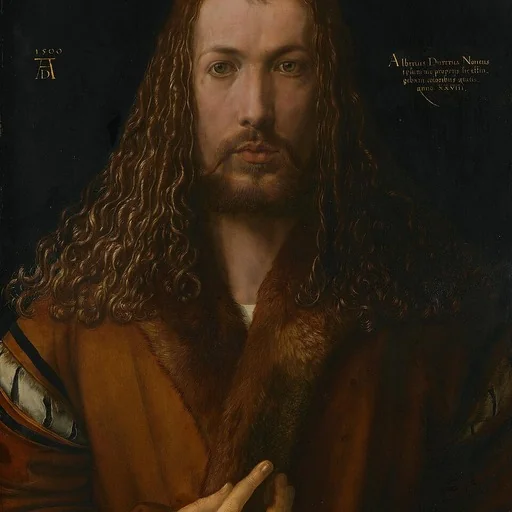
Albrecht Dürer spent his life in Nuremberg, a busy German city where artists traded prints like currency.

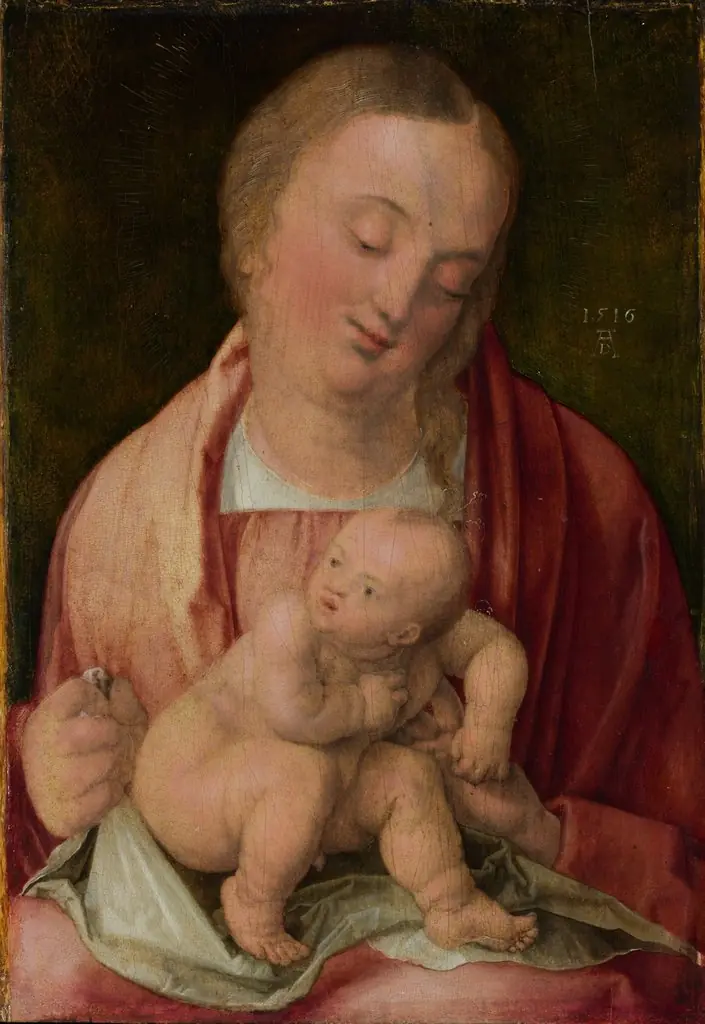
![Madonna and Child [obverse], by Albrecht Dürer](https://artifactworldgallery.com/img/albrecht-durer--madonna-and-child-obverse--d7b8ebf05d22ebe5-w320.webp)
![Lot and His Daughters [reverse], by Albrecht Dürer](https://artifactworldgallery.com/img/albrecht-durer--lot-and-his-daughters-reverse--b4ebf9b282faa17a-w320.webp)