Artwork
The Four Avenging Angels
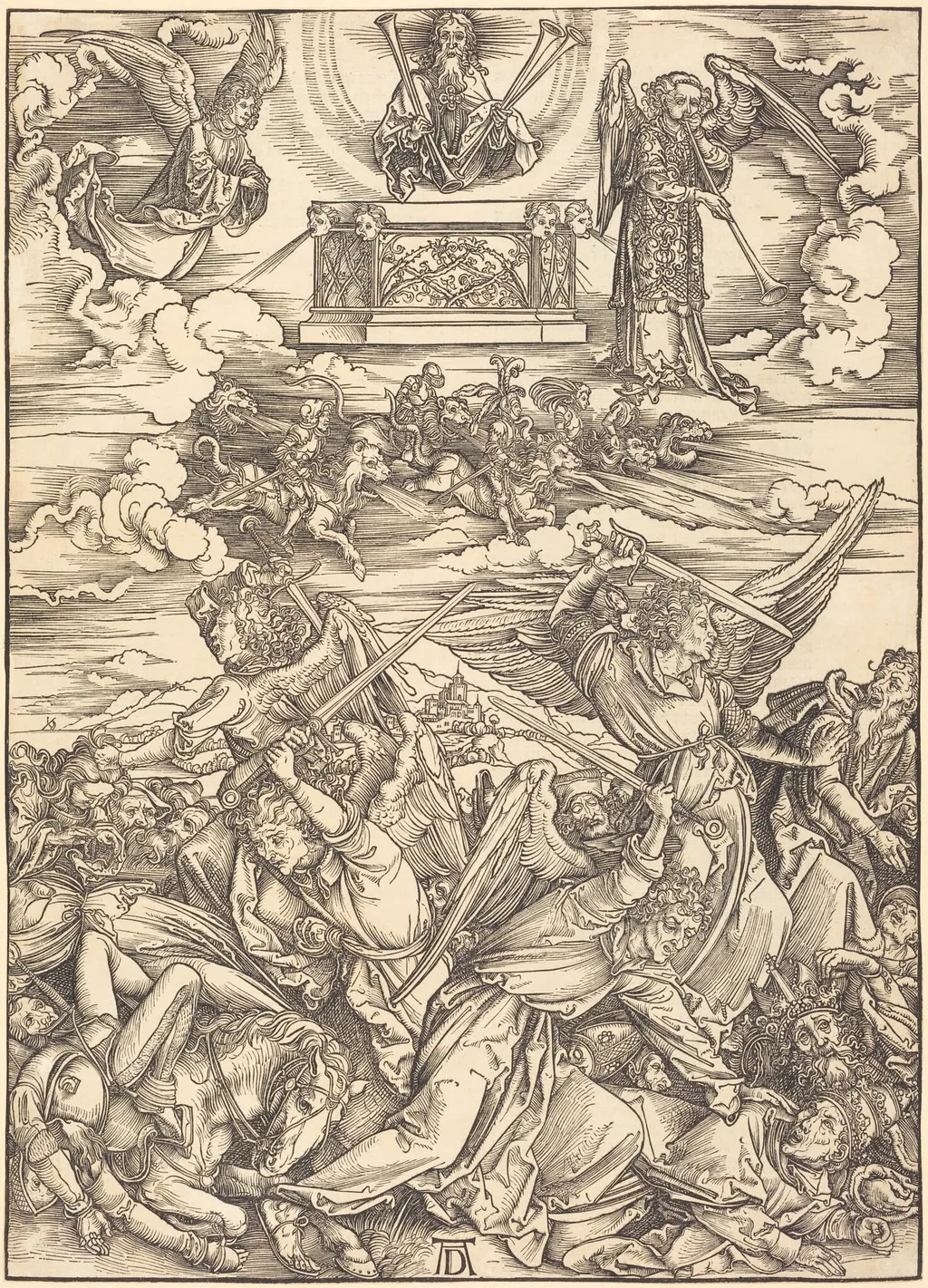
The Four Avenging Angels is an ink print by the Northern Renaissance artist Albrecht Dürer. It dates from 1497 and is held in the collection of the Metropolitan Museum of Art.
About this work
Subject & Meaning
As part of the religious genre, the work depicts these celestial agents of God’s wrath, emphasizing their role as instruments of apocalyptic judgment.
The Four Avenging Angels is a woodcut from Albrecht Dürer’s Apocalypse series that visualizes the four angels described in Revelation 9, who are unleashed to bring divine punishment upon the earth. As part of the religious genre, the work depicts these celestial agents of God’s wrath, emphasizing their role as instruments of apocalyptic judgment. The iconography draws directly from the biblical passage, portraying the angels with formidable presence to convey the severity of the impending doom and the inevitability of divine retribution.
Technique & Style
Executed as a woodcut, the composition was carved on a wooden block and printed in black ink on laid paper. The sheet measures approximately 39.2 cm in height and 28.2 cm in width, with the image area carved in fine, precise lines to articulate the figures’ drapery, wings, and halos.
The handling emphasizes linear clarity and dramatic contrast, typical of late fifteenth-century German printmaking, with dense hatching and cross-hatching used to model volume and shadow. The four angels are depicted frontally, their dynamic postures and flowing garments rendered through controlled, rhythmic linework that conveys both spiritual intensity and physical movement.
History & Provenance
Albrecht Dürer created The Four Avenging Angels in Nuremberg, with creation dates ranging from 1496 to 1498. The work is a woodcut print on laid paper that serves as part of Dürer's larger Apocalypse series, based on the biblical text of Revelation 9. While the inception is recorded as early as 1496, some records also cite 1498 as the completion date for the series.
The print depicts religious subjects featuring God and angels, executed in the style of the German Renaissance. No specific commission details or original ownership chain are provided in the available records.
Overview
Albrecht Dürer’s The Four Avenging Angels is a woodcut print dating to approximately 1497. Part of a broader tradition of religious imagery, the work presents a scene drawn from Christian eschatology, rendered through the medium’s characteristic stark contrasts and linear precision. Dürer’s composition balances intricate detail with bold, graphic clarity, a hallmark of the woodcut technique.
Context
Woodcuts served as a primary means of disseminating religious imagery in the late Middle Ages and early Renaissance. Dürer’s work emerges from this tradition, responding to contemporary anxieties about divine judgment and moral accountability. The print’s apocalyptic subject matter resonated with audiences familiar with biblical prophecy, particularly in an era marked by social and religious upheaval.
Own this work as a print
Artist & collection
Artist
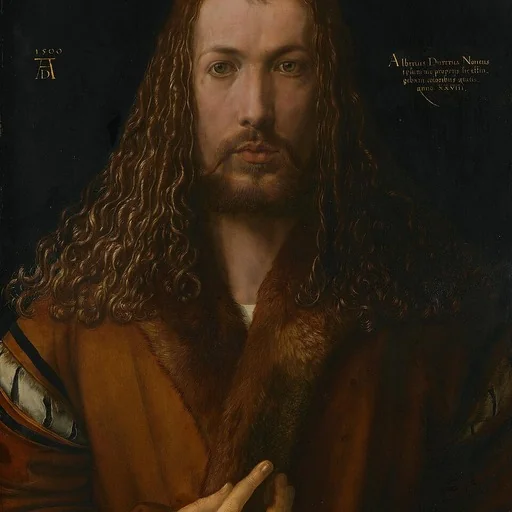
Albrecht Dürer spent his life in Nuremberg, a busy German city where artists traded prints like currency.

![Madonna and Child [obverse], by Albrecht Dürer](https://artifactworldgallery.com/img/albrecht-durer--madonna-and-child-obverse--d7b8ebf05d22ebe5-w320.webp)
![Lot and His Daughters [reverse], by Albrecht Dürer](https://artifactworldgallery.com/img/albrecht-durer--lot-and-his-daughters-reverse--b4ebf9b282faa17a-w320.webp)

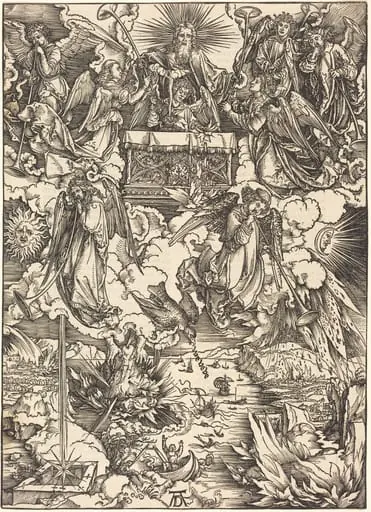 The Seven Angels with the Trumpets
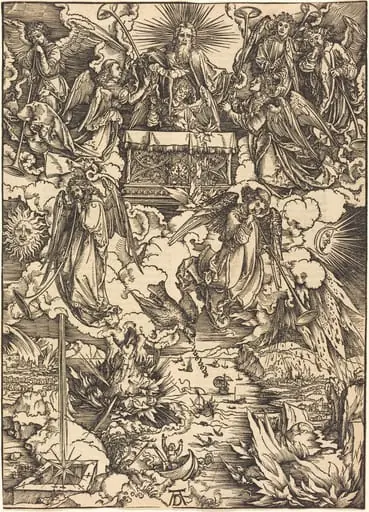 The Seven Angels with the Trumpets
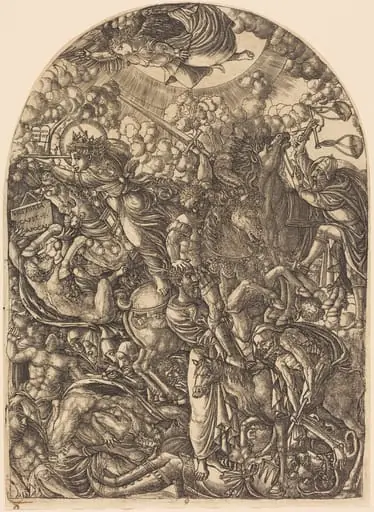 Saint John Sees the Four Horsemen
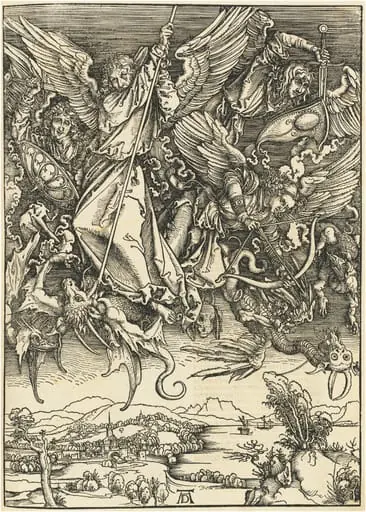 Saint Michael Fighting the Dragon
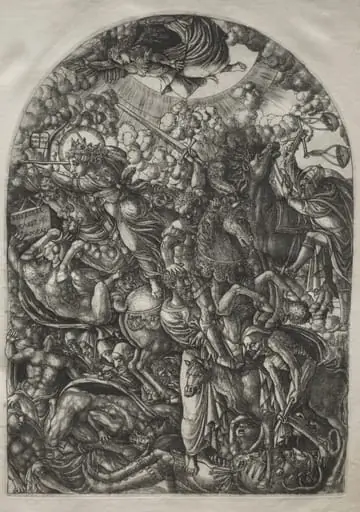 The Apocalypse: St. John Sees the Four Riders
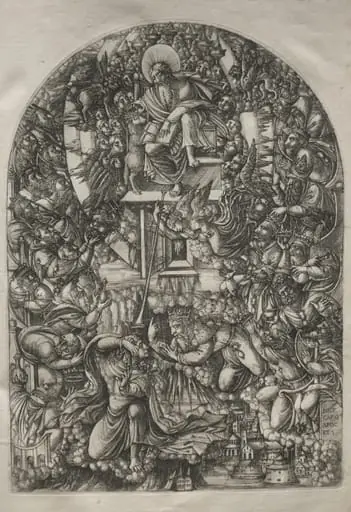 The Apocalypse: St. John Summoned to Heaven
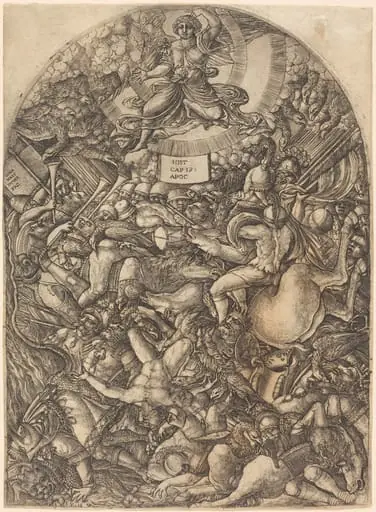 The Angel in the Sun Calling the Birds of Prey
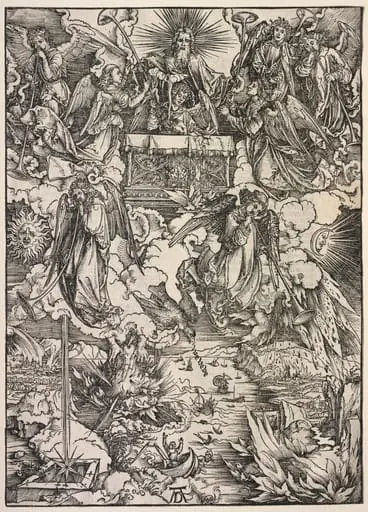 Revelation of St. John: Seven Angels with Trumpets