Artwork
The Seven Angels with the Trumpets
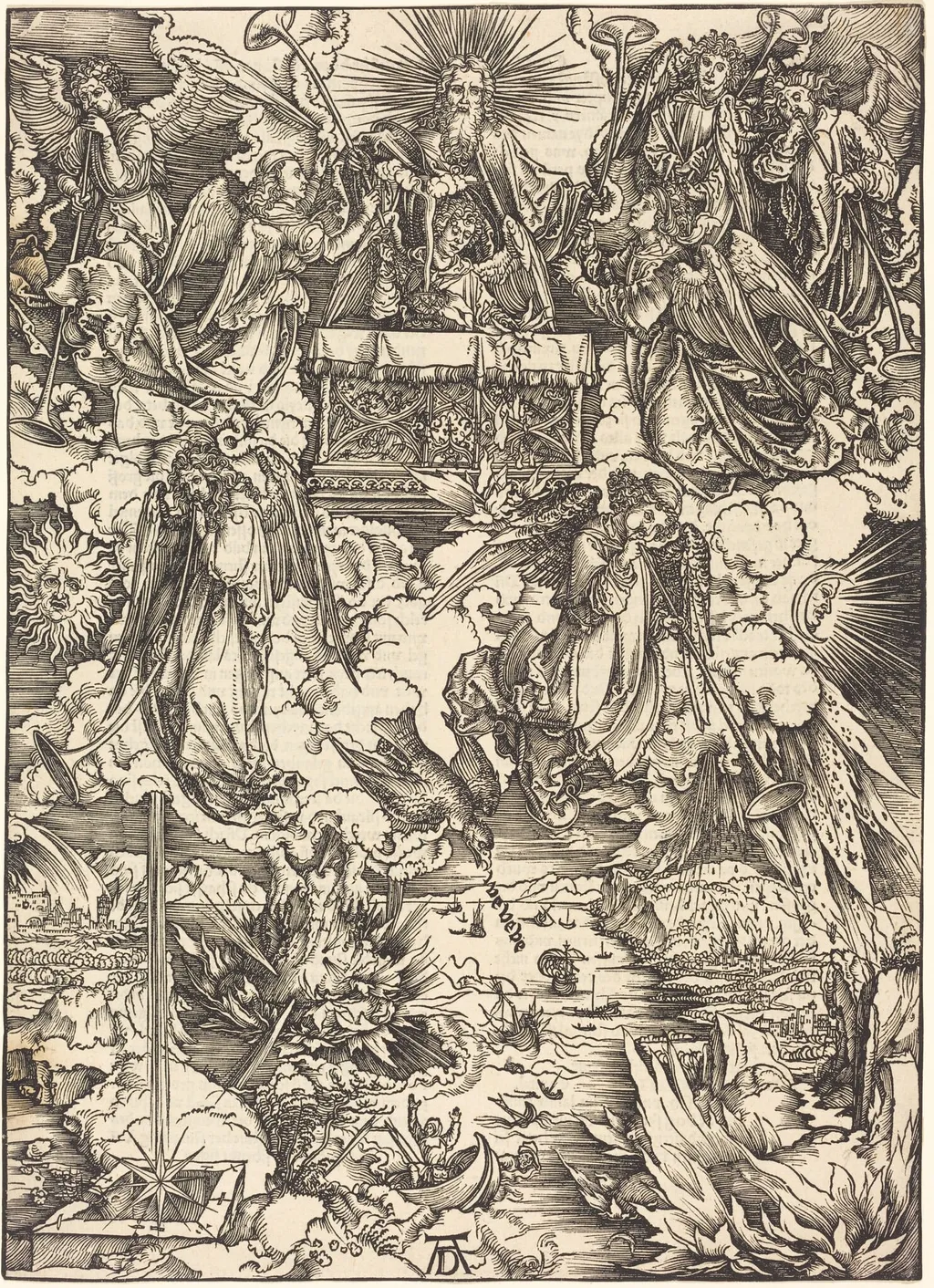
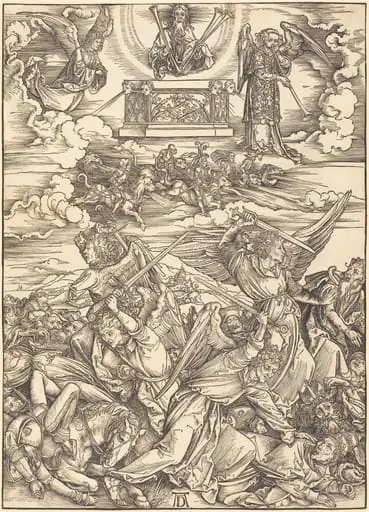
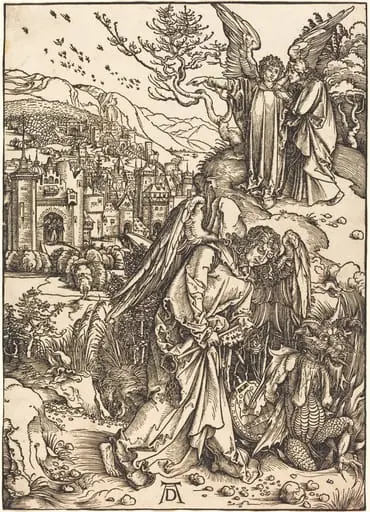
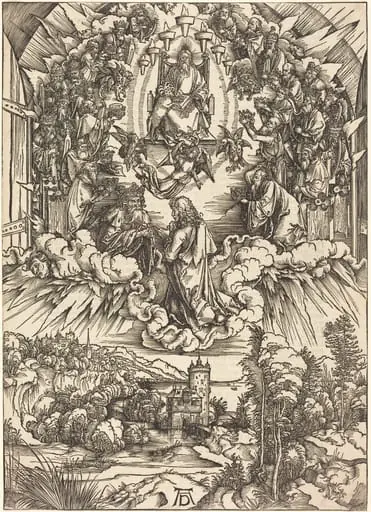
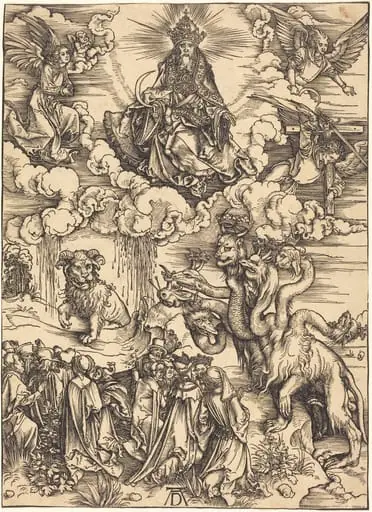
The Seven Angels with the Trumpets is an ink print by the Northern Renaissance artist Albrecht Dürer. It dates from 1497 and is held in the collection of the Städel Museum.
About this work
Subject & Meaning
The iconography aligns with the opening of both the fifth and sixth seals, symbolizing cosmic upheaval and the transition between divine wrath and redemption.
The Seven Angels with the Trumpets depicts the apocalyptic moment described in Revelation 6, where seven angels are poised to sound their trumpets as part of the unfolding divine judgment. Dürer renders each angel in dynamic poses, surrounded by swirling clouds and dramatic lighting that emphasize the celestial urgency of the scene. The iconography aligns with the opening of both the fifth and sixth seals, symbolizing cosmic upheaval and the transition between divine wrath and redemption.
This subject draws directly on the biblical narrative of the Book of Revelation, reflecting the German Renaissance’s fascination with visualizing eschatological themes.
The work’s symbolism underscores the theological tension of the seals as harbingers of both catastrophe and hope, a duality that resonated with contemporary audiences attuned to religious reform and humanist inquiry. By grounding the composition in Revelation 6, Dürer transforms a theological concept into a visceral, visual narrative that bridges the sacred text with observable nature, reinforcing the artist’s role as a conduit for spiritual revelation through meticulous observation of the natural world.
Technique & Style
The work is a woodcut executed on laid paper, typical of early German Renaissance print practice. Dürer’s technique demonstrates precise line work and tonal modulation, reflecting his mastery of the medium and his engagement with the apocalyptic imagery of Revelation 6. The composition shows the opening of the fifth and sixth seals, rendered with intricate detail that emphasizes both narrative clarity and formal balance.
The print measures 39.2 cm in height and 28.3 cm in width, produced in Nuremberg around 1496. It was printed on paper with a laid texture, a common support for high-quality prints of the period. The handling of line and contrast contributes to a stark, dramatic style characteristic of the German Renaissance, while the subject matter aligns with religious art traditions of the time.
History & Provenance
The Seven Angels with the Trumpets is a woodcut print created by Albrecht Dürer in 1496 in Nuremberg. It forms part of his Apocalypse series, illustrating the opening of the fifth and sixth seals from the Book of Revelation. The work was produced using laid paper and measures 39.2 cm in height by 28.3 cm in width.
Following its creation, it entered several European collections, including holdings at the Metropolitan Museum of Art, the National Gallery of Art in Washington, D.C., the Chester Beatty Library, and the Staatliche Kunsthalle Karlsruhe. Today it is part of the permanent collections of major institutions such as the National Gallery of Art and the Chester Beatty Library, reflecting a documented chain of ownership across prominent museums.
The Seven Angels with the Trumpets, a woodcut by Albrecht Dürer created around 1496, is held in numerous public collections rather than a single location. Prominent holdings include the Museum of Fine Arts in Houston, the Metropolitan Museum of Art, the National Gallery of Art in Washington, D.C., and the Staatliche Kunsthalle Karlsruhe. Additional examples are preserved at the Chester Beatty Library, the Städel Museum, the Cleveland Museum of Art, the Kupferstichkabinett in Berlin, and the Kupferstich-Kabinett in Dresden.
Specific institutional records confirm the presence of this print within the Rosenwald Collection at the National Gallery of Art and the Chester Beatty Library. While the work is widely distributed across these major European and American repositories, the provided sources do not list specific inventory numbers or a detailed exhibition history for this particular impression.
Context
The Seven Angels with the Trumpets is a woodcut by Albrecht Dürer that illustrates the opening of the fifth and sixth seals from the Book of Revelation. Executed in 1496 in Nuremberg, the print measures 39.2 cm by 28.3 cm and was made on laid paper. It forms part of Dürer’s Apocalypse series and has been held in several major collections, including the National Gallery of Art in Washington, D.C., and the Chester Beatty Library.
Scholarship emphasizes its role within the German Renaissance and its influence on religious printmaking, situating the work within Dürer’s broader exploration of apocalyptic imagery and the evolution of print as a medium for theological narrative.
Overview
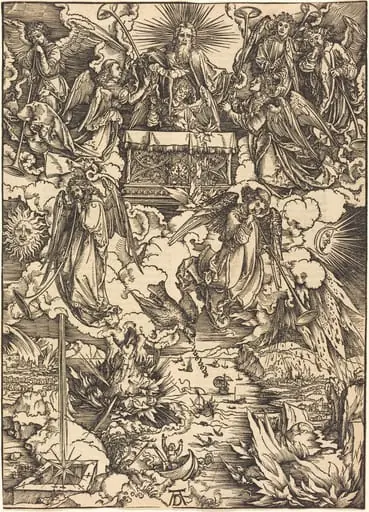
Albrecht Dürer’s woodcut titled The Seven Angels with the Trumpets dates from around 1497. Executed as a print, the image presents a dramatic biblical scene in which seven angels sound trumpets while chaotic forces unfold beneath them. The composition is rendered in the stark, graphic language of early German woodcut, emphasizing line and contrast.
Own this work as a print
Artist & collection
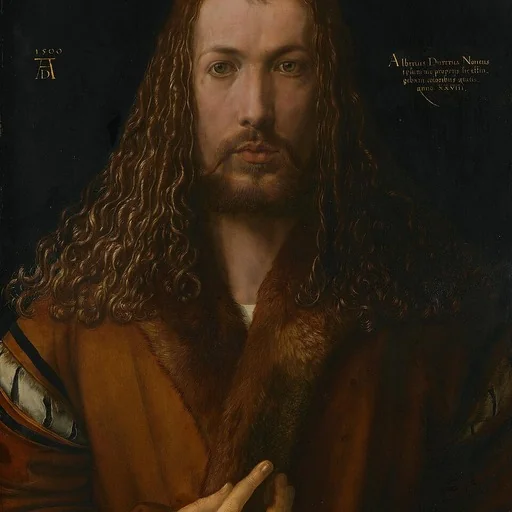
Artist
Albrecht Dürer spent his life in Nuremberg, a busy German city where artists traded prints like currency.

![Madonna and Child [obverse], by Albrecht Dürer](https://artifactworldgallery.com/img/albrecht-durer--madonna-and-child-obverse--d7b8ebf05d22ebe5-w320.webp)
![Lot and His Daughters [reverse], by Albrecht Dürer](https://artifactworldgallery.com/img/albrecht-durer--lot-and-his-daughters-reverse--b4ebf9b282faa17a-w320.webp)