Artwork
The Man of Sorrows Seated
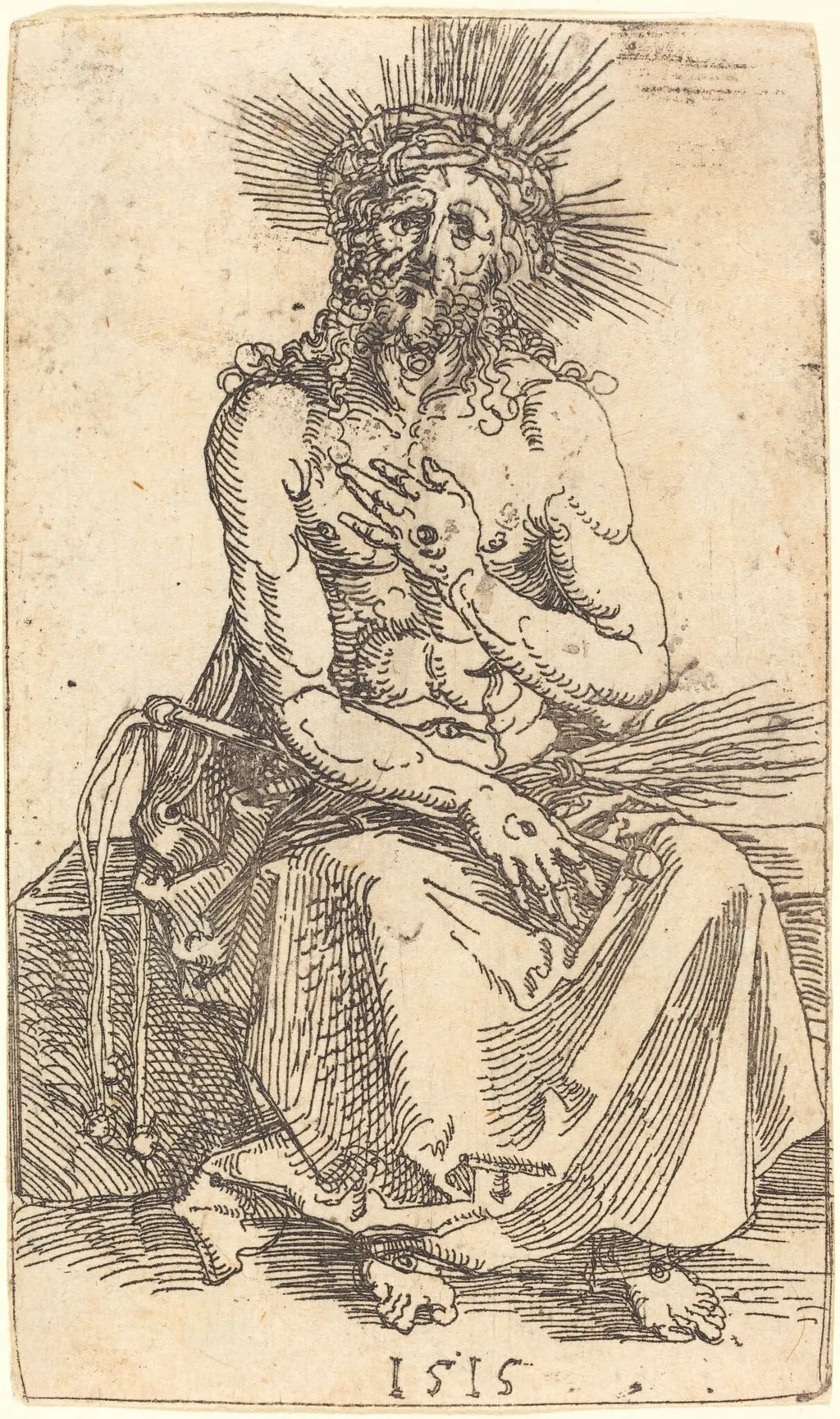
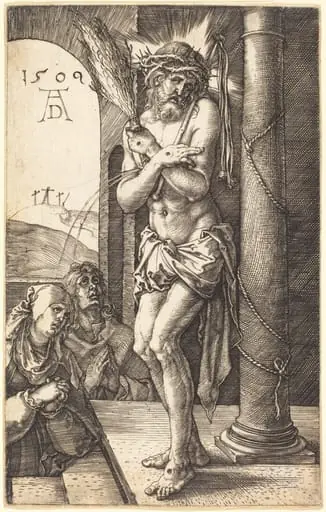
The Man of Sorrows Seated is an ink print by the Northern Renaissance artist Albrecht Dürer. It dates from 1515 and is held in the collection of the British Museum.
- Inscription
- Inscribed:in plate, bottom center: 1515; verso, lower left, in graphite by a later hand: C.9069; verso, lower left, in graphite by a later hand: 66; verso, lower right, in graphite by a later hand: 11; verso, bottom left, in graphite by a later hand: C3598; verso, bottom center, in graphite by a later hand: B.22; verso, bottom right, in graphite by a later hand: 69 [?] [crossed out]
About this work
Overview
Unlike his earlier, more monumental engravings, this piece emphasizes the human suffering of Christ, inviting the viewer into a direct, contemplative encounter.
Albrecht Dürer's 'The Man of Sorrows Seated' is a 1515 etching on laid paper, executed in iron. The composition presents a half-length view of Christ seated, wearing a crown of thorns and displaying the stigmata on his hands and side. Dürer renders the figure with intense psychological gravity, depicting the Savior in a posture of profound sorrow and exhaustion.
The artist utilizes the etching medium to create sharp, precise lines that define the anatomical details of the wounds and the texture of the flesh, contrasting with the deep, atmospheric shading that isolates the figure against a dark background. This work belongs to a series of religious prints Dürer produced during his later years, reflecting a shift toward more intimate and emotionally charged devotional imagery. Unlike his earlier, more monumental engravings, this piece emphasizes the human suffering of Christ, inviting the viewer into a direct, contemplative encounter.
The technical mastery of the etching process allows for a range of tonal values that enhance the dramatic lighting, a hallmark of Dürer's mature style in the German Renaissance.
Subject & Meaning
The image portrays Jesus wearing a crown of thorns, his body bowed and marked by the wounds of the Passion. The composition emphasizes quiet suffering and contemplation, inviting the viewer to confront the physical reality of the crucifixion and its spiritual resonance.
Technique & Style
Dürer worked alone on the copper‑etched plate, achieving crisp, precise lines that delineate the figure’s anatomy and the surrounding shadows. The contrast of sharply rendered details with subtle tonal gradations creates a palpable sense of depth and immediacy, characteristic of his mature printmaking.
History & Provenance
Among Dürer’s oeuvre, this piece stands out as one of the few religious prints he produced without workshop assistance. Its survival in museum collections reflects the high regard for Dürer’s technical mastery and the rarity of such devotional works in his print catalog.
Own this work as a print
Artist & collection
Artist
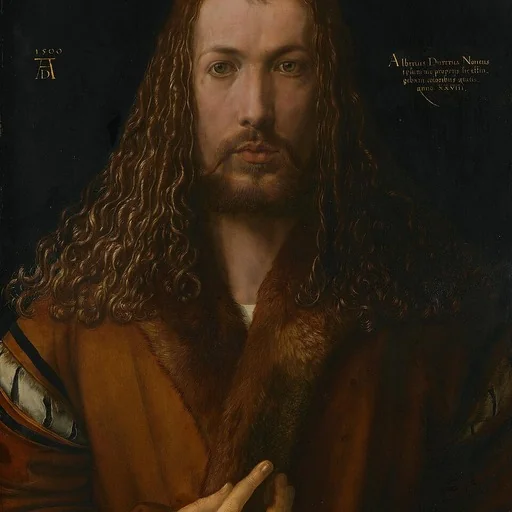
Albrecht Dürer spent his life in Nuremberg, a busy German city where artists traded prints like currency.

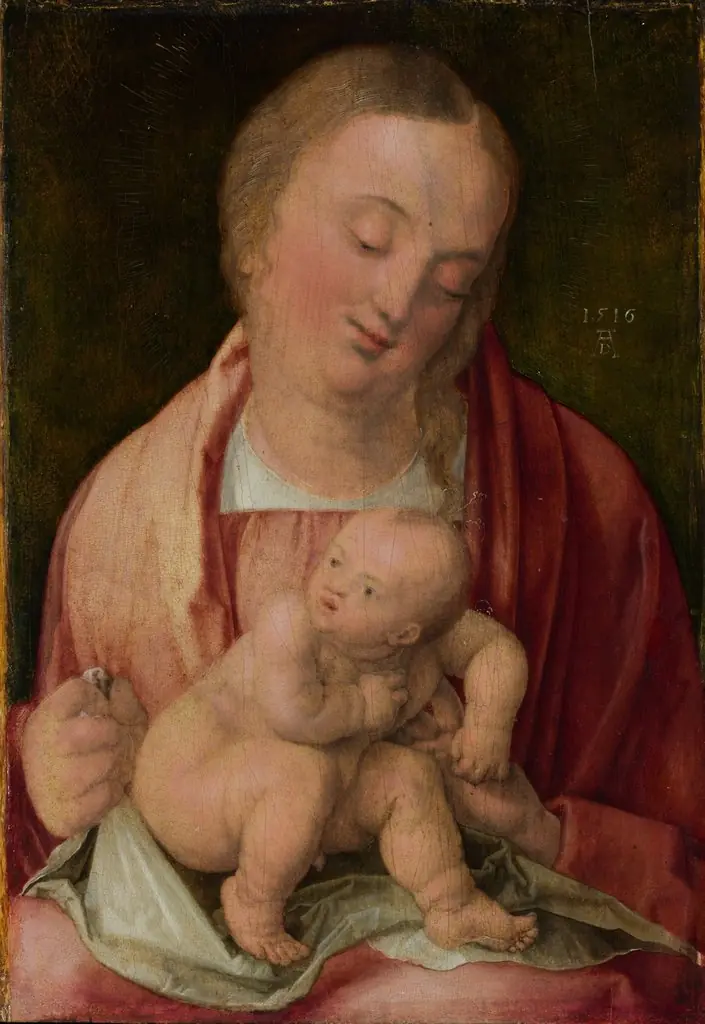
![Madonna and Child [obverse], by Albrecht Dürer](https://artifactworldgallery.com/img/albrecht-durer--madonna-and-child-obverse--d7b8ebf05d22ebe5-w320.webp)
![Lot and His Daughters [reverse], by Albrecht Dürer](https://artifactworldgallery.com/img/albrecht-durer--lot-and-his-daughters-reverse--b4ebf9b282faa17a-w320.webp)