Artwork
The Virgin Nursing the Christ Child with Four Angels
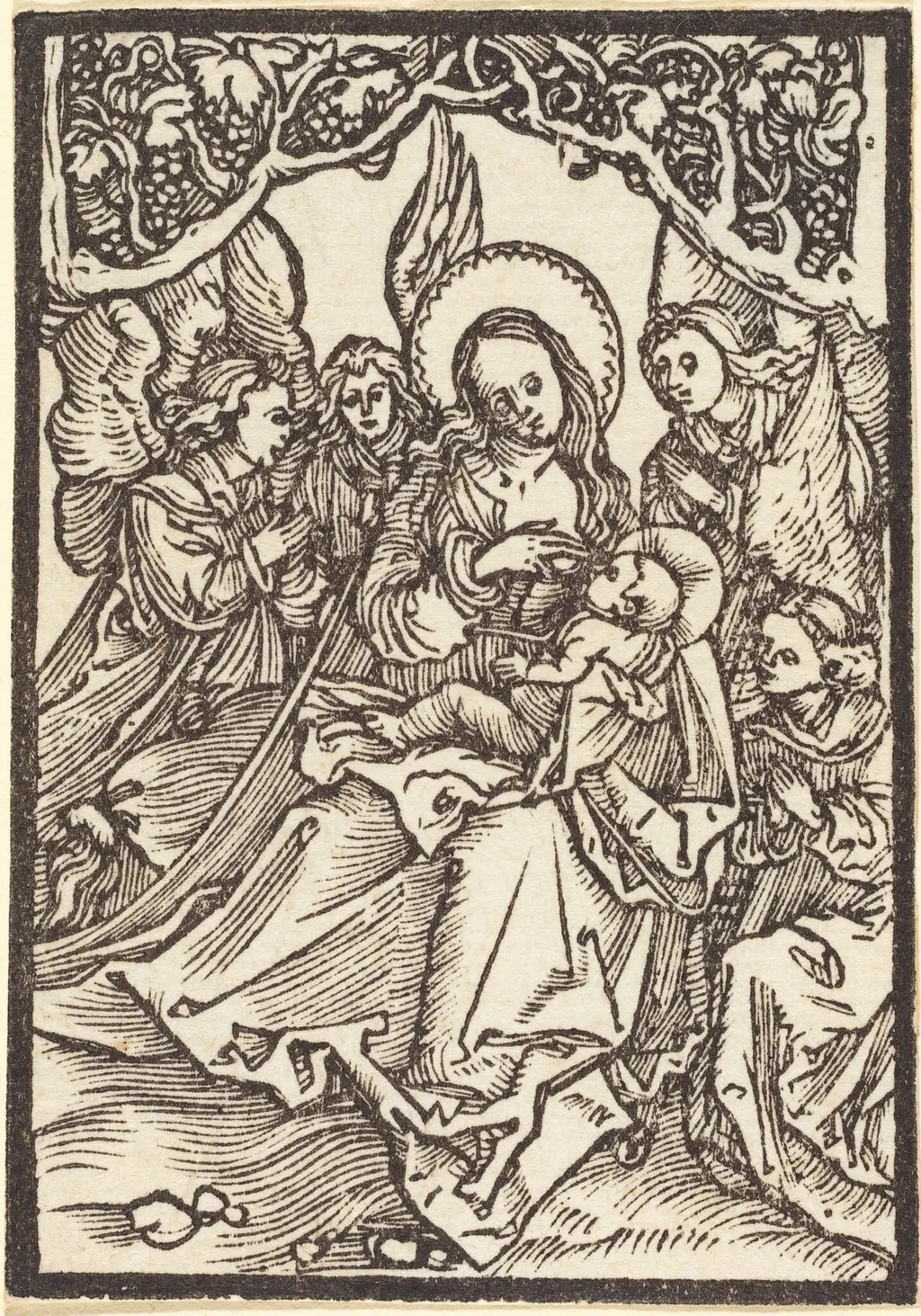
The Virgin Nursing the Christ Child with Four Angels is an ink print by the Northern Renaissance artist Albrecht Dürer. It dates from 1500 and is held in the collection of the National Gallery of Art.
About this work
Subject & Meaning
The woodcut depicts the Nursing Madonna, a traditional Christian iconography showing the Virgin Mary breastfeeding the Christ Child, flanked by four angels.
The woodcut depicts the Nursing Madonna, a traditional Christian iconography showing the Virgin Mary breastfeeding the Christ Child, flanked by four angels. This motif emphasizes Christ’s humanity and Mary’s role as both mother and intercessor, drawing on late medieval devotional imagery that underscores the Incarnation. The presence of angels heightens the sacred atmosphere, reinforcing the theological significance of the scene as a moment of divine presence and grace.
The composition aligns with contemporary German Renaissance religious prints, where intimate yet reverent depictions of sacred figures were used to foster personal devotion.
History & Provenance
Albrecht Dürer created the woodcut The Virgin Nursing the Christ Child with Four Angels in 1500. The work was produced in Nuremberg during the German Renaissance. Executed on paper, this religious print depicts the Nursing Madonna surrounded by angels.
The piece is currently held in the collection of the National Gallery of Art in Washington, D.C., where it is cataloged among the museum's prints.
The woodcut print The Virgin Nursing the Christ Child with Four Angels, created by Albrecht Dürer in 1500, is held in the collection of the National Gallery of Art in Washington, D.C. Within the institution, the work is categorized under the Prints in the National Gallery of Art. The provided sources do not contain specific inventory or accession numbers, nor do they list any exhibitions in which this specific impression has been displayed.
Context
Albrecht Dürer's 1500 woodcut The Virgin Nursing the Christ Child with Four Angels occupies a pivotal position within Northern Renaissance religious printmaking. Scholars highlight its innovative compositional balance and emotional restraint as defining traits of Dürer's early mastery, exemplifying the German Renaissance's synthesis of Northern detail with Italian proportion. The work's depiction of the Nursing Madonna reflects contemporary devotional practices, while its technical precision on paper solidified printmaking as a medium of intellectual and artistic prestige.
Its inclusion in the National Gallery of Art's collection underscores its enduring significance as a cornerstone of Dürer's graphic oeuvre and a key artifact for understanding the devotional art of the period.
Legacy
The print’s iconography of the Nursing Madonna shaped devotional imagery across German Renaissance print culture, establishing a visual precedent for intimate portrayals of Christ’s infancy. Its inclusion in the National Gallery of Art’s collection has ensured continued scholarly attention, reinforcing its reputation as a seminal work within the broader trajectory of Northern European religious printmaking.
Overview
The Virgin Nursing the Christ Child with Four Angels is a woodcut by Albrecht Dürer, created around 1500. It is a print on wood, depicting a scene from Christian iconography.
Technique & Style
The print features soft lines that create delicate folds in the figures' robes, achieved through Dürer's skillful use of the woodcut technique. The angels are rendered in a childlike manner, blurring the distinction between heavenly and human.
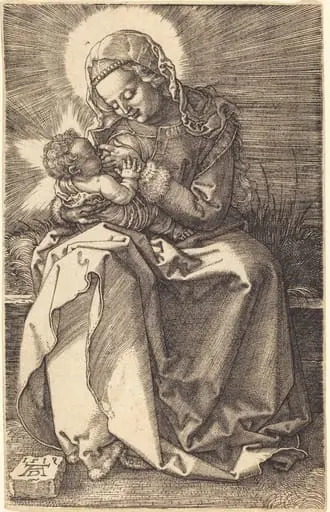
Own this work as a print
Artist & collection
Artist
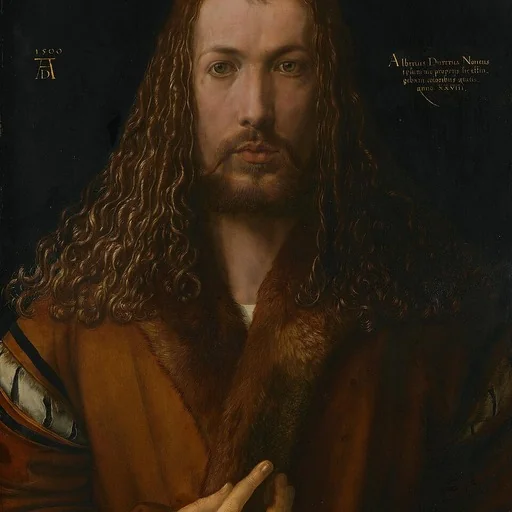
Albrecht Dürer spent his life in Nuremberg, a busy German city where artists traded prints like currency.

![Madonna and Child [obverse], by Albrecht Dürer](https://artifactworldgallery.com/img/albrecht-durer--madonna-and-child-obverse--d7b8ebf05d22ebe5-w320.webp)
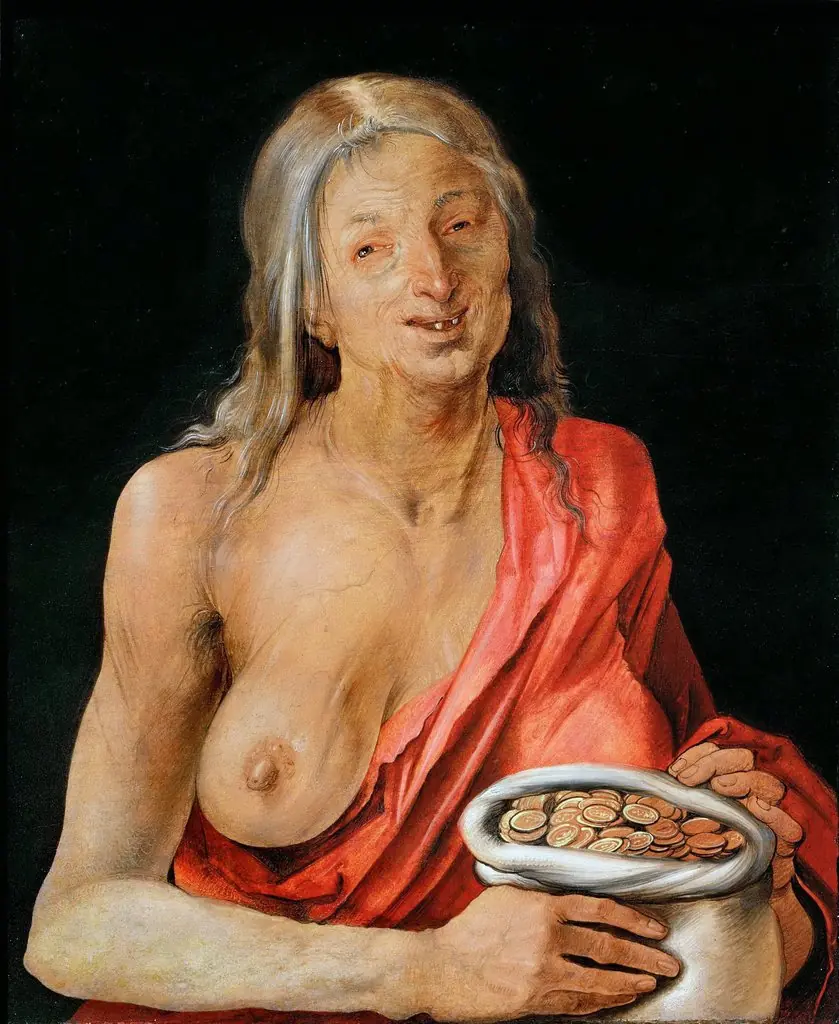
![Lot and His Daughters [reverse], by Albrecht Dürer](https://artifactworldgallery.com/img/albrecht-durer--lot-and-his-daughters-reverse--b4ebf9b282faa17a-w320.webp)
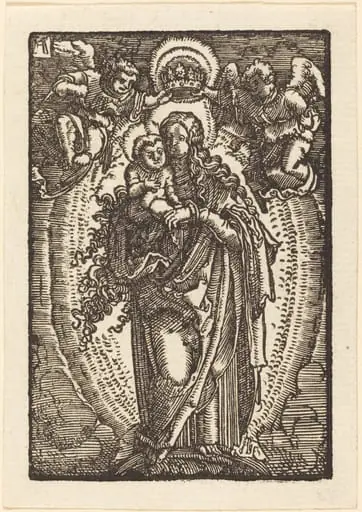 The Virgin and Child on a Crescent
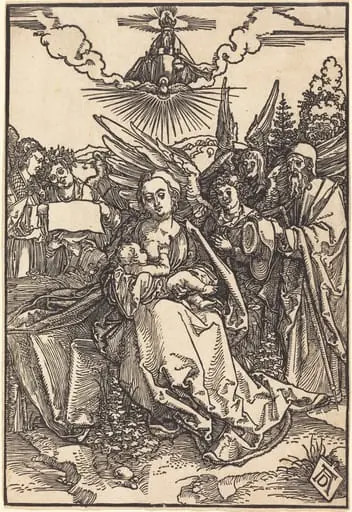 The Holy Family with Five Angels
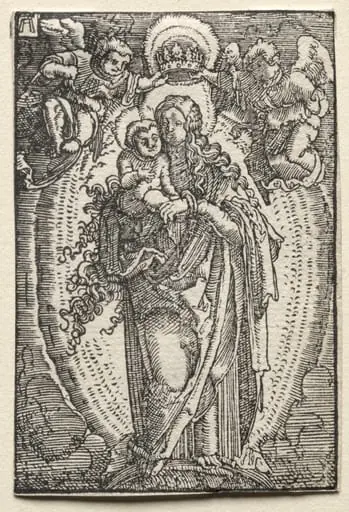 The Fall and Redemption of Man: The Virgin as Queen of Heaven
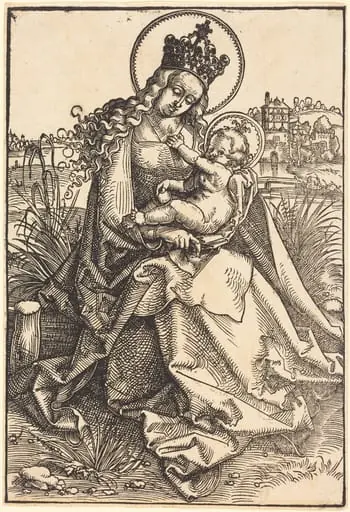 Madonna and Child on the Grassy Bank
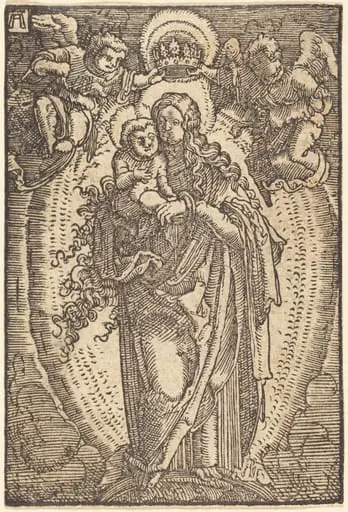 The Virgin and Child on a Crescent
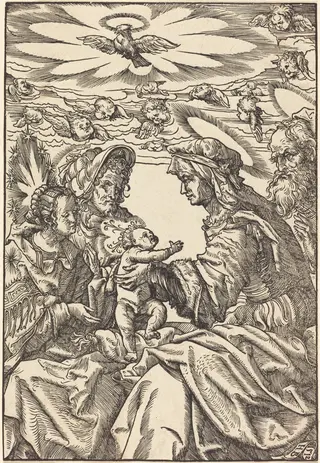 The Holy Family with Saint Anne and Saint Joachim
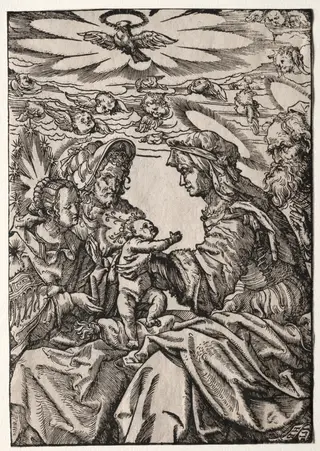 The Holy Family with St. Anne and Joachim
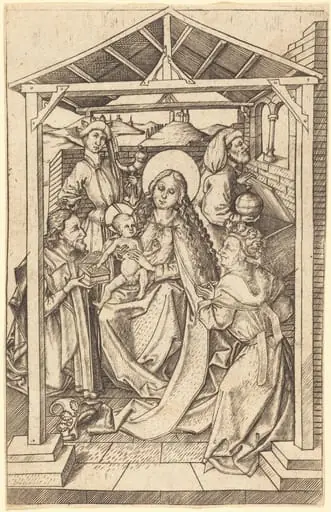 The Adoration of the Magi
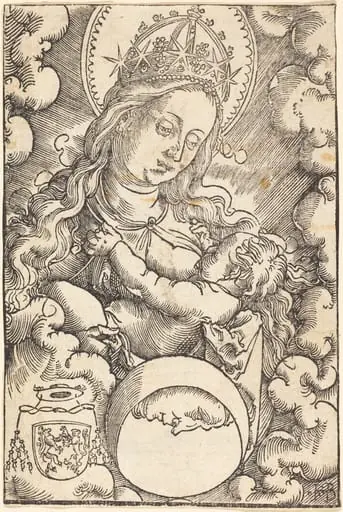 Virgin and Child in the Clouds
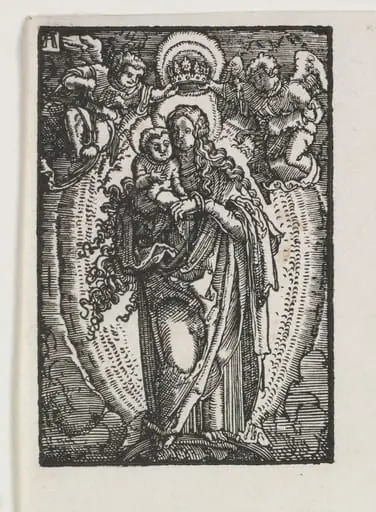 The Fall and Redemption of Man: The Virgin as Queen of Heaven
- The Virgin Nursing the Child
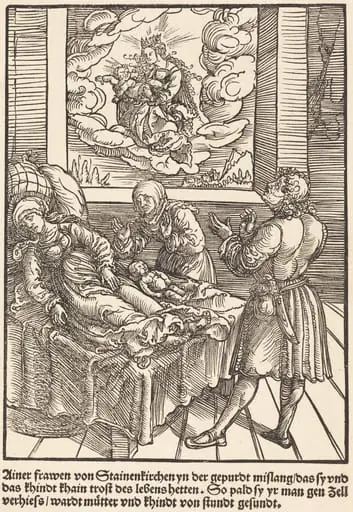 Ainer frawen von Stainerkirchen ...