Artwork
The Holy Family with Five Angels
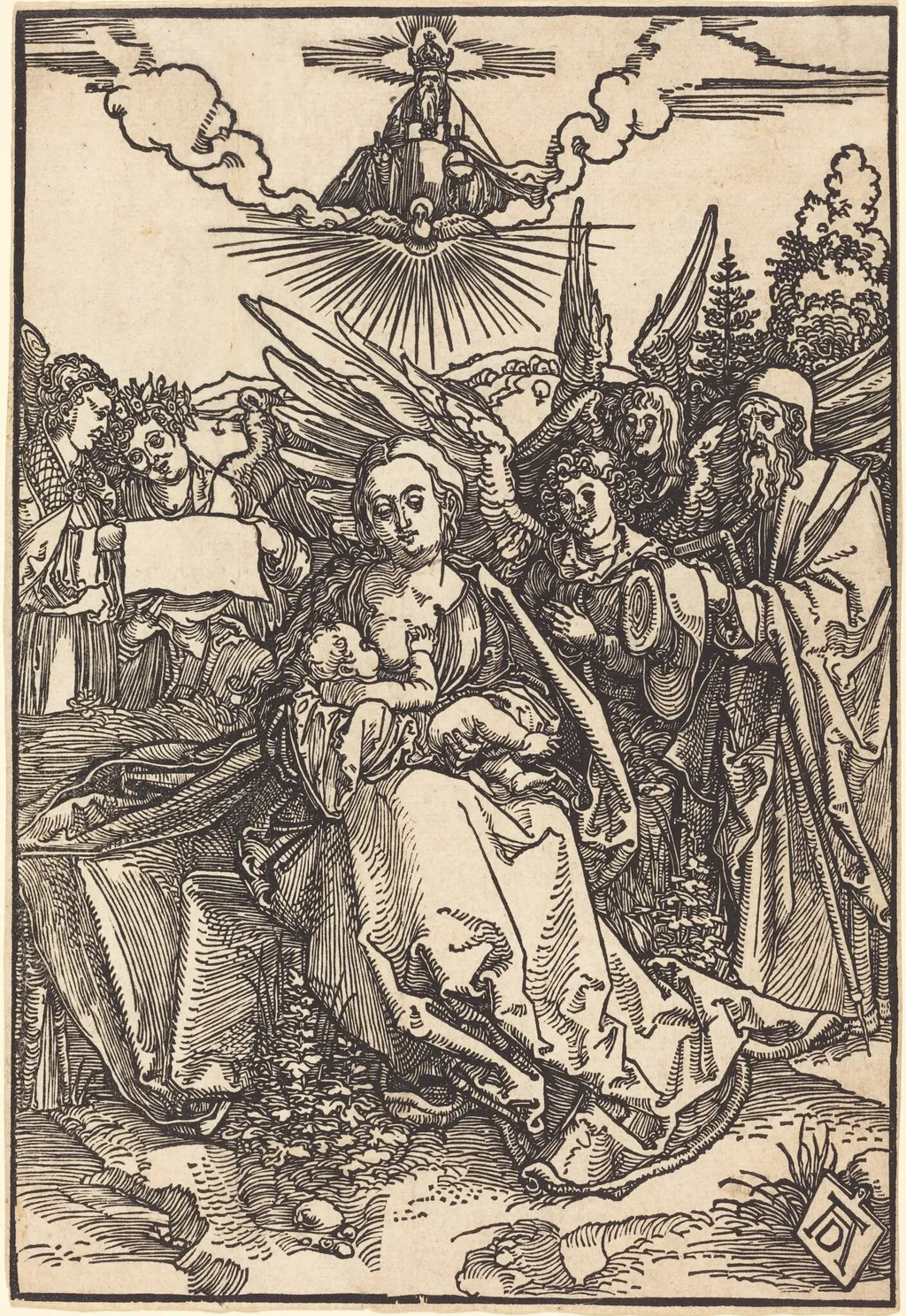
The Holy Family with Five Angels is an ink print by the Northern Renaissance artist Albrecht Dürer. It dates from 1505 and is held in the collection of the National Gallery of Art.
- Inscription
- Inscribed:in block, bottom right, on tablet: AD [artist's monogram]; verso, lower center, in graphite by a later hand: KK 966 [upside down]; verso, lower left, in graphite by a later hand: B. 99; verso, lower center, in graphite by a later hand: Gr. Lgb. [?] 285
About this work
Overview
This work exemplifies Dürer's mastery of the woodcut medium, transforming it from a reproductive technique into a vehicle for complex artistic expression.
Created in 1505, Albrecht Dürer's woodcut The Holy Family with Five Angels is a significant work from his second Italian journey, reflecting the artist's synthesis of Northern European detail with Italian Renaissance composition. The print depicts the Virgin Mary seated centrally, holding the Christ Child, while five angels surround them in a dynamic arrangement. Three angels hover above in the sky, playing musical instruments including a lute and a drum, while two others stand on the ground near the figures.
Dürer employs intricate cross-hatching and fine lines to render the textures of drapery, foliage, and cloud formations, creating a sense of depth and volume characteristic of his mature style. The background features a detailed landscape with trees and distant architecture, grounding the sacred scene in a tangible world. This work exemplifies Dürer's mastery of the woodcut medium, transforming it from a reproductive technique into a vehicle for complex artistic expression.
It stands as a key example of his religious output during a period of intense experimentation with perspective and human anatomy, bridging the gap between Gothic tradition and High Renaissance ideals.
Subject & Meaning
The central figures represent the Virgin Mary and the infant Jesus, embodying the intimate bond of the Holy Family. The surrounding angels, rendered with expressive faces and flowing hair, serve as celestial attendants, emphasizing the sanctity of the scene and reinforcing contemporary devotional practices that linked earthly family life with divine protection.
Technique & Style
Executed as a woodcut on laid paper, Dürer incised the image into a wooden block, allowing ink to transfer the intricate lines onto the sheet. The print displays crisp, precise contours, especially in the folds of clothing and the delicate feathering of the angels’ wings, showcasing Dürer’s mastery of line and his ability to convey texture without color.
Context
Created during the height of the Northern Renaissance, the work reflects both the period’s religious fervor and the growing demand for reproducible devotional images. Woodcuts like this were widely circulated, enabling broader access to sacred iconography beyond the confines of illuminated manuscripts and painted altarpieces.
Legacy
The Holy Family with Five Angels exemplifies Dürer’s contribution to printmaking, influencing subsequent generations of artists who adopted his meticulous approach to line work. Its composition and technical execution continue to inform studies of early modern religious art and the dissemination of visual culture across Europe.
Own this work as a print
Artist & collection
Artist
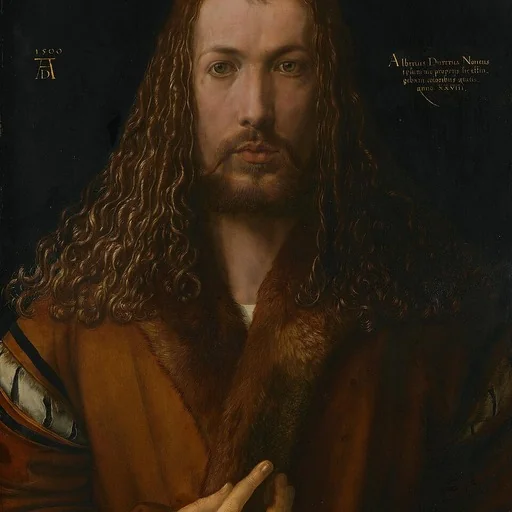
Albrecht Dürer spent his life in Nuremberg, a busy German city where artists traded prints like currency.

![Madonna and Child [obverse], by Albrecht Dürer](https://artifactworldgallery.com/img/albrecht-durer--madonna-and-child-obverse--d7b8ebf05d22ebe5-w320.webp)
![Lot and His Daughters [reverse], by Albrecht Dürer](https://artifactworldgallery.com/img/albrecht-durer--lot-and-his-daughters-reverse--b4ebf9b282faa17a-w320.webp)
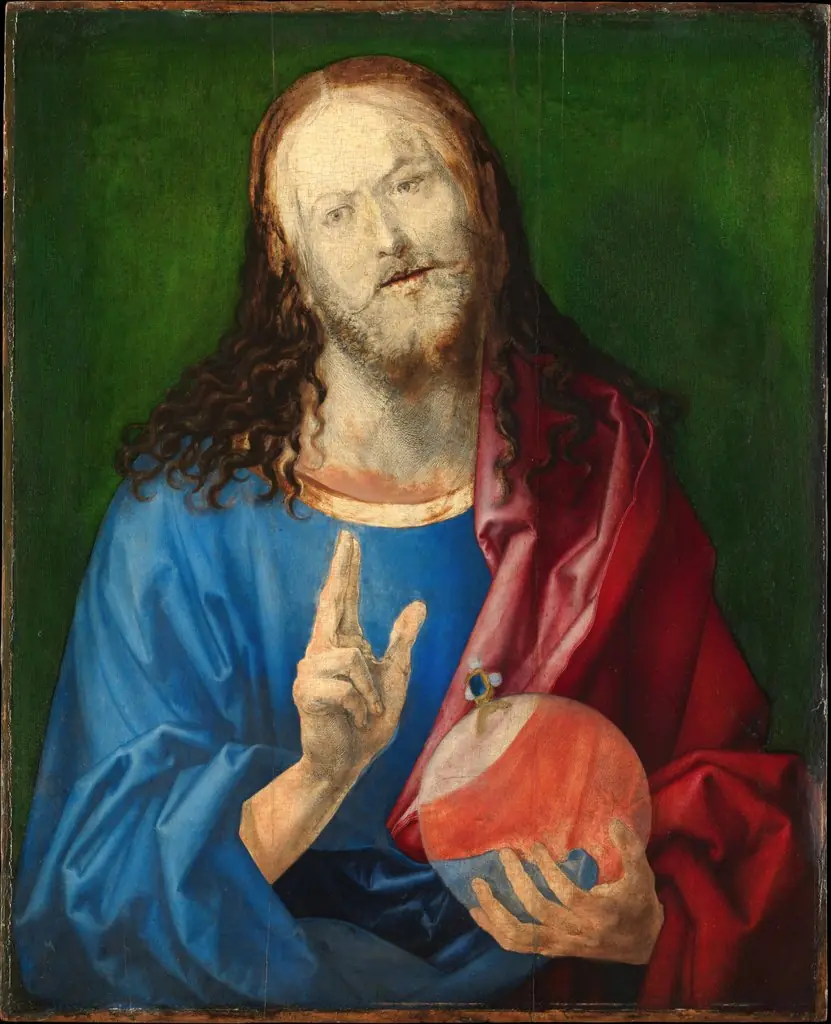
- The Holy Family with Saint Anne and Saint Joachim
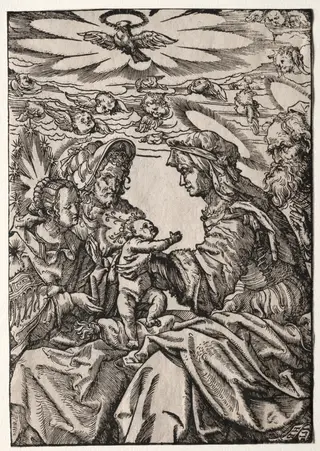 The Holy Family with St. Anne and Joachim
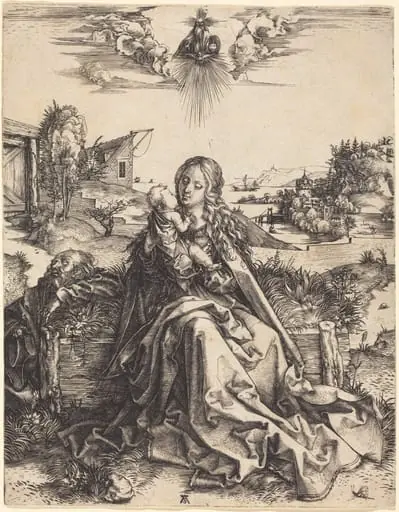 The Holy Family with the Mayfly
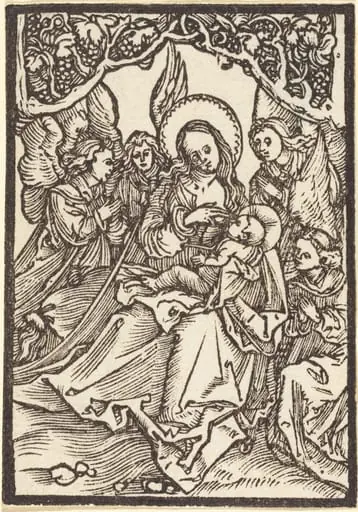 The Virgin Nursing the Christ Child with Four Angels
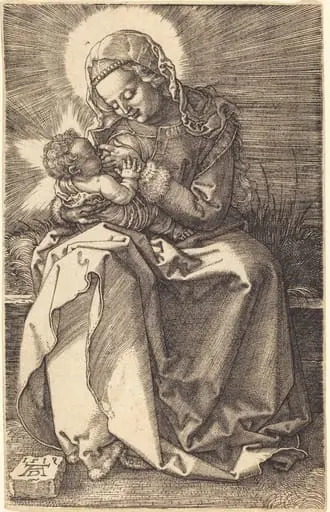 The Virgin Nursing the Child
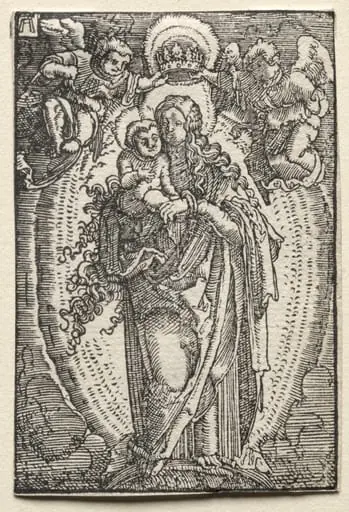 The Fall and Redemption of Man: The Virgin as Queen of Heaven
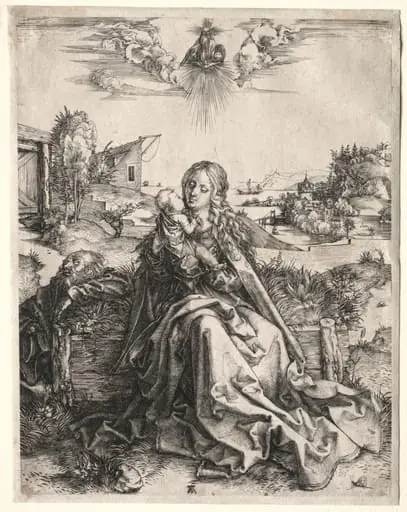 Holy Family with the Butterfly
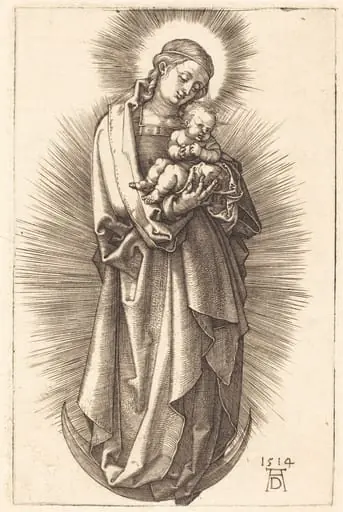 The Virgin and Child on a Crescent with a Diadem
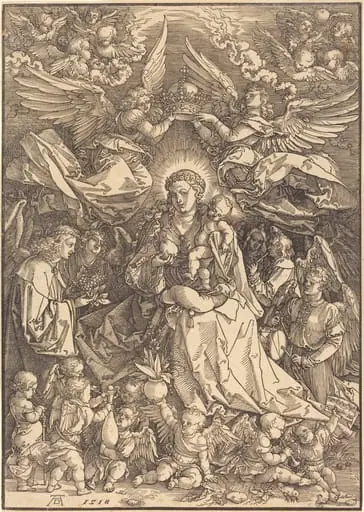 The Virgin Surrounded by Many Angels
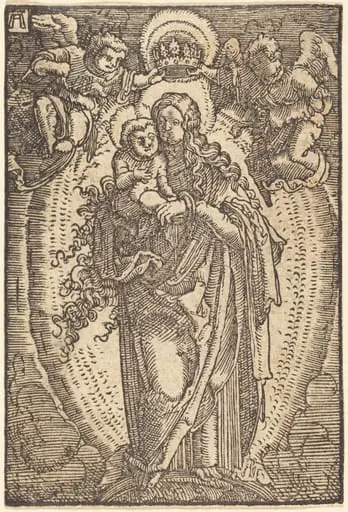 The Virgin and Child on a Crescent
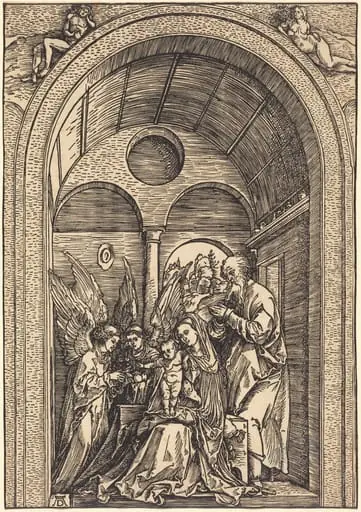 The Holy Family with Two Angels in a Vaulted Hall
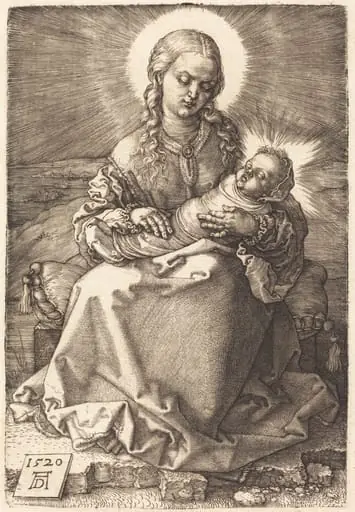 The Virgin with the Swaddled Child